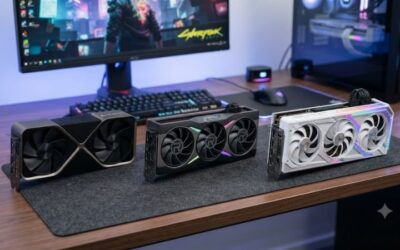
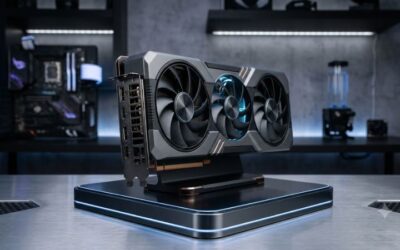
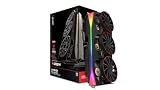
- Top Pick: GIGABYTE Radeon RX 9070 XT Gaming OC 16G Graphics Card, PCIe 5.0, 16GB GDDR6, GV-R9070XTGAMING OC-16GD Video Card
- Best Value: ASRock Radeon RX 9070 XT Challenger 16GB OC Graphics Card – AMD RDNA 4 Architecture, 2970 MHz Boost Clock, GDDR6, PCIe 5.0, DisplayPort 2.1a, HDMI 2.1b, Triple Fan Cooling 800W
- Premium Choice: GIGABYTE Radeon™ RX 9070 XT Gaming OC ICE 16G Graphics Card (16GB GDDR6, 256-bit, PCIe 5.0, HDMI/DP 2.1, 2.7 Slot, Hawk Fan, Server-Grade Thermal Gel, Reinforced Structure)
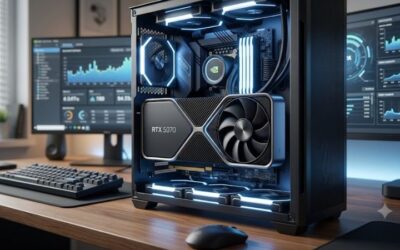
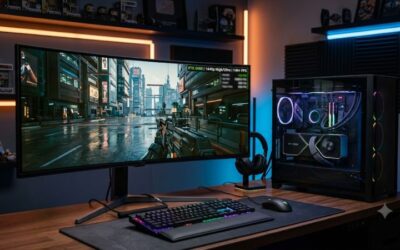
The mid-range graphics card fight has never been closer than it is right now. AMD’s Radeon RX 9070 XT and NVIDIA’s GeForce RTX 5070 launched as direct rivals, and after a full generation of driver updates, game patches, and price movement, the picture is finally clear enough to make a confident call. Both cards target the same buyer: someone building or upgrading a 1440p gaming rig who wants high refresh rates today and enough headroom to survive the next few years of increasingly demanding releases.
The choice matters more in 2026 than it did at launch. Modern engines lean harder on VRAM than ever, ray tracing has quietly become a default rather than a toggle in several major titles, and AI upscaling is now the single biggest performance lever in your settings menu. Picking the wrong card doesn’t just cost you a few frames — it can decide whether you’re running native 1440p ultra or leaning on upscaling to stay above 60 FPS three years from now. Below is a practical, no-nonsense breakdown of how these two actually compare.
As an Amazon Associate we earn from qualifying purchases at no extra cost to you. Product prices and availability are accurate as of the date shown and are subject to change.


⚡ Save on Your Next PC — Amazon Prime
Prime members get fast free shipping on the systems above, plus early access to Prime Day & Black Friday PC deals. New members get a 30-day free trial.
Watch: RX 9070 XT vs RTX 5070: 2026 Comparison — Video Review
Quick Verdict
The RX 9070 XT is the better raw-performance buy for most 1440p and entry-level 4K gamers, delivering a meaningful rasterization lead and 16GB of memory for a similar outlay. The RTX 5070 is the smarter pick if you lean heavily on DLSS 4 with Multi Frame Generation, play path-traced titles, or use your GPU for CUDA-accelerated creative and AI workloads where NVIDIA’s software stack remains unmatched.
Key Differences
- Memory capacity: The 9070 XT ships with 16GB of GDDR6 on a 256-bit bus, while the RTX 5070 offers 12GB of faster GDDR7 on a narrower 192-bit bus. AMD wins on headroom; NVIDIA wins on per-chip bandwidth efficiency.
- Rasterization: In traditional rendering, the 9070 XT typically leads by a comfortable double-digit margin at 1440p, often landing closer to the tier above it than to the 5070.
- Ray tracing: RDNA 4 closed most of the gap, and the 9070 XT trades blows with the 5070 in mainstream RT titles — but heavy path tracing still favours NVIDIA.
- Upscaling and frame generation: FSR 4 is a genuine leap in image quality, though DLSS 4 retains broader game support and Multi Frame Generation for very high refresh displays.
- Power and cooling: The 9070 XT draws noticeably more power and runs warmer, demanding a roomier case and a stronger PSU; the 5070 is the easier fit for compact builds.
- Creative workloads: NVENC, CUDA, and Studio drivers give the RTX 5070 a clear edge for video editing, 3D rendering, and local AI tooling.
Radeon RX 9070 XT: Raw Performance and Real Headroom
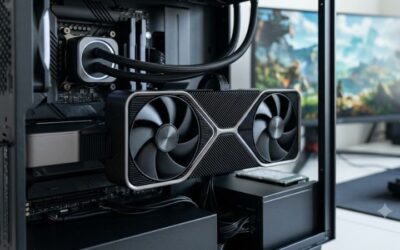
AMD’s RDNA 4 flagship for the mid-range is built around brute frame delivery. At 1440p ultra, it consistently outpaces the RTX 5070 in the vast majority of rasterized titles, and the 16GB frame buffer means texture packs, ultra-quality shadows, and 4K upscaling targets don’t push you into stutter territory. That extra memory is the single most future-proof thing about this card, and it’s the reason many reviewers now treat it as the default recommendation for high-settings 1440p play.
Board partner choice matters here more than usual, because the 9070 XT runs hot under sustained load. The Sapphire Nitro+ Gaming OC and GIGABYTE Gaming OC ICE sit at the premium end with heavier heatsinks and quieter acoustics, while the GIGABYTE Gaming OC 16G and XFX Swift Triple Fan strike a strong balance of cooling and value. For tighter cases, the ASUS Prime OC Edition uses a 2.5-slot design with dual BIOS, and the ASRock Challenger 16GB OC is the sensible no-frills option with triple-fan cooling and a 2970 MHz boost clock. All are PCIe 5.0 with DisplayPort 2.1a and HDMI 2.1b outputs.
GeForce RTX 5070: Software Polish and Efficiency
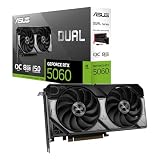
The RTX 5070’s argument was never raw throughput — it’s what NVIDIA wraps around the silicon. DLSS 4’s transformer-based upscaling remains the image-quality benchmark, and Multi Frame Generation can push a 1440p title well past 200 FPS on a high-refresh monitor in supported games. In path-traced showcases, the 5070’s stronger RT cores and denoising pipeline let it hold a playable framerate where the Radeon needs more aggressive upscaling to keep up.
It’s also the more forgiving card to build around. Lower board power means a smaller cooler, less case airflow pressure, and a more modest PSU requirement — genuinely useful in a compact ITX or prebuilt chassis. The catch is that 12GB frame buffer. At 1440p it’s adequate today, but several 2025 and 2026 releases already brush against it with maxed textures, and that ceiling will only get tighter.
Which Should You Buy?
- For 1440p high-refresh gaming: pick the RX 9070 XT — the raster lead translates directly into higher average and 1% low framerates.
- For entry-level 4K: pick the RX 9070 XT, where the 16GB buffer prevents texture-streaming hitches.
- For path tracing and RT showcase titles: pick the RTX 5070 and its stronger ray tracing pipeline.
- For small form factor or modest PSU builds: pick the RTX 5070, or the compact ASUS Prime 9070 XT if you still want AMD.
- For streaming, editing, or local AI work: pick the RTX 5070 for NVENC and CUDA support.
Frequently Asked Questions
Is 12GB of VRAM still enough in 2026?
At 1080p and most 1440p settings, yes. At 1440p ultra with high-resolution texture packs, or at 4K, you’ll increasingly need to step down a texture tier — which is exactly where the 9070 XT’s 16GB pays off.
How does FSR 4 compare to DLSS 4?
FSR 4 dramatically narrowed the image-quality gap and is excellent in supported titles. DLSS 4 still leads on game coverage and offers Multi Frame Generation, so NVIDIA retains an edge in breadth rather than outright quality.
What power supply do I need for an RX 9070 XT?
Plan on a quality 750W unit for most builds, or 850W if you’re pairing it with a high-core-count CPU or planning an overclock. The RTX 5070 is comfortable on 650W.
Which 9070 XT model should I choose?
The Sapphire Nitro+ and GIGABYTE Gaming OC ICE offer the best thermals and acoustics, the XFX Swift and GIGABYTE Gaming OC 16G are strong all-rounders, and the ASRock Challenger or ASUS Prime suit value and space-constrained builds respectively.
Final Verdict
For the majority of gamers, the Radeon RX 9070 XT is the stronger buy in 2026: it wins on raw frames, wins decisively on memory capacity, and RDNA 4 has closed enough of the ray tracing deficit that the old trade-off no longer stings. The RTX 5070 remains a genuinely good card — and the right one if DLSS 4, path tracing, low power draw, or creative workloads sit near the top of your list — but if your priority is the most gaming performance per dollar at 1440p and above, AMD takes this round.