🛒 Best Price Today on Amazon
Prime members get fast, free shipping on everything above, plus member-only deals. New members get a 30-day free trial — cancel anytime.
If you are buying new, choose the RX 7800 XT; choose the RX 6800 XT only when a clean used card is substantially cheaper and you mainly play at 1440p without relying on ray tracing.
Quick answer: Our top pick in 2026 is the Architecture — our #1 rated choice. See the full ranked comparison, alternatives and buying advice below.
RX 7800 XT vs RX 6800 XT at a glance
The RX 7800 XT is not a generational revolution, but it is the more complete 2026 purchase. It delivers a modestly higher rasterization frame rate, noticeably better ray-tracing capability, newer media features, lower typical board power, and a longer expected software-support runway. The RX 6800 XT remains attractive because its 16GB of VRAM and wide memory interface still suit modern 1440p gaming, particularly if its used price is well below the RX 7800 XT.
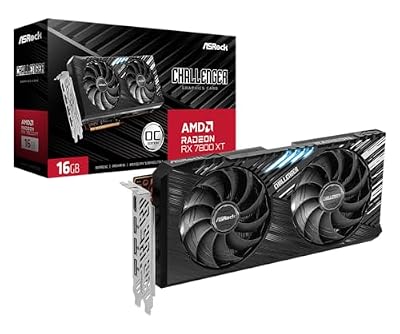
ASRock Radeon RX 7800 XT Challenger 16GB OC Graphics Card, RDNA 3, 2475MHz Boost, 16GB GDDR6 256-bit, PCIe 4.0, Dual Fans, 0dB Silent, LED Indicator
Included for 'RX 7800 XT vs RX 6800 XT: Which GPU Should You Buy?' because the listing specifies RDNA 3 and 2475MHz Boost, details this guide uses to compare options.
View on Amazon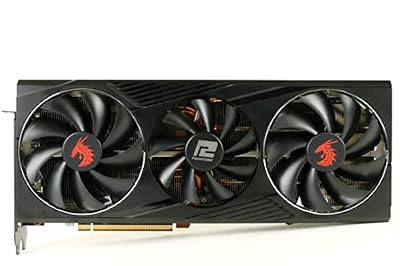
PowerColor AMD Radeon RX 6800 XT Gaming Graphics Card with 16GB GDDR6, Raytracing, PCIe 4.0, HDMI 2.1, AMD Infinity Cache (Renewed)
Included for 'RX 7800 XT vs RX 6800 XT: Which GPU Should You Buy?' because the listing specifies Raytracing and PCIe 4.0, details this guide uses to compare options.
View on Amazon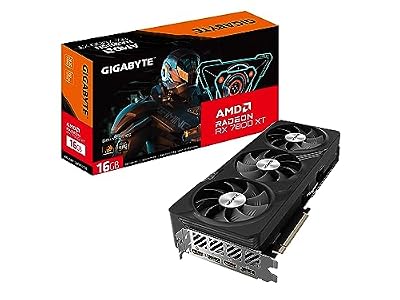
Gigabyte Radeon RX 7800 XT Gaming OC 16G Graphics Card, 3X WINDFORCE Fans 16GB 256-bit GDDR6, GV-R78XTGAMING OC-16GD Video Card
Included for 'RX 7800 XT vs RX 6800 XT: Which GPU Should You Buy?' because the listing specifies 3X WINDFORCE Fans 16GB 256-bit GDDR6 and GV-R78XTGAMING OC-16GD Video Card, details this guide uses to compare options.
View on Amazon
Sapphire Pulse AMD Radeon RX 7800 XT Gaming 16GB GDDR6 Dual Video Card
Included for 'RX 7800 XT vs RX 6800 XT: Which GPU Should You Buy?' as a relevant option in this category; details come from the product listing.
View on Amazon| Specification | Radeon RX 7800 XT | Radeon RX 6800 XT |
|---|---|---|
| Architecture | RDNA 3 | RDNA 2 |
| Compute units | 60 | 72 |
| Stream processors | 3,840 | 4,608 |
| Game clock | Approximately 2,124 MHz | Approximately 2,015 MHz |
| VRAM | 16GB GDDR6 | 16GB GDDR6 |
| Memory bus and bandwidth | 256-bit, 624GB/s | 256-bit, 512GB/s |
| Typical board power | 263W | 300W |
| Video outputs | Usually DisplayPort 2.1 and HDMI 2.1 | Usually DisplayPort 1.4a and HDMI 2.1 |
Clock speed, cooler design, and factory overclocking vary by manufacturer. The listed board-power figures are more useful for planning than comparing real electricity bills, since gaming load depends on frame-rate caps, undervolting, and the individual card.
Gaming performance: the resolution changes the answer
1080p
Both cards are powerful choices for 1080p, and the difference is often limited by the CPU rather than the GPU. In published-review results, the RX 7800 XT is typically around 5–15% faster in rasterized games, although the gap can shrink at high frame rates or widen in titles that benefit from its newer architecture. Either card can drive a high-refresh 1080p monitor, but buying one specifically for 1080p is difficult to justify unless you play demanding games at maximum settings or want substantial headroom for future releases.
1440p
1440p is the ideal target for both GPUs. The RX 7800 XT generally provides a modest lead in traditional rendering, often landing in the range of roughly 70–120 frames per second in demanding modern games with high settings, depending heavily on the title, CPU, upscaling mode, and patch. The RX 6800 XT commonly remains close enough that the price difference matters more than the specification difference.
For a 1440p monitor running at 165Hz, neither card will sustain 165 frames per second in every new, visually demanding game at native ultra settings. A sensible approach is to use high rather than ultra settings, enable FSR Quality when needed, and cap the frame rate near the monitor’s refresh rate. That reduces power draw and frame-time spikes without sacrificing much image quality.
4K
At 4K, the 16GB frame buffer is helpful, but it does not turn either card into a guaranteed ultra-settings 4K solution. Expect many games to require a mixture of high settings, optimized textures, and upscaling. The RX 7800 XT’s extra memory bandwidth helps it retain its lead, but the difference is still usually incremental rather than transformative.
Ray tracing changes the comparison. Neither card is a specialist ray-tracing GPU, but the RX 7800 XT’s newer ray accelerators and architecture generally make RT effects more practical. For demanding RT games, use FSR Quality or Balanced, reduce RT reflections or global illumination first, and keep texture quality high if VRAM usage allows.
Is 16GB of VRAM enough in 2026?
Yes for most 1440p gaming, but with conditions. Both cards’ 16GB capacity is more valuable than a small difference in average frame rate. It allows high-resolution textures and gives more room for future games than 8GB cards, but VRAM usage also depends on texture packs, ray-tracing data, resolution, shader compilation, and the game engine.
- 1080p: 8GB can still work in many games, while 16GB provides useful longevity and modded-texture headroom.
- 1440p: 16GB is a comfortable target for high textures and is the strongest use case for either card.
- 4K: 16GB is workable, but some games may require reduced textures or fewer RT effects.
- Heavy texture mods: VRAM can become the limiting factor regardless of GPU speed.
When a game stutters, do not assume VRAM is the cause. Monitor dedicated GPU memory, system RAM, GPU utilization, and frame-time graphs. If VRAM is nearly full and stutters occur when entering new areas, lower texture quality one step before reducing resolution. Textures affect memory more than they affect shader performance, so this is often the least visually destructive fix.
Features and connectivity
The RX 7800 XT has the more modern feature set. Its RDNA 3 media engine supports AV1 encoding, which is useful for efficient game streaming and video recording when supported by the application. The RX 6800 XT can decode AV1 but does not offer the same hardware AV1 encoding capability, making the newer card preferable for creators and streamers.
DisplayPort 2.1 on the RX 7800 XT also gives it more display-output bandwidth for future high-resolution, high-refresh monitors. It does not automatically improve game performance, and the exact usable mode depends on the monitor and cable. The RX 6800 XT’s DisplayPort 1.4a remains adequate for common 1440p and 4K gaming displays, especially when Display Stream Compression is available.
Both cards support AMD features such as FSR, Radeon Anti-Lag, and driver-level upscaling options, although support and image quality vary by game. FSR is not a substitute for raw GPU performance: it reduces the number of pixels rendered, which can improve frame rate, but very aggressive modes may introduce shimmer or softness.
Power, cooling, and the real cost of ownership
The RX 6800 XT has a 300W typical board-power rating, compared with 263W for the RX 7800 XT. Both commonly use two eight-pin PCIe power connectors, but check the exact model before buying. AMD’s recommended system-power guidance is commonly around 700W for the RX 7800 XT and 750W for the RX 6800 XT, with quality and age of the power supply more important than the label alone.
Here is a practical power-budget calculation. Suppose the graphics card averages 280W during gaming, the CPU and rest of the system use 150W, and transient headroom adds 20%:
(280W + 150W) × 1.20 = 516W
A good 650W supply may therefore be adequate for a well-balanced system, but a 750W unit provides more margin for a high-power CPU, aging components, overclocking, and transient spikes. The RX 7800 XT’s lower board power can also make it easier to cool quietly. A power limit reduction or undervolt can lower consumption further, but results vary by card and silicon quality.
New versus used pricing in 2026
The RX 7800 XT is typically found new in the general range of $450–$550, depending on board design, promotions, and regional supply. A used RX 6800 XT often falls around $300–$400, though condition, warranty, mining history, and local availability can move that range substantially. Treat these as broad market ranges rather than fixed prices.
The used card becomes compelling when it is at least about $100–$150 cheaper than a comparable new RX 7800 XT. At a smaller discount, the newer card’s warranty, lower power draw, AV1 encoding, newer display support, and reduced wear risk usually justify the difference.
Before buying a used RX 6800 XT, ask for evidence that the card runs without artifacts, inspect the cooler and fans, check whether the original BIOS has been modified, and confirm that all power connectors and display outputs work. A replacement thermal-paste job does not automatically mean the card was mistreated, but unexplained overheating, fan grinding, or unstable clocks should be treated as reasons to walk away.
Which GPU should you buy?
| Your situation | Better choice | Reason |
|---|---|---|
| Buying new and keeping the card for several years | RX 7800 XT | Newer architecture, lower power, AV1 encoding, and warranty |
| 1440p gaming with a tight budget | RX 6800 XT used | Nearly the same VRAM capacity and strong raster performance for less |
| Ray tracing is important | RX 7800 XT | Generally better RT performance and newer feature support |
| Streaming or recording with AV1 | RX 7800 XT | Hardware AV1 encoding support |
| Existing 650W power supply | Usually RX 7800 XT | Lower rated board power, provided the supply is high quality |
| Already own an RX 6800 XT | Keep it | The performance increase is usually too small to justify an upgrade |
Final verdict
The RX 7800 XT is the safer all-around recommendation for a new purchase in 2026. It is faster overall, more efficient, better suited to ray tracing and AV1 workflows, and comes with the advantages of a newer product. The RX 6800 XT still makes sense as a value buy when its used price is clearly lower, the seller is trustworthy, and your priority is conventional 1440p gaming. If you already own the RX 6800 XT, wait for a larger performance jump rather than replacing it with an RX 7800 XT.
Ready to decide? Our #1 pick for 2026 is the Architecture.
Live price & availability on Amazon.