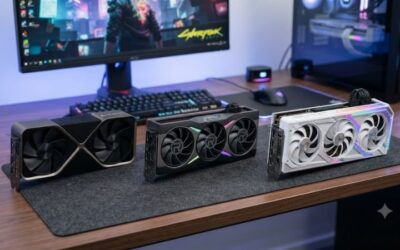
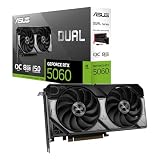
- Top Pick: ASUS TUF Gaming GeForce RTX™ 5080 16GB GDDR7 OC Edition Graphics Card
- Best Value: ASUS ROG Astral NVIDIA GeForce RTX™ 5080 16GB GDDR7 OC Edition Gaming Graphics Card (PCIe® 5.0, HDMI®/DP 2.1, 3.8-Slot, 4-Fan Design, Axial-tech Fans, Patented Vapor Chamber), 3 Year Warranty
- Premium Choice: PNY NVIDIA GeForce RTX™ 5080 Epic-X RGB™ OC Triple-Fan Graphics Card
The GeForce RTX 5080 and RTX 5070 Ti have quietly become the two most sensible upgrades in NVIDIA’s Blackwell lineup. Both are built on the same GB203 silicon, both carry 16GB of fast GDDR7 on a 256-bit bus, and both support the full DLSS 4 feature set including Multi Frame Generation. On paper they look like siblings. In practice, the 5080 ships with roughly 20% more shader cores, a higher power budget, and the headroom to hold 4K at high refresh rates where the 5070 Ti starts leaning on upscaling.
That makes the choice less about raw specs and more about the resolution you actually play at, the monitor you own, and how much you’re willing to spend for the last slice of performance. In 2026, with the 50-series now mature and board partners shipping refined coolers, both cards are easy to recommend — to different people. Below is a clear breakdown of where each one wins, plus which specific RTX 5080 models are worth your attention if you decide to go big.
As an Amazon Associate we earn from qualifying purchases at no extra cost to you. Product prices and availability are accurate as of the date shown and are subject to change.


⚡ Save on Your Next PC — Amazon Prime
Prime members get fast free shipping on the systems above, plus early access to Prime Day & Black Friday PC deals. New members get a 30-day free trial.
Watch: RTX 5080 vs 5070 Ti: Worth It in 2026? — Video Review
Quick Verdict
Buy the RTX 5080 if you game at 4K, own a high-refresh OLED, or want a card that will comfortably carry you through several more console-generation ports without compromise — it’s the better long-term 4K performer, and models like the ASUS ROG Astral RTX 5080 and GIGABYTE Gaming OC push clocks and cooling further than the reference design ever intended. Buy the RTX 5070 Ti if you play at 1440p or ultrawide, want the same 16GB of GDDR7 and identical DLSS 4 features for meaningfully less money, and would rather put the savings toward a better monitor, CPU, or storage.
Key Differences
- Compute: The RTX 5080 packs 10,752 CUDA cores versus 8,960 on the 5070 Ti — around 20% more raw shading, RT, and Tensor throughput.
- Memory: Both use 16GB of GDDR7 on a 256-bit bus, but the 5080’s faster memory modules deliver noticeably higher effective bandwidth for 4K textures and ray tracing.
- Real-world performance: Expect a 15–20% gap at 4K and a narrower 10–15% gap at 1440p, where CPU limits start compressing the difference.
- Power draw: The 5080 targets roughly 360W against 300W for the 5070 Ti, so factory-overclocked models want a quality 850W PSU rather than a 750W unit.
- Cooler size: 5080 designs run larger and heavier — the ROG Astral is a 3.8-slot, four-fan card — while 5070 Ti models are generally easier to fit in mid-towers.
- Value: The 5070 Ti almost always wins on frames per dollar; the 5080 wins on absolute performance and 4K headroom.
GeForce RTX 5080: The 4K Option
The RTX 5080 is the card to buy when you refuse to compromise at 4K. With ray tracing enabled and DLSS 4 in Quality mode, it holds well above 100 FPS in most modern titles, and Multi Frame Generation lets it saturate 4K 240Hz panels in supported games. It’s also the more capable creator card, with the extra Tensor throughput showing up clearly in AI-assisted video work and local model inference.
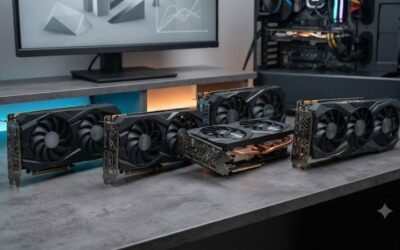
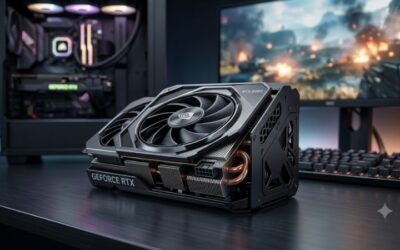
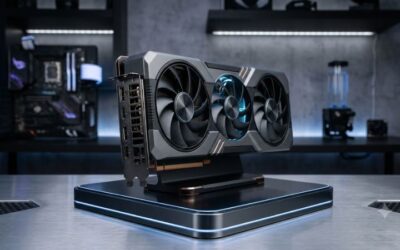
Board partner choice matters more here than usual. The ASUS ROG Astral RTX 5080 sits at the top with its four-fan, vapor-chamber design and a three-year warranty — it’s the quietest and coolest of the bunch, but it demands serious case clearance. The ASUS TUF Gaming RTX 5080 OC and GIGABYTE RTX 5080 Gaming OC with WINDFORCE cooling are the sweet spot for most builders, while the GIGABYTE RTX 5080 WINDFORCE OC SFF exists specifically for compact cases. If you want something with more personality, the PNY RTX 5080 Epic-X RGB OC and MSI RTX 5080 Ventus 3X OC White are strong picks for themed builds.
GeForce RTX 5070 Ti: The Value Pick
The RTX 5070 Ti is arguably the smarter buy for the majority of gamers. At 1440p it’s effectively overkill, pushing high-refresh frame rates with ray tracing on, and it handles 3440×1440 ultrawide with room to spare. Critically, it shares the 5080’s 16GB VRAM buffer, so you’re not sacrificing texture quality or future-proofing — only frame rate headroom.
It’s also the easier card to build around. Lower power draw means less heat dumped into your case, quieter fan curves under load, and compatibility with mainstream 750W power supplies. For anyone upgrading from a 3070, 3080, or 4070, the 5070 Ti delivers a generational leap while leaving budget for the rest of the system.
Which Should You Buy?
- For 4K 120Hz+ gaming: pick the RTX 5080 — the extra cores and bandwidth are exactly what 4K demands.
- For 1440p high-refresh: pick the RTX 5070 Ti; the 5080’s advantage shrinks and the savings are substantial.
- For small form factor builds: pick the GIGABYTE RTX 5080 WINDFORCE OC SFF, or step down to a compact 5070 Ti if clearance is tight.
- For creators and AI workloads: pick the RTX 5080 — Tensor throughput scales directly with your render and inference times.
- For balanced full-system builds: pick the RTX 5070 Ti and reinvest the difference in CPU, RAM, or a better display.
Frequently Asked Questions
Is the RTX 5080 worth the price premium over the 5070 Ti?
Only at 4K. The performance gap of 15–20% rarely matches the price gap, so at 1440p the 5070 Ti is the better value. If you’re driving a 4K high-refresh display, the 5080’s headroom justifies the cost.
Is 16GB of VRAM still enough in 2026?
Yes for 4K gaming with DLSS, which reduces the internal render resolution and VRAM load. Heavy modded titles and professional 3D work can exceed it, but for gaming both cards remain comfortable.
What power supply do I need?
Plan on a quality 850W unit for the RTX 5080, especially factory-overclocked models like the ROG Astral or Gaming OC. A solid 750W is sufficient for most RTX 5070 Ti cards.
Do both cards support DLSS 4 Multi Frame Generation?
Yes. Every Blackwell GPU supports the full DLSS 4 stack, including Multi Frame Generation and the transformer-based upscaling model, so feature parity is complete.
Final Verdict
If 4K is your target, the RTX 5080 is the clear answer — and the ASUS ROG Astral or TUF Gaming OC models are the versions worth paying for, with the GIGABYTE WINDFORCE OC SFF covering compact builds. For everyone gaming at 1440p or ultrawide, the RTX 5070 Ti delivers the same 16GB GDDR7 buffer and identical DLSS 4 features at a materially lower cost, making it the smarter overall purchase in 2026.