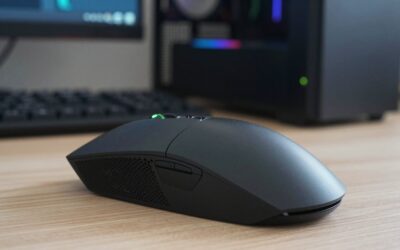
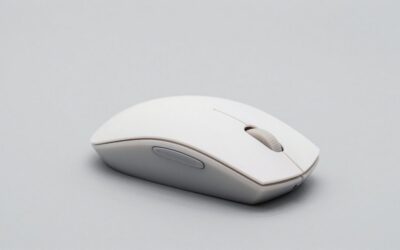
A full-size gaming mouse forces a small hand into bad compromises: fingers stretched flat to reach the front buttons, a palm that floats instead of anchoring, and extra shell length that turns every flick into a two-stage movement. The answer is a compact shell. Every pick here measures under 120 mm long, so the buttons, wheel and sensor sit under the hand rather than in front of it, and each publishes dimensions and weight to judge fit before buying.
This is the general small-hands roundup, mixing tri-mode models, a claw-grip specialist and a budget ultralight. Players who want only ergonomic shapes or only the lightest shells will find dedicated guides on this site; the five mice below are the strongest all-round compact options.
As an Amazon Associate, we earn from qualifying purchases.
Table of Contents
- Quick Answer
- Razer Cobra Pro
- Endgame Gear OP1we
- Keychron M3 Mini 8K
- Fantech Aria XD7
- ATTACK SHARK X3
- How to Choose
- Who Should Skip
- FAQ
- Final Verdict
Quick Answer
For most small-handed players, the Razer Cobra Pro is the easiest recommendation: a 119.6 mm shell, flagship 30K sensor and three connection modes. The Endgame Gear OP1we suits claw grips best, the Keychron M3 Mini 8K adds 8,000 Hz polling, and the ATTACK SHARK X3 covers the budget tier at just 49 g.
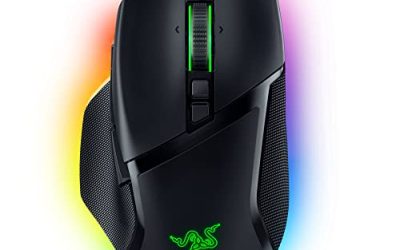
Razer Cobra Pro

The Cobra Pro is Razer’s small-shell flagship. At 119.6 mm long and 77 g it is the longest and heaviest pick here, yet its low 38.1 mm peak and narrow waist suit claw, palm and fingertip grips — the most forgiving option for small hands wanting some palm support.
Performance comes from the Focus Pro 30K optical sensor, Gen-3 optical switches and HyperSpeed wireless, with Bluetooth and a USB-C wired fallback. Battery life is a strength: up to 100 hours over HyperSpeed and up to 170 hours over Bluetooth. The trade-offs are the 11-zone Chroma RGB underglow, which drains the battery faster when lit, and a native 1,000 Hz polling rate — 4,000 Hz needs Razer’s separate HyperPolling dongle. It sits in the premium tier.
Specs
- Dimensions: 119.6 x 62.5 x 38.1 mm
- Weight: 77 g
- Sensor: Razer Focus Pro 30K optical, up to 30,000 DPI, 750 IPS, 50 G acceleration
- Switches: Razer Optical Mouse Switches Gen-3, rated for 90 million clicks
- Connectivity: HyperSpeed 2.4 GHz, Bluetooth, wired USB-C
- Battery: rechargeable; up to 100 hours on HyperSpeed, up to 170 hours on Bluetooth
- Polling rate: 1,000 Hz; up to 4,000 Hz with Razer HyperPolling Dongle (sold separately)
- Buttons: 10 customizable controls, 5 onboard memory profiles
Endgame Gear OP1we

The OP1we is the claw-grip specialist of this roundup. Its 118.2 mm symmetrical shell has a narrow 60.5 mm grip width and a low, forward-leaning profile that lets small hands wrap the sides without the rear pushing into the palm. At 58.5 g it is light enough for fast flicks, and the design is deliberately plain: no RGB, no honeycomb cutouts, just PTFE feet.
Inside, the PixArt PAW3370 sensor tracks up to 19,000 DPI — a generation behind the flagship chips here, but still a proven esports sensor. The Kailh GO optical switches remove mechanical contact wear, and the design is mod-friendly for players who tune click feel. The 335 mAh battery is rated for up to 168 hours per charge in the listing data. It suits players who value shape and click quality over headline DPI numbers.
Specs
- Dimensions: 118.2 x 60.5 x 37.2 mm
- Weight: 58.5 g
- Sensor: PixArt PAW3370 optical, up to 19,000 DPI, 400 IPS, 50 G acceleration
- Switches: Kailh GO optical switches
- Connectivity: 2.4 GHz wireless and wired USB-C
- Battery: 335 mAh rechargeable; up to 168 hours per charge
- Polling rate: 1,000 Hz
- Buttons: 5
Keychron M3 Mini 8K

Keychron’s M3 Mini 8K is the polling-rate pick: the only mouse here that reaches 8,000 Hz over both its 2.4 GHz receiver and a wired USB-C connection, suiting high-refresh monitors where input smoothness is visible. The shell is a 119.9 mm symmetrical shape with a low rear hump, and at 55 g it undercuts every pick except the ATTACK SHARK. Despite the Mini name it is the joint-longest mouse here, suiting claw and fingertip grips rather than a full palm hold.
The sensor is the flagship PixArt PAW3950, tracking up to 30,000 DPI, paired with Huano mechanical switches rated for 80 million clicks. Tri-mode connectivity adds Bluetooth 5.3, and Keychron’s browser-based Launcher handles remapping without installed software. Battery capacity and rated life are not stated for this 8K version, and 8,000 Hz polling drains any battery quickly, so treat it as a performance-first mid-range pick.
Specs
- Dimensions: 119.9 x 65.3 x 38.9 mm
- Weight: 55 g
- Sensor: PixArt PAW3950 optical, up to 30,000 DPI, 750 IPS, 50 G acceleration
- Switches: Huano mechanical switches, rated for 80 million clicks
- Connectivity: 2.4 GHz, Bluetooth 5.3, wired USB-C
- Battery: rechargeable; capacity and rated life not stated
- Polling rate: up to 8,000 Hz over 2.4 GHz and wired
- Buttons: 5, plus DPI and mode controls on the underside
Fantech Aria XD7

The Aria XD7 has the shortest shell here at 114 mm, and its rounded egg shape follows the compact profile small-hand players tend to praise: no sharp rear corners, a gentle central hump and wide, stable sides for claw and fingertip grips. At 59 g it stays in ultralight territory, and Fantech includes both solid and perforated rear covers, so the back can be swapped between smooth and ventilated finishes at no extra cost.
The hardware is a step above its mid-range tier: a PixArt PAW3395 sensor up to 26,000 DPI, Huano switches rated for 80 million clicks, and tri-mode connectivity. The compromises are a 1,000 Hz polling ceiling and a 300 mAh battery rated for up to 40 hours, the shortest runtime here, so it needs a charging routine. Grip tape and spare PTFE feet round out a package aimed squarely at smaller hands.
Specs
- Dimensions: 114 x 65 x 39 mm
- Weight: 59 g
- Sensor: PixArt PAW3395 optical, up to 26,000 DPI, 650 IPS, 50 G acceleration
- Switches: Huano TBSPD mechanical switches, rated for 80 million clicks
- Connectivity: 2.4 GHz, Bluetooth, wired USB-C
- Battery: 300 mAh rechargeable; up to 40 hours
- Polling rate: 1,000 Hz
- Extras: interchangeable solid and perforated rear covers, grip tape, spare PTFE feet
ATTACK SHARK X3

The X3 is the budget pick, and it gives away very little: the same PixArt PAW3395 sensor as the Fantech, a 49 g shell that makes it the lightest mouse here, and tri-mode connectivity with Bluetooth 5.2. The 118.5 mm symmetrical shell has a safe shape with a moderate hump that suits claw and fingertip grips on small and medium hands alike.
Its headline figure is battery life: up to 200 hours per charge at 1,000 Hz polling, beating every other pick here. Kailh GM 8.0 switches carry an 80-million-click rating, matching the mid-range models. Refinement is what the budget tier gives up — materials, coating and software polish sit a class below the Razer, Endgame Gear and Keychron picks — but for flagship tracking and the lowest weight here, the X3 is the value choice.
Specs
- Dimensions: 118.5 x 61 x 39.7 mm
- Weight: 49 g (plus or minus 3 g)
- Sensor: PixArt PAW3395 optical, up to 26,000 DPI, 650 IPS, 50 G acceleration
- Switches: Kailh GM 8.0 mechanical switches, rated for 80 million clicks
- Connectivity: 2.4 GHz, Bluetooth 5.2, wired USB-C
- Battery: 300 mAh rechargeable; up to 200 hours per charge
- Polling rate: 1,000 Hz
- Buttons: 5 programmable
How to Choose
Measure your hand first: length from the tip of the middle finger to the base of the palm. Hands under 17.5 cm are the target audience here, and for those hands a shell between 114 and 120 mm keeps claw and fingertip grips in control. The Fantech Aria XD7 anchors the short end at 114 mm; the Razer Cobra Pro and Keychron M3 Mini 8K sit at the long end.
Grip style narrows it further. Claw players should look at the Endgame Gear OP1we first, because its narrow grip width and low front half are shaped for an arched grip. Fingertip players can use any pick here, with the 49 g ATTACK SHARK X3 and 55 g Keychron M3 Mini 8K asking the least effort per movement. A relaxed or palm-leaning grip gets the most support from the taller Fantech and Razer shells.
Then weigh the hardware trade-offs. Sensor generation matters least — every pick tracks cleanly at real-world speeds. Polling rate matters more on high-refresh monitors, where the Keychron’s 8,000 Hz support stands alone. On battery, the ATTACK SHARK’s 200-hour rating and the Razer’s dual-mode endurance both beat the Fantech’s 40 hours. Finally, optical switches on the Razer and Endgame Gear picks remove the double-click wear that affects mechanical switches over time.
Who Should Skip
Skip this category if your hand measures over about 19 cm or you use a full palm grip: shells under 120 mm leave a larger palm unsupported and can cramp the fingers over long sessions, and this site’s large-hands roundup is the better starting point. Skip it if you need more than six buttons for MMO rotations or macros, because compact shells have no room for extra controls. Players who want a sculpted right-handed shape should read the ergonomic small-hand guide instead of choosing from these symmetrical shells, and every pick here is rechargeable rather than AA-powered.
FAQ
What size mouse is best for small hands?
For hands under roughly 17.5 cm, a shell between 110 and 120 mm long with a height under 40 mm usually fits best. The Fantech Aria XD7 is shortest at 114 mm; the Razer Cobra Pro and Keychron M3 Mini 8K sit just under 120 mm.
Which grip styles work with compact gaming mice?
Claw and fingertip grips work best, because both steer with the fingers rather than resting the whole palm on the shell. The Endgame Gear OP1we is shaped specifically for claw grip, the ATTACK SHARK X3 and Keychron M3 Mini 8K favour fingertip control, and the Razer Cobra Pro and Fantech Aria XD7 forgive a relaxed claw or palm-leaning hold.
Does a lighter mouse help small hands?
Usually, yes: a lighter mouse needs less force to start, stop and redirect, and a small grip has less leverage over the shell. The ATTACK SHARK X3 at 49 g and the Keychron M3 Mini 8K at 55 g are the easiest to flick, while the 77 g Razer Cobra Pro trades agility for a steadier glide and more features.
Is 8,000 Hz polling worth it on a small gaming mouse?
Only with a high-refresh monitor and games that benefit from smoother cursor delivery — the Keychron M3 Mini 8K is the one pick here that supports it. Everyone else is well served by the 1,000 Hz the other four models run, and lower polling extends battery life.
Final Verdict
Small hands should buy by shell length first and sensor second. The Razer Cobra Pro is the best all-round pick, pairing a compact frame with flagship tracking, three connection modes and strong battery life. The Endgame Gear OP1we is the claw-grip choice, the Keychron M3 Mini 8K the high-polling option, and the Fantech Aria XD7 offers the shortest shell with swappable covers. On a budget, the ATTACK SHARK X3 delivers a flagship sensor and the lightest body here. Measure your hand and pick the length that matches.
Product and ASIN Reference
| Product | ASIN |
|---|---|
| Razer Cobra Pro Wireless Gaming Mouse (Black) | B0C51934VF |
| Endgame Gear OP1we Wireless Gaming Mouse (Black) | B0CDCBDGGT |
| Keychron M3 Mini 8K Wireless Gaming Mouse (Black) | B0DXTSS99Q |
| Fantech Aria XD7 Wireless Gaming Mouse (White) | B0B7D57LR8 |
| ATTACK SHARK X3 Wireless Gaming Mouse | B0CCHY6YR8 |