🛒 Best Price Today on Amazon
Prime members get fast, free shipping on everything above, plus member-only deals. New members get a 30-day free trial — cancel anytime.
Finding a quality gaming mouse under 50 dollars requires balancing raw tracking precision against physical ergonomics. Budget models offer high acceleration rates alongside low-latency clicks. Evaluating internal components like optical switches and sensor polling rates allows buyers to match peripherals to their primary gaming genres on Windows platforms.
How to Choose a Gaming Mouse Under 50
Selecting an entry-level gaming mouse under 50 requires evaluating key design attributes that impact overall responsiveness. Sensor accuracy, switch durability, total weight, and system compatibility define how well a peripheral performs in fast titles. Prioritizing these internal features prevents unnecessary spending on extra decorative lighting.
Optical Switches and Click Latency
Optical mouse switches utilize light beams rather than physical metal contacts to register button presses. This design mechanism removes debouncing delay, reducing response time during high-speed clicks in shooter games. Gamers seeking instantaneous button activation should consider the Razer Cobra, which incorporates third-generation optical switches rated for ninety million clicks.
Traditional mechanical switches can develop double-clicking issues over extended use due to metallic wear. Optical switch architecture prevents this contact degradation completely by relying on infrared light actuation. Maintaining consistent click actuation across millions of actuations ensures long-term reliability for competitive gaming setups running Windows 10 or Windows 11.
Wireless Polling and Battery Management
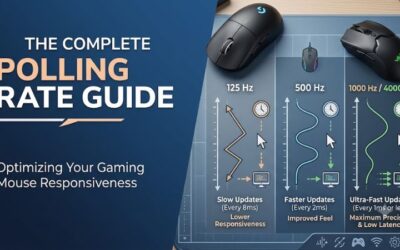
Wireless peripherals require stable radio frequency transmission to match the report rates of corded controllers. Low-latency 2.4 GHz USB receivers process movement data at 1000 Hz, maintaining steady cursor motion. Gamers selecting a wireless gaming mouse under 50 will find the Logitech G305 LIGHTSPEED an ideal option for desktop play.
Battery management systems determine how long a wireless device operates before requiring a power swap or recharge. Single AA battery configurations simplify power management by eliminating built-in lithium decay over time. Standard high-capacity alkaline batteries deliver up to two hundred fifty hours of active performance during extended gameplay sessions on desktop monitors.
Ultra-Lightweight Shells and Paracord Cables
Reducing total peripheral weight lowers wrist friction and physical strain during rapid movements. Ultra-light construction under sixty grams enables faster flick shots in first-person shooters. Gamers hunting for an ultra-light gaming mouse under 50 paired with flexible cabling should evaluate the HyperX Pulsefire Haste.
Flexible fabric-sleeved cables minimize surface drag against mouse pads compared to stiff rubber cords. Honeycomb pattern shells reduce frame weight while keeping structural integrity solid across intense gaming sessions. Using PTFE mouse feet alongside low-drag cables ensures smooth gliding performance across both cloth and hard gaming surfaces on PC setups.
Multi-Platform Compatibility and Onboard Memory
Onboard memory profiles allow users to save DPI settings and custom button assignments directly to the device microchip. Storing profiles locally ensures custom settings persist when plugging peripherals into different systems without background software running. The SteelSeries Rival 3 offers robust onboard storage, making it a great pick for cross-platform LAN tournament play.
Broad operating system support ensures full plug-and-play functionality across Windows, macOS, and Linux systems. While full custom software suites unlock granular lighting effects, basic hardware adjustments like onboard DPI toggling function universally. Cross-platform compatibility guarantees stable tracking performance regardless of the host operating system or driver availability.
Top Gaming Mouse Under 50 Picks
Selecting a reliable gaming mouse under 50 requires comparing key specifications like sensor DPI, weight, and connectivity against personal grip preferences. The following comparison table outlines the primary attributes, system requirements, and hardware tradeoffs for four top budget models. Evaluating these details helps match peripherals to specific gaming setups and play styles.
| Product | Best For | Key Spec | Compatibility | Watch Out For |
| Razer Cobra | Best Overall | 58g weight, 8,500 DPI sensor | Windows 10, Windows 11 | Compact shell for large hands |
| SteelSeries Rival 3 | Best Value | 77g weight, 8,500 DPI sensor | Windows, macOS, Linux | Stiff rubber cable material |
| Logitech G305 LIGHTSPEED | Best Wireless | 99g weight, 12,000 DPI sensor | Windows, macOS, ChromeOS | AA battery adds rear weight |
| HyperX Pulsefire Haste | Best Lightweight | 59g weight, 16,000 DPI sensor | Windows, Xbox, PlayStation | Perforated shell collects dust |
Razer Cobra
The Razer Cobra is engineered for fast-paced competitive players who prioritize low click latency and lightweight handling. Featuring a 58-gram symmetrical body, this peripheral houses an 8,500 DPI optical sensor capable of tracking up to 300 inches per second. Optical switches rated for 90 million actuations ensure instantaneous registration without physical contact degradation over time.
A minor downside is the narrow chassis design, which may feel cramped for users with large hands using a palm grip style. Players who demand a wide, full-sized right-handed shell should avoid this compact peripheral. However, fingertip and claw grip users seeking high-speed tracking on Windows PCs will find this model exceptionally agile during fast matches.
SteelSeries Rival 3
The SteelSeries Rival 3 targets players seeking a versatile gaming mouse under 50 dollars with cross-platform support. Built around the TrueMove Core optical sensor with 8,500 DPI precision, it includes 60-million-click mechanical switches. Incorporating onboard memory lets users carry custom DPI profiles between Windows, macOS, and Linux systems.
One noticeable drawback is the stiff rubber cord, which creates slight drag on cloth surfaces without a cable bungee. Gamers wanting wireless freedom or ultra-flexible paracord lines should look elsewhere. Nevertheless, players wanting a durable entry-level mouse with three-zone RGB illumination will appreciate its balanced construction and affordable entry cost.
Logitech G305 LIGHTSPEED
The Logitech G305 LIGHTSPEED is designed for players seeking wireless movement without experiencing input latency. It utilizes the HERO optical sensor delivering 12,000 DPI tracking alongside 1000 Hz polling over a 2.4 GHz USB adapter. Operating on a single AA battery, it achieves up to 250 hours of continuous gaming performance on Windows and macOS desktops.
A key limitation is the 99-gram operating weight with battery installed, which creates a noticeable rearward weight distribution. Esports players looking for sub-60-gram ultra-light gear should choose a lightweight wired model instead. However, gamers desiring reliable wireless tracking without battery charging cables will find this peripheral exceptionally convenient.
HyperX Pulsefire Haste
The HyperX Pulsefire Haste caters to esports enthusiasts who demand minimal physical resistance during rapid mouse movements. Featuring a honeycomb shell design weighing just 59 grams, it houses a PixArt PAW3335 sensor with up to 16,000 DPI sensitivity. TTC Golden micro dustproof switches rated for 80 million clicks provide crisp tactile feedback across long gaming sessions.
The open honeycomb frame allows dust and debris to collect inside the casing over extended desktop use. Gamers playing in dusty environments or drinking near their desks should consider solid-shell alternatives. Despite this structural trade-off, competitive shooter players using Windows or console setups gain exceptional speed and low cable friction during matches.
Frequently Asked Questions
Addressing common questions regarding entry-level peripherals helps buyers choose a gaming mouse under 50 dollars for their needs. Clarifying sensor performance, wireless latency, switch durability, and software dependencies ensures realistic expectations. The following responses detail key technical considerations for budget controllers.
Are budget gaming mice reliable for competitive esports?
Yes, modern budget gaming mice deliver sensor precision and click responsiveness fully suitable for competitive esports play. Current entry-level optical sensors handle high tracking speeds without spin-outs or unwanted smoothing. Choosing a model with stable 1000 Hz USB polling ensures input latency matches high-end tournament controllers on PC setups.
Hardware quality in budget controllers has advanced significantly through improved switch designs and lighter materials. High acceleration tolerances up to 40G prevent sensor tracking loss during rapid hand flicks across large mouse pads. Gamers can comfortably compete in fast multiplayer titles without experiencing sensor tracking limitations or input delay.
Is a wired mouse better than a wireless mouse below 50 dollars?
Wired gaming mice under 50 dollars offer lower overall weight and lower prices compared to wireless models in the same price tier. Corded controllers eliminate battery replacements and internal power components, allowing manufacturers to include lighter shells and premium optical switches. However, modern 2.4 GHz wireless devices provide equal tracking speed without cable drag.
Choosing between wired and wireless options depends on whether cable clutter or total physical weight matters more to your gaming setup. Wired models deliver consistent power without monitoring battery levels during long matches. Meanwhile, wireless variants provide complete freedom of movement at the cost of slight weight additions from AA battery compartments.
How long do primary switches last on entry-level gaming mice?
Primary switches on a gaming mouse under 50 typically last between sixty million and ninety million clicks under normal usage conditions. Optical switches offer longer lifespans because they trigger via infrared light beams rather than physical metal contact plates. Mechanical switches remain durable but can develop double-clicking errors over time.
Switch longevity depends heavily on physical button construction and environmental factors like dust accumulation. Sealed optical micro switches prevent airborne particles from degrading contact points, maintaining consistent actuation force. Selecting controllers with high click ratings ensures years of reliable button actuation without mechanical failure on PC platforms.
Do budget gaming mice require custom software to change DPI settings?
No, most budget gaming mice feature a dedicated hardware DPI cycle button that changes tracking sensitivity without installing software. Physical DPI buttons allow instant adjustment across pre-set sensitivity levels directly on the device microchip. Companion software suites are only required when remapping buttons or setting custom RGB lighting patterns.
Integrated onboard memory chips store custom settings locally once configured in desktop companion apps like Logitech G HUB or Razer Synapse. This feature enables peripherals to retain user preferences when connected to secondary PCs or console hardware. Gamers can plug their device into any computer while preserving custom DPI settings without background software.
Final Thoughts
Finding an effective gaming mouse under 50 dollars comes down to choosing between ultra-light wired agility and cable-free convenience. High-end optical sensors and durable switch designs now exist across affordable price points, ensuring responsive control on Windows PCs. Matching peripheral weight and shape to your grip style guarantees a satisfying gaming upgrade.