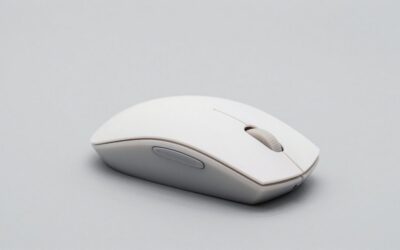
Claw grip players steer with curled fingers and a rear shell that presses into the base of the palm, so the real decision is not raw sensor power but how a light shell is shaped: where the hump sits, how narrow the waist is, and whether the weight helps flicks without making stops feel twitchy. A mouse that is merely light can still fight a claw grip if its hump peaks too far forward or its sides flare where curled fingers need to pinch.
This roundup serves aggressive claw players with small to medium hands, relaxed claw players stepping up from a heavier mouse, and FPS players who want a cable-free setup. Every pick is a wireless model whose name and specifications come from its Amazon product page, and each one weighs 55 grams or less where the listing states a weight.
Quick Picks
As an Amazon Associate we earn from qualifying purchases.
| Product | Best for | Key spec from title |
|---|---|---|
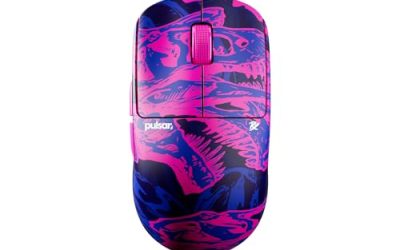
| Pulsar X2H Mini Super Clear Limited Edition | Aggressive claw grip on small to medium hands | 52 g shell with a high rear hump |
| Pulsar X2 v3 Mini | Claw players chasing the newest sensor | XS-1 sensor at 32,000 DPI |
| Attack Shark X3 | Flagship sensor specs on a tight budget | 49 g with a PAW3395 sensor |
| VGN Dragonfly F1 Pro Max | Long sessions between charges | 130-hour rated battery life |
| HyperX Pulsefire Haste 2 Core Wireless | Swappable AAA power and a big-brand shell | Dual wireless with 100-hour AAA runtime |
How to Choose
Shell shape and hump placement
For claw grip, the hump does the steering. A rear hump that peaks toward the back of the shell gives curled fingers a wall to push against, which stabilises micro-adjustments and makes stopping after a flick more predictable. A narrow waist matters just as much, because claw fingers pinch the sides rather than rest on them. Symmetrical shells with a raised rear, like the X2H Mini profile, suit aggressive claw, while flatter symmetrical shells suit a relaxed claw that sometimes drifts toward fingertip control.
Weight and balance
Every mouse here sits between 49 and 55 grams where the listing states a weight, and that range changes how a claw grip feels over a long session. Lighter shells reduce the effort of constant small corrections and make lift-off resets easier, but they also punish a tense grip because there is less mass damping hand tremor. Balance matters too: a slightly rear-weighted shell pairs naturally with claw contact at the palm base, while a front-heavy mouse can feel like it pulls away from curled fingers during slow tracking.
Sensor and polling rate
All five picks use optical sensors rated far beyond what any player can outrun, from 12,000 DPI on the HyperX Custom Core to 32,000 DPI on Pulsar’s XS-1, so sensor choice should come down to consistency rather than headline numbers. Polling rate is the more practical divider. A 1,000 Hz connection already reports every millisecond, while the 4K and 8K modes offered here need a separate high-polling receiver and mainly reward high-refresh monitors. Check what is in the box before assuming the fastest mode works out of the box.
Battery life and connectivity
Rated battery life in this group runs from 100 to 200 hours depending on the model and mode, but the figures are measured at standard polling, and high-polling modes drain a cell far faster. Decide how you will actually play: 2.4 GHz wireless for gaming, Bluetooth as a handy second connection for a laptop, and a wired mode for charging mid-session. One pick runs on a swappable AAA cell instead of a rechargeable pack, which removes charge anxiety entirely if you keep spares in the desk drawer.
The 5 Best Options
Pulsar X2H Mini Super Clear Limited Edition

The X2H Mini is the claw specialist of this group because its shape was drawn around the grip: a high rear hump and a narrower waist than the standard X2 mini, in a compact symmetrical shell that leaves room for curled fingers to work. At a listed 52 grams it stays easy to flick, and the PixArt PAW3395 sensor with optical switches gives it flagship tracking without mechanical switch lag. This clear limited edition carries the same listing specifications as the standard X2H Mini, so it suits players who want the most claw-focused shape here and like the see-through shell.
Specs
- Sensor: PixArt PAW3395 optical
- Maximum DPI: 26,000
- Tracking speed: 650 IPS
- Acceleration: 50 G
- Polling rate: 1,000 Hz, 4K polling ready with a separate dongle
- Switches: Optical switches
- Weight: 52 g
- Shape: Symmetrical with a high rear hump and narrow waist
- Battery life: not stated
- Model number: PX2H1CB
Best for: Aggressive claw players with small to medium hands who want maximum rear-hump support.
Watch out for: The 4K mode needs a separate Pulsar dongle, and the mini shell will feel cramped if your hands are large.
ASIN: B0D6QTKYCJ
Pulsar X2 v3 Mini

The X2 v3 Mini takes the flatter, lower X2 profile and updates the internals with Pulsar’s XS-1 flagship sensor, rated at 32,000 DPI and 750 IPS, plus optical switches and a Pulsar Blue encoder. That flatter shape suits a relaxed claw or a claw-fingertip hybrid better than the high-humped X2H Mini, because the rear of the shell stays out of the way until you pull the mouse back into your palm. It is also the only pick here that is 8K polling ready, which makes it the forward-looking choice for players building around a high-refresh setup.
Specs
- Sensor: Pulsar XS-1 optical
- Maximum DPI: 32,000
- Tracking speed: 750 IPS
- Acceleration: 50 G
- Polling rate: 1,000 Hz standard, 8K polling ready with a separate dongle
- Switches: Optical switches
- Shape: Symmetrical, low-profile mini shell
- Weight: not stated
- Battery life: not stated
- Color: White
Best for: Relaxed claw and hybrid grip players who want the newest sensor and an 8K upgrade path.
Watch out for: The 8K dongle is sold separately, and the listing data captured for this model does not state a weight, so confirm it on the page before ordering.
ASIN: B0DLWJKVK1
Attack Shark X3

The Attack Shark X3 is the value outlier: a listed 49 grams, the lightest shell in this roundup, built around the same PixArt PAW3395 sensor family used by far pricier mice. Its small symmetrical body and tri-mode connectivity make it easy to recommend to claw players who switch between a gaming PC and a laptop, because Bluetooth covers the second machine while the 2.4 GHz link handles play. The listing also rates it for up to 200 hours of battery life, the longest claim here, although that figure applies to lighter use modes rather than continuous high-polling play.
Specs
- Sensor: PixArt PAW3395 optical
- Maximum DPI: 26,000
- Tracking speed: 650 IPS
- Acceleration: 50 G
- Polling rate: 1,000 Hz
- Switches: Kailh GM8.0
- Weight: 49 g
- Connectivity: 2.4 GHz wireless, Bluetooth and wired
- Battery life: Up to 200 hours as listed
- Color: Black
Best for: Budget-minded claw players who want flagship tracking and the lightest shell here.
Watch out for: Software and support come from a smaller brand, so check the listing’s stated warranty and return terms before buying.
ASIN: B0D4QP81J8
VGN Dragonfly F1 Pro Max

The Dragonfly F1 Pro Max pairs a 55 gram symmetrical shell with the longest practical runtime in this group, a listed 130 hours of playtime, which matters to claw players who practise daily and forget to charge. Its PAW3395 sensor is rated to 26,000 DPI, and the listing states 4,000 Hz polling support, putting it ahead of the 1,000 Hz-only models without jumping to a separate 8K ecosystem. The shape is a safe middle ground: a medium symmetrical body with enough rear slope for claw contact, in a white finish that shows desk dust less than glossy black shells do.
Specs
- Sensor: PixArt PAW3395 optical
- Maximum DPI: 26,000
- Polling rate: Up to 4,000 Hz as listed
- Weight: 55 g
- Connectivity: 2.4 GHz wireless and wired
- Battery life: Up to 130 hours as listed
- Shape: Symmetrical
- Color: White
Best for: Daily claw players who want high polling support and the fewest charging breaks.
Watch out for: Confirm which receiver is included for the 4,000 Hz mode, since high-polling setups vary by production run.
ASIN: B0F8J9BRKP
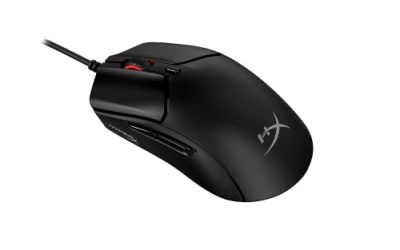
HyperX Pulsefire Haste 2 Core Wireless

The Haste 2 Core Wireless is the mainstream option, a symmetrical HyperX shell that runs on a single AAA battery instead of a rechargeable cell. That trade shapes everything about it: the listed operating weight is 70 grams with the battery fitted, the heaviest here, but a spare AAA restores full power in seconds and the listing rates runtime at up to 100 hours. Its HyperX Custom Core sensor tops out at 12,000 DPI, which is lower on paper than the flagship sensors above yet still far beyond the settings claw players actually use in game.
Specs
- Sensor: HyperX Custom Core optical
- Maximum DPI: 12,000
- Polling rate: 1,000 Hz
- Buttons: 6
- Weight: 70 g with battery, 60 g without
- Connectivity: 2.4 GHz wireless and Bluetooth
- Battery: 1 AAA battery, up to 100 hours as listed
- Color: Black
Best for: Claw players who prefer swappable batteries and a familiar big-brand shape.
Watch out for: At 70 grams with the battery it gives up the ultralight feel of the other picks, and the AAA cell is not rechargeable in the mouse.
ASIN: B0D2BJTX1L
Which One Fits Your Situation
You claw hard with curled fingers and a planted palm base
Pick the Pulsar X2H Mini Super Clear Limited Edition. Its high rear hump is the only shape here designed specifically to fill the back of a clawed hand, and the narrow waist gives curled fingers a secure pinch point. The flatter mice in this list will feel vague by comparison if your grip depends on that rear contact.
You play competitive FPS and care about latency headroom
Start with the Pulsar X2 v3 Mini if you plan to add the 8K dongle, or the VGN Dragonfly F1 Pro Max if you want 4,000 Hz support from a more conventional setup. Both pair flagship-class sensors with high-polling paths, while the 1,000 Hz models here remain perfectly serviceable on standard monitors.
You practise daily and hate thinking about charging
The VGN Dragonfly F1 Pro Max, with its listed 130-hour playtime, is the rechargeable pick that asks the least attention. If even that sounds like too much upkeep, the HyperX Pulsefire Haste 2 Core Wireless removes charging from the routine entirely: swap the AAA cell and keep playing, at the cost of extra weight.
You split time between a gaming PC and a laptop
Choose the Attack Shark X3 or the HyperX Pulsefire Haste 2 Core Wireless, the two tri-mode and dual-wireless picks here. Use the 2.4 GHz receiver on the gaming PC for play, then switch to Bluetooth on the laptop for work or travel, without carrying a second mouse or re-pairing a single connection every time.
Common Mistakes
- Buying by weight alone and ignoring hump placement, which decides whether a claw grip actually locks in.
- Assuming 4K or 8K polling works out of the box when several of these mice need a separate high-polling receiver.
- Comparing battery ratings without checking the mode, since high-polling play drains a battery far faster than the rated figure.
- Choosing a mini shell for large hands, which forces fingers to over-curl and causes cramping in long sessions.
- Treating maximum DPI as a quality score, when every sensor here already exceeds the settings players use.
Frequently Asked Questions
Is lighter always better for a claw grip?
No. A lighter shell makes flicks and lift-off resets easier, but it also removes the mass that steadies a tense grip. Most claw players settle somewhere in the 49 to 60 gram band covered here, where the mouse still feels planted against the palm base. If your aim feels jittery on an ultralight mouse, a few extra grams can calm it down.
What mouse size suits a claw grip best?
Short to medium shells usually suit claw grip best, because curled fingers need the rear of the mouse to meet the palm without pushing the hand flat. Mini models like the two Pulsar picks fit small to medium hands well. Players with large hands should look at medium symmetrical shells instead, and check the listed length against their current mouse before ordering.
Does polling above 1,000 Hz make a visible difference?
It can, but the gains are subtle and depend on the rest of the setup. Higher polling smooths cursor movement most clearly on high-refresh monitors, and it shortens the delay between reports. The trade-off is battery life and, on several picks here, a separate receiver purchase. For most players, a stable 1,000 Hz connection remains the sensible default for everyday ranked play.
How much battery life should a wireless claw mouse have?
Aim for a rating of at least 70 to 100 hours at standard polling if you play daily, which covers roughly two to three weeks between charges for most people. Remember that ratings assume lighter modes: high-polling play can cut real runtime dramatically. If charging annoys you, the AAA-powered HyperX pick trades a little weight for instant battery swaps instead.