🛒 Best Price Today on Amazon
Prime members get fast, free shipping on everything above, plus member-only deals. New members get a 30-day free trial — cancel anytime.
Upgrading your display setup does not mean spending a fortune on flagship desktop hardware. Choosing the best monitor under 300 allows PC players to experience smooth motion, sharp resolutions, and rapid response times without compromise. Modern displays combine high refresh rates with vibrant colors for immersive visual performance.
How to Choose a Gaming Monitor Under 300
Selecting a display in this price category requires evaluating key panel specifications, motion capabilities, and physical connectivity options. Buyers should match their target screen resolution with their graphics card capability to maintain high framerates in demanding games. The best monitor under 300 balances speed with vivid picture quality.
High Contrast and Mini LED Local Dimming
High contrast panels significantly improve dark scene presentation in modern titles by deep background rendering. Mini LED backlighting technology uses localized dimming zones behind the LCD panel to increase dynamic contrast ratios. This enables true high dynamic range performance without the elevated pricing of organic light emitting diode screens.
Finding the best monitor under 300 for HDR gaming leads directly to Mini LED panel options like the AOC Q27G3XMN. The 336 individual dimming zones help prevent grey washed-out shadow detail in dark environments. Connecting via DisplayPort 1.4 ensures full bandwidth support for high dynamic range color processing at native refresh rate.
Balanced 1440p IPS Motion and Ergonomics
In-plane switching panels remain a favored choice for competitive players due to consistent color output and wide viewing angles. A 27-inch display with 2560×1440 resolution provides an optimal pixel density of roughly 109 pixels per inch. This delivers sharp text rendering alongside detailed gaming visuals without overwhelming midrange graphics cards.
Displays such as the Dell G2724D demonstrate how fast response times can minimize motion blur during rapid mouse swings. Ergonomic adjustment capability is equally critical, as height, tilt, and swivel options prevent neck strain during long gaming sessions. VESA mounting support provides flexible installation on custom monitor arms.
Integrated KVM Switching for Hybrid Work
Hybrid desktop setups often require sharing a single display and peripheral collection between a gaming PC and a laptop. Displays featuring integrated keyboard, video, and mouse switches streamline this workflow without requiring external hardware hubs. Users can toggle input sources while maintaining control through one keyboard and mouse pair.
Models like the Gigabyte M27Q Rev 2.0 include a dedicated hardware switch alongside USB Type-C connectivity with DisplayPort Alt Mode. This configuration allows clean cable management while supplying display video signals directly from modern laptops. Ensure your laptop supports DisplayPort Alt Mode over USB Type-C for full functionality.
High Refresh Rate Esports Motion Clarity
Competitive esports titles like Counter-Strike 2 demand high refresh rates to minimize input latency and motion clarity artifacts. Moving from standard 60Hz displays to 240Hz monitors drastically reduces motion blur and improves target tracking. High frame rates provide real-time visual feedback that allows players to react faster in competitive matches.
Products like the ViewSonic XG2431 utilize specialized backlight strobing features to achieve exceptional motion clarity at 1080p resolution. Blur Busters certification verifies that backlight strobing functions without introducing severe crosstalk or unwanted flickering. High refresh rates require a capable processor to push frames reliably.
Top Monitor Picks Under 300 Dollars
This selection highlights top performing displays across distinct budget tiers based on verified manufacturer specs and third-party benchmarks. Each model addresses specific player needs, ranging from Mini LED high dynamic range visuals to competitive high refresh rates. Evaluating these options helps secure the best monitor under 300 for your desktop.
| Product | Best For | Key Spec | Compatibility | Watch Out For |
| AOC Q27G3XMN | Best Overall | 27″ 1440p 180Hz Mini LED | DP 1.4 / HDMI 2.0 | Narrower VA viewing angles |
| Dell G2724D | Best Value | 27″ 1440p 165Hz Fast IPS | DP 1.4 / HDMI 2.1 | Mediocre HDR performance |
| Gigabyte M27Q Rev 2.0 | Best For Work and Play | 27″ 1440p 170Hz IPS KVM | DP 1.2 / HDMI 2.0 / USB-C | 10W USB-C power delivery limit |
| ViewSonic XG2431 | Best For Competitive Esports | 24″ 1080p 240Hz IPS Strobing | DP 1.2 / HDMI 2.0 | Lower 1080p pixel density |
AOC Q27G3XMN
Players seeking immersive high dynamic range visuals should select the AOC Q27G3XMN. It features a 27-inch 2560×1440 VA panel with 336 Mini LED local dimming zones and an overclocked 180Hz refresh rate. Peak brightness exceeds 1000 nits, enabling true HDR visual output with deep contrast ratios. AMD FreeSync Premium prevents screen tearing on AMD GPUs.
The main weakness of this model is narrower viewing angles inherent to VA panel technology, along with mild dark level response trailing. Users who frequently view their screen from off-center angles or require color-critical graphic editing should choose an IPS alternative instead. DisplayPort 1.4 is required to run 1440p at 180Hz with full 10-bit color.
Dell G2724D
Gamers prioritizing balanced color performance, wide viewing angles, and motion clarity will find exceptional value in the Dell G2724D. As a top contender for the best monitor under 300, it provides a 27-inch 1440p Fast IPS panel with a 165Hz refresh rate. NVIDIA G-Sync Compatible and AMD FreeSync Premium certifications ensure smooth VRR playback.
A notable limitation of this display is its modest 1000:1 static contrast ratio, which causes dark room black levels to appear slightly grey. Players who primarily play cinematic games in dark environments may prefer a Mini LED option. HDMI ports support up to 144Hz at 1440p resolution, so use DisplayPort 1.4 on your graphics card for maximum refresh rate.
Gigabyte M27Q Rev 2.0
Users who divide their desktop time between work laptops and gaming rigs should choose the Gigabyte M27Q Rev 2.0. This 27-inch 1440p Fast IPS monitor offers a 170Hz refresh rate alongside a built-in hardware KVM switch. Finding the best monitor under 300 with dedicated multi-device switching capabilities makes desktop setup cable management far simpler.
Its primary drawback is that the USB Type-C port delivers only 10W of power, which cannot keep high-power work laptops fully charged during heavy use. Buyers requiring high wattage single-cable charging will need a separate power adapter connected to their laptop. Connect via DisplayPort for 170Hz playback or HDMI 2.0 for 144Hz on desktop PCs.
ViewSonic XG2431
Competitive shooters requiring maximum frame fluidity should consider the ViewSonic XG2431. This 23.8-inch 1080p IPS display delivers a 240Hz refresh rate paired with Blur Busters 2.0 certified PureXP backlight strobing. Third-party testing confirms exceptionally clear motion tracking for fast reflex tracking in tactical multiplayer games.
The principal downside is the lower 1080p resolution, which offers less desktop screen space and lower pixel density compared to 1440p panels. Players who prefer large cinematic single-player worlds or need extensive multitasking space should avoid 24-inch 1080p screens. Standard HDMI 2.0 or DisplayPort 1.2 ports connect easily to graphics hardware.
Frequently Asked Questions
Addressing common hardware questions helps clarify technical specifications before purchasing a new gaming monitor. Understanding panel technologies, cable bandwidth limits, and refresh rate targets prevents compatibility issues with desktop GPUs. Selecting the best monitor under 300 depends heavily on matching screen specs with hardware output.
Is 1440p Better Than 1080p For Gaming Under 300 Dollars?
Resolution choices under 300 dollars depend on screen size and graphics card performance. A 1440p display offers 78 percent more pixels than a 1080p panel, producing sharper detail on 27-inch screens. However, running games at 2560×1440 demands significantly more GPU power to maintain high frame rates compared to standard 1920×1080 resolution.
Players using entry level graphics hardware may achieve higher frame rates on a 24-inch 1080p display with a 240Hz refresh rate. Conversely, users with midrange graphics cards will benefit from the increased visual fidelity of 1440p at 165Hz. Consider your current GPU rendering capabilities before choosing your target display resolution.
Does DisplayPort or HDMI Deliver Better Refresh Rates?
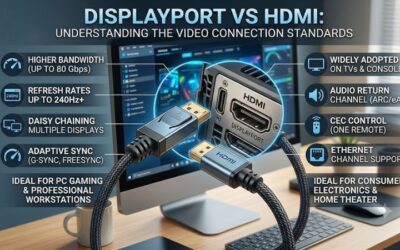
DisplayPort delivers higher bandwidth for gaming monitors and supports full variable refresh rate features on NVIDIA graphics cards. Many monitors limit HDMI connection ports to lower refresh rates or disable G-Sync compatibility over HDMI interfaces. Using a DisplayPort 1.4 cable ensures your monitor runs at its maximum rated refresh rate.
While HDMI 2.1 supports high bandwidth on modern consoles, many budget monitors use HDMI 2.0 ports capped at 144Hz at 1440p resolution. Connecting via DisplayPort prevents signal bottlenecks and enables native panel color depth without chroma subsampling. PC players should always default to DisplayPort connections when setting up displays.
What Is the Difference Between IPS and Mini LED Panels?
Mini LED panels use dense backlights to achieve superior HDR contrast, whereas standard IPS panels rely on edge lighting or global dimming. In-plane switching panels provide excellent color consistency and wide viewing angles but struggle with dark black levels. Mini LED technology solves this issue by dimming backlight zones behind dark images.
Selecting the best monitor under 300 with Mini LED backlighting provides black levels close to OLED panels without risk of permanent image burn-in. However, IPS monitors remain cheaper and offer slightly faster pixel response consistency across grey transitions. Choose IPS for competitive speed and Mini LED for high dynamic range visual depth.
Is FreeSync Compatible With NVIDIA Graphics Cards?
AMD FreeSync monitors work with NVIDIA graphics cards through G-Sync Compatible mode over DisplayPort connections. NVIDIA enabled VESA Adaptive-Sync support in GTX 10-series GPUs and newer models through GeForce drivers. Players can enable variable refresh rates in the NVIDIA Control Panel to avoid screen tearing without added lag.
To use Adaptive-Sync on an NVIDIA GPU, connect the monitor using a DisplayPort cable rather than an HDMI connection. Navigate to the NVIDIA Control Panel display settings and toggle variable refresh rate support for your specific display model. This feature synchronizes the monitor refresh rate directly with GPU framerate output.
Final Thoughts
Selecting the best monitor under 300 comes down to prioritizing either motion speed, contrast depth, or multi-device utility. Modern display options deliver outstanding performance for PC gaming setups without requiring extreme budgets. Matching panel specifications with your target gaming genres ensures long-term satisfaction.