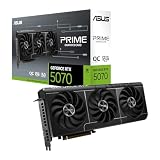
🛒 Best Price Today on Amazon
Prime members get fast, free shipping on everything above, plus member-only deals. New members get a 30-day free trial — cancel anytime.
Graphics card buying guide details everything required to select ideal computer hardware without spending too much money. Shopping for a video card on Amazon can feel overwhelming due to complex technical specifications and endless product options. This manual clarifies key features so you can purchase the finest component for gaming.
How to Choose the Right Graphics Card
Selecting a new video card requires evaluating several technical factors to ensure optimal system performance and value. This graphics card buying guide outlines critical elements like memory bandwidth, core architecture, power draw, and physical size. Understanding these factors prevents bottlenecking and guarantees a smooth gameplay experience.
Target Display Resolution
Your monitor display resolution dictates the graphical processing power required for fluid framerates. Playing games at 1080p resolution demands far less processing horsepower than rendering imagery at 1440p or native 4K. Choosing a card tailored specifically to your monitor prevents unnecessary spending while maintaining sharp visuals.
Gamers utilizing standard HD displays can save money by selecting entry level options that easily maintain sixty frames per second. High refresh rate monitors running at 1440p require mid range hardware capable of pushing dense pixel counts. Enthusiasts targeting pristine 4K resolution must invest in flagship graphics processing hardware.
Video Memory Capacity
Video Random Access Memory stores texture files and visual assets needed for real time rendering. Modern titles demand larger memory pools to load detailed environments and high definition textures smoothly. Running out of dedicated video memory causes severe framerate stuttering and degraded visual fidelity during intense gaming sessions.
A minimum of eight gigabytes is essential for budget gaming builds running contemporary titles at 1080p resolution. Buyers seeking long term stability should reference a graphics card buying guide to identify models offering twelve or sixteen gigabytes. Ample VRAM ensures your setup handles upcoming demanding game releases without performance drops.
Power Requirements and Physical Dimensions
Installing a modern graphics processor requires sufficient power supply capacity and proper electrical connectors. High performance components consume substantial wattage, often demanding a power supply unit rated for seven hundred watts or higher. Checking system power capabilities prior to purchase avoids stability issues and system crashes.
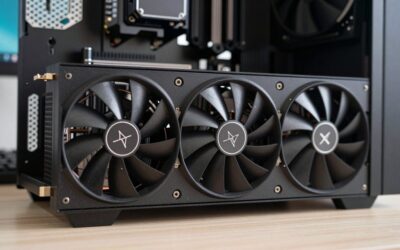
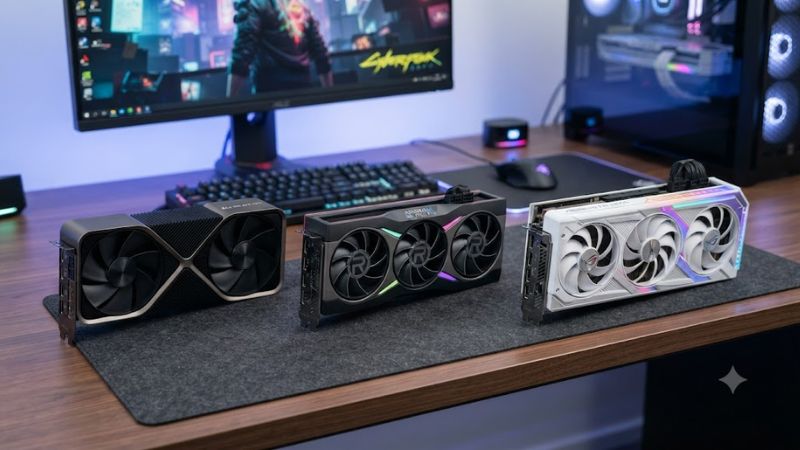
Physical dimensions also present critical constraints when installing new components inside standard computer chassis. Triple fan cooling designs frequently measure over three hundred millimeters in length and occupy three expansion slots. Measuring internal cabinet space carefully ensures your chosen hardware fits comfortably inside your desktop.
Thermal Performance and Cooling Solutions
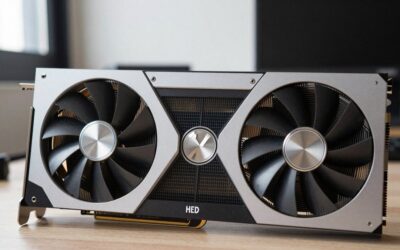
Efficient thermal management maintains stable clock speeds and extends the overall lifespan of electronic components. Graphics cards utilize various cooling implementations, including dual fan setups, triple fan arrays, and liquid cooling systems. Effective heat dissipation prevents thermal throttling during prolonged intensive workload sessions.
Acoustic noise levels represent another vital consideration when selecting suitable desktop hardware components. Open airflow designs keep temperatures low but can produce audible noise under heavy workloads. Consulting a reliable graphics card buying guide helps buyers identify whisper quiet options that maintain cool operating temperatures under load.
Top Picks for Every Gamer and Creator
Finding top rated components on Amazon requires balancing total cost against real world gaming performance. Following this graphics card buying guide section simplifies your search by highlighting outstanding choices across various price points. Each selection offers exceptional build quality, reliable driver support, and impressive frame output.
NVIDIA GeForce RTX 4070 Super
This versatile mid range option suits mainstream gamers who desire high framerates at 1440p resolution. Packed with twelve gigabytes of fast VRAM, it handles demanding ray tracing tasks and advanced spatial scaling effortlessly. Real world testing proves it delivers exceptional efficiency, though high pricing remains a primary drawback for budget buyers.
Content creators and enthusiasts will appreciate the strong CUDA core performance for video rendering and 3D modeling tasks. Advanced DLSS technology provides impressive frame generation capabilities that dramatically boost smoothness in supported titles. It stands out as an excellent overall choice for balanced high performance computing setups.
AMD Radeon RX 7800 XT
Designed for value conscious PC builders, this model delivers massive raw rasterization power at a competitive price point. Featuring sixteen gigabytes of memory, it easily powers high refresh rate gaming setups operating at 1440p resolution. Prospective buyers seeking high frame rates without excessive premium costs will find great value here.
While rasterization speed remains top tier, ray tracing performance lags slightly behind competing alternatives. Nevertheless, checking a graphics card buying guide highlights this model as a top value contender on Amazon today. Generous memory capacity ensures great longevity, making it a smart investment for forward thinking budget builders.
NVIDIA GeForce RTX 4060
Ideal for casual gamers and entry level builders, this compact option excels at delivering smooth 1080p performance. Extremely low power consumption allows seamless integration into systems equipped with modest power supply units. Main drawbacks include a modest eight gigabyte memory buffer that limits native high resolution gaming flexibility.
Despite memory limitations, full access to DLSS frame generation technology allows remarkable performance boosts in modern titles. Quiet operation and compact physical dimensions make it perfect for smaller desktop enclosures. It represents a practical choice for budget conscious users prioritizing low energy draw and cool running temperatures.
AMD Radeon RX 7600
Targeted at standard HD gaming setups, this budget friendly component provides solid performance for competitive esports games. It delivers fluid framerates in popular multiplayer titles without requiring expensive system upgrades or massive power supplies. Limited VRAM capacity and modest ray tracing capabilities are its main structural trade offs.
Gamers building cost effective systems will appreciate the impressive value proposition offered by this capable hardware unit. Utilizing a current graphics card buying guide confirms that this model delivers excellent cost per frame metrics for 1080p gaming. It serves as an accessible entry point for newcomers entering the PC gaming space.
| GPU Model | Ideal Resolution | Memory Size | Major Advantage |
| NVIDIA GeForce RTX 4070 Super | 1440p / 4K | 12 GB GDDR6X | Superior DLSS and ray tracing performance |
| AMD Radeon RX 7800 XT | 1440p | 16 GB GDDR6 | Generous VRAM and excellent rasterization |
| NVIDIA GeForce RTX 4060 | 1080p | 8 GB GDDR6 | Low power draw and frame generation support |
| AMD Radeon RX 7600 | 1080p | 8 GB GDDR6 | Affordable pricing for competitive esports |
Frequently Asked Questions
Navigating technical specifications raises common questions regarding component compatibility, pricing, and system upgrades. This comprehensive graphics card buying guide section addresses crucial questions to help shoppers make confident buying decisions on Amazon. Clear answers eliminate confusion and streamline your purchasing journey.
How Much VRAM Do You Need for Modern Games?
Eight gigabytes of video memory represents the current baseline requirement for modern games running at standard 1080p resolution. Demanding titles utilizing high resolution texture packs benefit significantly from twelve gigabytes or more. Selecting adequate memory capacity prevents annoying micro stuttering and temporary frame drops.
Gamers planning to play at 1440p or 4K resolutions should prioritize buying hardware with sixteen gigabytes of memory. Higher VRAM capacities ensure smooth gameplay performance when activating demanding graphical settings like ray tracing. Investing in sufficient memory helps safeguard your system against rapid technological obsolescence.
Is Ray Tracing Essential for PC Gaming?
Ray tracing enhances lighting realism, dynamic shadows, and realistic reflections, creating immersive visual environments in supported titles. While visual improvements are striking, activating ray tracing reduces overall framerates significantly on mid range hardware. It remains an optional graphical luxury rather than a strict necessity.
Gamers who prioritize maximum framerates in competitive online shooters often disable ray tracing features entirely to minimize latency. However, narrative driven single player titles gain noticeable visual depth when realistic ray tracing features are enabled. Dedicated hardware accelerators inside modern GPUs make these effects usable.
Should You Upgrade Your Power Supply Unit?
Upgrading your desktop power supply unit becomes necessary if your current unit lacks sufficient wattage or required power cables. Modern high performance graphics cards exhibit sudden transient power spikes that demand robust power delivery. Operating a powerful card on an underpowered supply risks sudden shutdowns and component damage.
Checking manufacturers wattage recommendations ensures your desktop computer maintains rock solid system stability during heavy gaming workloads. Most modern mid range configurations require a high quality power supply rated between six hundred and seven hundred fifty watts. Modular cables also assist with efficient cable management in your case.
How Long Will a New GPU Last Before Upgrading?
A quality graphics card typically maintains satisfactory gaming performance for roughly three to five years depending on personal performance standards. Mid range options reliably handle new game releases at moderate settings for several years before requiring upgrades. Premium flagship models tend to stretch usable lifespan even further.
Software scaling technologies like DLSS and FSR extend hardware longevity by artificially boosting framerates on aging graphics hardware. Adjusting graphical detail settings from ultra to medium also preserves smooth performance as new titles become more demanding. Smart settings management significantly prolongs overall hardware utility.
Final Thoughts
Selecting the perfect desktop upgrade depends on your budget, target screen resolution, and desired frame rate expectations. Reviewing this graphics card buying guide empowers you to choose ideal Amazon options tailored to your needs. Invest wisely in a balanced video card today to experience smooth gameplay and stunning visual clarity.
As an Amazon Associate we earn from qualifying purchases at no extra cost to you.




Related guide: How to choose a gaming monitor