As an Amazon Associate we earn from qualifying purchases.
- What Air Filtered Really Means in a Mini-ITX Case
- How to Choose an Air Filtered Mini-ITX Case
- Air Filtered Mini-ITX Cases Compared
- Setting Up a Filtered Mini-ITX Build for Clean Airflow
- Cleaning and Maintenance Routine
- Airflow Versus Filtration: Finding the Right Balance
- Frequently Asked Questions
- Conclusion
The best air filtered PC cases Mini ITX buyers can choose are the small chassis that keep dust out without choking airflow. In a compact case, every intake sits close to the graphics card, the CPU cooler and the power supply, so dust builds up faster and temperatures climb sooner than in a roomy tower. A good filter set changes that. It catches dust before it reaches fans and heatsinks, it slides out for a quick rinse or wipe, and it lets the case breathe well enough that cooling does not suffer.
This guide explains what air filtration really means in a Mini-ITX case, how to judge filter coverage and mesh density, which layouts work best for dusty rooms and pet owners, and how to keep a small build clean with a simple routine. It focuses on filtration first, because a case can be small, quiet and attractive while still letting dust straight onto every component.
What Air Filtered Really Means in a Mini-ITX Case
Air filtration in a PC case is not one feature. It is a system made of intake filters, panel design, fan direction and pressure. A case earns the label when most of its air intakes pass through a filter or a fine mesh, and when those filters can be removed and cleaned without taking the whole build apart.
There are three common approaches. The first is a dedicated removable dust filter, usually a fine nylon mesh in a plastic or magnetic frame, fitted over the front, top, bottom or side intake. The second is a perforated or mesh panel that acts as a coarse filter, letting air through many small holes while stopping larger dust, hair and debris. The third is a combination of the two, with a removable filter behind a mesh panel at the main intakes and perforated panels elsewhere.
Each approach has a trade-off. A fine filter catches the most dust, but it also adds resistance, so fans must work a little harder to pull the same amount of air. A coarse mesh panel flows more freely, but it lets fine dust through. A case with no filter at all flows best on day one and collects dust fastest over time. The right choice depends on the room, the pets, the floor and how often the owner is willing to clean.
In a Mini-ITX build the trade-off matters more than in a large tower. The internal volume is small, often between ten and twenty litres, and the components sit millimetres from the panels. Dust on a graphics card heatsink or a low-profile CPU cooler has less room to spread, and a clogged intake can raise temperatures quickly.
How to Choose an Air Filtered Mini-ITX Case
Check Filter Coverage at Every Intake
Start by listing every place air enters the case. A well-filtered Mini-ITX case covers the front intake, the bottom intake under the power supply or graphics card, and any side intake that feeds the CPU or graphics card. Top panels are usually exhausts, so a filter there matters less, although a top filter can help when the case sits idle and dust settles from above.
Read the specification sheet carefully. Some listings use the words dust filter loosely, and a case may be listed with that feature while its panels are only perforated. Look for the number and position of filters, and for words such as removable, washable or magnetic.
Balance Mesh Density and Airflow
Fine mesh stops more dust. Coarse mesh flows more air. The best filtered Mini-ITX cases find a middle ground, with a mesh fine enough to catch visible dust and hair but open enough that intake fans do not spin loudly to compensate.
Fan choice helps here. Larger intake fans move more air at lower speed, which reduces noise and helps push air through a filter. A single 120 mm intake fan is a common baseline in compact cases, while two 120 mm fans or a 140 mm fan give more headroom.
Favour Removable and Washable Filters
A filter is only useful if it gets cleaned. Magnetic filters lift off in seconds, which makes them the easiest to maintain. Slide-out filters under the bottom panel are also convenient, especially for a case that sits on a desk. Filters held by screws or clips take longer, but they stay secure during transport, which matters for a portable small form factor build.
Washable nylon filters can be rinsed under water and dried before refitting. Foam filters catch fine dust well but need more drying time and can restrict airflow when dirty. Metal mesh filters are durable and easy to brush clean, but they are usually coarser.
Plan for Positive Pressure
Positive pressure means intake fans push slightly more air into the case than exhaust fans pull out. The extra air escapes through small gaps and seams, which helps keep unfiltered dust from entering through those gaps. In a filtered Mini-ITX case, positive pressure is one of the most effective dust-control tools, and it costs nothing.
A simple setup is two intake fans and one exhaust fan, or one strong intake and one slower exhaust. Fan curves can be tuned in the motherboard software so intakes run slightly faster than exhausts at idle and under load.
Match Clearance Before Falling for Filtration
Filtration should not override fit. Check graphics card length and thickness, CPU cooler height, power supply format and radiator support before choosing. Most Mini-ITX cases use SFX or SFX-L power supplies, and many limit CPU cooler height to a low-profile design. A case with excellent filters is no help if the graphics card does not fit or the cooler is too tall.
Also check storage and cable space. A cramped build with cables pressed against an intake filter can block airflow and make cleaning harder. Cases with a little cable routing room behind the motherboard tray are easier to keep tidy and therefore easier to keep cool.
Think About Where the Case Will Live
The room decides how much filtration matters. A case on a carpeted floor collects more dust than one on a desk, and a home with pets or open windows needs finer and more complete filter coverage. A case in a clean office can get away with mesh panels alone, while a case in a dusty living room benefits from full removable filters.
Placement also affects cleaning access. If the case sits in a tight shelf, a bottom filter that slides out from the front is far more practical than one that needs the case to be lifted. If the case travels to LAN events or between rooms, filters that clip firmly in place are worth more than magnetic ones that can slip in a bag.
Air Filtered Mini-ITX Cases Compared
The table below compares well-known Mini-ITX designs by their approach to filtration. Confirm the current specification sheet for the exact model, because filter fittings can change between revisions.
| Case | Filtration Approach | Filter Access | Best For |
|---|---|---|---|
| Fractal Design Node 304 | Removable filters on front and side intakes | Slide-out and clip-in filters | Dusty rooms and long-term builds |
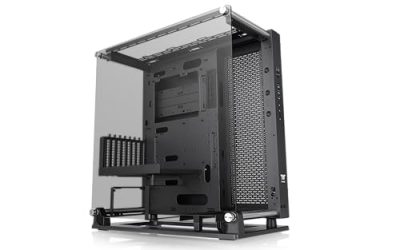
| Thermaltake Core V1 | Filtered front and side panels with mesh | Removable panel filters | Cube layouts with strong intake airflow |
| Cooler Master NR200P V2 | Filters on top and bottom intakes, mesh side panels | Removable top and bottom filters | Larger graphics cards in a small case |
| Fractal Design Terra | Perforated panels, no dedicated dust filter | No filter to remove | Clean rooms and open, ventilated desks |
| Lian Li A4-H2O | Mesh side panels, open sandwich layout | Panels lift off for cleaning | Compact water-cooled builds |
| SSUPD Meshroom S V2 | Full mesh panels on most sides | Mesh panels remove for cleaning | Flexible layouts with high airflow |
The Node 304 is the classic filtered choice. Its boxy shape leaves room for a tower-style CPU cooler and a full-length graphics card, and its filters sit at the intakes where dust enters. It is larger than many modern small form factor cases, but that size buys filter coverage and easier cleaning.
The Core V1 takes a cube approach, with a large front fan pulling air through a filtered panel and side mesh feeding the graphics card. Cube cases are easy to open and clean, and the wide front intake suits a single large fan.
The NR200P V2 is a popular middle ground. It is roomier than ultra-compact cases, it fits long graphics cards and taller coolers, and it includes filters at the top and bottom. Its side panels are mesh, which helps airflow but means fine dust can still enter through the sides.
The Terra shows why the specification sheet deserves a close read. Its perforated aluminium panels look like a filter and flow air well, but the official specification lists no dedicated dust filters, and reviews note that the panels have no filter layer behind them. That makes the Terra a strong choice for a clean, ventilated room and a weaker choice for a dusty floor-level setup. It is included here as a caution, not as a filtered pick.
The A4-H2O and the Meshroom S V2 use mesh as the filter. Their panels breathe freely and keep larger debris out, but fine dust passes through more easily than through a dedicated filter. Owners who choose these cases usually accept more frequent internal cleaning in exchange for a smaller footprint and stronger airflow.
Setting Up a Filtered Mini-ITX Build for Clean Airflow
A filtered case works best when the fans and the filters work together. Start with the intake fans. Fit them so they pull air through the filter, not around it. Check that the filter frame sits flat against the panel, with no gap at the edges where dust can slip past. A filter that bows or gaps is worse than a slightly coarser filter that seals properly.
Set the fan curves next. Intake fans should run a little faster than exhaust fans across the normal temperature range, to hold positive pressure. Avoid running exhaust fans at full speed while intakes idle, because that pulls unfiltered air through every seam. Most motherboards let the owner set a simple curve in the BIOS or in a fan utility, with intakes a step ahead of exhausts.
Cable management is part of dust control. Cables that block an intake force air to take a longer path and leave dead spots where dust settles. Route cables behind the motherboard tray where possible, tie them flat, and keep the area in front of intake fans clear.
Choose the cooler with the filter in mind. A low-profile air cooler sits close to a side intake, so a filtered side panel feeds it clean air directly. A 120 mm or 240 mm liquid cooler mounted at a filtered intake also works well, as long as the radiator does not make the filter hard to remove.
Finally, place the case well. A desk is better than a carpeted floor, and a few centimetres of clearance under the case helps the bottom filter breathe. Leave space behind the case for exhaust air to escape, and avoid pushing the case against a wall or into a closed cabinet.
Cleaning and Maintenance Routine
A filtered Mini-ITX case is easy to maintain when the routine is short and regular. The goal is to clean the filters before they clog, because a clogged filter raises temperatures and forces fans to work harder.
Every two to four weeks, lift off the magnetic filters or slide out the bottom filter and brush off the dust. A soft brush or a quick rinse under water works for nylon mesh, as long as the filter dries fully before it goes back. Do not refit a damp filter, because trapped moisture can encourage dust to stick and can affect nearby components.
Every two to three months, open the side panel and check the graphics card heatsink, the CPU cooler fins and the power supply intake. A short burst of compressed air, used in brief bursts with the fans held still, clears dust that slipped past the filters. Hold fans still while cleaning them, because spinning a fan with compressed air can damage its bearing.
Twice a year, or after a dusty season, do a deeper clean. Remove the graphics card if the owner is comfortable doing so, clean the heatsink fins, wipe the panels with a dry cloth, and check that every filter frame still seals flat. Check fan blades for dust build-up, because a dusty blade moves less air and runs louder.
Airflow Versus Filtration: Finding the Right Balance
Every filter adds some resistance, so a filtered case will always flow a little less air than the same case with the filters removed. The question is how much that matters. For most gaming and general-use builds, a clean fine filter costs only a small amount of airflow, and the benefit of clean heatsinks outweighs it. The problem starts when the filter is dirty, because resistance rises sharply as dust builds up.
Mesh panels sit at the other end of the balance. They flow freely and keep temperatures low, but they let fine dust through, which then coats heatsinks and slowly raises temperatures anyway. Over months, a mesh-only case can end up hotter than a filtered case that is cleaned regularly, because the dust inside the mesh case is harder to remove than the dust on a filter.
Room conditions shift the balance too. In a home with pets, a finer filter and a shorter cleaning interval are worth the small airflow cost. In a clean, air-conditioned room, a mesh panel and a longer interval may be enough.
Frequently Asked Questions
Do air filtered Mini-ITX cases run hotter than mesh cases?
They can run slightly hotter when the filter is dirty, because dust adds resistance and reduces airflow. With a clean filter and sensible fan curves, the difference is usually small, and a filtered case often stays cooler over months because its heatsinks stay clean. The key is regular cleaning, not removing the filter to chase a lower temperature on day one.
Are magnetic dust filters better than slide-out filters?
Magnetic filters are faster to remove, which makes them easier to clean often. Slide-out filters under the bottom panel are convenient when the case stays on a desk, and they stay in place during transport. Clip-in filters are secure but slower to remove. The best type is the one the owner will actually clean, so ease of access matters more than the fitting method.
How often should Mini-ITX case filters be cleaned?
Every two to four weeks is a good starting point for most homes, with more frequent cleaning in dusty rooms or homes with pets. Check the filter by holding it up to a light: if light struggles to pass through, it needs cleaning. Temperatures creeping up without a change in workload are another sign that the filters are clogged.
Is positive pressure really important in a small case?
Yes, because it helps filtered intakes do the work. When intake fans push slightly more air in than exhaust fans pull out, the extra air leaves through small gaps, which keeps unfiltered dust from entering through those gaps. Set intakes a little faster than exhausts and avoid running exhausts at full speed while intakes idle.
Can a mesh panel replace a dust filter?
A mesh panel stops larger dust, hair and debris, and it flows air well, but it lets fine dust through more easily than a dedicated filter. Mesh works well in a clean room with regular internal cleaning. In a dusty room, a dedicated removable filter at the main intakes gives better long-term protection for fans and heatsinks.
Conclusion
The best air filtered PC cases Mini ITX buyers can choose are the ones that match the room, the parts and the cleaning habit. Full removable filters suit dusty homes and pet owners, mesh panels suit clean rooms and owners who clean often, and a mix of the two suits most builds in between. Filter coverage, removable access, positive pressure and proper clearance matter more than size or looks alone.
Before buying, check the specification sheet for the number and position of filters, confirm graphics card and cooler clearance, and picture the cleaning routine. A case whose filters lift off in seconds will be cleaned, while a case whose filters hide behind the graphics card will not. Choose the filtered Mini-ITX case that stays clean with the least effort, and the small build will stay cooler, quieter and healthier for longer.