Our Short List of 3
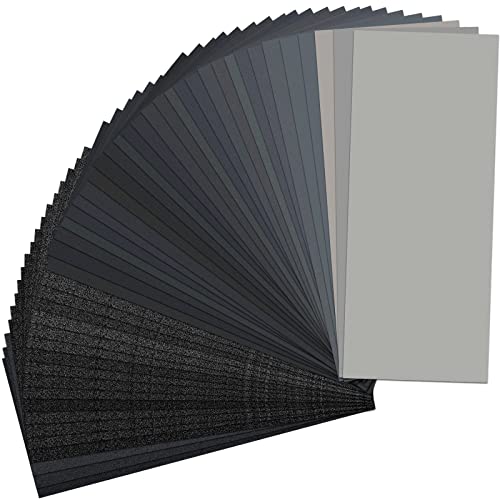
- Best for: A full case repaint, from stripping paint to a polished finish.
- 48 sheets, 16 grits from 120 to 5000, 3 sheets of each grit
- Sheet size 9 x 3.6 inches
- Silicon carbide abrasive on waterproof paper backing
- For metal, wood, plastic, and automotive sanding, wet or dry use
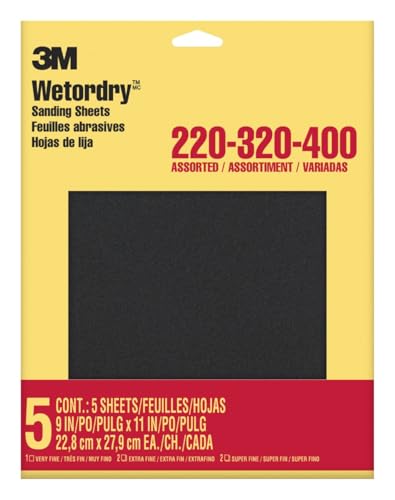
- Best for: Smoothing primer and sanding between coats of paint on case panels.
- 5 sheets per pack, assorted grits 220, 320, and 400
- Sheet size 9 in x 11 in
- Silicon carbide abrasive on waterproof paper
- For sanding between coats of varnish, lacquer, paint, and other finishes
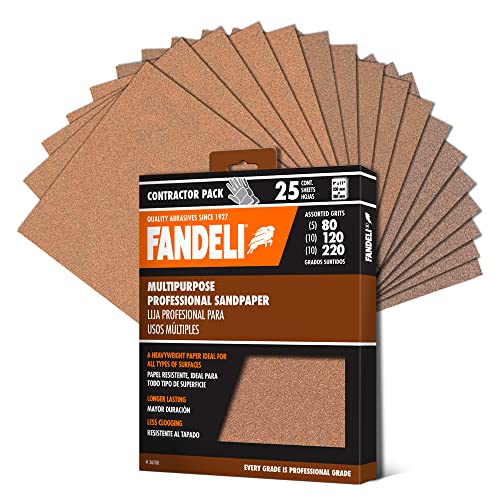
- Best for: Stripping paint, powder coat, and light rust from steel case panels.
- 25 sheets, assorted grits 80, 120, and 220
- Sheet size 9 in x 11 in
- Aluminum oxide abrasive on paper backing
- For sanding metal and wood, by hand or with an orbital sander
All 3 Picks at a Glance
| Product | Specs | Action |
|---|---|---|
| 1. YXYL 48 PCS Sandpaper, 120 to 5000 Assorted Grit |
| Check price on Amazon |
| 2. 3M Wetordry Sandpaper, 5 Sheets, Assorted Grits (220 / 320 / 400) |
| Check price on Amazon |
| 3. Fandeli Multi-Purpose Sanding Paper, Assorted Grits (80, 120, 220) |
| Check price on Amazon |
Sanding a PC case is a small job with an outsized effect on the result. Whether you are stripping a scratched side panel for a fresh coat of paint, smoothing a cut edge after a fan-hole mod, or knocking down filler before primer, the grit you choose decides how much work the next step takes. Too coarse and you leave deep scratches that show through paint; too fine and you spend an evening removing almost nothing.
The three packs below cover the whole job on steel and plastic case panels. One is a wide wet-or-dry assortment that runs from rough shaping to polishing, one is a focused fine-grit set for paint prep, and one is a classic coarse-to-medium sequence for stripping and smoothing. All three are sheet sandpaper you can cut to fit a sanding block or fold for edges and corners.
Quick Picks
As an Amazon Associate we earn from qualifying purchases
| Product | Best for | Key spec from title |
|---|---|---|
| YXYL 48 PCS Sandpaper, 120 to 5000 Assorted Grit | Full grit ladder in one pack | 48 sheets, 120 to 5000 grit, 9 x 3.6 inch |
| 3M Wetordry Sandpaper, 5 Sheets, Assorted Grits (220 / 320 / 400) | Fine paint prep between coats | 5 sheets, 9 in x 11 in, silicon carbide |
| Fandeli Multi-Purpose Sanding Paper, Assorted Grits (80, 120, 220) | Stripping and shaping steel panels | 25 sheets, 9 in x 11 in, aluminum oxide |
How to Choose
Match the grit to the stage of the job
Case work moves through stages, and each stage has a grit range that fits it. Coarse sheets from 80 to 120 grit strip paint, powder coat, and light rust from steel panels without clogging. Mid grits from 150 to 320 grit smooth the scratches left behind and level filler or primer. Fine grits from 400 upward prepare a surface for paint, and very fine grits above 1000 grit polish a finish or smooth a plastic panel to a satin sheen. Jumping from 80 straight to 600 grit wastes time, since the fine sheet cannot erase deep marks, so move up the ladder in small steps and wipe the panel clean between grits.
Choose wet or dry sanding for the panel in front of you
Wet sanding suits the later stages of case work. Water carries dust away from the sheet, keeps the abrasive cutting longer, and leaves a smoother scratch pattern on steel and aluminum, which matters when paint goes on next. Waterproof silicon carbide sheets handle this well, and a light mist from a spray bottle is enough. Dry sanding suits the early stages, when coarse aluminum oxide sheets remove paint and rust quickly. Keep in mind that steel panels can rust after wet sanding, so dry the panel fully and wipe it with a clean cloth before priming. Work outside or with the panel away from the PC itself.
Pick a sheet size and backing that fits hand sanding
Full 9 by 11 inch sheets suit flat side panels, since one sheet covers a wide area and can be cut into quarters for a sanding block. Narrower 9 by 3.6 inch strips suit edges, corners, and the inside of a case, and they fold neatly for sanding around drive bays and cable cutouts. Paper backing tears cleanly for curves but wears faster on sharp steel edges, so keep spare pieces close. Grit numbers printed on the back of each sheet make it easy to tell one grit from another once several sheets are on the bench. A simple rubber sanding block keeps pressure even across a flat panel.
Treat steel, aluminum, and plastic differently
A steel side panel tolerates coarse grit, so 80 or 120 grit is a fair place to begin stripping paint or rust. Aluminum is softer and marks more easily, so begin at 150 or 220 grit and check the surface often. Plastic front panels and trim scratch with little effort, so begin at 220 grit or finer and let the sheet do the work rather than pressing hard. Tempered glass side panels should never meet sandpaper, and any panel with a printed logo or coating needs a light touch. Always remove drives, fans, and hardware from the case before sanding, and wear a dust mask and gloves.
The 3 Best Options
1. YXYL 48 PCS Sandpaper, 120 to 5000 Assorted Grit
- Best for: A full case repaint, from stripping paint to a polished finish.
- 48 sheets, 16 grits from 120 to 5000, 3 sheets of each grit
- Sheet size 9 x 3.6 inches
- Silicon carbide abrasive on waterproof paper backing
- For metal, wood, plastic, and automotive sanding, wet or dry use
A full case repaint, from stripping paint to a polished finish.
Only three sheets per grit, so heavy stripping can use up the coarse grits fast; the 9 x 3.6 inch sheets are narrower than full-size sheets for large flat panels.
The YXYL pack is the widest ladder in this roundup, covering 16 grits from 120 to 5000 with three sheets of each, so one purchase carries a case from rough stripping to a polished finish. The sheets are silicon carbide on waterproof paper, which means they handle both wet and dry sanding on steel, aluminum, and plastic panels. At 9 by 3.6 inches, each sheet is a handy size for hand sanding and folds well for edges and corners, while the grit number printed on the back keeps the sequence clear on a busy bench. For a full case repaint, this is the pack that removes the most guesswork.
2. 3M Wetordry Sandpaper, 5 Sheets, Assorted Grits (220 / 320 / 400)
- Best for: Smoothing primer and sanding between coats of paint on case panels.
- 5 sheets per pack, assorted grits 220, 320, and 400
- Sheet size 9 in x 11 in
- Silicon carbide abrasive on waterproof paper
- For sanding between coats of varnish, lacquer, paint, and other finishes
Smoothing primer and sanding between coats of paint on case panels.
Only five sheets in the pack, and the finest grit here is 400, so it will not polish a finish to a high shine on its own.
The 3M Wetordry pack is the finishing choice, with five sheets in 220, 320, and 400 grit for the stages where paint prep is won or lost. The silicon carbide abrasive sits on waterproof paper, so the same sheets work wet or dry, and the listing points to sanding between coats of varnish, lacquer, and paint, plus sanding metal before primer. Full 9 by 11 inch sheets give plenty of room to cut pieces for a sanding block or to wrap around a pad for a side panel. Five sheets will not carry a strip-down, but for smoothing primer and keying paint between coats, this pack is hard to beat.
3. Fandeli Multi-Purpose Sanding Paper, Assorted Grits (80, 120, 220)
- Best for: Stripping paint, powder coat, and light rust from steel case panels.
- 25 sheets, assorted grits 80, 120, and 220
- Sheet size 9 in x 11 in
- Aluminum oxide abrasive on paper backing
- For sanding metal and wood, by hand or with an orbital sander
Stripping paint, powder coat, and light rust from steel case panels.
No grit finer than 220 in the pack, so a separate fine-grit set is needed for paint prep; the listing does not describe wet use.
The Fandeli pack is the workhorse for the rough end of case work, with 25 full 9 by 11 inch sheets in 80, 120, and 220 grit. The aluminum oxide abrasive on paper backing cuts paint, powder coat, and light rust from steel panels at a steady pace, and the large sheets cut down easily to fit a sanding block or an orbital sander. Five sheets of 80 grit handle the heaviest stripping, while ten sheets each of 120 and 220 grit carry the panel through smoothing. The listing does not describe wet use, so pair it with a wet-or-dry set for the fine finishing stages.
Which One Fits Your Situation
Repainting a whole case from bare metal
The YXYL 48-piece pack is the simplest single purchase for a full repaint. Its 120 grit sheets strip the old finish, the mid grits smooth filler and primer, and the fine grits up to 5000 leave the surface ready for paint and easy to polish between coats. The narrow sheets fold well for edges and vents, and having every grit on hand means no extra trip to the store mid-project.
Smoothing primer and paint between coats
The 3M Wetordry pack fits the painter who already stripped the case and now needs a clean finish. Its 220, 320, and 400 grit sheets key primer and paint between coats without cutting through to bare metal, and the waterproof paper supports wet sanding for a smoother scratch pattern. Full-size sheets cut down for a sanding block, and five sheets cover a typical mid-tower case with care.
Stripping a rusty or powder-coated steel panel
The Fandeli pack is the pick for heavy removal on steel. Its 80 grit sheets cut through powder coat and light rust, and the 120 and 220 grit sheets that follow leave the panel smooth enough for primer. The large 9 by 11 inch sheets cover a side panel quickly and cut down for a sanding block, so a single pack handles several panels. Add a fine-grit set later for the paint stages.
Modding a case for the first time
A first-time modder should reach for the YXYL pack, since it covers every stage in one box and the printed grit numbers keep the sequence clear. Begin with 120 grit on steel panels, move up through the mid grits for smoothing, and finish with 400 grit or finer before paint. The low sheet count per grit is a fair trade for the range, and the pack leaves room to learn what each grit does.
Common Mistakes
- Sanding a panel while it is still mounted in the case, which fills the interior with dust and grit that later finds its way into fans and connectors.
- Jumping from 80 grit straight to 600 grit and leaving deep scratches that show through the first coat of paint.
- Pressing hard on plastic panels, which cuts grooves faster than it smooths them; let the sheet do the work and check the surface often.
- Wet sanding a steel panel and leaving it damp, which invites rust before primer goes on; dry the panel fully and wipe it clean.
- Sanding a tempered glass side panel, which can weaken the glass; glass panels should be cleaned, not sanded.
Frequently Asked Questions
What grit sandpaper should I use on a PC case?
Begin with 80 to 120 grit for stripping paint, powder coat, or rust from a steel panel, then move to 150 to 320 grit for smoothing and filler work. Use 400 grit for paint prep and 1000 grit or finer for polishing a finish. Plastic panels need a gentler approach, so begin at 220 grit and move up in small steps to avoid deep scratches.
Can I wet sand a steel PC case panel?
Yes, wet sanding works well on steel, and it keeps dust down while leaving a smoother finish for paint. Use waterproof silicon carbide sheets and a light mist of water, then dry the panel fully with a clean cloth as soon as you finish. A damp steel panel rusts quickly, so prime or seal the surface soon after sanding rather than leaving it overnight.
Do I need different sandpaper for plastic case panels?
Plastic scratches more easily than steel, so begin at 220 grit or finer and avoid coarse sheets entirely on visible trim. Wet sanding helps here, since water keeps the sheet cutting smoothly and carries dust away from the surface. Work lightly, check the panel often, and stop once the surface feels even, since plastic has little material to spare.
Should I remove the parts from my PC case before sanding?
Yes, remove every component, cable, and fan from the case before sanding, and take the panel off the frame when you can. Sanding dust is fine, abrasive, and hard to clean out of bearings and connectors, and it can settle on a motherboard or power supply. Work outside or in a garage, wear a dust mask and gloves, and wipe the panel clean before it goes near the build again.