Affiliate disclosure: As an Amazon Associate we earn from qualifying purchases. This post contains affiliate links — we may earn a small commission at no extra cost to you. This never affects our picks. Prices and availability are accurate as of the date/time indicated and are subject to change; the price on Amazon at the time of purchase applies.
- Quick Comparison Table
- 1. MSI Gaming RTX 5070 12G Ventus 2X OC: Best for 1440p high-refresh play
- 2. ASUS Dual GeForce RTX 5060 Ti 16GB OC: Best for texture-heavy games and creative work
- 3. ASUS Prime GeForce RTX 5060 8GB OC: Best for 1080p builds in compact cases
- 4. Gigabyte GeForce RTX 3060 WindForce OC 12G: Best for older platforms and 12GB on a tighter plan
- 5. Intel Arc A750 Limited Edition 8GB: Best for entry builds willing to tune drivers
- How to Choose
- Frequently Asked Questions
- About the Author
- Related Articles
Quick answer: The best GPUs under 1000 start with the MSI RTX 5070 12GB Ventus 2X for 1440p. The ASUS RTX 5060 Ti 16GB suits memory-hungry textures, the ASUS RTX 5060 8GB fits 1080p builds, the Gigabyte RTX 3060 12GB serves older platforms, and the Intel Arc A750 is the entry pick.
This guide compares five graphics cards that sit under a 1000 ceiling, ranging from entry 1080p hardware to a 12GB RTX 5070. Every comparison uses the specs published on each product listing: memory size, memory type, slot width and outputs. We did not run our own benchmarks, so treat performance statements as general class guidance and confirm frame rates for your own games in published reviews before you commit.
Quick Comparison Table
| # | Model | Key specs (per listing) | Best for |
|---|---|---|---|
| 1 | MSI Gaming RTX 5070 12G Ventus 2X OC | RTX 5070, 12GB GDDR7, 192-bit, 2557 MHz boost | 1440p high-refresh play |
| 2 | ASUS Dual GeForce RTX 5060 Ti 16GB OC | RTX 5060 Ti, 16GB GDDR7, PCIe 5.0, 2.5-slot | texture-heavy games and creative work |
| 3 | ASUS Prime GeForce RTX 5060 8GB OC | RTX 5060, 8GB GDDR7, PCIe 5.0, 2.5-slot | 1080p builds in compact cases |
| 4 | Gigabyte GeForce RTX 3060 WindForce OC 12G | RTX 3060, 12GB 192-bit GDDR6, 2X WindForce fans | older platforms and 12GB on a tighter plan |
| 5 | Intel Arc A750 Limited Edition 8GB | Intel Arc A750, 8GB, PCIe 4.0 | entry builds willing to tune drivers |
1. MSI Gaming RTX 5070 12G Ventus 2X OC: Best for 1440p high-refresh play
Specs per the listing: NVIDIA RTX 5070 on the Blackwell architecture, 12GB GDDR7, 192-bit bus, listed boost clock of 2557 MHz, three DisplayPort 2.1a outputs and one HDMI 2.1b.
Cards in the RTX 5070 class are aimed at 1440p, and this dual-fan MSI model is the most capable pick in this group. The 12GB of GDDR7 is enough for most current titles at high settings, though the newest texture-heavy games at maximum quality can still ask for more.
The Ventus 2X cooler is a conventional two-fan design, so check your case clearance and power connector requirements on the maker page, since the listing does not spell out card length or recommended PSU wattage.
- Pros: Strongest GPU tier on this list; 12GB GDDR7 and a 192-bit bus; Three DisplayPort 2.1a outputs for multi-monitor setups
- Cons: Card length and PSU guidance are not listed; 12GB can be tight for maximum-quality 4K textures

msi Gaming RTX 5070 12G Ventus 2X OC Graphics Card (12GB GDDR7, 192-bit, Extreme Performance: 2557 MHz, DisplayPort x3 2.1a, HDMI 2.1b, NVIDIA Blackwell Architecture)
Included for 'Best GPUs Under 1000: Five Graphics Cards Compared' as a representative home product in this roundup; selection reflects the product set returned for this topic.
View on Amazon2. ASUS Dual GeForce RTX 5060 Ti 16GB OC: Best for texture-heavy games and creative work
Specs per the listing: RTX 5060 Ti with 16GB GDDR7, PCIe 5.0, HDMI 2.1b, DisplayPort 2.1b, 2.5-slot cooler with Axial-tech fans, 0dB Technology and Dual BIOS.
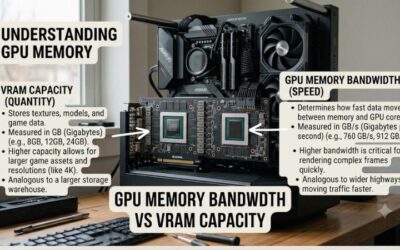
The headline here is memory capacity. Sixteen gigabytes gives more headroom than the 12GB and 8GB cards in this guide when you run high-resolution texture packs, mods or GPU-accelerated editing, even though the core sits a tier below the RTX 5070.
The 0dB feature stops the fans at light loads, which suits a quiet desktop, and the Dual BIOS switch lets you pick a quieter profile. The 2.5-slot cooler needs a case with room for it.
- Pros: 16GB of VRAM for large assets; Fans stop at light loads; Dual BIOS switch
- Cons: Slower core than an RTX 5070; 2.5-slot width limits small cases

ASUS Dual GeForce RTX 5060 Ti 16GB GDDR7 OC Edition Gaming Graphics Card | PCIe 5.0, HDMI 2.1b, DisplayPort 2.1b, 2.5-slot, Axial-tech Fans, 0dB Technology, Dual BIOS
Included for 'Best GPUs Under 1000: Five Graphics Cards Compared' as a representative home product in this roundup; selection reflects the product set returned for this topic.
View on Amazon3. ASUS Prime GeForce RTX 5060 8GB OC: Best for 1080p builds in compact cases
Specs per the listing: RTX 5060 with 8GB GDDR7, PCIe 5.0, HDMI/DP 2.1, 2.5-slot cooler with Axial-tech fans and Dual BIOS.
An RTX 5060 class card targets 1080p, and 8GB of memory is adequate for most esports and mainstream titles at that resolution. It is the sensible choice when your monitor is 1080p and you want the newest architecture without paying for capacity you will not use.
Be honest about the ceiling: demanding games with high-resolution textures can exceed 8GB, so this is not the card to buy if you plan to move to a 1440p monitor soon.
- Pros: Newest architecture in a modest tier; Dual BIOS switch; Good match for 1080p monitors
- Cons: 8GB limits future 1440p use; Not suited to texture-heavy mods

ASUS Prime GeForce RTX 5060 8GB GDDR7 OC Edition Gaming Graphics Card | PCIe 5.0, HDMI/DP 2.1, 2.5-slot, Axial-tech Fans, Dual BIOS
Included for 'Best GPUs Under 1000: Five Graphics Cards Compared' as a representative home product in this roundup; selection reflects the product set returned for this topic.
View on Amazon4. Gigabyte GeForce RTX 3060 WindForce OC 12G: Best for older platforms and 12GB on a tighter plan
Specs per the listing: GeForce RTX 3060 with 12GB of 192-bit GDDR6, two WindForce fans, model GV-N3060WF2OC-12GD Rev2.0.
The RTX 3060 is an older generation, but its 12GB frame buffer is generous for its class and it remains a workable 1080p card with some 1440p ability at tuned settings. It is the pick for owners of older systems who want a straightforward upgrade.
It lacks the newer feature set of the 50-series cards, so do not expect the same efficiency or newest output standards. Read the revision number carefully when ordering, since this listing names Rev2.0.
- Pros: 12GB of memory on a mature design; Simple dual-fan cooler; Fits many older systems
- Cons: Older GDDR6 generation; Lacks newest features of 50-series cards

GIGABYTE GeForce RTX 3060 WINDFORCE OC 12G (rev. 2.0) Graphics Card, 2X WINDFORCE Fans, 12GB 192-bit GDDR6, GV-N3060WF2OC-12GD Rev2.0 Video Card
Included for 'Best GPUs Under 1000: Five Graphics Cards Compared' as a representative home product in this roundup; selection reflects the product set returned for this topic.
View on Amazon5. Intel Arc A750 Limited Edition 8GB: Best for entry builds willing to tune drivers
Specs per the listing: Intel Arc A750 Limited Edition with 8GB of memory and a PCI Express 4.0 interface. Other specs are not listed; check the maker page.
The Arc A750 is the entry option here. It offers 8GB and a PCIe 4.0 interface at the lowest tier of this list, and it can handle 1080p play in many titles once drivers are current.
Intel cards generally reward newer platforms with Resizable BAR enabled, and older games can behave unevenly. Choose it if you are comfortable updating drivers and checking compatibility for your favorite titles.
- Pros: Entry-level option from a third vendor; 8GB with PCIe 4.0; Gives you a non-NVIDIA alternative
- Cons: Driver maturity varies by game; Works best with Resizable BAR support

Intel Arc A750 Limited Edition 8GB PCI Express 4.0 Graphics Card
Included for 'Best GPUs Under 1000: Five Graphics Cards Compared' as a representative home product in this roundup; selection reflects the product set returned for this topic.
View on AmazonHow to Choose
Match the card to your monitor
Pick the resolution first. A 1080p monitor is well served by 8GB cards like the RTX 5060 class. For 1440p, aim for 12GB or more, which points to the RTX 5070 or the 16GB RTX 5060 Ti. Buying beyond your panel wastes budget that could go to a better monitor or CPU.
Check physical fit and power
Measure the space inside your case. Two-fan cards often occupy two to three slots, and listings frequently omit length. Confirm the recommended PSU wattage on the maker page and make sure your supply has the correct PCIe power connectors. Do not rely on a card being small just because the cooler has two fans.
Weigh memory against core speed
More VRAM helps texture-heavy games, mods and creative work, while a faster core lifts frame rates in everything. If you mostly play competitive titles, the faster RTX 5070 core matters more. If you stack mods or edit video, the 16GB RTX 5060 Ti gives better headroom.
Skip what the listing cannot explain
Avoid listings that give a vague name without memory size or model number. Be careful with older cards if the revision is unclear, and avoid unfamiliar sellers or unbranded boards that do not state a GPU model. A clear model name and memory spec are the minimum.
Frequently Asked Questions
Is 8GB of VRAM enough today?
For 1080p, usually yes. Some demanding games with high-resolution textures can exceed it, so choose 12GB or 16GB if you want headroom or plan a 1440p monitor.
Is the RTX 5070 enough for 1440p?
Cards in the RTX 5070 class are aimed at 1440p and handle most games at high settings. Check published reviews for the exact titles you play.
Does PCIe 5.0 matter?
The 50-series cards support PCIe 5.0 but also run in PCIe 4.0 slots. For most gaming the difference is small, so do not replace a motherboard just for it.
Should I buy the Intel Arc card?
Consider it if you want an entry option and accept driver updates. It does best on newer platforms, so verify Resizable BAR support on your motherboard first.
Do I need a new power supply?
Possibly. Compare each card’s recommended PSU wattage and required PCIe connectors from the maker page with your current supply before ordering.