Volleyball games ask a monitor to track one of the smallest, fastest targets in sports gaming through the air. The ball arcs high on every set, drops steeply on every spike, and crosses the net at full speed on serves, while the camera holds a side-on broadcast view that pans laterally to follow the rally. At the same time, digs, blocks and serve reception are pure timing plays, so input lag and motion clarity decide whether the ball stays a readable object or smears into the court lighting.
This roundup covers both halves of that problem. The five picks span a 360Hz QD-OLED built for ball tracking, a 32-inch 4K OLED for the broadcast look, a 360Hz TN esports panel with backlight strobing, a 4K 144Hz IPS all-rounder, and a bright Mini-LED with the contrast to keep a white ball separated from a bright court. Every pick is judged on published specifications: refresh rate, response time, panel type, HDR rating, brightness behavior and connectivity.
As an Amazon Associate, we earn from qualifying purchases.
Quick Answer
For most players, a 4K 144Hz IPS monitor like the GIGABYTE M32U is the sweet spot for volleyball games: sharp enough for career-mode menus, fast enough for rallies. Competitive players should pick a 360Hz panel such as the Alienware AW2725DF or BenQ ZOWIE XL2566K, while the Samsung Odyssey OLED G8 leads for HDR arena presentation.
Table of Contents
- Alienware AW2725DF
- Samsung Odyssey OLED G8
- BenQ ZOWIE XL2566K
- GIGABYTE M32U
- AOC Q27G3XMN
- How to Choose
- Who Should Skip
- FAQ
- Final Verdict
Alienware AW2725DF

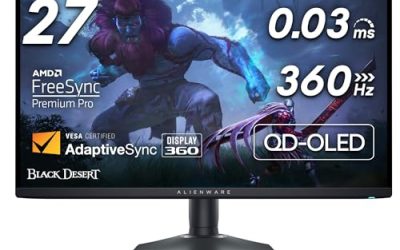
The AW2725DF is the ball-tracking specialist. Its 26.7-inch QD-OLED panel runs 2560 x 1440 at 360Hz with a 0.03ms gray-to-gray response, so on a jump serve or a quick middle attack the ball stays a distinct object through its arc instead of a fading trail. That combination of refresh rate and near-instant pixel response is exactly what volleyball’s steep ball trajectories and fast lateral camera pans punish on slower panels.
Color is the other strength: Alienware rates the panel at 99.3 percent of DCI-P3, which keeps the two teams’ kits separated and makes the antennae, net tape and court lines easy reference points when you are reading where a set is going. FreeSync Premium Pro handles variable refresh, and the 1440p resolution is a sensible match for the frame rates volleyball titles can actually sustain. The trade-offs are OLED’s static-image considerations, covered in the FAQ, and brightness that trails the Mini-LED pick on the brightest arena scenes.
Specs
- Screen size: 26.7 inches
- Resolution: 2560 x 1440 (QHD)
- Panel type: QD-OLED
- Refresh rate: 360Hz
- Response time: 0.03ms GtG
- Color gamut: 99.3 percent DCI-P3
- Adaptive sync: FreeSync Premium Pro
- Extras: AlienFX lighting, height/tilt/swivel/pivot stand
Samsung Odyssey OLED G8

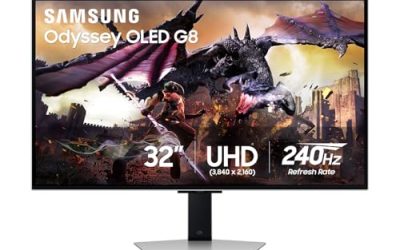
The Odyssey OLED G8 (G80SD) is the premium pick for players who want volleyball to look like a televised final. Its 32-inch QD-OLED panel runs 3840 x 2160 at 240Hz, and the glare-free coating matters more in this genre than most: arena scenes are bright and evenly lit, and a glossy screen turns that lighting into room reflections. Per-pixel dimming keeps the crowd and the shadowed areas beyond the court dark while the playing surface stays bright.
Samsung’s OLED Safeguard Plus adds a dynamic cooling system and brightness adjustments aimed at reducing image retention, relevant for a genre with a persistent score bug. The 0.03ms response keeps long rallies clean, and the larger 32-inch canvas makes the far-side hitter easier to pick out as the ball crosses the net. The limits are the ones shared by every OLED here: static HUD elements need sensible habits, and 4K at 240Hz asks a lot of a GPU in other genres, even if volleyball titles are comparatively light.
Specs
- Screen size: 32 inches
- Resolution: 3840 x 2160 (4K UHD)
- Panel type: QD-OLED
- Refresh rate: 240Hz
- Response time: 0.03ms GtG
- HDR: HDR10+ Gaming
- Finish: glare-free matte coating
- Extras: OLED Safeguard Plus, Core Lighting+
BenQ ZOWIE XL2566K

The XL2566K is the motion-clarity purist’s pick. Its 24.5-inch Fast TN panel runs 1920 x 1080 at 360Hz, and BenQ’s DyAc+ backlight strobing cuts the blur that fast pans create, so a spiked ball crossing the frame stays sharp enough to time a dig. For ranked and competitive volleyball play, where reading the setter’s hands matters more than scenery, this is the most direct tool in the roundup.
BenQ’s Black eQualizer lifts dark areas without washing out the court, which helps spot a ball against a shadowed stand, and Color Vibrance gives quick control over kit separation. The honest trade-offs are the 1080p resolution, which leaves career-mode text and menus softer than the 1440p and 4K picks, and TN viewing angles and color that trail the OLED and IPS models. This is a competition screen first and a general-purpose screen second.
Specs
- Screen size: 24.5 inches
- Resolution: 1920 x 1080 (Full HD)
- Panel type: Fast TN
- Refresh rate: 360Hz
- Motion clarity: DyAc+ backlight strobing
- Extras: Black eQualizer, Color Vibrance, S Switch controller
- Stand: height, tilt, swivel and pivot adjustment
GIGABYTE M32U

For most volleyball players, the M32U is the balanced pick. Its 31.5-inch Super Speed IPS panel runs 3840 x 2160 at 144Hz with a 1ms gray-to-gray response, fast enough that a floater serve stays readable, while the 4K pixel density keeps career-mode menus, rotation charts and player cards crisp without scaling workarounds. That mix suits a genre split between fast rallies and long menu sessions between matches.
Two HDMI 2.1 ports handle 4K at 120Hz from a console, DisplayPort covers full 4K 144Hz on PC, and the built-in KVM switch is genuinely useful if the same desk runs a work laptop between games. DisplayHDR 400 is modest next to the Mini-LED and OLED picks, and IPS contrast renders the dark arena crowd as dark gray rather than true black, but as an all-round screen for volleyball and everything else, it gives up the least.
Specs
- Screen size: 31.5 inches
- Resolution: 3840 x 2160 (4K UHD)
- Panel type: Super Speed IPS
- Refresh rate: 144Hz
- Response time: 1ms GtG
- HDR: DisplayHDR 400
- Ports: 2x HDMI 2.1, 1x DisplayPort 1.4, USB-C
- Extras: KVM switch, FreeSync Premium Pro
AOC Q27G3XMN
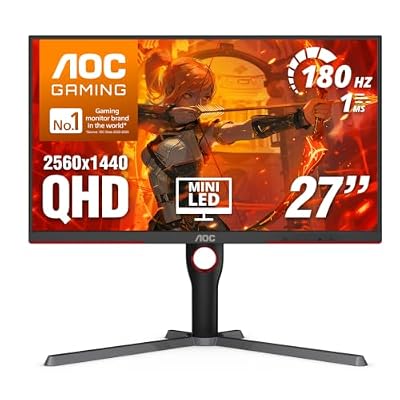
The Q27G3XMN answers volleyball’s brightness problem directly. Its 27-inch VA panel uses a 336-zone Mini-LED backlight rated for DisplayHDR 1000, so a brightly lit court can be driven hard without the whole image flattening, while the VA panel’s 4000:1 native contrast keeps dark kits, the shadowed far court and the ball’s shaded side separated from that bright surface. Few combinations suit this genre’s mix of bright arena light and fast dark motion as well.
The panel runs 2560 x 1440 at 180Hz overclocked, with a 1ms gray-to-gray response and 96 percent DCI-P3 coverage, so rallies stay smooth and kit colors stay distinct. It sits in the budget tier of this roundup while offering the strongest HDR hardware here. The caveats are VA viewing angles, which are narrower than the IPS pick, and some haloing possible around a small bright ball against a dark stand when local dimming works hardest, the classic Mini-LED compromise.
Specs
- Screen size: 27 inches
- Resolution: 2560 x 1440 (QHD)
- Panel type: VA with 336-zone Mini-LED backlight
- Refresh rate: 180Hz (overclocked)
- Response time: 1ms GtG
- HDR: DisplayHDR 1000
- Contrast ratio: 4000:1
- Color gamut: 96 percent DCI-P3
How to Choose
Start with the ball. Volleyball’s small, fast target rewards refresh rate and response time more than raw resolution: 240Hz or 360Hz panels with sub-1ms response keep the ball readable through its arc and on lateral pans, while 144Hz is the sensible floor for anyone playing competitively. If your volleyball time is mostly career or management menus between matches, weight resolution higher instead, because 4K makes dense text noticeably easier on the eyes.
Next, judge the arena. The court is brightly and evenly lit, so look at sustained brightness and finish: a matte or glare-free coating prevents the arena lighting from mirroring your room, and Mini-LED or OLED panels hold the contrast that separates kits and the ball at the extremes. VA and OLED panels lead on that contrast; IPS counters with wider viewing angles for a shared couch setup.
Finally, match the port and the platform. Console players need HDMI 2.1 for 4K at 120Hz; PC players should confirm DisplayPort support for their panel’s full refresh rate. Adaptive sync, FreeSync or G-SYNC compatibility, smooths the frame pacing when a crowded net scramble dips the frame rate.
Who Should Skip
Skip the 360Hz specialists if you play volleyball casually on a mid-range GPU or a console capped at 120Hz; the extra refresh headroom goes unused and the money serves you better in resolution or HDR. Skip OLED if your screen doubles as an all-day work monitor with static windows, or if you routinely leave the game paused on a static screen for long stretches. Skip the 1080p XL2566K if career menus and text clarity matter as much as gameplay. And skip every pick here if your real bottleneck is a living room setup; a large television suits couch volleyball better than any desk monitor in this roundup.
FAQ
Is 240Hz or 360Hz worth it for volleyball games?
For competitive play, yes. The ball crosses the screen faster than the target in most sports titles, and higher refresh rates with fast response times keep it readable through serves, spikes and quick sets. Casual players on 144Hz still get a smooth game; the jump matters most in ranked and online play.
Can an OLED burn in from the score bug in volleyball games?
The score bug, set counters and team logos are static elements, so the risk is real over long sessions. Modern OLEDs include pixel refresh cycles, logo detection and brightness limiting, and the Odyssey OLED G8 adds a dedicated safeguard system. Vary your content, let the panel run its refresh cycles, and avoid leaving a paused game up for hours.
Is 1440p or 4K better for volleyball games?
1440p at high refresh is the better pure-gameplay choice, because volleyball titles can hold very high frame rates there and the ball stays sharp in motion. 4K wins if you spend heavily in menus and career modes, or share the screen with slower games and media, and your hardware can drive it.
Do volleyball games need HDMI 2.1?
Only console players chasing 4K at 120Hz need HDMI 2.1. At 1440p or 1080p, or on PC over DisplayPort, older connections cover the required bandwidth. Check the individual pick: the M32U includes HDMI 2.1, while the esports panels prioritize DisplayPort for their full refresh rates.
Final Verdict
Volleyball asks a monitor to track a small, fast ball through the air against a bright arena, with timing windows that punish every millisecond of lag. Competitive players should take the Alienware AW2725DF for 360Hz QD-OLED ball tracking, or the BenQ ZOWIE XL2566K if DyAc+ strobing and 1080p focus fit better. Players who want the broadcast look should take the Samsung Odyssey OLED G8. The GIGABYTE M32U is the all-round recommendation for mixed play and menus, and the AOC Q27G3XMN is the value pick, pairing genuine HDR brightness with the contrast this genre’s bright-court problem demands.
Product and ASIN Reference
| Product | ASIN |
|---|---|
| Alienware AW2725DF | B0CZSGWLD5 |
| Samsung Odyssey OLED G8 (G80SD) | B0DHJ8B7TP |
| BenQ ZOWIE XL2566K | B0B434LTLF |
| GIGABYTE M32U | B083GRVFXN |
| AOC Q27G3XMN | B0C8ZJKPWC |