🛒 Best Price Today on Amazon
Prime members get fast, free shipping on everything above, plus member-only deals. New members get a 30-day free trial — cancel anytime.
For the best am5 motherboard for gaming, focus on CPU support, DDR5 layout, PCIe lanes, storage, networking, and the board’s physical fit. AMD’s current AM5 800-series options include X870E, X870, B850, and B840, while X870E and X870 add PCIe 5.0 and CPU overclocking support.
How to Choose an AM5 Motherboard
The right board depends less on gaming FPS and more on how much connectivity, storage, memory tuning, and expansion your build needs. X870E provides more chipset connectivity than X870, while both use DDR5 and AM5 processors. For most gaming PCs, prioritize the features you will actually connect rather than paying for unused expansion.
Check CPU and DDR5 compatibility
The best am5 motherboard for gaming should match your Ryzen generation and memory plan before you compare extras. X870E and X870 boards support Ryzen 7000, 8000, and 9000 desktop processors, but PCIe behavior can change with some Ryzen 8000 chips. DDR5 is required; DDR4 modules are not compatible.
Memory speed claims are also configuration-dependent. Manufacturers publish higher DDR5 speeds as overclocked profiles, while supported speed can vary with CPU, DIMM count, and memory kit. Check the motherboard memory support list before buying a high-speed kit, particularly with four DIMMs or unusual modules.
Match PCIe and M.2 requirements
For a gaming system using one modern graphics card, PCIe 5.0 x16 support is already common on current X870 and X870E boards. The more important question is how many M.2 slots you need and whether additional slots share lanes with expansion slots or other devices.
Storage-heavy builds benefit from boards with several M.2 sockets, but more slots do not automatically mean identical bandwidth. The ASUS ROG Strix X870E-E, for example, provides five M.2 slots, including three PCIe 5.0 sockets, while the MSI MAG X870E Gaming Plus Max WiFi provides three M.2 slots.
Plan networking and rear I/O
Wi-Fi 7 is now common on current AM5 gaming boards, but wired networking differs substantially. The ASUS ROG Strix X870E-E includes 5Gb Ethernet, while the Gigabyte X870 Aorus Elite WiFi7 uses 2.5Gb Ethernet. A faster LAN controller matters mainly if your network equipment and workload can use it.
USB connectivity should also match your peripherals. USB4 reaches 40Gbps and is useful for fast external storage, docks, and compatible displays, but ordinary keyboards, mice, headsets, and controllers do not require it. Count the rear Type-A and Type-C ports you actually need before paying for a higher-tier chipset.
Verify case and power compatibility
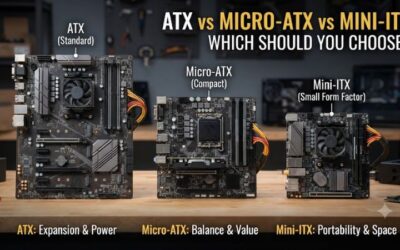
An ATX AM5 board needs an ATX-compatible case with the appropriate mounting points and expansion clearance. The MSI MAG X870E Gaming Plus Max WiFi and MSI MPG X870E Carbon WiFi are ATX boards, so compact cases designed for Micro-ATX or Mini-ITX require a different form factor.
The board also requires a compatible ATX power supply with CPU EPS connectors and the necessary GPU power connections; the exact PSU wattage depends on the processor and graphics card rather than the motherboard alone. Check GPU length, CPU cooler height, radiator position, and front-panel clearance against the case before ordering.
Top Picks
These four boards cover different gaming-build priorities without treating motherboard choice as a direct FPS ranking. Independent X870/X870E comparisons show that many current boards provide substantial power-delivery capacity, so feature layout, connectivity, expansion, and current pricing are more useful differentiators for a normal gaming build.
| Product | Best For | Key Spec | Compatibility | Watch Out For |
| ASUS ROG Strix X870E-E Gaming WiFi | Best Overall | 5 M.2, 3× PCIe 5.0 M.2, 5GbE | AM5, DDR5, ATX, PCIe 5.0 | Premium price |
| MSI MAG X870E Gaming Plus Max WiFi | Best Value | 64MB BIOS, 5GbE, PCIe 5.0 | Ryzen 7000/8000/9000, DDR5, ATX | Only 3 M.2 slots |
| Gigabyte X870 Aorus Elite WiFi7 | Best For Mainstream Builds | 4 M.2, dual USB4, 2.5GbE | AM5, DDR5, ATX, PCIe 5.0 | Less chipset bandwidth than X870E |
| ASRock X870 Steel Legend WiFi | Best For Balanced Connectivity | PCIe 5.0 GPU, 3 M.2, dual USB4 | AM5, DDR5, ATX, Windows 11 Wi-Fi 7 | M.2 sharing needs attention |
Best Overall: ASUS ROG Strix X870E-E Gaming WiFi
The ASUS ROG Strix X870E-E Gaming WiFi suits buyers who want a feature-rich best am5 motherboard for gaming without moving to an extreme workstation-class board. It has five M.2 slots, three PCIe 5.0 M.2 sockets, dual USB4, Wi-Fi 7, and 5Gb Ethernet, making it particularly suitable for gaming PCs that also handle substantial storage or high-speed peripherals.
Its real weakness is cost and unused capacity for simpler builds. ASUS lists a $449.99 store price, while Tom’s Hardware reviewed it as a roughly $500-class board. A gamer with one GPU, one or two SSDs, and ordinary USB peripherals may not benefit enough from the additional connectivity to justify the premium.
Best Value: MSI MAG X870E Gaming Plus Max WiFi
The MSI MAG X870E Gaming Plus Max WiFi is aimed at buyers who want X870E connectivity without moving into flagship pricing. It supports Ryzen 7000, 8000, and 9000 processors, DDR5 up to 8200+ MT/s as an overclocked specification, PCIe 5.0 graphics, one PCIe 5.0 M.2 slot, 5Gb Ethernet, Wi-Fi 7, and a 64MB BIOS.
Do not choose it solely for having the largest storage array: three M.2 slots is modest beside five-slot alternatives. It is also an ATX board, so it needs an ATX-compatible case and DDR5 memory. Buyers with a compact system, extensive M.2 requirements, or a Micro-ATX case should look elsewhere rather than adapting the build around this board.
Best For Mainstream Builds: Gigabyte X870 Aorus Elite WiFi7
The Gigabyte X870 Aorus Elite WiFi7 is a practical choice for a mainstream best am5 motherboard for gaming build because its X870 platform combines PCIe 5.0 graphics support, four DDR5 slots, four M.2 sockets, dual USB4, Wi-Fi 7, and 2.5Gb Ethernet. Gigabyte specifies support for Ryzen 7000, 8000, and 9000 processors.
Its main limitation is that X870 does not provide the same chipset-level expansion capacity as X870E. AMD lists 36 usable PCIe lanes for X870 versus 44 for X870E, with both allowing CPU overclocking and DDR5 memory overclocking. That makes the Gigabyte board less suitable for unusually expansion-heavy systems.
Best For Balanced Connectivity: ASRock X870 Steel Legend WiFi
The ASRock X870 Steel Legend WiFi targets builders who want a current AM5 platform without moving into the more expensive X870E tier. It supports DDR5 up to 8000+ MT/s as an overclocked specification, has a PCIe 5.0 x16 graphics slot, three M.2 sockets, dual USB4, 2.5Gb Ethernet, and Wi-Fi 7.
It is not the right choice for Windows 10 users who specifically require onboard Wi-Fi 7, because ASRock states that its Wi-Fi 7 module has no Windows 10 driver. It is also worth checking the storage layout before installation: occupying the third M.2 slot disables the secondary PCIe 4.0 x16 slot.
FAQ
The main questions around the best am5 motherboard for gaming usually concern chipset choice, CPU compatibility, memory, and whether a more expensive board changes game performance. These boards use the same AM5 platform family, but their expansion and connectivity capabilities differ enough to affect which model fits a particular PC.
Is X870E better than X870 for gaming?
X870E offers more chipset connectivity, but it does not automatically make games run faster. AMD lists 44 usable PCIe lanes for X870E compared with 36 for X870, while both support Ryzen CPU overclocking and DDR5 memory overclocking. The practical advantage appears when you need more expansion, storage, or high-speed connectivity.
For a single-GPU gaming PC, X870 can therefore cover the core platform requirements without requiring X870E. The Gigabyte X870 Aorus Elite WiFi7, for example, provides PCIe 5.0 graphics support, four M.2 sockets, dual USB4, Wi-Fi 7, and 2.5Gb Ethernet in an ATX design.
Can AM5 motherboards use DDR4 RAM?
No, current AM5 motherboards use DDR5 memory rather than DDR4. AMD’s current X870E, X870, B850, and B840 chipset specifications are paired with DDR5 memory support, so an existing DDR4 kit cannot simply be transferred to an AM5 gaming build.
The exact DDR5 speed still depends on the CPU, DIMM configuration, and memory kit. Manufacturers list high speeds as overclocked values, so check the board’s qualified memory list and the CPU’s memory-controller limitations before buying an unusually fast kit or filling all four DIMM slots.
Does a more expensive motherboard increase gaming FPS?
A more expensive motherboard does not inherently provide a major gaming-FPS increase when the CPU, memory, graphics card, and software configuration are otherwise comparable. Motherboard pricing mainly reflects power delivery, storage, expansion lanes, networking, USB connectivity, firmware features, and physical design.
That means the best am5 motherboard for gaming should be selected around the rest of the PC rather than a motherboard price target alone. Spending more can make sense for additional PCIe 5.0 M.2 slots, 5Gb Ethernet, USB4, or stronger expansion options, but those features do not automatically translate into higher frame rates.
Do Ryzen 9000 CPUs work on these AM5 boards?
Yes, the current boards covered here support Ryzen 9000 desktop processors, alongside supported Ryzen 7000 and 8000 models. ASUS, MSI, Gigabyte, and ASRock each list Ryzen 9000 compatibility for their respective X870E or X870 boards.
The important qualification is that processor generation can change PCIe behavior on some slots. For example, several manufacturers specify reduced PCIe generation or lane width with certain Ryzen 8000 processors. Check the CPU-specific motherboard manual and support list before assuming every slot operates at its maximum advertised specification.
Final Thoughts
The best am5 motherboard for gaming depends on expansion needs more than raw gaming performance. ASUS offers extensive storage and I/O, MSI provides a feature-dense X870E option, Gigabyte targets mainstream systems, and ASRock balances current connectivity. Check CPU, DDR5, case, PCIe, M.2, and PSU compatibility before buying.