🛒 Best Price Today on Amazon
Prime members get fast, free shipping on everything above, plus member-only deals. New members get a 30-day free trial — cancel anytime.
Shopping for the best monitor under 500 dollars used to mean settling for weak contrast or slow response times. Today, modern displays in this price segment offer advanced features like local dimming and ultra-high refresh rates. Choosing the right panel depends on your target resolution, system graphics card, and primary game genres.
How to Choose a Gaming Monitor Under 500
Selecting the right panel in this budget category requires assessing your hardware capabilities alongside your favorite gaming genres. High refresh rates suit competitive shooters, while full local dimming provides deep contrast for single-player titles. Evaluating these key features helps identify the best monitor under 500 for your desk.
Backlight Technology and High Dynamic Range
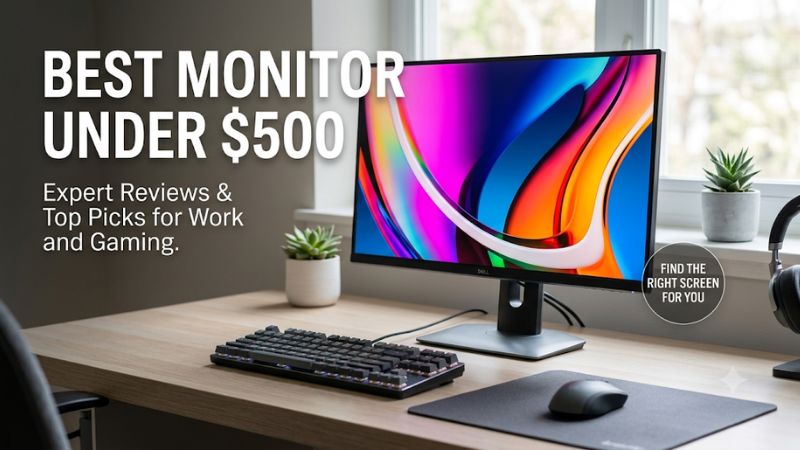
Backlight design dictates how well a display renders deep shadows and bright highlights in modern PC titles. Traditional edge-lit IPS panels struggle with contrast, often washing out dark scenes in games like Cyberpunk 2077. Displays equipped with Mini-LED backlights offer the best monitor under 500 experience for HDR depth.
Local dimming allows individual screen regions to brighten or completely turn off depending on the frame content. This capability brings dark room performance closer to premium panels without pushing prices beyond reasonable limits. Models featuring over 300 dimming zones provide an impressive entryway into true high dynamic range gaming.
Resolution and GPU Performance Requirements
Screen resolution directly affects image sharpness and dictates the graphical horsepower required from your system graphics card. Running games at 2560×1440 provides a sweet spot between pixel density and frame rates on mid-range GPUs. Stepping up to 3840×2160 delivers extreme text clarity but demands high-end hardware for smooth motion.
A GPU like the NVIDIA GeForce RTX 4070 easily achieves over 100 frames per second at 1440p resolution in demanding titles. However, driving a 4K display at high frame rates often requires using upscaling technologies like DLSS or FSR. Selecting a resolution matching your graphics card prevents frustrating frame rate drops during gameplay.
Refresh Rate and Speed Demands
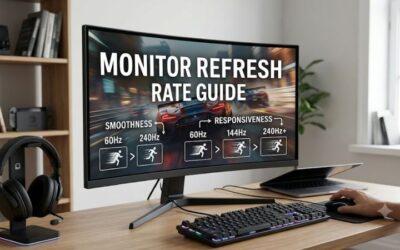
Refresh rate determines how many images a screen displays per second, directly influencing motion clarity and input responsiveness. Standard 1440p gaming displays offer 165Hz to 180Hz, which delivers fluid motion for general gameplay. Competitive players finding the best monitor under 500 can choose panels reaching 500Hz.
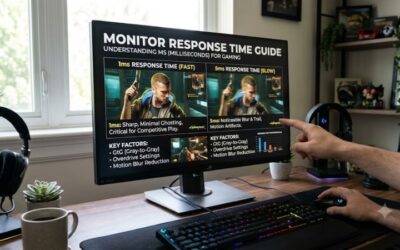
Fast response times prevent motion blur during swift mouse movements in titles like Apex Legends or Counter-Strike 2. Pixel transition speeds under two milliseconds keep competitive gameplay sharp, preventing distracting trailing artifacts. Prioritizing refresh rate over raw pixel count gives fast-paced players a distinct tactical edge.
Video Inputs and Platform Compatibility
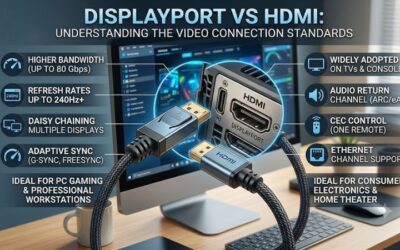
Modern displays must offer versatile connectivity to support both desktop PCs and current generation gaming consoles. DisplayPort 1.4 handles maximum refresh rates and variable refresh rate technologies on PC graphics cards. HDMI 2.1 bandwidth enables PlayStation 5 and Xbox Series X consoles to output 4K resolution at 120Hz with HDR enabled.
Integrated KVM switches allow users to control a gaming PC and a laptop using a single keyboard and mouse setup. USB-C connections with power delivery further streamline desk clutter by supplying power and video over one cable. Checking port specifications ensures full compatibility across all your connected computing hardware.
Top Picks for Displays
Finding a top display requires matching panel specifications to your primary gaming goals and hardware setup. The market includes options for cinematic HDR, extreme competitive speeds, and high-density 4K clarity. Reviewing the comparison table below simplifies finding the best monitor under 500 dollars for your specific gaming setup.
| Product | Best For | Key Spec | Compatibility | Watch Out For |
| AOC Q27G3XMN | Best Overall | 27″ 1440p 180Hz Mini-LED | DisplayPort 1.4, HDMI 2.0 | Narrow VA viewing angles |
| Gigabyte M27Q | Best Value | 27″ 1440p 170Hz IPS | DP 1.2, HDMI 2.0, USB-C | Low 1000:1 contrast ratio |
| KTC M27P6 | Best 4K Display | 27″ 4K 160Hz Mini-LED | DisplayPort 1.4, HDMI 2.1 | Blooming around desktop text |
| Alienware AW2524HF | Best High Refresh | 24.5″ 1080p 500Hz IPS | DisplayPort 1.4, HDMI 2.1 | Low 1080p resolution for work |
AOC Q27G3XMN
The AOC Q27G3XMN is designed for PC gamers seeking outstanding HDR visual quality without spending a fortune. Featuring a 27-inch 2560×1440 VA panel with 336 Mini-LED dimming zones, it delivers impressive contrast and peak brightness. A fast 180Hz refresh rate ensures smooth motion handling across demanding single-player titles.
However, the VA panel technology results in narrower viewing angles compared to standard IPS alternatives. Fast dark transitions can also exhibit minor black smearing during rapid camera movements in fast competitive games. Gamers prioritizing wide viewing angles or pure esports speed should look toward dedicated high-speed IPS displays.
Gigabyte M27Q
The Gigabyte M27Q caters to budget-conscious players wanting a versatile display for gaming and daily productivity. Its 27-inch 2560×1440 Super Speed IPS panel offers vivid color reproduction alongside a fluid 170Hz refresh rate. It remains a top choice for anyone seeking the best monitor under 500 with a KVM switch.
Its main drawback is a native contrast ratio limited to approximately 1000:1, typical of standard IPS panels. Dark room gaming in titles like Dead by Daylight yields dark grays rather than pitch black shadow levels. Buyers seeking deep blacks and true HDR performance should consider Mini-LED options instead of standard IPS panels.
KTC M27P6
The KTC M27P6 targets enthusiasts wanting high pixel density combined with advanced backlight dimming performance. Its 27-inch Fast IPS panel features 3840×2160 4K resolution, 1152 Mini-LED dimming zones, and a 160Hz refresh rate. Full HDMI 2.1 connectivity allows current generation consoles to run 4K games at 120Hz with ease.
Driving this 4K panel requires a high-performance graphics card like an NVIDIA GeForce RTX 4080 to maintain high frame rates. Additionally, aggressive local dimming can produce faint blooming around white cursor elements on dark backgrounds. Users with mid-range GPUs or heavy desktop workloads should opt for a 1440p monitor.
Alienware AW2524HF
The Alienware AW2524HF caters exclusively to competitive esports players who demand maximum motion clarity and speed. Utilizing a 24.5-inch Fast IPS panel, it reaches a staggering 500Hz refresh rate with sub-millisecond response times. This rapid frame delivery provides ultra-smooth tracking in fast titles like Valorant.
The 1920×1080 resolution appears noticeably soft across a desktop compared to sharp 1440p or 4K screen alternatives. Achieving 500 frames per second also requires a powerful central processing unit like an AMD Ryzen 7 7800X3D. Casual players and RPG enthusiasts will prefer higher-resolution panels with superior color contrast.
Frequently Asked Questions
Navigating display specifications can feel confusing when balancing resolution, panel technology, and refresh rates. Understanding how these features interact with your computer components prevents costly upgrading errors. Selecting the best monitor under 500 requires knowing how specs impact real performance.
Is 1440p better than 4K for gaming under 500?
For most PC gamers, 1440p offers a better balance of frame rate and visual clarity than 4K in this price segment. A 2560×1440 resolution requires significantly less GPU rendering power, allowing mid-tier graphics cards to maintain higher refresh rates. It represents the best monitor under 500 resolution sweet spot.
Independent performance testing shows an NVIDIA GeForce RTX 4070 achieving 125 FPS at 1440p High settings in Shadow of the Tomb Raider. That same graphics card averages around 68 FPS when rendering at native 3840×2160 resolution. The higher frame rate on a 1440p display results in smoother motion and lower input latency.
Do budget Mini-LED displays require HDMI 2.1 cables?
HDMI 2.1 cables are only required if you are connecting a current generation console or running 4K at high refresh rates. Desktop PC users can utilize a standard DisplayPort 1.4 connection to achieve maximum resolution and full refresh rates. DisplayPort 1.4 provides ample bandwidth for 1440p displays operating up to 240Hz.
Consoles like the PlayStation 5 require HDMI 2.1 to transfer a 3840×2160 signal at 120Hz with uncompressed HDR color. Using an older HDMI 2.0 cable on a console limits output to 4K at 60Hz or 1080p at 120Hz. Verifying your cable standard ensures you receive the maximum refresh rate supported by your display hardware.
Will a 500Hz monitor increase frame rates on older graphics cards?
A 500Hz display will not increase the frame rates generated by your computer’s graphics card or system processor. The monitor only displays the frames your GPU renders, meaning an older system will still output low frame rates. Upgrading your display improves motion smoothness only if your hardware delivers high FPS.
In competitive titles like Overwatch 2, reaching 500 FPS requires a powerful processor paired with a fast graphics card. If your graphics card renders 120 frames per second, a 500Hz screen will simply refresh those same 120 frames repeatedly. Upgrading hardware components must precede buying ultra-high refresh panels.
Can USB-C monitor connections power a gaming laptop during play?
Most display USB-C ports do not supply enough power to charge a high-performance gaming laptop during heavy gameplay sessions. Monitor USB-C ports typically supply between 15W and 90W of power delivery to connected mobile devices. High-end gaming laptops often require 180W to 300W under load to maintain full battery charge.
Connecting a gaming laptop solely via USB-C with 65W power delivery may result in battery drain while playing demanding games. The laptop consumes power faster than the display cable can supply, eventually forcing the system into low-power mode. Gamers should keep the laptop’s dedicated power adapter plugged in while gaming.
Final Thoughts on Selecting a Display
Choosing the best monitor under 500 dollars comes down to identifying whether you value pixel resolution, HDR contrast, or competitive speed. Mini-LED technology brings dynamic contrast to budget setups, while fast IPS panels deliver high motion clarity. Match your display choice to your GPU performance for a great gaming experience.