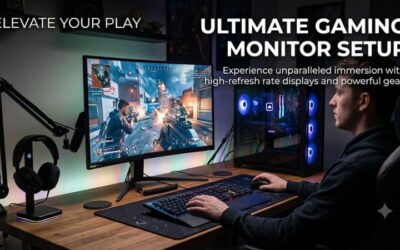
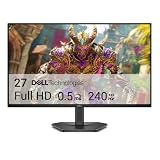
- Top Pick: Dell 27 240Hz Gaming Monitor – SE2726HG – 27-inch FHD (1920×1080) 240Hz Display, in-Plane Switching (IPS) Technology, AMD FreeSync Premium, TÜV 3-Star, 2X HDMI, DisplayPort 1.4, Tilt
- Best Value: Dell 24 240Hz Gaming Monitor – SE2426HG – 23.8-inch FHD (1920×1080) 240Hz Display, in-Plane Switching (IPS) Technology, AMD FreeSync™ Premium, TÜV 3-Star, 2X HDMI, DisplayPort 1.4, Tilt
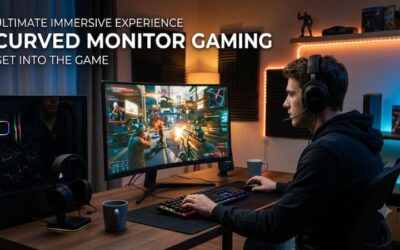
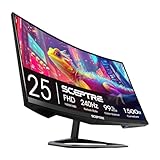
- Premium Choice: Sceptre Curved 24.5-inch Prime Gaming Monitor up to 240Hz 1080p R1500 1ms DisplayPort x2 HDMI x2 Blue Light Shift Build-in Speakers, Machine Black 2025 (C255B-FWT240 Series)
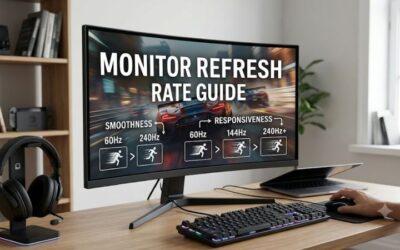
Refresh rate is the single most visible upgrade you can make to a gaming setup, and in 2026 the decision has narrowed to two mainstream tiers: 144Hz and 240Hz. A 144Hz panel draws a new image every 6.9 milliseconds; a 240Hz panel does it every 4.2ms. That gap is small on paper but meaningful in fast shooters, where fresher frames mean earlier information and smoother tracking of moving targets.
What has changed recently is price. 240Hz used to carry a heavy premium and usually meant a compromised TN panel. Today, 1080p 240Hz IPS and curved VA monitors from Dell, ASUS, SANSUI, and Sceptre sit close to what 144Hz cost a couple of years ago. The real question is no longer “is 240Hz worth it?” but “can my GPU and my games actually feed it?” This comparison breaks down where each tier still makes sense.
As an Amazon Associate we earn from qualifying purchases at no extra cost to you. Product prices and availability are accurate as of the date shown and are subject to change.





⚡ Save on Your Next PC — Amazon Prime
Prime members get fast free shipping on the systems above, plus early access to Prime Day & Black Friday PC deals. New members get a 30-day free trial.
Watch: 144Hz vs 240Hz Monitor: Worth It in 2026? — Video Review
Quick Verdict
Choose 144Hz if you play a mix of single-player and competitive titles, run a mid-range GPU, or want to put your budget toward higher resolution — a 1440p 144Hz panel looks dramatically better than 1080p 240Hz in story-driven games. Choose 240Hz if competitive FPS titles like Valorant, CS2, Apex, or Fortnite are your priority and your system can push 200+ fps at 1080p. For that use case, the ASUS TUF VG279QM5A and the Dell SE2726HG are the two strongest all-round picks on this list.
Key Differences
- Frame pacing: 144Hz delivers a new frame every 6.9ms versus 4.2ms at 240Hz — roughly a 2.7ms reduction in worst-case display latency, which compounds with mouse and network delay.
- Motion clarity: 240Hz produces noticeably less sample-and-hold blur during fast flicks and strafing. Backlight strobing modes such as ASUS ELMB Sync sharpen this further.
- GPU demand: 144Hz is comfortably reachable at 1440p with a mid-tier card; saturating 240Hz generally requires 1080p, lowered settings, or a high-end GPU.
- Resolution trade-off: At similar prices, 144Hz buys you 1440p; 240Hz almost always means 1080p, as with the Dell SE2426HG and Sceptre C255B-FWT240.
- Panel quality: Both tiers now offer good IPS options. Dell’s SE-series and the ASUS TUF use IPS for wide viewing angles, while the SANSUI curved models use VA for deeper contrast.
- Diminishing returns: The jump from 60Hz to 144Hz is transformative; 144Hz to 240Hz is a refinement most players notice only in competitive shooters.
144Hz Monitors: The Balanced Standard
144Hz remains the most sensible default for the majority of gamers. It is high enough that mouse movement feels immediate and screen tearing largely disappears with FreeSync or G-SYNC enabled, yet undemanding enough that a mid-range GPU can hold the refresh rate in most modern titles. It also frees up budget for resolution and panel quality — the practical reason many players end up happier with a 27-inch 1440p 144Hz display than a 1080p 240Hz one.
The trade-off is ceiling. If you already average 200fps in your main game, a 144Hz panel is discarding frames your PC has already rendered, and you will feel that in tight duels. 144Hz is also the safer choice for laptops, older GPUs, and anyone playing graphically heavy single-player games where 240fps was never realistic in the first place.
240Hz Monitors: The Competitive Edge
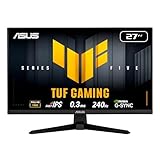
240Hz is now genuinely affordable, and the options are varied. The ASUS TUF VG279QM5A is the enthusiast pick, pairing a 0.3ms Fast IPS panel with G-SYNC compatibility and Extreme Low Motion Blur Sync for the cleanest motion here. Dell’s SE2726HG (27-inch) and SE2426HG (23.8-inch) offer IPS panels, FreeSync Premium, and dual HDMI plus DisplayPort 1.4 at a lower price, with the 24-inch size still favored by many competitive players for keeping the full screen in view.
If you prefer curved immersion, the Sceptre C255B-FWT240 brings a 1500R 24.5-inch panel with built-in speakers, while SANSUI’s 27-inch curved model adds 130% sRGB coverage, 4000:1 contrast, and HDR support. SANSUI’s 32-inch curved 240Hz display is the outlier — that much screen at 1080p means visibly larger pixels, so it suits sim racing and casual play more than pixel-precise aiming.
Which Should You Buy?
- For competitive FPS players: pick 240Hz — the ASUS TUF VG279QM5A if budget allows, or the Dell SE2426HG for the best value.
- For mixed gaming and mid-range GPUs: pick 144Hz, ideally at 1440p, for the better all-round image.
- For story-driven and visually rich games: pick 144Hz and spend the difference on resolution or HDR performance.
- For immersive or curved setups: pick 240Hz curved — the Sceptre C255B-FWT240 or SANSUI 27-inch curved.
- For dual-monitor or small desks: pick a 24-inch 240Hz panel like the Dell SE2426HG to keep the sightline tight.
Frequently Asked Questions
Can you actually see the difference between 144Hz and 240Hz?
Yes, but it is subtler than the 60Hz-to-144Hz jump. Most players notice it as smoother tracking and less blur during rapid movement rather than as an obvious visual change.
Do I need a high-end GPU for 240Hz?
At 1080p with competitive settings, a current mid-range GPU can often exceed 240fps in esports titles. Demanding AAA games will fall well short, but adaptive sync keeps those frame rates smooth anyway.
Is 1080p 240Hz better than 1440p 144Hz?
For competitive shooters, yes. For everything else, 1440p 144Hz generally delivers the better experience thanks to sharper text and more detailed visuals.
Does 240Hz reduce input lag?
It reduces display-side latency by a few milliseconds. That is real but modest — mouse polling, engine tick rate, and network latency usually matter more.
Final Verdict
If competitive shooters define your play time and your GPU can keep up, 240Hz is now cheap enough to be the obvious choice, with the ASUS TUF VG279QM5A leading on motion clarity and the Dell SE2426HG and SE2726HG offering the best balance of price and panel quality. Everyone else is better served by 144Hz at a higher resolution — the frames you can actually render matter more than the ones your monitor could theoretically display.