🛒 Best Price Today on Amazon
Prime members get fast, free shipping on everything above, plus member-only deals. New members get a 30-day free trial — cancel anytime.
A Wi-Fi extender is a patch for one specific problem: a dead zone in an otherwise working network. The garage, the back bedroom or the patio gets one bar or none, and the router cannot be moved. With a cap of under 300 dollars, every extender on the market qualifies, so price will not narrow the field. What narrows it is how honest the coverage numbers are and whether the box has the one feature you need, usually an Ethernet port.
Shopping in 2026 means wading through listings that promise 10,000 or even 15,000 square feet from a plug-in device the size of a deck of cards. Those figures describe best-case open air, not your hallway. The nine units below range from a name-brand model with a modest 1,500 square foot claim to unbranded boosters with enormous numbers, so this guide reads each listing with a skeptical eye and points you to the sensible fit for each dead spot.
Quick Picks

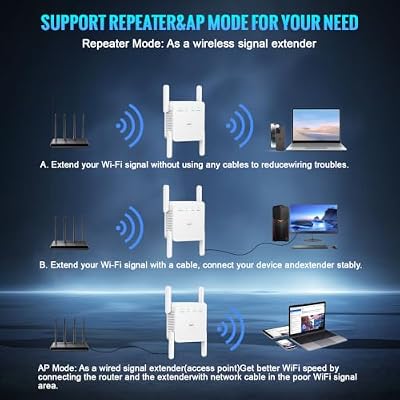
WiFi Extender Signal Booster for Home 5G 1200Mbps Dual Band WiFi Booster | wifi extenders signal booster Device Servers Covers Up to 5000 Sq.ft and 35 Devices, Wireless Signal Repeater Ethernet




As an Amazon Associate we earn from qualifying purchases. Product prices and availability are accurate as of the date/time indicated.

WiFi Extender, 1200Mbps Dual Band WiFi Extenders Signal Booster for Home | 5GHz/2.4GHz Dual Band WiFi Booster Covers Up to 3500 Sq.Supports 40 devices, Equipped with 2 Ethernet ports and 4 antennas


As an Amazon Associate we earn from qualifying purchases. Product prices and availability are accurate as of the date/time indicated.

2026 Fastest WiFi Extender, WiFi Repeater, WiFi Booster, Covers Up to 10000 Sq.ft and 80 Devices, Internet Booster - with Ethernet Port, Quick Setup, Home Wireless Signal Booster


As an Amazon Associate we earn from qualifying purchases. Product prices and availability are accurate as of the date/time indicated.

Jancane WiFi Extender Signal Booster Up to 5800sq.ft and 55 Devices | Wireless Internet Repeater, Long Range Amplifier with Ethernet Port, 1-Key Setup, Access Point, Alexa Compatible


As an Amazon Associate we earn from qualifying purchases. Product prices and availability are accurate as of the date/time indicated.

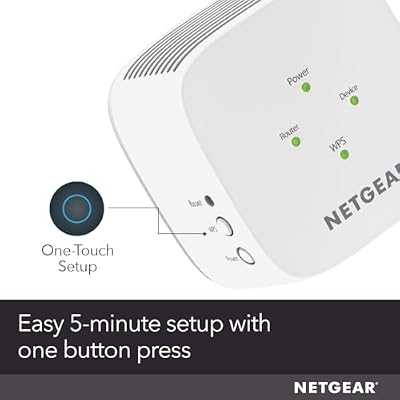
NETGEAR WiFi Extender EX5000, up to 1,500 sq ft, 1.2 Gbps | Signal Booster for Home, Easy Set Up, 25 devices, Works with any Router, Compact Design, WiFi 5, AC1200



As an Amazon Associate we earn from qualifying purchases. Product prices and availability are accurate as of the date/time indicated.

WiFi Extender Internet Booster, 10000 Sq.ft Long Range Repeater Wireless Routers Amplifier, Mesh Wi-Fi 80% Faster | Broader Than Ever, Support More Network Devices at Home, 1-Tap Setup


As an Amazon Associate we earn from qualifying purchases. Product prices and availability are accurate as of the date/time indicated.

2026 WiFi Extender Signal Booster, Longest Range up to 15000 sq.ft for Home, Wireless Internet Extender with Ethernet Port, 6X Faster Speed WiFi Repeater, 1-Tap Setup, Compatible with 99% Routers


As an Amazon Associate we earn from qualifying purchases. Product prices and availability are accurate as of the date/time indicated.

2026 WiFi Extender Signal Booster for Home, 15000sq.ft Wireless Internet Repeater, Long Range WiFi Booster and Signal Amplifier w/Ethernet Port, WiFi Router Extender Support 99% Devices, 1-Tap Setup


As an Amazon Associate we earn from qualifying purchases. Product prices and availability are accurate as of the date/time indicated.
| Product | Best for | Key spec from the title |
|---|---|---|
| AC1200 booster, 5,000 sq ft listing | Large single-floor dead zone | 1200 Mbps dual band, up to 5,000 sq ft |
| AC1200 booster, 3,500 sq ft listing | Mid-size house | 5GHz/2.4GHz, supports 40 devices |
| 10,000 sq ft repeater with Ethernet | Big claim, wired option | Up to 10,000 sq ft and 80 devices |
| Jancane extender | Mid-to-large homes | Up to 5,800 sq ft and 55 devices |
| NETGEAR EX5000 | Known brand, small dead zone | 1,500 sq ft, 1.2 Gbps, 25 devices |
| 10,000 sq ft mesh-style repeater | Shoppers wanting mesh wording | 10,000 sq ft, 80 percent faster claim |
| 15,000 sq ft repeater, 6X claim | Widest listed range | 15,000 sq ft, Ethernet port |
| 15,000 sq ft repeater with amplifier | Widest listed range, alternative | 15,000 sq ft, Ethernet port |
| EELEDEN AC1200 | Plain dual-band fix | AC1200, 5GHz/2.4GHz, Ethernet port |
How to Choose
Treat the square footage as marketing
No extender covers 15,000 square feet. Radio signal drops fast through brick, tile, ductwork and insulation, so a realistic target is the single dead zone, one or two rooms beyond the router’s reach. Anything above about 3,000 square feet on the label should be read as filler. The honest question is whether the extender can be placed halfway between the router and the dead spot and still hear the router clearly.
Dual band and the speed penalty
Most extenders receive and rebroadcast on the same radio, which can roughly halve throughput. Dual-band models, those listing 5GHz and 2.4GHz, reduce the penalty by letting one band carry traffic back to the router. AC1200 means a combined figure, so a phone will see far less than 1200 Mbps. Match the extender to your internet plan: a modest plan will not notice the penalty, a fast one will.
An Ethernet port changes what the box can do
A wired port lets you plug in a console, smart TV or desktop with a cable, which is more reliable than wireless for those devices. Several listings here include one. Some can double as an access point when connected to the router by cable, which gives much better performance than rebroadcasting. Check the listing mentions it before you rely on it.
Where budget units cut corners
Unbranded boosters often skip proper support, firmware updates and clear security documentation. Device counts, such as 35, 55 or 80, describe how many connections the box accepts, not how many it serves well. A name-brand unit costs more but usually offers better setup help and updates.
The 9 Best Options
AC1200 booster, 5,000 sq ft listing
This dual-band 1200 Mbps booster claims coverage up to 5,000 square feet and lists 5G dual-band operation. It is aimed at a single-floor home where the router sits at one end and a bedroom or office at the other. The label figure is generous, so think of it as a way to stretch a signal into one remote room. In practice, a household with a router near the front door and a home office near the back is the use case, and the dual-band radios give it more flexibility than a single-band repeater when older gadgets share the network.
- Strength: dual-band design reduces the speed penalty of repeating.
- Strength: the large coverage claim suggests an amplifier built for wider spaces.
- Trade-off: the unbranded listing offers little visible support information.
Skip it if you want a recognized brand behind the firmware and setup help.
AC1200 booster, 3,500 sq ft listing
This one is a 1200 Mbps dual-band extender covering up to 3,500 square feet and supporting 40 devices on 5GHz and 2.4GHz. Its more modest claims are, if anything, more believable than the giant ones elsewhere. A two-bedroom home with a garage office is the sort of place it makes sense. Because the title lists both 5GHz and 2.4GHz, you can keep a laptop on the faster band while a smart plug or older tablet sits on the slower, longer-reaching one, which is the common split in a family home.
- Strength: a realistic coverage claim helps set sensible expectations.
- Strength: the 40-device allowance fits a typical busy household.
- Trade-off: the title mentions no Ethernet port, so wired devices may have to look elsewhere.
Skip it if you need a cable connection for a console or desktop.
10,000 sq ft repeater with Ethernet (80 devices)
Marketed as a fast repeater, booster and internet booster in one, covering up to 10,000 square feet and 80 devices, with an Ethernet port and quick setup. It suits a buyer who wants the biggest numbers and a wired jack on a tight budget, provided expectations stay grounded. The quick-setup wording suggests a push-button or app pairing process, which matters for a buyer who has never touched router settings. Use the wired jack for the one device that cares most about a stable link.
- Strength: the Ethernet port lets you attach a wired device in the dead zone.
- Strength: an 80-device allowance is large for a plug-in unit.
- Trade-off: the coverage claim is far beyond what any plug-in repeater can deliver.
Skip it if you plan to rely on the stated square footage.
Jancane extender (5,800 sq ft)
The Jancane lists coverage up to 5,800 square feet, 55 devices, an Ethernet port and one-key setup, described as a long-range amplifier. Unlike several generic listings here, it carries a visible maker name, which helps if you ever need to find the product again. A mid-size household with a main router on one floor and a work-from-home desk in a far room is a natural match, and the wired jack lets that desk skip Wi-Fi entirely for video calls.
- Strength: one-key setup suits people who dislike admin pages.
- Strength: Ethernet port adds a wired connection.
- Trade-off: the 5,800 square foot figure is still a best-case number.
Skip it if you need verified firmware support from a large vendor.
NETGEAR EX5000
The NETGEAR EX5000 lists coverage up to 1,500 square feet, 1.2 Gbps, 25 devices and compatibility with any router, in a compact design. The modest claims are the honest ones here, making it a sensible choice for a single dead zone in a small home or apartment. It also says it is easy to set up and works with any router, which removes the usual worry about matching brands. For a renter with one weak corner, small and simple is often exactly right.
- Strength: works with any router, per the listing.
- Strength: a known brand behind setup and updates.
- Trade-off: the smallest coverage and device numbers on the list.
Skip it if you have a large house or dozens of connected gadgets.
10,000 sq ft mesh-style repeater
This listing pairs a 10,000 square foot claim with mesh wording and an 80 percent faster claim, plus support for more devices. It appeals to shoppers who like the idea of a mesh system on a small budget, though the claim is marketing rather than a verified spec. The title also claims broader coverage than before, which hints at an effort to compete with real mesh kits. Read that as an aspiration, and place the unit carefully to see any benefit at all.
- Strength: the large device allowance suits crowded networks.
- Strength: the wording suggests a seamless-roaming goal.
- Trade-off: a single plug-in repeater is not a true multi-node mesh.
Skip it if you want genuine mesh roaming across a big home.
15,000 sq ft repeater, 6X claim
The listing promises the longest range of the group, up to 15,000 square feet, with an Ethernet port and a 6X faster claim. It is for a buyer who wants the most dramatic label for the least outlay, though the speed multiplier carries no reference point. Remember that listing language like this rewards a buyer who ignores it: plan placement around walls and distance, not the headline number, and the plug-in will perform at its best.
- Strength: Ethernet port enables a wired connection in the dead zone.
- Strength: easy plug-in format.
- Trade-off: “6X faster” has no baseline, so it cannot be compared fairly.
Skip it if you value specifications you can actually verify.
15,000 sq ft repeater with amplifier wording
A close cousin of the previous listing, this one also claims 15,000 square feet with an Ethernet port, described as a long-range booster and signal amplifier. Treat the two as near-twins and choose on availability, since their stated features overlap heavily. The amplifier phrasing is a reminder that the device boosts both what it hears and the noise along with it, so a clean, strong source signal matters more than the stated range.
- Strength: Ethernet port adds a wired option.
- Strength: wide device support aimed at busy homes.
- Trade-off: the huge coverage number is not realistic for a plug-in unit.
Skip it if you prefer a branded model with visible support.
EELEDEN AC1200
EELEDEN offers an AC1200 dual-band booster on 5GHz and 2.4GHz with an Ethernet port, billed as a 35X faster option. It is a plain-vanilla fix for a bedroom or office that needs a signal and perhaps a wired connection, with a named brand on the label. It is the sort of unit a student or renter might put in a hallway outlet to push Wi-Fi into a bedroom, and the Ethernet jack gives a gaming laptop or streaming stick a steadier link than wireless can.
- Strength: dual-band AC1200 with a wired port.
- Strength: a named maker gives you something to search for later.
- Trade-off: the 35X claim is a marketing line, not a measurable spec.
Skip it if you want a long-established networking brand.
Which One Fits Your Situation
One stubborn dead spot in a small home
The NETGEAR EX5000 matches a modest problem with modest claims and a known name behind it.
A bedroom or office that needs a cable
The EELEDEN AC1200 adds dual-band operation and an Ethernet port for a console or desktop.
A mid-size house with many devices
The AC1200 booster listing 3,500 square feet and 40 devices keeps claims believable, while the Jancane extender suits a slightly larger layout with its 55-device allowance.
A big claim and a wired jack
The 10,000 square foot repeater with Ethernet offers an 80-device allowance and a port, as long as you place it halfway to the router.
Common Mistakes
- Placing the extender in the dead zone itself, where it cannot hear the router, instead of halfway.
- Trusting 10,000 or 15,000 square foot figures as real coverage.
- Ignoring the speed penalty of single-radio repeating on a fast internet plan.
- Forgetting to check for an Ethernet port when a console or TV needs a cable.
- Using an extender when a wired access point or mesh system would solve the problem properly.
Related guides
- Gaming Chairs For Back Pain With Lumbar Support
- Gaming Keyboards For Fps With Rapid Trigger
- Travel Backpack With Laptop Compartment
Frequently Asked Questions
Will an extender slow my internet down?
Usually, yes, because it rebroadcasts the same signal. Dual-band models soften the effect, and for modest plans the difference is rarely noticeable.
Where should I plug it in?
Halfway between the router and the dead zone, in a spot where the router’s signal is still strong. An extender cannot repair a signal it cannot hear.
Is a mesh system better?
Often, for larger homes. A mesh system uses dedicated links between nodes, while an extender repeats on shared radios, so mesh keeps more speed.
Do these work with any router?
Most claim to, and the NETGEAR listing says so directly. Confirm compatibility on the listing and keep the router’s firmware current.