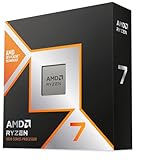
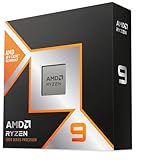
- Top Pick: Intel® Core™ Ultra 9 Processor 285K 24 cores (8 P-cores + 16 E-cores) up to 5.7 GHz
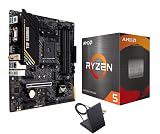
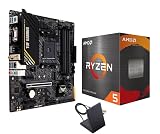
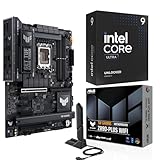
- Best Value: Micro Center CPU Motherboard Combo – Ultra 9 285K 24-Cores LGA 1851 Desktop Processor Bundle with Tuf Gaming Z890-Plus WiFi Motherboard
- Premium Choice: Intel® Core™ Ultra 9 Desktop Processor 285 24 cores (8 P-cores + 16 E-cores) up to 5.6 GHz
Choosing a flagship gaming CPU in 2026 comes down to two very different philosophies. Intel’s Core Ultra 9 285K throws 24 cores at the problem — eight performance cores and sixteen efficient cores clocking up to 5.7 GHz — betting that raw multithreaded throughput and a modern, power-efficient tile design will carry you through gaming, streaming and heavy creative work alike. AMD’s Ryzen 9 9950X3D takes the opposite approach: fewer cores, but a stack of 3D V-Cache sitting directly on top of one of them, feeding the CPU the game data it needs before it ever has to reach out to system memory.
That distinction matters more now than it did a generation ago. GPUs have gotten fast enough that a mid-range card at 1080p or 1440p will regularly wait on the processor, and modern engines — UE5 traversal, large-scale simulation titles, competitive shooters chasing 300+ FPS — are exactly the workloads that expose the gap. At the same time, the platform decision behind each chip (LGA 1851 versus AM5) determines what you can drop in two or three years from now. Below we break down how the two flagships actually differ, and which one belongs in your build.
As an Amazon Associate we earn from qualifying purchases at no extra cost to you. Product prices and availability are accurate as of the date shown and are subject to change.






⚡ Save on Your Next PC — Amazon Prime
Prime members get fast free shipping on the systems above, plus early access to Prime Day & Black Friday PC deals. New members get a 30-day free trial.
Watch: Intel Core Ultra 9 vs Ryzen 9: 2026 Battle — Video Review
Quick Verdict
The Ryzen 9 9950X3D is the better buy for anyone whose primary goal is frame rate, especially at 1080p and 1440p with a high-end GPU — it wins the majority of CPU-limited games and still holds its own in rendering and compiling thanks to 16 full SMT cores. The Core Ultra 9 285K is the smarter pick if gaming is one job among several: it’s excellent at heavily threaded productivity, runs cooler and quieter than Intel’s previous flagship, and its Z890 platform brings Thunderbolt, an integrated Arc GPU and QuickSync encoding that streamers and video editors genuinely use.
Key Differences
- Gaming performance: The 9950X3D’s 3D V-Cache gives it a consistent lead in CPU-bound titles; the 285K is competitive but generally trails in the games that stress cache the hardest.
- Core layout: Intel splits 24 cores into 8 P-cores plus 16 E-cores with no hyperthreading (24 threads); AMD runs 16 full cores with SMT for 32 threads, split across two CCDs.
- Platform longevity: AM5 has been supported across multiple Ryzen generations and remains the safer long-term socket; LGA 1851 and Z890 are newer but have a shorter runway.
- Power and thermals: Intel’s tile design idles efficiently and behaves well in games, but sustained all-core workloads still pull serious wattage on both platforms — a 360 mm AIO or a top-tier air cooler is the realistic baseline.
- Integrated features: The 285K ships with Arc graphics, an NPU and native Thunderbolt 4 support; the 9950X3D’s integrated graphics are display-out only, so you’ll lean on your discrete GPU for encoding.
- Memory support: Z890 boards support CUDIMM kits for higher stable speeds, while AM5 continues to reward tuned DDR5 around the 6000–6400 sweet spot.
Intel Core Ultra 9 285K
The Core Ultra 9 285K is Intel’s most balanced flagship in years. The move to a tiled architecture cut power draw and package temperatures dramatically compared to the old i9 line, and the sixteen E-cores mean background tasks — Discord, OBS, a browser with forty tabs, a compile in the background — barely touch your P-cores. In Blender, Handbrake, DaVinci Resolve and code compilation it’s genuinely excellent, and QuickSync remains the fastest, lowest-effort way to encode a stream without taxing your GPU.
If you’d rather not source parts separately, the Micro Center CPU + motherboard combo pairing the Ultra 9 285K with the TUF Gaming Z890-Plus WiFi is a clean way to get a validated board and chip in one go. Budget-conscious builders have good options in the same family too: the locked Core Ultra 9 285 delivers nearly the same 24-core configuration at up to 5.6 GHz with lower power draw, while the Core Ultra 7 270K Plus keeps the 8P+16E layout at up to 5.5 GHz for less money. Intel’s older i9-14900K still boosts to 6.0 GHz and can be a bargain on a discounted LGA 1700 board, but it runs hotter and it’s a platform dead end.
AMD Ryzen 9 9950X3D
The Ryzen 9 9950X3D exists to solve one problem: game engines hate memory latency. By stacking extra L3 cache on one CCD, AMD keeps hot game data on-die, and the result is a top-of-chart CPU in simulation titles, MMOs, strategy games and esports shooters — the categories where a fast GPU spends most of its time waiting. In many of those workloads it leads by a wide enough margin that a lesser GPU on this platform can outperform a stronger GPU paired with a slower CPU.
What makes it a flagship rather than a niche gaming part is the second CCD. You get 16 cores and 32 threads of conventional Zen 5 performance for rendering, exports and virtualization, with AMD’s scheduling handing game threads to the cache-equipped die automatically. It also lands on AM5, which has proven to be a long-lived socket — a meaningful advantage if you plan to reuse your board and DDR5 for a future drop-in upgrade.
Which Should You Buy?
- For maximum frame rates at 1080p/1440p: pick the Ryzen 9 9950X3D — the cache advantage is decisive in CPU-limited games.
- For streaming, editing and mixed creative work: pick the Core Ultra 9 285K for QuickSync, the NPU and strong threaded throughput.
- For 4K gaming with a high-end GPU: either works, since you’ll be GPU-bound most of the time — buy whichever is cheaper on the day.
- For the simplest possible build: the Micro Center 285K and TUF Gaming Z890-Plus WiFi bundle removes compatibility guesswork.
- For value: the Core Ultra 7 270K Plus or locked Ultra 9 285 gets you most of the performance for noticeably less outlay.
Frequently Asked Questions
Is the Ryzen 9 9950X3D always faster in games?
No. Its lead is largest in cache-sensitive, CPU-limited titles at lower resolutions. At 4K with maximum settings, most games become GPU-bound and the two flagships land within a few percent of each other.