🛒 Best Price Today on Amazon
Prime members get fast, free shipping on everything above, plus member-only deals. New members get a 30-day free trial — cancel anytime.
- What kind of CPU rating are you reading?
- Use your workload to choose the evidence
- Read single-thread and multi-thread scores together
- Core counts need architectural context
- GHz is not a complete performance score
- Gaming ratings require a complete test system
- Power ratings and cooling are separate checks
- Compatibility comes before performance ranking
- Create a fair comparison record
- Frequently asked questions
CPU ratings are useful when they connect a processor to the work you want it to do. A benchmark score, a clock frequency and a power specification measure different things. None is a universal rating for how good a complete computer will feel.
This guide explains how to compare processor specifications and benchmark results without confusing them with ratings on cooler clips, power cables or industrial controllers. Those components have their own purposes, but they are not substitutes for a desktop or laptop processor comparison.
What kind of CPU rating are you reading?
Measure / What it describes / What it does not prove
- Single-thread benchmark
-
What it describes: Performance in a defined lightly threaded test
What it does not prove: Speed in every application
- Multi-thread benchmark
-
What it describes: Throughput in a workload using multiple threads
What it does not prove: That every game benefits equally
- Game frame-rate result
-
What it describes: Performance in a particular game and system
What it does not prove: The same result with another GPU or settings
- Clock frequency
-
What it describes: A specified or observed operating frequency
What it does not prove: A cross-generation performance ranking
- Power specification
-
What it describes: A manufacturer-defined power parameter
What it does not prove: Exact whole-PC wall consumption
Always read the benchmark name and version. Scores from different programs do not share a common scale, and results from different versions of one program may not be directly comparable. A larger unexplained number is not automatically a better buying recommendation.
Use your workload to choose the evidence
Start with the tasks that consume your time: compiling code, editing photographs, exporting video, working with large spreadsheets or playing particular games. Look for measurements of those applications or a clearly related workload.
A general benchmark can help narrow the field, but it should not override an application-specific limitation. Check whether the application uses the CPU, graphics hardware or another accelerator for the operation you care about. Buying extra CPU cores will not necessarily improve a task limited elsewhere.
Read single-thread and multi-thread scores together
Single-thread results help describe work that cannot spread effectively across many CPU threads. Multi-thread tests exercise a different part of the processor’s capabilities. Intel’s benchmark-reading guide distinguishes these categories and advises checking graphics performance for gaming systems too.
Neither category should become the only rating. A machine used for both interactive work and long exports may need a balance. Also check how long a benchmark runs: a short result may not reflect sustained operation inside a particular cooling and power design.
Core counts need architectural context
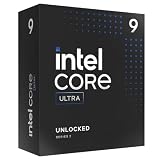
Core and thread counts are specifications, not interchangeable performance units. Intel’s Core Ultra 7 265K, for example, combines eight performance cores and twelve efficient cores for twenty total cores and twenty threads. Its official specification page separates those numbers.
Do not compare that twenty-core figure with another architecture as though each core does identical work. Check actual results and the operating conditions. Likewise, a higher thread count does not guarantee lower latency in a task that relies on a smaller number of active threads.
GHz is not a complete performance score
Base and boost clocks have different meanings, and an advertised maximum does not promise that every core runs at that frequency continuously. Temperature, power limits and the workload affect observed operation. Intel explains these distinctions in its clock-speed guide.
Use frequency to understand a processor within its context, then use comparable tests to evaluate real performance. Comparing GHz alone across different generations or architectures can hide changes in the amount of useful work completed per clock.
Gaming ratings require a complete test system
Record the GPU, memory configuration, resolution, quality preset and game version. A powerful graphics card at low settings can expose CPU differences that become less visible when the graphics workload increases. That does not make either test wrong; it means they answer different questions.
Look beyond an average frame rate when possible. Frame-time consistency and slower portions of a run can matter to perceived smoothness. Check how the reviewer defines and calculates those metrics before comparing them with another publication’s figures.
Do not treat generated-frame output, native-rendering results and different upscaling modes as identical measurements. Save the test settings alongside the number so that a future comparison does not lose the information that made the result meaningful.
Power ratings and cooling are separate checks
Manufacturers use defined power terms that need their accompanying documentation. A processor’s listed power value is not the wall-socket consumption of the entire computer. Motherboard settings, cooling, graphics hardware and the workload all belong in a complete system evaluation.
Check the motherboard’s support list and a cooler’s documented socket compatibility before buying. A mounting clip’s material rating or a cable seller’s claimed wattage does not establish CPU performance, cooler suitability or complete-system reliability.
For laptops, examine results for the specific computer rather than relying only on the chip name. The cooling design and selected power profile are part of what you are buying. Compare plugged-in and battery behavior separately if both matter to you.
Compatibility comes before performance ranking
Write down the exact motherboard, socket, memory type and required BIOS version. A processor near the top of a chart is not an upgrade if it cannot work in your board. Include a new motherboard and memory in the cost when a platform change is necessary.
For an existing machine, compare the expected benefit against the full upgrade cost. If your workload is limited by memory capacity or storage behavior, solving that constraint may be more useful than buying a higher-scoring CPU. Diagnose the problem before ordering parts.
Create a fair comparison record
- Exact processor and whether it is desktop or mobile.
- Benchmark name, version and workload.
- Operating system, memory and graphics configuration.
- Power profile, cooling and relevant firmware details.
- Average result and any reported variation.
- Complete platform cost and required compatibility changes.
Prefer several relevant measurements over a single composite score. If two results disagree, investigate the conditions before averaging them. A stable explanation of the difference is more useful than a precise-looking number built from incompatible tests.
Frequently asked questions
Can one CPU rating identify the best processor?
Only for a defined question and set of conditions. A buying decision should combine relevant performance evidence, compatibility, cost and the way you use the computer.
Is a higher power rating better?
No. It is not a quality score. Check workload performance and the cooling and power requirements together rather than treating greater power demand as a benefit.
Should I compare a laptop and desktop CPU by name?
Use measurements of the actual systems. Similar naming does not establish the same power settings, cooling or sustained performance.
What should I do with an unexplained score?
Find the test methodology and configuration. If that information is unavailable, treat the score as incomplete evidence and avoid making it the deciding factor.