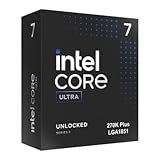
- Top Pick: Intel® Core™ Ultra 7 Processor 270K Plus 24 cores (8 P-cores + 16 E-cores) up to 5.5 GHz
- Best Value: (Amazon.co.jp Exclusive) Intel Core Ultra 7 Processor 270K Plus (Arrow Lake, LGA 1851), 24 Cores (8P + 16E), Up to 5.50 GHz, Equipped with 36 MB Cache, Box Version BX80768270K/AZ
- Premium Choice: Intel® Core™ Ultra 5 Processor 250K Plus 18 cores (6 P-cores + 12 E-cores) up to 5.3 GHz
Intel’s Core Ultra 7 270K Plus arrives as a refreshed Arrow Lake desktop processor aimed squarely at enthusiasts who want strong multi-core throughput alongside gaming-friendly clock speeds. With 24 cores split into 8 performance and 16 efficient cores, boosting up to 5.5 GHz on the LGA 1851 platform, it targets the sweet spot between mainstream and high-end desktop builds.
We dug into what the 270K Plus offers versus its siblings and the broader Ultra lineup to help you decide whether it belongs in your next build. From core layout to platform requirements and the combo bundles that simplify shopping, here’s an honest look at where this chip fits.
As an Amazon Associate we earn from qualifying purchases at no extra cost to you. Product prices and availability are accurate as of the date shown and are subject to change.



🎮 Get More From Your Setup — Free
Prime Gaming gives you free PC games every month, in-game loot, and a free Twitch channel sub — plus fast free shipping on all the gear above. New members get a 30-day free trial.
Watch: Intel Ultra 270k Plus — Video Review
Design & Build
The Core Ultra 7 270K Plus uses Intel’s Arrow Lake architecture on the LGA 1851 socket, which means it requires a Z890 or compatible motherboard rather than dropping into older boards. The 24-core hybrid layout pairs 8 P-cores with 16 E-cores and 36MB of cache, a configuration designed to juggle heavy multithreaded work and responsive gaming. The unlocked “K” designation confirms full overclocking support for tuners. Intel also offers regional box variants like the Amazon.co.jp exclusive BX80768270K, so verify you’re buying the version with the warranty and support that applies to your region.
Performance
The 270K Plus slots neatly between the 6-P-core Core Ultra 5 250K Plus and the flagship Core Ultra 9 285K. Its 8 P-cores and 5.5 GHz boost make it a capable gaming chip, while the 16 E-cores give it serious muscle for content creation, compiling, and streaming while you play. Against the 285K, you give up two-tenths of a gigahertz on boost and some headroom, but you save meaningfully on cost. For most enthusiasts who game and create rather than run professional rendering farms, the 270K Plus hits a more sensible price-to-performance balance than reaching for the flagship. Pairing it with fast DDR5 and a capable Z890 board unlocks its full potential.
Pros & Cons
- 24 cores deliver excellent multithreaded performance for creators
- 5.5 GHz boost keeps gaming performance competitive
- Fully unlocked for overclocking enthusiasts
- Combo bundles available with Z890 boards to simplify buying
- Requires new LGA 1851 platform, adding motherboard cost
- Regional box variants can complicate warranty coverage
- Marginal gaming gains over cheaper chips in GPU-bound titles
Alternatives to Consider
Budget-focused builders should look at the Core Ultra 5 250K Plus, which trims core count but keeps strong gaming clocks for less. Those wanting the absolute peak of Intel’s desktop stack can step up to the Core Ultra 9 285K with its higher boost and more headroom. If you’d rather skip part-picking, a Micro Center CPU and motherboard combo bundling the 270K Plus with a Z890 board removes the guesswork and often saves money.
Related Guides
- Best Fifine Stream Deck (2026)
- Best Screen Size For Gaming (2026)
- Best Computer For Gaming (2026)
- Best Gaming Device (2026)
- Best Buy Laptops Gaming (2026)
Frequently Asked Questions
What motherboard does the 270K Plus need?
It uses the LGA 1851 socket, so you’ll need a Z890 or compatible board. It won’t work in older LGA 1700 motherboards, so budget for a platform upgrade if you’re coming from a previous generation.
Is the 270K Plus good for gaming?
Yes. Its 8 performance cores and 5.5 GHz boost handle modern games well. In heavily GPU-bound titles the difference versus cheaper chips shrinks, but it’s a strong all-around gaming and productivity processor.
How does it compare to the Core Ultra 9 285K?
The 285K boosts slightly higher to 5.7 GHz and offers a bit more headroom, but the 270K Plus delivers most of the real-world performance for less money, making it the better value for most enthusiasts.
Should I buy a CPU and motherboard combo?
Combos like the Micro Center bundle with a Z890 board can save money and eliminate compatibility guesswork. If you’re comfortable pairing components yourself, buying separately gives you more board choice.
Verdict
The Core Ultra 7 270K Plus is a well-judged enthusiast processor that balances 24-core productivity power with capable gaming clocks. It’s the smart middle ground between the value-oriented 250K Plus and the flagship 285K. Factor in the LGA 1851 platform cost, and if a combo bundle fits your build, this chip anchors a fast, versatile desktop without the flagship price.