🛒 Best Price Today on Amazon
Prime members get fast, free shipping on everything above, plus member-only deals. New members get a 30-day free trial — cancel anytime.
Managing dynamic broadcasts requires rapid scene switching, audio adjustment, and instant app launching. Exploring stream deck alternatives helps creators discover physical and digital control surfaces tailored to distinct production needs without locked ecosystem restrictions. Modern desktop software supports customized input profiles.
How to Choose Stream Deck Alternatives
Selecting the right control surface requires evaluating key density, budget limits, tactile preference, and system compatibility. Production workflows vary between single-screen streaming and multi-monitor broadcast management. Matching interface hardware to exact operational demands prevents paying for unneeded dials or extra physical displays.
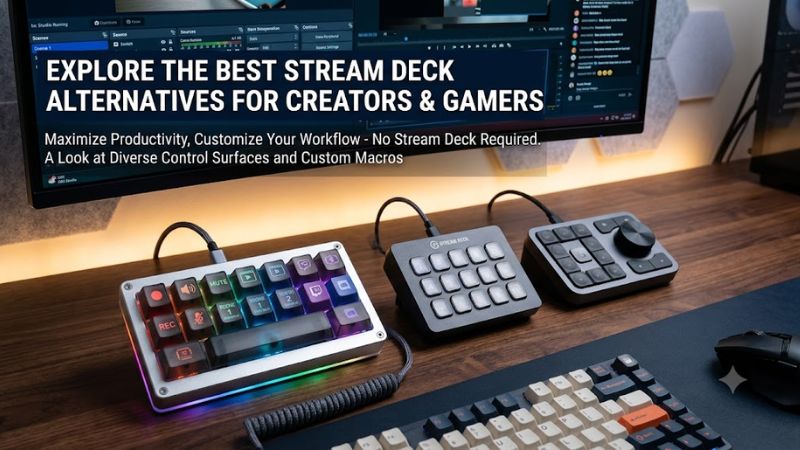
Key Count and Display Type
Physical screen real estate determines how many commands remain visible without opening secondary pages. Keypads with customizable LCD icons offer instant visual identification for streaming scenes and active micro macros. High-resolution screens reduce setup confusion during live production by clearly displaying specific status toggles.
Choosing fifteen active display keys provides a ideal balance for standard broadcast workflows without cluttering desktop surfaces. Users managing extensive scene layouts benefit from folder hierarchies or page switching features. Compact display arrangements keep crucial commands accessible while minimizing total desk footprint.
Budget and Device Repurposing
Mobile software controllers offer exceptional value by converting existing smartphones or tablets into functional touch surfaces. Utilizing active local Wi-Fi or USB tethering eliminates hardware purchase expenses while delivering customizable touch grids. App solutions allow extensive macro building without requiring dedicated USB desk space.
Software licensing for mobile control suites typically involves small one-time fees rather than ongoing subscription costs. Users can test interface functionality on personal mobile hardware before committing to dedicated production equipment. Touchscreen options work efficiently for secondary media controls and scene transitions.
Dial Integration and Tactile Feedback
Analog dials allow precise numerical adjustments for volume channels, microphone gain, and color grading parameters. Rotating physical knobs provides accurate control that binary press buttons cannot match during complex broadcasts. Tactile rotary dials let creators modify desktop settings without shifting eyes away from active monitors.
Combining physical push buttons alongside analog dials creates a hybrid interface suited for combined audio and visual tasks. Multi-function knobs often feature push-to-mute triggers for immediate microphone silencing. Streamers managing multiple audio channels gain significant operational control from physical dial inputs.
Hardware Compatibility and OS Integration
System connectivity relies on standard USB Type-C or Type-A interfaces with minimal background CPU overhead. Universal compatibility across Windows 10, Windows 11, and macOS ensures reliable profile operation across different workstation setups. Verifying low latency driver requirements prevents unexpected input delay during broadcasts.
Hardware compatibility extends to third-party broadcasting tools like OBS Studio, Twitch, and Spotify through active open plugins. Native plugin support enables direct software feedback without complex manual keystroke mapping. Choosing open controllers ensures long-term utility across shifting software environments.
Top Stream Deck Alternatives
| Product | Best For | Key Spec | Compatibility | Watch Out For |
| Razer Stream Controller X | Best Overall | 15 LCD Keys (15Hz) | Windows 10/11, macOS | Requires Loupedeck Software |
| Touch Portal Pro | Best Value | Unlimited Touch Pages | Android, iOS, Windows, macOS | Requires Separate Mobile Device |
| Loupedeck Live S | Best For Mixed Control | 2 Dials, 15 Touch Keys | Windows 10/11, macOS | Non-Detachable USB Cable |
| VSDinside Stream Dock M18 | Best For Hybrid Keypad | 15 LCD Keys, 3 Buttons | Windows 10/11, macOS | Lacks Analog Dial Controls |
Finding suitable stream deck alternatives depends on whether your setup benefits from physical keys or flexible touch displays. The following options highlight leading choices across hardware and software categories.
Razer Stream Controller X
Broadcasters seeking traditional physical buttons with crisp visual feedback will find strong performance in this dedicated unit. Featuring 15 customizable LCD keys operating on a detachable magnetic stand, this controller delivers crisp icon visibility. The chassis connects via a standard USB Type-C cable and uses 15Hz panel refresh rates.
This model is ideal for dedicated content creators who want reliable physical key responses during live broadcasts. However, the system relies entirely on Loupedeck background software, which consumes approximately 250MB of RAM. Power users requiring physical dials or sliders should select multi-input devices instead of button-only units.
Touch Portal Pro
Creators looking to minimize gear costs can convert existing Android or iOS mobile devices into powerful control surfaces. Touch Portal offers full grid customization, endless sub-pages, and local network or wired USB connectivity. The Pro upgrade costs $14.99 as a single purchase and operates seamlessly on Windows 10, Windows 11, and macOS.
This software setup suits budget-focused streamers who already possess a spare tablet or smartphone. It supports advanced multi-action macros, OBS Studio scene changes, and local Twitch chat integration. The lack of physical tactile feedback means operators must look directly at the screen to confirm button activations.
Loupedeck Live S
Streamers managing real-time audio adjustments benefit greatly from a surface combining touch buttons with physical dials. The Loupedeck Live S features two analog rotary knobs, four tactile push buttons, and fifteen touch-sensitive screen regions. The compact housing connects directly through USB and offers custom vibration feedback upon touch.
This device suits video editors and podcasters who frequently adjust master gain levels or application volumes on the fly. The dual multi-function dials feature integrated push toggles for rapid audio mutes. Potential buyers should note the fixed USB cable design, which prevents using custom aftermarket cables on desktop setups.
VSDinside Stream Dock M18
Users looking for dedicated hardware with added physical shortcuts will appreciate this flexible desktop key pad device. The Stream Dock M18 includes 15 programmable LCD keys supplemented by 3 distinct side keys and an RGB light strip. The unit operates over standard USB Type-A connections and features dynamic plugin profile switching.
This controller suits entry-level streamers seeking complete visual key customization at competitive price points. The physical side buttons allow instant page changes without taking up main screen positions. Its primary trade-off is a less mature plugin marketplace compared to long-standing software ecosystems.
FAQ: Stream Deck Alternatives
Understanding compatibility, software demands, and input options helps narrow down the right controller for your desk. Here are clear answers to common questions about alternative broadcast hardware options.
Are stream deck alternatives fully compatible with OBS Studio?
Most modern stream deck alternatives support direct native integration with OBS Studio through dedicated software plugins. Drivers automatically pass scene transitions, source toggles, and audio mutes to active broadcasting sessions. This direct connection ensures reliable visual state feedback without relying on basic keyboard macros.
Users running custom OBS Studio builds can also map global hotkeys if native plugin support is absent. Plugin updates are maintained frequently by device manufacturers to match current OBS Studio software releases. Confirming active plugin status in your device control panel prevents missing key actions.
Can mobile phone apps replace dedicated hardware control decks?
Mobile applications provide equivalent command functionality to physical control decks by using local network protocols. Software options like Touch Portal display custom icon grids, execute complex multi-step macros, and control local media. Connecting via USB tethering eliminates potential wireless latency during live broadcasts.
The primary difference remains the absence of physical tactile feedback when pressing touchscreen buttons. Using a mobile phone requires mounting the device securely near your primary monitor for quick access. For creators with spare mobile hardware, app solutions deliver full control at low cost.
Do stream deck alternatives require paid software subscriptions?
Most alternative hardware controllers include full software suite access without requiring recurring monthly subscription fees. Desktop configuration apps for devices like Razer and Loupedeck download free of charge from official sites. Mobile software alternatives typically use optional one-time license fees for full key access.
Users should verify software license models before purchasing third-party utility applications for custom keypads. Standard hardware drivers remain permanently unlocked for profile building and plugin downloads. Choosing perpetual licenses protects creators from unexpected ongoing operational costs.
How do rotary dials improve stream audio and media control?
Rotary dials provide continuous numerical parameter control, allowing smooth volume fades and precise microphone gain tweaks. Unlike standard press buttons that step volume in fixed increments, analog dials deliver fluid adjustments during live broadcasts. Broadcasters can fine-tune background music levels without opening mixer windows.
Many rotary knobs also integrate push-button actions to instantly mute active audio channels when tapped. This dual functionality keeps desktop layouts clean while expanding physical control options. Audio-heavy production workflows gain significant precision from physical knob inputs.
Final Thoughts
Upgrading your broadcast environment with functional stream deck alternatives streamlines media management, scene changes, and production macros. Choosing between physical keypads, hybrid dial controllers, or mobile software applications depends on your exact desk space and budget limits. Modern control surfaces deliver responsive desktop management for creators.