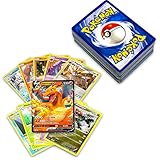
- Top Pick: 50+ Official Pokemon Cards Collection with 5 Foils in Any Combination and at Least 1 Rarity, GX, EX, FA, Tag Team, Or Secret Rare
- Best Value: THE TRADING CARD BLUEPRINT: The 2025 Beginner's Guide to Collecting, Valuing, and Profiting from Pokémon, Sports, and TCG Cards (Without Getting Scammed)
- Premium Choice: Pokémon TCG: Mega Evolution—Pitch Black Booster Bundle
To start collecting Pokémon cards, buy one Elite Trainer Box from a current in-print set, pick up a hundred penny sleeves and a side-loading binder, and decide up front whether you are collecting to complete sets, to chase specific artwork, or to play competitively. That is genuinely the whole starting checklist. Everything else — grading, vintage, sealed investing — is a decision you can make months later, once you know what you actually enjoy.
As an Amazon Associate I earn from qualifying purchases.
🛒 Best Price Today on Amazon
Prime members get fast, free shipping on everything above, plus member-only deals. New members get a 30-day free trial — cancel anytime.
Pokémon Games Worth Playing While You Collect
| Game | Platform | Genre | Why It’s Great | Rating |
|---|---|---|---|---|
| Pokémon TCG Pocket | iOS, Android | Card collecting | Free daily packs let you learn card rarity without spending money | 8.5/10 |
| Pokémon TCG Live | PC, macOS, iOS, Android | Digital card battler | Test a deck for free before buying a single physical card | 7.4/10 |
| Pokémon Trading Card Game | Game Boy Color | Digital card battler | Still the best tutorial for the actual rules ever made | 8.8/10 |
| Pokémon Scarlet & Violet | Switch | Open-world RPG | Open-world Paldea plus two substantial story expansions | 7.9/10 |
| Pokémon Legends: Arceus | Switch | Action RPG | Catching Pokémon has never felt this hands-on | 8.8/10 |
| Pokémon Sword & Shield | Switch | RPG | Crown Tundra and Isle of Armor are among the series’ best content | 8.0/10 |
| Pokémon: Let’s Go, Pikachu! & Eevee! | Switch | RPG | The gentlest possible entry point into Kanto | 7.8/10 |
| Pokémon UNITE | Switch, iOS, Android | MOBA | A surprisingly deep team battler that is free to try | 7.5/10 |
Step One: Decide What Kind of Collector You Are
This single decision saves the most money. There are four broad types. Set collectors aim to complete a master set, every card from one expansion. Art collectors chase specific illustrations, alternate arts or a single favourite Pokémon across every set it has appeared in. Players buy only what a competitive deck needs. Sealed collectors buy boxes and never open them.
Art collecting is the cheapest and most satisfying way in for most people, because you can buy exactly the cards you want as singles rather than gambling on packs. Set collecting is the most expensive per card if done with sealed product, and dramatically cheaper if done with singles. Know which one you are before you spend anything.
Step Two: What to Buy First When Starting to Collect Pokémon Cards
An Elite Trainer Box is the best first purchase, full stop. It contains multiple booster packs, sleeves, damage counters, dice, a condition marker and a storage box, all for less than buying those pieces separately. Buy one from whatever set is currently on shelves.
Avoid a full booster box until you are certain you enjoy this, because it is a significant outlay and the value is entirely luck-dependent. Avoid loose packs at supermarkets too — they are frequently weighed or resealed. And for any specific card you actually want, buy the single. Buying a single card is almost always cheaper than the expected cost of pulling it. If you plan to stream unboxings, our roundup of the best webcams and capture cards for streaming covers what to buy, and the best gaming laptops under $1000 lists machines that handle streaming software comfortably.
Step Three: Protect the Cards Properly
The protection stack goes: penny sleeve first, then either a toploader or a semi-rigid holder for anything valuable, then a binder or storage box for the rest. Penny sleeves cost almost nothing and prevent the surface scratching that destroys a card’s grade.
Two crucial rules. Use side-loading binder pages, not top-loading ones — top-loaders let cards slide out when the binder tilts. And check that any sleeve, page or holder is explicitly PVC-free and acid-free. Old PVC pages leach plasticisers that permanently cloud and warp card surfaces over years, and it is the most common way collections get quietly ruined. Store binders upright, not stacked flat, and keep them out of direct sunlight.
Step Four: Where to Buy Pokémon Cards Safely
Big-box retailers and dedicated hobby shops are the safest sources for sealed product, since the chain of custody is short. Local game stores are worth the small premium because staff can identify sets, explain rarity and often run casual play nights.
For singles, established card marketplaces with condition standards and buyer protection are the norm. Be extremely cautious of unusually cheap “lots” and “mystery boxes” on general auction sites — they are the single largest source of counterfeit cards entering collections. Learning card values takes screen time, and a decent second display makes comparison shopping much easier; see the best budget monitors for dual-screen setups.
Step Five: How to Spot Fake Pokémon Cards
Counterfeits are common and mostly easy to catch. Hold the card up to a bright light: a genuine card has a thin black layer in the middle of the cardstock that blocks most light, while fakes usually glow through. Feel the texture — real cards have a subtle, consistent finish, while fakes are often either glossy and slick or oddly rough.
Check the back. The blue swirl pattern should be crisp and correctly coloured; fakes are frequently too dark, too purple or blurry at the edges. Compare the font of the HP number and the energy symbols against a card you know is genuine. Spelling errors, wrong energy costs and impossible rarity symbols are dead giveaways. And be suspicious of any card that is holographic across the entire front, including the text box, when the real version is not.
Step Six: Understanding Rarity and Pull Rates
Modern sets use a tiered rarity structure: commons and uncommons fill most of a pack, then rares, then holo rares, then the modern chase tiers — double rares, illustration rares, special illustration rares and hyper rares. Roughly speaking, the top chase tiers appear in only a small fraction of packs, which is exactly why buying singles is more efficient than chasing.
Every pack in a modern set contains a guaranteed number of reverse-holo and higher-rarity slots, so you are never opening a pack of pure commons. Understanding which slot your chase card lives in tells you honestly how many packs it would take. Tracking all of it in a spreadsheet is standard practice, and the best mechanical keyboards for typing makes that data entry noticeably less tedious.
Step Seven: Should You Grade Your Cards?
Grading — sending a card to PSA, CGC or Beckett to be authenticated, assessed and sealed in a slab — only makes financial sense when the graded value substantially exceeds the raw value plus the grading fee and shipping. For most modern cards, it does not.
Grade when three things are true: the card is genuinely valuable raw, it looks flawless under a bright light with no whitening on the back edges, and it is centred well. Otherwise, sleeve it and enjoy it. Newer collectors routinely spend more on grading than the returned slabs are worth. Good lighting is essential for assessing centring and surface, and the best desk lamps and RGB lighting for desks covers options that make flaws visible.
Step Eight: Set a Budget and Stick to It
Decide a monthly figure before you buy anything, and treat pack openings as entertainment spending rather than investment. The cards you keep longest are almost always the ones you chose deliberately, not the ones luck handed you. A sensible first three months looks like one Elite Trainer Box, one binder with sleeves, and a small budget for singles of the cards you genuinely love.
Community is the other half of the hobby. Local league nights, trade groups and online communities will teach you more about condition, pricing and fakes in a month than any article. If you join voice calls for trades and deck talk, the best gaming headsets with clear microphones lists options that do not make you sound distant.
Frequently Asked Questions About How to Start Collecting Pokémon Cards
How much money do I need to start collecting Pokémon cards?
Far less than most people assume. An Elite Trainer Box, a hundred penny sleeves and a side-loading binder will get you fully started, and after that you can add singles at whatever pace suits you. Many serious collectors spend nothing on sealed product and buy only the specific cards they want.
Should I open packs or buy single cards?
Buy singles if you want specific cards, and open packs only because you enjoy the experience of opening them. Statistically, the expected cost of pulling any particular chase card from packs is significantly higher than simply purchasing that card outright from a reputable singles marketplace.
Are old Pokémon cards from my childhood worth anything?
Usually only a small amount, unless they are first-edition or shadowless Base Set cards, holographic rares in excellent condition, or scarce promotional cards. Condition dominates value entirely, so a played, creased holo from 1999 is worth a tiny fraction of a mint copy of the same card.
What is the best way to store a growing Pokémon card collection?
Use penny sleeves for everything you care about, toploaders or semi-rigid holders for high-value cards, and PVC-free side-loading binder pages for display. Store binders upright rather than stacked, keep them away from direct sunlight and humidity, and use cardboard storage boxes for bulk commons and uncommons.
As an Amazon Associate we earn from qualifying purchases at no extra cost to you.