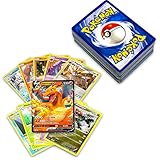
- Top Pick: 50+ Official Pokemon Cards Collection with 5 Foils in Any Combination and at Least 1 Rarity, GX, EX, FA, Tag Team, Or Secret Rare
- Best Value: 50 Pokemon Cards Plus a Rare Legendary Pokemon Card | Bundle with LCC Deck Box
- Premium Choice: Pokemon TCG: Random Cards from Every Series, 50 Cards in Each Lot
Here is how to play Pokemon cardsOn your turn you draw a card, attach one Energy, play Trainers, evolve, and finish by attacking. Knock out an opponent’s Pokémon and you take a Prize card. Take all six Prizes and you win.
That is the whole game in outline, but the details are where new players get stuck — Supporter limits, Special Conditions, retreat costs, and the rules for what the first player can and cannot do. This guide covers every one of them.
As an Amazon Associate I earn from qualifying purchases.
| Game | Platform | Genre | Why It’s Great | Rating |
|---|---|---|---|---|
| Pokémon TCG Pocket | iOS, Android | Digital Card Game | Simplified 20-card decks make learning the basics painless | 8.5/10 |
| Pokémon TCG Live | PC, Mac, iOS, Android | Digital Card Game | Free, full-rules practice with the current Standard format | 7.5/10 |
| Pokémon Trading Card Game (GBC) | Game Boy Color, 3DS VC | RPG / Card Game | Still the best single-player tutorial the TCG has ever had | 8.5/10 |
| Pokémon Card GB2 | Game Boy Color | RPG / Card Game | Expanded sequel with Team Rocket decks and deeper duels | 8/10 |
| Pokémon Scarlet & Violet | Nintendo Switch | RPG | The generation that anchors most current TCG set art | 7.5/10 |
| Pokémon Legends: Arceus | Nintendo Switch | Action RPG | Its Hisuian forms became some of the most collectible cards | 9/10 |
| Pokémon Sword & Shield | Nintendo Switch | RPG | Introduced Gigantamax designs that shaped the VMAX card era | 8/10 |
| Pokémon Café ReMix | Switch, iOS, Android | Puzzle | A relaxed entry point for younger players between card matches | 7/10 |
🛒 Best Price Today on Amazon
Prime members get fast, free shipping on everything above, plus member-only deals. New members get a 30-day free trial — cancel anytime.
How to Play Pokemon Cards: Setting Up a Match
Both players shuffle their 60-card decks and draw seven cards. You must have at least one Basic Pokémon in that opening hand. If you do not, you reveal your hand, shuffle it back, and draw seven again — this is called a mulligan, and your opponent draws one extra card for each mulligan you take.
Next, each player counts the top six cards of their deck and sets them aside face down as Prize cards. Flip a coin or roll a die to decide who goes first, then both players flip their Pokémon face up and the game begins. The player going first may not attack on their opening turn and may not play a Supporter card on that turn either.
The Turn Structure, Step by Step
Every turn follows the same shape. First, draw one card from your deck — if you cannot, you lose immediately. Second, take any number of these actions in any order: place Basic Pokémon onto your Bench, evolve Pokémon that have been in play since before this turn, attach exactly one Energy card, play Item cards freely, play one Supporter card, play one Stadium card, use Abilities, and retreat your Active Pokémon once. Third, declare an attack, which ends your turn immediately.
Energy, Attacks, and Damage
Attacks list an Energy cost in the top-left corner. A colorless symbol accepts any Energy type; a Fire, Water, or Psychic symbol demands that specific type. You may attach only one Energy card per turn, which is the single biggest pacing constraint in the game and the reason two-Energy attackers dominate competitive play. Damage is tracked with counters placed on the defending Pokémon; when total damage meets or exceeds its HP, it is knocked out.
Weakness, Resistance, and Prize Cards
Check the bottom bar of every card. Weakness doubles incoming damage from that type. Resistance subtracts a flat amount, usually 30. Apply Weakness first, then Resistance, then any other effects. When you knock out an opponent’s Pokémon, you take one Prize card into your hand — but two Prizes for a Pokémon ex or V, and three for a VMAX or VSTAR. That asymmetry is the core strategic tension of modern decks: big attackers hit hard but hand your opponent a shortcut to victory.
Special Conditions You Need to Memorize
There are five: Asleep, Burned, Confused, Paralyzed, and Poisoned. Poisoned places one damage counter between turns. Burned places two damage counters between turns, then you flip a coin and remove the Burn on heads. Asleep means you cannot attack or retreat; flip between turns and wake up on heads. Paralyzed also blocks attacking and retreating and clears at the end of your next turn. Confused forces a coin flip when you attack — on tails the attack fails and you place three damage counters on yourself. Asleep, Confused, and Paralyzed cannot stack with each other, but Burned and Poisoned can apply alongside any of them.
Retreating and Switching
Your Active Pokémon can retreat once per turn by discarding Energy equal to its retreat cost, then swapping with a Benched Pokémon. Retreating does not end your turn. Items like Switch move Pokémon without paying a cost, which is why nearly every competitive deck runs several of them. A stuck, heavily damaged Active Pokémon with a three-Energy retreat cost is the most common way beginners lose a game they were winning.
Building Your First 60-Card Deck
A deck must be exactly 60 cards. You may include at most four copies of any card sharing the same name, with basic Energy cards exempt from that limit. A reliable beginner ratio is roughly 14 to 18 Pokémon, 28 to 32 Trainer cards, and 12 to 15 Energy. Build around one main attacker, include the full evolution line, and add plenty of draw Supporters like Professor’s Research so you actually see your good cards. Pre-built Battle Decks and the Trainer’s Toolkit are the cheapest legal starting points.
Formats, Events, and Where to Play
Standard format uses only the most recent sets and rotates every autumn; Expanded reaches back much further. Local game stores run weekly League play and periodic League Challenges, and the organized play ladder climbs through Regionals to the World Championships. Playing digitally through TCG Live is the fastest way to learn, and if you want a machine that handles it alongside everything else, our best budget gaming PC guide covers sensible builds. For streaming your matches, a decent USB microphone and webcam buying guide matters more than raw graphics power.
Common Beginner Mistakes
Four errors show up constantly: attaching Energy to a Pokémon that will be knocked out next turn, running too few draw Supporters, evolving a Pokémon the same turn you played it (which is illegal), and forgetting that attacking ends your turn. Also remember that placing damage counters is not the same as dealing damage — some effects care about the difference. Long deck-building sessions and card sorting go easier with proper lighting and a comfortable setup; see our gaming desk and chair buying guide if you are setting up a play space.
If you play mostly on a phone or tablet, TCG Pocket’s simplified 20-card format is genuinely the fastest on-ramp to the real rules. On a larger screen, colour accuracy helps when you are inspecting card art and rarity, which our best monitor for creators and gamers roundup covers. For local tournament trips, portable play on a handheld is ideal — the best handheld gaming device guide lists options that run TCG Live comfortably. And if you record deck profiles for YouTube, a capture card buying guide will save you a lot of editing pain.
Frequently Asked Questions
How many cards do you need to play Pokemon cards?
A legal deck is exactly 60 cards, no more and no fewer. You also need six-sided dice or damage counters to track damage, a coin or die for flip effects, and ideally sleeves to protect your cards. Most starter products such as Battle Decks include counters and a coin in the box.
Can you evolve a Pokemon the same turn you play it?
No. A Pokémon must have been in play since the beginning of your turn before you can evolve it, and you cannot evolve on the very first turn of the game. The one exception is a Pokémon you placed during setup, which can be evolved on your first turn of play if the turn structure otherwise allows it.
How do you win a game of Pokemon cards?
There are three win conditions. You win by taking all six of your Prize cards, by knocking out every Pokémon your opponent has in play so they cannot replace their Active Pokémon, or by your opponent being unable to draw a card at the start of their turn because their deck is empty.
What is the difference between an Item, a Supporter, and a Stadium?
Items can be played in unlimited numbers each turn and are discarded after use. Supporters are limited to one per turn and are usually the most powerful draw or search effects. Stadiums stay in play affecting both players, and playing a new one discards the old one, with a limit of one Stadium played per turn.
As an Amazon Associate we earn from qualifying purchases at no extra cost to you.