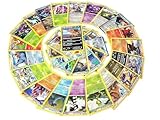
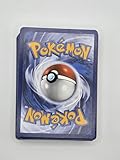
You can spot a fake Pokemon card in under a minute with three checks: hold it up to a bright light to see whether the black inner core blocks the glow, compare the back’s blue swirl and the front’s yellow border against a card you know is real, and read the tiny text at the bottom of the card for font, spacing and copyright errors. Counterfeits have improved enormously since the cheap 1999 “Charizard” knock-offs, but almost all of them still fail on card stock, print registration and surface texture. Once you know what genuine cardboard looks and feels like, the fakes stop being convincing.
As an Amazon Associate I earn from qualifying purchases.
🛒 Best Price Today on Amazon
Prime members get fast, free shipping on everything above, plus member-only deals. New members get a 30-day free trial — cancel anytime.
How to Spot Fake Pokemon Cards: The Quick Answer
Genuine Pokemon cards are made of three layers: two sheets of card stock sandwiching a thin black film. That black core is the single hardest thing for counterfeiters to reproduce cheaply, which is why the light test works so well. Hold the card flat against a phone torch or a bright window. A real card lets through almost nothing except a dim glow at the very edges. A fake usually lights up like tracing paper, and you can often read the artwork through the back. Everything else on this page is confirmation of what that first test tells you.
| Game | Platform | Genre | Why It’s Great | Rating |
|---|---|---|---|---|
| Pokemon Trading Card Game | Game Boy Color / 3DS Virtual Console | Digital card battler | The 1998 classic that teaches the real rules through a full RPG-style island tournament | 9.0/10 |
| Pokemon TCG Live | PC, Mac, iOS, Android | Digital card battler | Free official client with current Standard-legal sets and code-card redemption | 7.8/10 |
| Pokemon Scarlet & Violet | Nintendo Switch | Open-world RPG | The first fully open-world mainline Pokemon adventure with three parallel storylines | 8.2/10 |
| Pokemon Legends: Arceus | Nintendo Switch | Action RPG | Reinvents catching as a real-time stealth mechanic in ancient Hisui | 8.9/10 |
| Yu-Gi-Oh! Master Duel | PC, Switch, PS5, Xbox | Digital card battler | Free, gorgeous presentation and a card pool of over 10,000 cards | 8.5/10 |
| Magic: The Gathering Arena | PC, Mac, Mobile | Digital card battler | The deepest deckbuilding system in the genre with rotating Standard formats | 8.7/10 |
| Marvel Snap | PC, iOS, Android | Card battler | Six-turn matches and a location system that keeps games under four minutes | 8.8/10 |
| Slay the Spire | PC, Switch, PS4, Xbox, Mobile | Roguelike deckbuilder | The template every modern deckbuilding roguelike still borrows from | 9.5/10 |
The Light Test: The Fastest Way to Spot Fake Pokemon Cards
Put the card face down on a torch beam in a dim room. A genuine card shows a faint halo around the border and nothing through the middle. A counterfeit printed on single-ply stock glows evenly, and mid-tier fakes show a blotchy, uneven glow because the black layer is a printed grey ink rather than a laminated film. If you own a card you are certain is genuine — anything from a sealed Elite Trainer Box or a booster pack you opened yourself — test both together. Comparison is far more reliable than memory.
The destructive version of this test is the rip test: tearing a corner reveals the black core instantly. Only ever do it on a card you are already convinced is fake, and never on someone else’s card.
Check the Back: Borders, Swirls and Colour
The back of a Pokemon card is a fixed design that has barely changed since 1999, which makes it an excellent control. Look at the blue field: on real cards it is a deep, slightly purple-leaning blue with a crisp swirl pattern and clean white highlights. Fakes are commonly too dark, too bright, or shifted toward teal. Check the red-and-white Poke Ball in the centre — the black outline should be even in thickness, and the word “Pokemon” should have sharp, unbroken letter edges under magnification.
Also check centring on the back. Real cards are machine cut and rarely perfect, but the yellow-to-blue offset is usually modest. Wildly off-centre backs combined with any other red flag on this list mean you are holding a proxy or a counterfeit.
Front-of-Card Red Flags: Fonts, HP and Energy Symbols
Counterfeiters recreate card text by hand, and small errors pile up. Check the HP number: it should sit in a bold, tightly kerned font at the top right, with the letters “HP” smaller than the digits. Energy symbols in attack costs should be perfectly round with clean internal icons — fakes often have squashed circles or muddy symbols. Read the attack text out loud; spelling mistakes, American versus British spellings mixed together, and odd grammar (“Basic Pokemon” written as “Basic Pokemon Card”) are dead giveaways.
The other giveaway is impossible cards. A Pokemon that never received an ex, V, GX or VMAX card, a starter with 340 HP, or a “1st Edition” stamp on a set that never had one all mean the card is fantasy-made rather than merely badly printed.
Texture, Weight and the Feel Test
Genuine cards use a subtle linen finish; run a fingernail lightly across the surface and you should feel a faint grain rather than glass. Most fakes are printed on glossy stock that feels slippery and reflects light in a single sheet. Weight is another cheap test — a modern Pokemon card weighs roughly 1.7 grams, and a jeweller’s scale accurate to 0.01 g will flag anything meaningfully lighter or heavier. Bend resistance matters too: real cards spring back, while thin fakes crease and hold the crease.
Holo Patterns and Rarity Symbols on Fake Pokemon Cards
On a genuine holo, the foil is confined to specific areas — usually the artwork window on older cards, or defined texture patterns on modern ex and Illustration Rares. A card where the entire face, including the text box and the yellow border, shimmers uniformly is almost always counterfeit. Check the rarity symbol in the bottom corner too: a circle for common, diamond for uncommon, star for rare. A “rare” card carrying a common circle is a mismatch that legitimate print runs do not produce.
Read the Bottom Line: Set Symbol, Number and Copyright
The bottom strip carries the illustrator credit, the collector number (such as 025/165), the rarity symbol and the copyright line naming Pokemon, Nintendo, Creatures and GAME FREAK. Cross-check the collector number against the real set list on any card database. If the card claims to be number 210 in a 165-card set, it is fake. Fakes frequently blur or omit the illustrator name entirely because it is the smallest text on the card and the hardest to reproduce at low print resolution.
Where Fakes Come From and How to Buy Safely
The overwhelming majority of counterfeits enter collections through marketplace listings for “sealed” booster boxes at half the going rate, mystery packs, and bulk lots sold by accounts with no card-specific feedback. Buy sealed product from established retailers, buy singles from dedicated card shops or graded slabs from PSA, CGC or Beckett, and treat any deal that is dramatically cheaper than the market as a warning rather than a win. Custom art cards sold openly as “oricas” are legal and fun — the problem is only ever when they are resold as genuine.
If you are building a card-battling setup at home, the desk around it matters as much as the binder: our best gaming monitors buying guide covers panels that keep card text legible for hours, while the gaming desk and chair guide helps if you sort collections in long sessions. Deck-building on PC benefits from a comfortable wireless gaming mouse buying guide pick, and streaming your pack openings is much easier after reading our USB microphone buying guide and the companion webcam and capture card guide. If you play TCG Live on the move, the gaming laptop buying guide explains which specs actually matter.
Frequently Asked Questions
Does the light test damage a Pokemon card?
No. Shining a torch through a card is completely non-destructive as long as you avoid pressing the card against a hot bulb. Use an LED phone torch or a bright window instead of an incandescent lamp, and hold the card by its edges so you do not add fingerprints or bend the corners while testing it.
Are Japanese Pokemon cards fake if they look different?
Not at all. Japanese cards are printed by a different licensee and use a distinct back design, thinner border styling and a different card stock feel, but they are entirely genuine. They are actually harder to counterfeit convincingly because of their tighter print quality, which is one reason many collectors prefer buying Japanese sealed product.
Can a graded Pokemon card still be fake?
Reputable graders such as PSA, CGC and Beckett authenticate before grading, so a genuine slab from those companies is a strong guarantee. The real risk is counterfeit slabs: check the certification number against the grader’s online verification database, and inspect the label font, hologram and case seams for tampering before you buy.
Are proxy or custom Pokemon cards illegal to own?
Owning a clearly marked custom or proxy card for personal playtesting is generally fine, and many players use them to test decks before buying expensive singles. They are not tournament legal at any official Play! Pokemon event, and selling them as authentic cards crosses into fraud, which is where the genuine legal problems begin.
As an Amazon Associate we earn from qualifying purchases at no extra cost to you.