🛒 Best Price Today on Amazon
Prime members get fast, free shipping on everything above, plus member-only deals. New members get a 30-day free trial — cancel anytime.
- Likely Causes
- Fix 1: Remove In-Game Frame Rate Caps and VSync Locks
- Fix 2: Eliminate Background GPU Context Consumers
- Fix 3: Toggle Game Mode and Hardware-Accelerated GPU Scheduling
- Fix 4: Correct Windows Power Plan and GPU Power Management
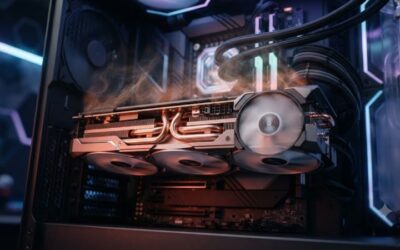
- Fix 5: Rule Out Thermal Throttling
- Fix 6: Clean Driver Reinstall via DDU
- Fix 8: Edit Engine Configuration Files for Hidden Bottlenecks
- If Nothing Works
- FAQ
- Related Guides
- Top Pick: DROP + EPOS H3X Gaming Headset with Microphone, Over-Ear Closed-Back Design, Leatherette and Suede Earpads, Compatible with PC, PS4, PS5, Switch, Xbox, Mac, Mobile, and More (Meteorite),Grey
- Best Value: 77Pcs Gamer Video Game Birthday Party Decorations Kit for Kids & Boys
- Premium Choice: Redragon H889 Wireless Gaming Headset, 4-in-1 (2.4G/BT/USB/3.5mm), 51H Battery & Play-While-Charging, 7.1 Spatial Audio & 53mm Drivers, Detachable Mic, Multi-Platform Headphone for PC/PS5/NS/Mobile
When GPU usage drops while gaming, your graphics card stops doing the work you paid it to do. The result is a stuttering frame rate, sudden drops into single-digit FPS, or a game that feels like it is running on hardware half its age. Unlike a complete crash or a blue screen, this symptom is quiet — Task Manager shows a healthy CPU, the game still renders, but your GPU sits idle at 10 to 30 percent utilization when it should be pushing 85 to 99 percent.
In practice, the cause depends on the engine. Unreal Engine 5 titles often bottleneck on CPU draw calls or virtual shadow map generation, starving the GPU of work. Unity-based games frequently hit a single-threaded physics or scripting bottleneck. Older DirectX 11 titles may be limited by driver-side command buffer submission. Understanding which engine you are dealing with narrows the search significantly, but the checks below cover the most common failure points across all of them.
As an Amazon Associate we earn from qualifying purchases at no extra cost to you.


Likely Causes
| Cause | How to confirm | Fix difficulty |
|---|---|---|
| In-game FPS cap or VSync clamping | Disable cap in settings, observe GPU usage in MSI Afterburner OSD | Trivial |
| Background overlay or capture app hogging GPU context | Fresh boot with no startup apps, compare usage | Easy |
| Windows Game Mode or HAGS conflict | Toggle Windows 11 Settings > Gaming > Game Mode and Graphics > Hardware-Accelerated GPU Scheduling | Easy |
| Power plan set to Balanced or OEM silent profile | Check active plan, switch to High Performance, retest | Easy |
| NVIDIA or AMD power management forcing low clocks | Set Power Management Mode to Prefer Maximum Performance | Moderate |
| Thermal throttling on GPU or CPU | Monitor with HWiNFO64 during a drop, check for 83 C+ hotspots | Moderate |
| Outdated or corrupted GPU driver | DDU clean install with latest WHQL driver | Moderate |
| Full-screen optimizations or DPI mismatch breaking exclusive fullscreen | Right-click .exe > Properties > Compatibility | Easy |
| Engine-level config forcing low draw distance or async compute off | Inspect .ini or .config files in user AppData folder | Advanced |
Fix 1: Remove In-Game Frame Rate Caps and VSync Locks
How to check
Open the game’s video or graphics settings menu. Look for “Max FPS,” “Frame Limit,” “VSync,” or “Adaptive Sync.” Launch MSI Afterburner, enable the on-screen display for GPU Usage %, and play for a minute. If usage snaps to a flat 50 or 60 percent matching your monitor’s refresh divided by two, the cap is the culprit.
What to do
Set Max FPS to “Uncapped” or 0. Disable VSync or switch to an adaptive mode (NVIDIA Reflex, AMD Anti-Lag). Some engines expose a separate “Background FPS Limit” in advanced or developer settings — check the console with tilde and type LimitFPS 0 for Unreal Engine titles.
How to undo it
Re-enable the cap if you are running on a laptop and need to manage heat. You can also set a cap slightly below your refresh rate (e.g., 141 for a 144 Hz panel) to reduce tearing without a hard lock.
Fix 2: Eliminate Background GPU Context Consumers
How to check
Open Task Manager (Ctrl+Shift+Esc), go to the Performance tab > GPU. Note which processes appear under GPU utilization outside your game. Common offenders: Xbox Game Bar overlay (GameBar.exe), Discord hardware acceleration, OBS Studio, Chrome with hardware acceleration enabled, and the NVIDIA ShadowPlay recording buffer.
What to do
Use msconfig or Task Manager’s Startup tab to disable non-essential launch entries. For Discord, go to Settings > Advanced > disable “Hardware Acceleration.” For Xbox Game Bar, open Settings > Gaming > Xbox Game Bar and toggle it off. Relaunch the game and observe usage.
How to undo it
Re-enable the startup entries individually until you identify the specific conflict. This preserves your convenience features while keeping the game clean.
Fix 3: Toggle Game Mode and Hardware-Accelerated GPU Scheduling
How to check
Navigate to Windows Settings > Gaming > Game Mode. Then go to Settings > System > Display > Graphics > Change default graphics settings. Note the state of Hardware-Accelerated GPU Scheduling (HAGS).
What to do
If Game Mode is on, turn it off and reboot. HAGS interacts poorly with some NVIDIA drivers (particularly branch 555 and 560 on RTX 40-series cards in early 2026 builds), causing the scheduler to starve the GPU of queued draw calls. Try toggling HAGS off, rebooting, and retesting.
How to undo it
Return both toggles to their original state via the same menus. Reboot for changes to take effect.
Fix 4: Correct Windows Power Plan and GPU Power Management
How to check
Open Settings > System > Power. If the plan reads “Balanced” or an OEM profile (Dell Optimized, Lenovo Vantage Power Plan), the GPU may be clocking down between frames. In NVIDIA Control Panel > Manage 3D Settings > Power Management Mode, confirm whether “Normal” is selected. In AMD Software, check Radeon Settings > Graphics > Power Tuning.
What to do
Switch Windows to High Performance. In NVIDIA Control Panel, set Power Management Mode to “Prefer Maximum Performance.” In AMD Software, set the GPU tuning profile to “Gaming” or raise the power limit slider to +20%. Apply, restart the game, and watch GPU clock speeds in HWiNFO64.
How to undo it
Revert the power plan to Balanced if thermals or noise become unacceptable. Lower the AMD power limit or set NVIDIA back to Normal.
Fix 5: Rule Out Thermal Throttling
How to check
Run HWiNFO64 in sensors-only mode. Start the game and play until usage drops. Watch “GPU Core Virtual Voltage,” “GPU Temperature,” and “GPU Power (Board).” If temps exceed 83 C or the “GPU Slowdown Temperature” flag reads “Yes,” the card is throttling clocks to protect itself.
What to do
Check physical airflow: dust in heatsink fins, obstructed intake, or a failed fan bearing. If you are comfortable, apply a fresh layer of thermal paste to the GPU die (note: this voids warranty on most cards). As a software stopgap, reduce the power limit by 10 to 15% in the vendor control panel to keep clocks sustainable.
How to undo it
Return the power limit slider to default. If you repasted, no undo is needed — just reassemble with new mounting hardware if applicable.
Fix 6: Clean Driver Reinstall via DDU
How to check
Corrupted driver state is invisible until you compare a fresh install. If the drops began after a Windows Update or a driver version bump, this is a strong candidate.
What to do
Download the Display Driver Uninstaller (DDU) from Guru3D. Boot into Safe Mode. Run DDU and select “Clean and Restart.” Back in normal Windows, install the latest WHQL driver from NVIDIA or AMD’s official site. Do not install the GeForce Experience or AMD Adrenalise overlay if you are testing — install the driver package only.
How to undo it
There is no meaningful undo for a clean install, but you can roll back to a known-stable driver via Device Manager > Display Adapters > Properties > Driver tab > Roll Back Driver.
Fix 7: Disable Full-Screen Optimizations and Check Exclusive Fullscreen
How to check
Some games default to “Borderless Window” or “Windowed Fullscreen,” which routes rendering through the Desktop Window Manager compositor. This adds latency and can reduce measured GPU utilization because DWM introduces its own frame pacing. Navigate to the game’s installation folder, right-click the main .exe, select Properties > Compatibility tab.
What to do
Check “Disable fullscreen optimizations.” Also check “Run this program as an administrator” if the engine needs to bypass DWM. In the game’s own graphics settings, switch from “Windowed” or “Borderless” to “Exclusive Fullscreen” if available.
How to undo it
Uncheck both boxes. Switch back to Borderless in the game if you prefer Alt+Tab speed.
Fix 8: Edit Engine Configuration Files for Hidden Bottlenecks
How to check
Unreal Engine games store user settings in %LOCALAPPDATA%\. Unity titles often use %LOCALAPPDATA%\ or a player.log that reveals async compute status.
What to do
Open the .ini or .json with Notepad. Search for “AsyncCompute,” “r.RHICmdBypass,” or “MaxFrameRate.” For UE5, setting r.RHICmdBypass=1 in a console command (tilde key) can reveal whether the RHI command buffer thread is the bottleneck. If usage jumps, the engine’s threading model is starving your GPU. Update to the latest game patch if available, as this is an engine-side issue.
How to undo it
Delete the modified .ini or .json before launching; the engine regenerates defaults automatically.
If Nothing Works
If all software-level fixes fail, the issue may be hardware. A failing VRM phase on the GPU’s power delivery circuitry can cause instantaneous clock collapse under load without triggering thermal sensors. Test with a different GPU if available. On multi-GPU or PCIe riser setups, check lspci or Device Manager to confirm the card is running at x16 Gen 4 and not silently dropping to x4 Gen 1 due to a seating issue.
As a last resort before RMA, run a GPU stress test (FurMark, 3DMark Speed Way) for 30 minutes. If usage drops during a pure stress test with nothing else running, the problem is almost certainly hardware-level and warrants a warranty claim.
FAQ
Why does my GPU usage drop only in certain scenes or areas?
This typically indicates a CPU-bound moment. A crowded open-world city, a large explosion effect, or a physics-heavy encounter can push a single thread to 100 percent, starving the GPU of draw commands. Check Task Manager during the drop — if one CPU core reads 95 to 100 percent while GPU usage falls, the bottleneck is CPU-side.
Can a bottlenecked CPU really cause GPU usage to drop?
Yes. Modern rendering pipelines submit draw calls from CPU threads to the GPU. If the CPU cannot produce work fast enough, the GPU sits idle waiting for instructions. This shows as low GPU utilization in monitoring tools even though the GPU is fully functional.
Is 30 percent GPU usage always a problem?
No. If your game is capped at 60 FPS and your GPU can render that at 30 percent, the card is doing exactly what it is told. The concern is when usage drops during uncapped scenes where the GPU should be saturated. Compare against expected utilization at your target resolution and settings.
Does RAM speed or capacity affect GPU usage?
Indirectly. Insufficient RAM (8 GB in a modern title) forces the system to page to disk, causing CPU stalls that starve the GPU. Slow RAM increases latency for the CPU-to-GPU command pipeline. Upgrading from 16 GB DDR4-2666 to 32 GB DDR5-6000 can raise GPU utilization in CPU-limited titles by 5 to 15 percentage points.