🛒 Best Price Today on Amazon
Prime members get fast, free shipping on everything above, plus member-only deals. New members get a 30-day free trial — cancel anytime.
- Likely Causes
- Fix 1: Free Up VRAM by Closing Background Consumers
- Fix 2: Lower GPU-Intensive Settings
- Fix 3: Clear the Shader Cache
- Fix 4: Increase the Windows TDR Delay
- Fix 5: Perform a Clean Driver Install with DDU
- Fix 6: Revert GPU Overclocks and Adjust Power Limit
- Fix 7: Verify Hardware Integrity
- If Nothing Works
- FAQ
- Related Guides
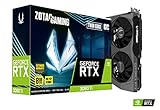
- Top Pick: MSI Gaming GeForce RTX 3090 24GB GDRR6X 384-Bit HDMI/DP Nvlink Torx Fan 3 Ampere Architecture OC Graphics Card (RTX 3090 VENTUS 3X 24G OC) (Renewed)
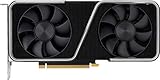
- Best Value: NVIDIA GeForce RTX 3090 Founders Edition Graphics Card (Renewed)
- Premium Choice: nVidia GeForce RTX 3090 Founders Edition Graphics Card
If you are playing Cyberpunk 2077 and your screen freezes for a few seconds before snapping back to desktop, Windows almost certainly logged a TDR (Timeout Detection and Recovery) event. The REDengine is extremely demanding on VRAM and command-buffer submission, which means the driver has less headroom to absorb a stall compared to engines that stream assets more conservatively. When the GPU fails to respond within the TDR window, nvlddmkm (NVIDIA) or amdkmdag (AMD) reports a hang, the driver resets, and the game process loses its context. What you see as a “driver timeout” is actually a chain reaction: a single overlong GPU command or VRAM exhaustion causes the watchdog to trip. This article walks you through the diagnostic and remediation steps in order of invasiveness.
Likely Causes
| Cause | How to confirm | Fix difficulty |
|---|---|---|
| VRAM overflow from maxed ray-traced settings | Monitor GPU memory usage with HWiNFO or MSI Afterburner while reproducing the crash; look for usage pinned at 100% of available VRAM | Easy |
| Background processes holding VRAM (browsers, overlays) | Open Task Manager’s GPU column and sort by dedicated memory; check if total exceeds what Cyberpunk can safely use alongside those processes | Easy |
| Corrupt or partial shader cache | Check Event Viewer for repeated Event ID 4101 entries clustered after a driver update or game patch; clear the cache and test | Medium |
| GPU overclock or unstable memory timings | Revert all clocks to stock via MSI Afterburner or the driver control panel; test for stability over a 30-minute session | Medium |
| Insufficient power delivery or PSU sag under transient load | Use the GPU’s power draw graph in HWiNFO alongside voltage rail monitoring during the crash moment; look for drops below 11.4V on the 12V rail | Hard |
| Failing GPU hardware (VRAM or core) | Run multiple passes of OCCT or FurMark stress tests; if artifacts or crashes appear without Cyberpunk running, suspect hardware | Hard |
Fix 1: Free Up VRAM by Closing Background Consumers
How to check
Before launching Cyberpunk, open Task Manager (Ctrl+Shift+Esc), navigate to the Performance tab, and note your total VRAM. Then check Processes with the “Dedicated GPU memory” column visible. Chrome tabs with video decoding, Discord screen-sharing, and RGB software like iCUE or Armoury Crate can each hold 100-400 MB. If Cyberpunk’s settings push you within 200 MB of your VRAM ceiling, any background allocation triggers the hang.
As an Amazon Associate we earn from qualifying purchases at no extra cost to you.



What to do
Close hardware-accelerated browsers, disable Discord overlay (User Settings, Game Overlay, toggle off), exit iCUE or equivalent, and if you run NVIDIA, turn off the “In-Game Overlay” in GeForce Experience under Settings, General. Launch the game, reproduce the scenario that previously crashed, and observe whether the timeout recurs.
How to undo it
Re-enable overlays and relaunch background applications normally once you have identified the culprit or confirmed the issue is not VRAM pressure.
Fix 2: Lower GPU-Intensive Settings
How to check
Open the Cyberpunk 2077 graphics settings menu. Pay special attention to Ray Traced: Shadows, Ray Traced: Global Illumination, Ray Traced: Reflections, and Multisampled Anti-Aliasing. On cards with 8 GB or less, maxing these simultaneously is a common trigger for command-buffer overruns that lead to TDR resets.
What to do
Drop ray-traced shadows to medium, turn off RT global illumination (use screen-space instead), reduce RT reflections to low, and set the DLSS or FSR mode to Performance or Balanced. These adjustments reduce per-frame command load and VRAM footprint without eliminating visual fidelity entirely.
How to undo it
Cyberpunk stores graphics presets in the file `settings/QCPCyberPunk2077.xml` under `C:\Users\[username]\Saved Games\CD Projekt Red\Cyberpunk 2077\`. Back up this file before changing settings, then restore it if you want to return to your previous configuration.
Fix 3: Clear the Shader Cache
How to check
If you recently updated a GPU driver or applied a game patch and crashes began immediately after, a stale shader cache is a probable cause. NVIDIA stores cached shaders in `C:\Users\[username]\AppData\Local\NVIDIA\DXCache` and `C:\Program Files\NVIDIA Corporation\NV_Cache`. AMD uses `C:\Users\[username]\AppData\Local\AMD\DxCache`.
What to do
Close the game and the launcher. Delete all files in the relevant DXCache folder. Relaunch Cyberpunk; the first session will compile shaders on the fly and may stutter briefly, but subsequent sessions should run clean. This removes any corrupted entries that could cause the driver to submit an invalid program.
How to undo it
The cache regenerates automatically on next launch. There is no undo needed.
Fix 4: Increase the Windows TDR Delay
How to check
Open Event Viewer and navigate to Windows Logs, System. Filter for Event ID 4101 from the “Display” source. The default TDR delay is 2 seconds; if your GPU occasionally needs slightly longer to complete a frame (due to a large open-world load in Night City), increasing the delay can prevent the watchdog from firing prematurely.
What to do
Open regedit as Administrator. Navigate to `HKEY_LOCAL_MACHINE\SYSTEM\CurrentControlSet\Control\GraphicsDrivers`. Create or modify the DWORD value `TdrDelay` and set it to 8 (decimal). Optionally create `TdrLevel` and set it to 3 (the default is also 3, so this only matters if you had previously disabled recovery). Reboot after the change.
How to undo it
Delete the `TdrDelay` value (or set it back to 2), then restart. If you created `TdrLevel`, delete it as well.
Fix 5: Perform a Clean Driver Install with DDU
How to check
Repeated crashes across multiple games, not just Cyberpunk, or crashes that persist even at stock clocks, suggest a driver stack corruption. Check whether a leftover component from a previous driver version remains by looking in `C:\Program Files\NVIDIA Corporation\` or `C:\Program Files\AMD\` for orphaned folders.
What to do
Download the Display Driver Uninstaller (DDU) from Wagnardsoft’s site. Boot into Safe Mode, run DDU, select “Clean and restart,” then install the latest driver in “Game Ready” or “Adrenalin” mode. After installation, re-enable any features you had configured in the control panel. Launch Cyberpunk and test the previously crashing area.
How to undo it
The new driver is now your installed driver. If the new version itself is problematic, run DDU again and install a previous version you know was stable.
Fix 6: Revert GPU Overclocks and Adjust Power Limit
How to check
If you use MSI Afterburner, EVGA Precision X1, or an AMD equivalent, open it and confirm whether core or memory clocks exceed reference specifications. Even a modest +50 MHz memory overclock can cause intermittent hangs during heavy VRAM read patterns like those in Night City’s dense interiors.
What to do
Reset all clock offsets to zero. If you want a safety margin, lower the power limit slider to 95% and reduce memory clock by 100 MHz below stock. Test with a 20-minute run through a previously crashing zone. If the crash disappears, you have identified an instability margin.
How to undo it
In MSI Afterburner, click the reset button (circular arrow icon) or delete your saved profile. Settings apply only within the utility’s runtime unless “Apply at startup” was checked.
Fix 7: Verify Hardware Integrity
How to check
Open your case and reseat the GPU in its PCIe slot. Ensure the power cables are firmly connected at both the PSU and GPU ends. For cards using 12VHPWR connectors, confirm the cable is fully inserted and not bent at a sharp angle within 35 mm of the connector. Run FurMark for 15 minutes or OCCT’s VRAM test; if errors appear outside of Cyberpunk, the problem is hardware.
What to do
Reseat the card, swap to a different PCIe slot on the motherboard, try a different power cable from the PSU, and monitor temperatures via HWiNFO. If the GPU core exceeds 88°C or the hotspot exceeds 110°C consistently, clean the cooler or consider repasting. If VRAM errors appear in OCCT, the card is failing.
How to undo it
Reverse any physical changes. There is no software undo for hardware intervention.
If Nothing Works
When all software-side fixes fail and the card is stable under synthetic benchmarks, consider that Cyberpunk’s 2.0 update and subsequent patches in 2026 may have introduced engine-specific regressions. Check the CD Projekt Red support site’s known-issues thread for your exact driver version. Some users have found that running the game in DirectX 12 mode rather than DX12 Ultimate, or forcing the older renderer via the `-renderer=dx12` launch argument in Steam (under Cyberpunk properties, General, Launch Options), avoids the specific command-buffer path that triggers the timeout on certain GPU architectures.
FAQ
Does this mean my GPU is dying?
Not necessarily. In the majority of Cyberpunk-specific TDR events, the cause is VRAM pressure or a shader cache conflict, both fully software-resolvable. Hardware failure typically shows crashes in multiple applications and artifacts during idle or benchmarking.
Will increasing TdrDelay fix it permanently?
It raises the threshold, meaning the watchdog tolerates a longer stall before resetting. If the underlying cause (overclock, VRAM exhaustion, failing hardware) persists, you may experience a longer freeze followed by a crash instead of the shorter reset. Use it as a diagnostic tool: if a longer delay lets the game resume normally, the issue is marginal timing rather than a hard fault.
Does the Steam overlay cause driver timeouts?
Rarely on its own, but it adds a per-frame injection that increases command-buffer depth. Combined with already-heavy ray-traced settings and limited VRAM, it can push the driver over the edge. Test by launching with the Steam overlay disabled in game properties.
Where are the Cyberpunk crash logs stored?
Check `C:\Users\[username]\Saved Games\CD Projekt Red\Cyberpunk 2077\crash.log` and `cyberpunk2077.log`. The log timestamps can be cross-referenced against the Event Viewer 4101 entries to confirm whether a specific area, enemy encounter, or ray-traced scene triggered the hang.