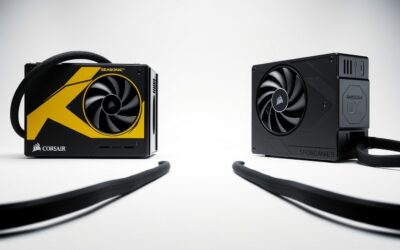
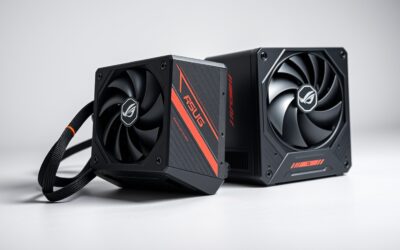
🛒 Best Price Today on Amazon
Prime members get fast, free shipping on everything above, plus member-only deals. New members get a 30-day free trial — cancel anytime.
An best psu for an rtx 5090 build should balance wattage, transient handling, native 12V-2×6 cabling, efficiency, and case fit. NVIDIA lists a 1,000W PSU recommendation for the RTX 5090, while 1,200W-class models provide more system headroom for demanding CPUs and sustained workloads.
How to Choose an RTX 5090 PSU
For an RTX 5090, start with the complete system rather than the GPU alone. The card has a 575W rated board power, so the PSU also needs capacity for the CPU, storage, cooling, motherboard and short power excursions. A quality 1,000W unit can meet NVIDIA’s stated requirement, while 1,200W or higher leaves more room for high-end CPUs and future upgrades.
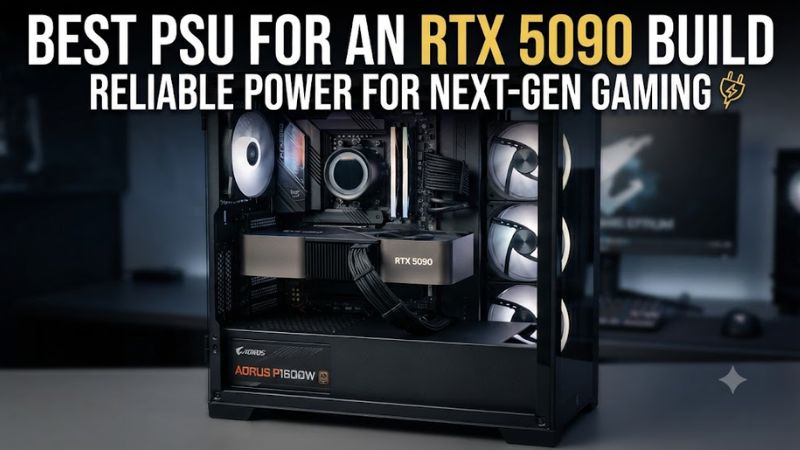
Wattage and Transient Headroom
The best psu for an rtx 5090 build depends partly on the processor paired with the graphics card. Tom’s Hardware recorded RTX 5090 power spikes reaching 659W in Cyberpunk 2077, with a high-power Core i9-14900K system potentially approaching the 900–1,000W range during combined demand. That makes system-level capacity more useful than GPU wattage alone.
A 1,000W PSU is therefore a legitimate starting point rather than an automatic requirement to buy larger. The MSI MAG A1000GL PCIE5 supplies 1,000W, supports ATX 3.1 and PCIe 5.1, and provides a 600W-rated 16-pin connection. It suits builds that stay within that capacity, while a 1,200W or 1,250W model gives more room for power-hungry CPUs.
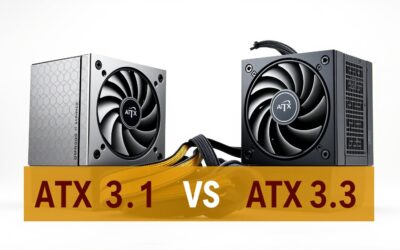
ATX 3.1 and 12V-2×6
ATX 3.1 and a native 12V-2×6 connection are useful compatibility targets when choosing the best psu for an rtx 5090 build. Current RTX 5090-oriented supplies from Corsair, Seasonic and MSI include modern 16-pin GPU cabling, reducing reliance on multi-plug adapter arrangements. MSI’s A1250GS, for example, provides two native 12V-2×6 outputs.
The connector still needs correct installation. A native cable does not make seating optional, and the PSU’s cable must be the one specified for that particular PSU family. Corsair’s current HX1200i includes two 12V-2×6 cables and dual-color connectors intended to make full insertion easier to confirm.
Efficiency, Cooling and Noise
Efficiency matters more in a high-wattage system because unused input power becomes heat inside the PSU. The best psu for an rtx 5090 build does not necessarily need the highest efficiency badge, but Gold is a common baseline and Platinum can reduce losses under suitable loads. Independent measurements also show that efficiency can vary substantially between normal and very light loads.
Cooling design affects acoustics when the RTX 5090 and CPU are both drawing heavily. The Corsair HX1200i uses a 140mm fluid-dynamic-bearing fan and Zero RPM mode, while the Seasonic Vertex GX ATX 3.1 uses a 135mm FDB fan with hybrid fan control. Both are conventional ATX units, but their physical length and cooling behavior should still be checked against the case.
Case and Platform Compatibility
Physical compatibility is easy to overlook when selecting the best psu for an rtx 5090 build. PSU clearance depends on the case, cable-routing space and GPU location, not only the ATX label. The Seasonic Vertex GX ATX 3.1 measures 160mm deep, while the Corsair HX1200i is listed at 200mm in one current configuration, so case clearance should be checked before purchase.
The PSU itself is independent of DDR4, DDR5 and CPU socket choice, but its available EPS connectors matter for the motherboard and processor. Corsair’s HX1200i provides two EPS12V connectors, and MSI’s A1250GS also provides two 4+4-pin EPS connectors. Always confirm the motherboard’s required CPU power connectors and the PSU cable layout.
Top Picks for RTX 5090 Builds
The four choices below cover different system priorities without treating every RTX 5090 build as identical. The 1,000W MSI model meets NVIDIA’s stated PSU recommendation, while the 1,200W and 1,250W choices add capacity for more demanding CPUs and system configurations. Independent PSU measurements are used for electrical-performance context rather than gaming FPS claims.
| Product | Best For | Key Spec | Compatibility | Watch Out For |
| Corsair HX1200i | Best Overall | 1200W, 80 PLUS Platinum | ATX 3.1, dual 12V-2×6 | 200mm-class chassis clearance |
| MSI MAG A1000GL PCIE5 | Best Value | 1000W, 80 PLUS Gold | ATX 3.1, 600W 16-pin | Less capacity for extreme CPUs |
| MSI MPG A1250GS PCIE5 | Best For High-End Systems | 1250W, dual 12V-2×6 | ATX 3.1, PCIe 5.1 | Gold rather than Platinum efficiency |
| Seasonic Vertex GX ATX 3.1 1200W | Best For Quiet Builds | 1200W, 80 PLUS Gold | ATX 3.1, 12V-2×6 | Premium pricing and 160mm depth |
Best Overall: Corsair HX1200i
The best psu for an rtx 5090 build for a high-end conventional tower is the Corsair HX1200i when its price and case dimensions fit the project. It supplies 1,200W, carries an 80 PLUS Platinum rating, supports ATX 3.1, and includes two 12V-2×6 cables. Corsair also provides a 10-year warranty and iCUE monitoring.
Its main weakness is not electrical capacity but chassis planning. The HX1200i is a relatively long ATX supply, and independent measurements found strong regulation and ripple performance but less impressive ATX 3.1 transient behavior at some high-load conditions. Buyers who need a compact PSU or do not want Corsair’s software ecosystem should consider another option.
Best Value: MSI MAG A1000GL PCIE5
The best psu for an rtx 5090 build on a tighter hardware budget can start with MSI’s MAG A1000GL PCIE5. It supplies 1,000W, uses ATX 3.1, carries 80 PLUS Gold certification, and has a PCIe 5.1 16-pin connector rated for 600W. Its 150mm depth also makes it easier to accommodate than some larger high-wattage alternatives.
The trade-off is capacity rather than basic connector support. A 1,000W unit matches NVIDIA’s published requirement, but a system with an unusually power-hungry CPU, extensive expansion hardware or aggressive power tuning has less spare capacity than a 1,200W-class PSU. Buyers planning such a configuration should look upward rather than treating 1,000W as universally sufficient.
Best For High-End Systems: MSI MPG A1250GS PCIE5
The MSI MPG A1250GS PCIE5 suits builders who want additional capacity without moving to a much larger wattage tier. It delivers 1,250W, uses ATX 3.1 and PCIe 5.1, and provides two native 12V-2×6 connectors rated at 600W each. MSI also specifies a fully modular design and a 10-year warranty.
Its real limitation is positioning: the extra capacity is most useful when the rest of the PC can actually demand it. It is also an 80 PLUS Gold unit rather than Platinum, so buyers prioritizing efficiency certification over capacity may prefer the HX1200i. Small-form-factor builders should also avoid assuming compatibility because this is a standard ATX design.
Best For Quiet Builds: Seasonic Vertex GX ATX 3.1 1200W
The Seasonic Vertex GX ATX 3.1 1200W is aimed at builders who want high capacity with a strong focus on acoustics. The current version supports ATX 3.1 and PCIe 5.1, uses a 135mm FDB fan with hybrid silent control, provides a native 12V-2×6 cable, and carries a 12-year warranty. Its rated capacity is 1,200W.
The weakness is value relative to newer alternatives. Independent measurements of the earlier Vertex GX-1200 platform found good electrical performance and low noise but also noted a relatively high price and weaker overall performance than some competing platforms. The current ATX 3.1 version updates the connector standard, so older ATX 3.0 measurements should not be treated as measurements of every current revision.
FAQ: RTX 5090 PSU Questions
The main buying decision comes down to the complete PC, because the RTX 5090’s 575W board power is only one part of total system demand. NVIDIA specifies 1,000W as the PSU recommendation, while larger units can provide additional capacity for high-end CPUs and other components.
Is 1000W enough for an RTX 5090?
Yes, 1,000W can meet NVIDIA’s published PSU recommendation for an RTX 5090, provided the PSU is a suitable quality unit and the complete system stays within its capacity. The MSI MAG A1000GL PCIE5 is one example with 1,000W capacity, ATX 3.1 support and a 600W-rated PCIe 5.1 16-pin connection.
The practical question is what CPU and other components accompany the GPU. Tom’s Hardware measured RTX 5090 spikes as high as 659W in one gaming workload and calculated that a powerful CPU could push combined system demand toward the upper range of a 1,000W PSU. A larger PSU therefore provides more margin, but it is not automatically required.
Is 1200W better for a 5090 build?
A 1,200W PSU provides more capacity than the 1,000W baseline and can be useful for a high-end CPU, additional drives and other demanding components. The Corsair HX1200i and Seasonic Vertex GX ATX 3.1 1200W both provide this capacity alongside modern GPU power connections.
That additional capacity should be viewed as system headroom rather than a performance upgrade. A PSU with more wattage does not make the RTX 5090 render games faster by itself, so the extra capacity is mainly relevant when the complete PC can draw enough power to benefit from it.
Does an RTX 5090 need a native 12V-2×6 cable?
A native 12V-2×6 cable is a sensible compatibility target for a new RTX 5090 PSU because current ATX 3.1 supplies can connect directly to compatible graphics cards. Corsair, Seasonic and MSI all document current PSU models with native 16-pin GPU connections for modern graphics cards.
The cable should match the exact PSU model, and the connector must be fully seated according to the manufacturer’s instructions. MSI uses dual-color connector designs on several models to make insertion easier to inspect, while Corsair supplies dual-color 12V-2×6 connectors on the current HX1200i.
Is ATX 3.1 required for an RTX 5090?
No, ATX 3.1 is not the same thing as NVIDIA’s 1,000W PSU requirement, but it is a useful standard to target for a new RTX 5090 system. Modern ATX 3.1 supplies are designed around transient power excursions and commonly include PCIe 5.1 GPU connectivity, matching the requirements of current high-end graphics hardware.
Older PSU standards can still appear in compatible configurations when the required adapters and connectors are supplied, but a new build has fewer cable and compatibility variables when the PSU already provides the appropriate 16-pin connection. The final choice should still account for wattage, protection, case clearance and the rest of the system.
Final Thoughts
The best psu for an rtx 5090 build depends on total system demand, case clearance and connector needs. NVIDIA’s 1,000W recommendation makes quality 1,000W units viable, while 1,200W to 1,250W models offer more capacity for high-end CPUs and demanding configurations. ATX 3.1 and native 12V-2×6 support are sensible priorities for a new build.