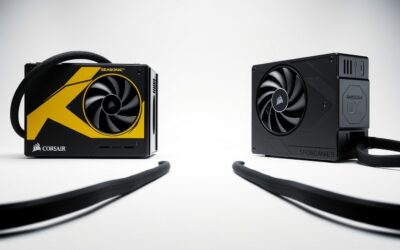
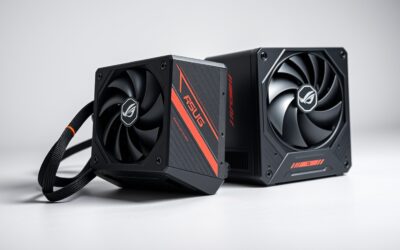
🛒 Best Price Today on Amazon
Prime members get fast, free shipping on everything above, plus member-only deals. New members get a 30-day free trial — cancel anytime.
NVIDIA specifies an 850W minimum PSU for the RTX 5080 Founders Edition, with more power potentially needed for some system configurations. The best power supply for an RTX 5080 build therefore starts at a quality 850W unit, while 1000W provides extra capacity for power-hungry CPUs and future upgrades.
How to Choose a Power Supply for an RTX 5080 Build
Choosing the best power supply for an RTX 5080 build is not simply a matter of buying the largest wattage available. Start with NVIDIA’s 850W baseline, then compare ATX 3.1 support, a native 12V-2×6 connection, chassis clearance, efficiency, and the capacity needed by the rest of the system.
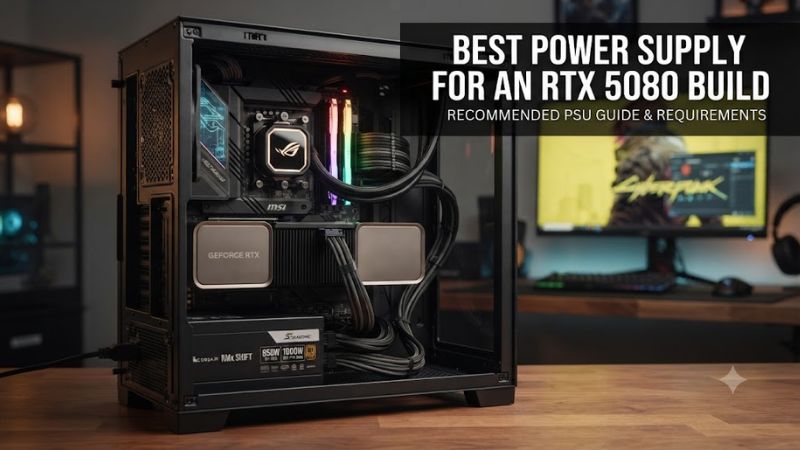
Start With Enough Continuous Power
For a standard RTX 5080 Founders Edition system, 850W is NVIDIA’s stated minimum. That makes the MSI MAG A850GL PCIE5 II a sensible value-oriented starting point: it supplies 850W continuously and is explicitly listed by MSI as supporting GeForce RTX 40 and 50 Series graphics cards.
Moving to 1000W is useful when the build also contains a high-consumption desktop CPU, numerous drives, pumps, or planned upgrades. It is headroom rather than an RTX 5080 requirement by itself. The Corsair RM1000x, Seasonic Vertex GX-1000, and be quiet! Straight Power 12 all provide that larger capacity.
Prefer a Native Modern GPU Connector
Connector compatibility matters as much as wattage when choosing the best power supply for an RTX 5080 build. NVIDIA accepts either its supplied adapter using three PCIe 8-pin PSU cables or one PCIe Gen 5 cable rated for at least 450W, so builders do not strictly need a native connector.
A native 12V-2×6 or PCIe 5.1 cable reduces the amount of cabling around the graphics card. Corsair’s current RM1000x includes a native 12V-2×6 cable, while MSI lists one PCIe 5.1 16-pin output on the MAG A850GL PCIE5 II. Those are cleaner choices for a fresh RTX 5080 build.
Check ATX 3.1 and Transient Capability
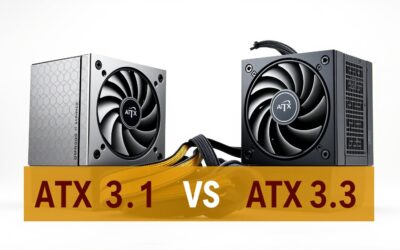
ATX 3.1 is worth prioritizing for a newly purchased high-end gaming PSU because the current models here are designed around newer GPU power requirements. Corsair’s 2024 RMx family is ATX 3.1 compliant, and MSI states that the A850GL PCIE5 II follows the Intel ATX 3.1 power supply design guide.
The same applies to the other premium choices. be quiet! identifies the Straight Power 12 as ATX 3.1 with PCIe 5.1 support, while Seasonic’s current Vertex GX line covers 750W through 1200W models. Buying the modern revision also avoids relying on adapters when a suitable native cable is available.
Measure the PSU Bay Before Buying
Physical compatibility can rule out an otherwise appropriate PSU. The MSI MAG A850GL PCIE5 II measures 140 × 150 × 86 mm, making it the shortest model among these choices. That can help in cases where a drive cage, cable channel, or front-mounted radiator reduces space around the PSU compartment.
The current Corsair RM1000x, Seasonic Vertex GX-1000, and be quiet! Straight Power 12 1000W are each 160 mm long. Confirm the case’s supported ATX PSU depth and leave additional room for modular plugs and cable bends rather than assuming every ATX chassis accepts the same PSU length.
Top Picks for an RTX 5080 Gaming PC
These four models cover different priorities without treating 1000W as mandatory. The Corsair is the balanced overall choice, MSI targets buyers satisfied with NVIDIA’s 850W baseline, be quiet! adds Platinum-rated efficiency, and Seasonic combines 1000W capacity with an unusually long manufacturer warranty.
| Product | Best For | Key Spec | Compatibility | Watch Out For |
| Corsair RM1000x ATX 3.1 | Best Overall | 1000W, 80 PLUS Gold | ATX 3.1, native 12V-2×6 | Gold rather than Platinum |
| MSI MAG A850GL PCIE5 II | Best Value | 850W, 80 PLUS Gold | ATX 3.1, PCIe 5.1 16-pin | Less spare wattage than 1000W |
| be quiet! Straight Power 12 1000W | Best For Efficiency | 1000W, 80 PLUS Platinum | ATX 3.1, 12V-2×6 | 160 mm body |
| Seasonic Vertex GX-1000 | Best For Long Warranty | 1000W, 80 PLUS Gold | ATX 3.1 family, modern GPU cabling | Gold rather than Platinum |
Corsair RM1000x ATX 3.1: Best Overall
The current RM1000x is a strong best power supply for an RTX 5080 build when 1000W of capacity is desirable without moving to an oversized unit. Corsair specifies ATX 3.1 compliance, a native 12V-2×6 cable, full modularity, 160 × 150 × 86 mm dimensions, and a ten-year warranty.
Its main compromise is efficiency class: this model is Gold-rated rather than Platinum-rated. Cybenetics measured about 91.1% average efficiency at 230V across more than 1,450 load combinations and roughly 24.8 dBA average noise, useful laboratory data but not a gaming FPS benchmark.
MSI MAG A850GL PCIE5 II: Best Value
The MAG A850GL PCIE5 II fits buyers who want the best power supply for an RTX 5080 build while staying at NVIDIA’s stated 850W minimum. MSI specifies an 850W output, ATX 3.1 readiness, one PCIe 5.1 16-pin connection, full modular cabling, and a compact 140 mm chassis depth.
The tradeoff is reduced expansion margin versus the three 1000W models. An 850W supply can meet NVIDIA’s Founders Edition recommendation, but NVIDIA also notes that higher power may be necessary depending on the full configuration. Buyers planning unusually demanding CPUs or extensive upgrades should calculate the complete system first.
be quiet! Straight Power 12 1000W: Best For Efficiency
The Straight Power 12 1000W suits builders who place efficiency high on the list. It combines 1000W continuous output with an 80 PLUS Platinum rating, ATX 3.1 support, a native 12V-2×6 connector, four conventional PCIe 6+2-pin connections, full modularity, and a ten-year warranty.
Its 160 × 150 × 86 mm enclosure is not unusually large for a 1000W ATX unit, but it requires more PSU-bay depth than MSI’s 140 mm model. That difference can matter in compact cases. Builders should also choose this model for its feature set rather than assuming Platinum certification changes gaming performance.
Seasonic Vertex GX-1000: Best For Long Warranty
The Vertex GX-1000 is aimed at builders who want 1000W capacity and extended manufacturer coverage. Seasonic lists 80 PLUS Gold certification, full modularity, a 135 mm fluid-dynamic-bearing fan, 160 × 150 × 86 mm dimensions, and a twelve-year warranty for the current Vertex GX family.
Its limitation compared with the Straight Power 12 is the Gold rather than Platinum 80 PLUS classification. Independent Cybenetics data for the GX-1000 recorded around 23.9 dBA average noise and roughly 91.4% average efficiency at 230V across more than 1,450 load combinations, not an in-game benchmark.
FAQ
The questions below cover the practical decisions that most often affect PSU selection for an RTX 5080 system: minimum wattage, whether 1000W is necessary, connector requirements, and whether older power supplies remain usable. The GPU vendor’s specification should take priority over assumptions based only on card generation.
Is an 850W PSU Enough for an RTX 5080?
Yes, an 850W PSU can be enough for an RTX 5080 because NVIDIA specifies 850W as the minimum system power supply for the Founders Edition. NVIDIA immediately qualifies that recommendation by stating that a higher rating may be required depending on the rest of the system configuration.
That makes a quality ATX 3.1 model such as the MSI MAG A850GL PCIE5 II appropriate for many conventional gaming systems. An 850W label alone is not enough, however; verify CPU demand, available GPU cabling, case fit, and the exact requirements of an aftermarket RTX 5080 because board-partner specifications can differ.
Do I Need a 1000W PSU for an RTX 5080?
No, a 1000W PSU is not universally required for an RTX 5080. NVIDIA’s Founders Edition guidance starts at 850W, so 1000W primarily adds capacity for demanding CPUs, additional hardware, power-limit changes, and later upgrades rather than serving as a fixed requirement for every RTX 5080 PC.
For buyers who want that margin, the RM1000x, Straight Power 12 1000W, and Vertex GX-1000 all provide 1000W continuous output. Choosing among them should depend on connector support, physical dimensions, efficiency preference, warranty, noise characteristics, and the actual power profile of the complete build.
Does the RTX 5080 Require a 12V-2×6 PSU?
No, the RTX 5080 Founders Edition does not strictly require a PSU with a native 12V-2×6 output. NVIDIA supports its included power adapter connected to three individual PCIe 8-pin PSU cables, while the alternative is a PCIe Gen 5 power cable rated at 450W or higher directly from the PSU.
A native cable is still convenient when assembling a new machine because it reduces connector count and cable bulk. Current units such as the Corsair RM1000x and be quiet! Straight Power 12 provide modern direct GPU connections, while MSI’s A850GL PCIE5 II includes one PCIe 5.1 16-pin connection.
Can I Reuse an Older 850W or 1000W PSU?
Yes, an older 850W or 1000W PSU may be reusable if it is a suitable model in good condition and provides the cabling required by NVIDIA. For the Founders Edition adapter, NVIDIA calls for three PCIe 8-pin cables; otherwise, a compatible PCIe Gen 5 cable rated for at least 450W can be used.
Never substitute modular cables merely because their plugs physically fit the PSU. Modular wiring is not universally interchangeable; Corsair specifically warns that incompatible PSU cables can damage components. Check the exact PSU model, its cable compatibility documentation, age, condition, and GPU manufacturer’s instructions before reuse.
Final Thoughts
The best power supply for an RTX 5080 build can be an 850W or 1000W model rather than one universally correct wattage. The MSI covers NVIDIA’s baseline in a compact format, while Corsair, be quiet!, and Seasonic offer more capacity. Prioritize the correct GPU cable, ATX 3.1 support, case fit, and total system demand.