Upgrading your display setup can drastically transform open-world immersion and multi-tasking productivity. Selecting the best ultrawide gaming monitor requires balancing panel contrast, refresh rates, and your Graphics Card processing capacity. This guide breaks down essential hardware criteria and top picks for your desktop rig.
How to Choose an Ultrawide Gaming Monitor
Selecting a wide display requires evaluating how different display technologies interact with modern Graphics Processing Units. Panel types determine contrast and color accuracy, while pixel density dictates visual sharpness across large screen diagonals. Matching display capabilities to your system specs prevents hardware bottlenecks.
Panel Technology and Native Contrast
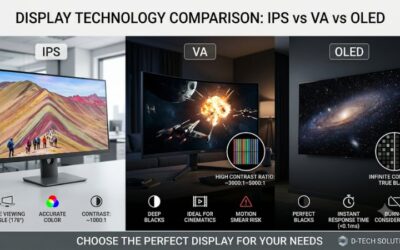
Organic Light-Emitting Diode panels provide self-lit pixels that deliver infinite static contrast and zero backlight bleed. Quantum Dot OLED displays enhance peak brightness and color volume, making dark scenes vivid without blooming. Buying the best ultrawide gaming monitor with QD-OLED panel tech, like Alienware AW3423DWF, delivers high-end HDR visuals.
In-Plane Switching panels offer wide viewing angles and uniform color accuracy across 21:9 aspect ratios, though static contrast ratios remain near 1000:1. Traditional IPS backlights struggle to reproduce deep blacks in dim rooms. Budget displays utilizing IPS technology remain cost-effective alternatives for daylight gaming and office work.
Refresh Rates and Response Times
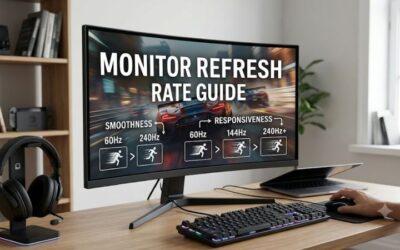
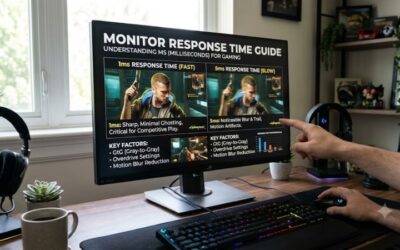
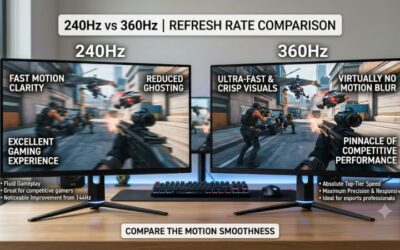
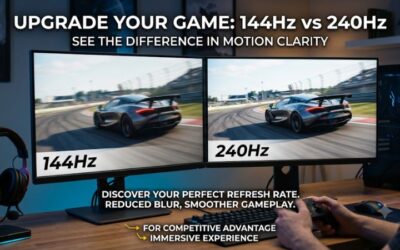
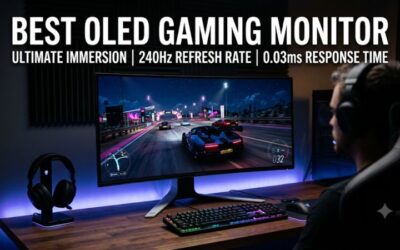
High refresh rates reduce input latency and motion blur during fast camera movements in competitive shooter games. Modern displays scale from 144Hz IPS panels up to 240Hz OLED options with 0.03ms pixel response times. Competitive players who prioritize motion clarity often select the best ultrawide gaming monitor with a 240Hz refresh rate, like the LG UltraGear 34GS95QE.
Adaptive-sync protocols like NVIDIA G-Sync and AMD FreeSync Premium match panel refresh rates to variable GPU frame output. Variable refresh rate technology prevents screen tearing and stutters when frame rates drop below native limits. Ensuring display certification for your graphics processor guarantees fluid gameplay motion.
Hardware Compatibility and Display Bandwidth
Running a 3440×1440 resolution display requires rendering 4.95 million pixels per frame, which is 34 percent more pixels than standard 2560×1440 panels. In independent benchmarks from Tom’s Hardware, running Cyberpunk 2077 at 3440×1440 resolution on Ultra settings yields an average of 98 FPS when paired with an NVIDIA GeForce RTX 4070 GPU.
DisplayPort 1.4 connection bandwidth supports high refresh rates up to 165Hz at 1440p resolution without requiring compression algorithms. Monitors offering HDMI 2.1 inputs allow full 240Hz dynamic range performance on modern desktop graphics cards. Verifying physical display outputs on your PC case ensures flexible connection options.
Curvature Radius and Aspect Ratio
Aggressive curvature radii like 800R bring peripheral screen edges closer to your focal line, enhancing field-of-view immersion in flight simulators. Subtler curves such as 1800R maintain uniform viewing distances without creating geometric distortion in desktop apps. Choosing the best ultrawide gaming monitor with a flat panel, like Gigabyte M34WQ, suits combined work and play.
Super-ultrawide 32:9 displays extend horizontal screen space to 5120×1440 resolution, mimicking dual 27-inch monitors without central bezels. Displays with 49-inch diagonals like the Samsung Odyssey OLED G9 require desks with at least 48 inches of clear horizontal width. Measuring desktop depth prevents ergonomic neck strain.
Top Ultrawide Gaming Monitor Picks
Our hardware selections compare key panel specifications, connectivity bandwidth, and physical desktop requirements across distinct price tiers. Each featured display suits specific gaming genres and system configurations while outlining real trade-offs. Review the comparison table below to identify the ideal match for your setup.
| Product | Best For | Key Spec | Compatibility | Watch Out For |
| Alienware AW3423DWF | Best Overall | 34″ 3440×1440, 165Hz, QD-OLED | DP 1.4, HDMI 2.0; RTX 4070 recommended | HDMI limited to 100Hz; text fringe on desktop |
| Gigabyte M34WQ | Best Value | 34″ 3440×1440, 144Hz, Flat IPS | DP 1.4, HDMI 2.0, USB-C; RTX 4060 Ti minimum | Flat panel IPS with low 1000:1 contrast ratio |
| LG UltraGear 34GS95QE | Best High-Refresh | 34″ 3440×1440, 240Hz, WOLED | DP 1.4 DSC, HDMI 2.1; RTX 4080 recommended | Aggressive 800R curve distorts straight lines |
| Samsung Odyssey OLED G9 | Best Super-Ultrawide | 49″ 5120×1440, 240Hz, QD-OLED | DP 1.4, HDMI 2.1; RTX 4090 recommended | Needs 48″ desk width; 32:9 black side bars |
Alienware AW3423DWF
Gamers seeking top-tier HDR visuals and vibrant colors should choose this 34-inch QD-OLED display. Featuring a native 3440×1440 resolution and a 165Hz refresh rate, it delivers a fast 0.1ms response time and VESA DisplayHDR True Black 400 certification. For enthusiasts building around the best ultrawide gaming monitor, this model offers unmatched dark scene depth.
A primary hardware limitation is the inclusion of legacy HDMI 2.0 ports, which caps refresh rates at 100Hz over HDMI cables. Additionally, triangular subpixel structures can cause minor color fringing around text during office document editing. Buyers requiring dual HDMI 2.1 bandwidth or heavy desktop text clarity should consider alternate options.
Gigabyte M34WQ
Budget-conscious users seeking the best ultrawide gaming monitor for work and play will benefit from this flat 34-inch IPS display. It sports a 3440×1440 resolution at 144Hz alongside an integrated KVM switch for controlling two PCs with one keyboard. Middle-tier graphics cards easily handle high framerates on this panel.
The main drawback is its flat IPS structure, which lacks a curve to bring outer edges into comfortable viewing range. Furthermore, a native 1000:1 static contrast ratio results in dark game scenes appearing dark gray in dim rooms. Players seeking deep contrast for nighttime gaming sessions should avoid flat IPS models.
LG UltraGear 34GS95QE
Competitive players seeking the best ultrawide gaming monitor with ultra-fast speed will appreciate this 34-inch WOLED display. Operating at 3440×1440 resolution with a 240Hz refresh rate and 0.03ms response times, motion blur is non-existent. An NVIDIA GeForce RTX 4080 Super GPU maintains fluid frame rendering on this panel.
An aggressive 800R screen curvature represents the main drawback, causing straight lines to look bent during web browsing and spreadsheet editing. The matte screen finish can also slightly reduce optical clarity compared to glossy glass panels. Graphic designers and CAD professionals should avoid this heavy curve.
Samsung Odyssey OLED G9
Simulator enthusiasts and extreme multitaskers will benefit from this 49-inch super-ultrawide QD-OLED monitor. Pushing a 5120×1440 resolution at 240Hz across a 32:9 aspect ratio, it replaces dual 27-inch 1440p monitors without vertical frame borders. Driving all 7.37 million pixels requires an elite graphics card such as the RTX 4090.
The major limitation stems from its massive 47-inch chassis width, which requires a heavy-duty desk frame and substantial mounting space. Some older games also lack native 32:9 aspect ratio support, resulting in pillarboxed black bars on the sides. Users with compact desk setups should select standard 21:9 monitors instead.
Frequently Asked Questions
Addressing common hardware concerns helps clarify compatibility, performance overhead, and long-term ownership details before purchasing a wide display. The answers below resolve critical questions regarding graphics processor demands, physical desk spacing, display port standards, and panel maintenance.
What GPU Is Needed for a 3440×1440 Ultrawide Display?
An NVIDIA GeForce RTX 4070 or AMD Radeon RX 7800 XT graphics card is recommended to run games smoothly at 3440×1440 resolution. This resolution contains 4.95 million pixels, which demands roughly 34 percent more rendering performance than standard 1440p displays. Pushing modern titles past 100 FPS on high graphics settings requires modern GPU hardware.
Enabling AI upscaling features such as NVIDIA DLSS or AMD FSR can significantly improve frame rates without degrading visual quality. Older graphics cards with 8GB of VRAM may struggle with texture allocation in newer game releases. Investing in a card with at least 12GB of VRAM ensures stable frame rendering over time.
Do All PC Games Support 21:9 Ultrawide Aspect Ratios?
Most modern PC titles natively support 21:9 aspect ratios, though competitive esports games and older titles may show black side bars. Developers occasionally lock cutscenes or main menus to standard 16:9 ratios to prevent visual glitches. Finding the best ultrawide gaming monitor lets you enjoy wider viewports in supported titles.
Community modifications and custom configuration file edits often fix field-of-view restrictions in unsupported titles. Third-party utility software can force ultrawide aspect ratios across unsupported indie games without impacting system stability. Checking game community forums ensures compatibility before purchasing legacy games.
Is OLED Burn-In Still a Risk on Gaming Monitors?
Permanent image retention remains a potential risk on OLED panels, but integrated mitigation features significantly reduce burn-in potential. Technologies such as pixel shifting, automatic static bright image dimming, and background pixel refresh cycles protect active displays. Operating panels within normal thermal limits extends overall operational lifespan.
Major display manufacturers like Dell Alienware and LG include three-year warranties covering OLED burn-in damage on current display lines. Setting Windows wallpaper slideshows and enabling taskbar auto-hide further minimizes static UI element exposure. Simple desk habits effectively prevent image retention during daily PC usage.
How Big of a Desk Do You Need for an Ultrawide Display?
A desk with a minimum width of 40 inches is required for 34-inch displays, while 49-inch screens require at least 48 inches of width. In addition to desktop width, a desk depth of 24 to 30 inches ensures a healthy viewing distance from curved panels. Proper desk dimensions prevent physical crowding and optimize viewing comfort.
Heavy ultrawide monitors often weigh between 15 and 28 pounds with their factory stands attached, requiring sturdy desk construction. Utilizing a VESA-compliant monitor arm frees up valuable desk space beneath the screen while providing precise height and tilt adjustments. Checking mounting arm weight limits prevents equipment damage.
Final Thoughts
Selecting the right wide panel transforms your desktop gaming setup by combining expansive field-of-view immersion with workspace efficiency. Balancing panel hardware, curve radius, and GPU power ensures your system delivers high framerates across demanding titles. Choosing the best ultrawide gaming monitor optimizes your setup for years to come.