- Top Pick: 4 Generation Picture Frame 4 X 6, Four Generations Families Picture Frame.
- Best Value: Beliran Three Generations Picture Frame 5×7, Family Photo Frame, Family Birthday Christmas Gifts for Parents Grandparents, 3 Generations Wooden Picture Photo Frames for Desk Home Room Decor
- Premium Choice: Cudwid Family Wooden Frame Suitable For 5×7 Inch Photo – Four Generations One Common Thread…Love – Modern Farmhouse Home Tabletop Shelf Display Picture Frame – Family Keepsake Gift – A09
Frame generation is one of the most talked-about gaming technologies of the last few years, and in 2026 it is baked into nearly every major GPU platform. In simple terms, it uses AI to create entirely new frames that sit between the frames your graphics card actually renders, boosting your on-screen frame rate well beyond what raw rendering horsepower alone would deliver.
But the technology comes with trade-offs around latency, image artifacts, and when it actually makes sense to turn on. This guide breaks down how frame generation works, the differences between NVIDIA’s DLSS, AMD’s FSR, and Intel’s XeSS implementations, and how to decide whether to enable it in your favorite games.
As an Amazon Associate we earn from qualifying purchases at no extra cost to you.




⚡ Save on Your Next PC — Amazon Prime
Prime members get fast free shipping on the systems above, plus early access to Prime Day & Black Friday PC deals. New members get a 30-day free trial.
Watch: What Is Frame Generation? — Video Review
How Frame Generation Actually Works
Traditional rendering draws every frame from scratch: the GPU calculates geometry, lighting, and shading for each image your monitor displays. Frame generation adds a step. After the GPU renders two sequential frames, an AI model analyzes the motion between them, along with data like motion vectors and an optical flow field, and synthesizes a brand-new intermediate frame. That generated frame is inserted into the sequence, so a card producing 60 rendered frames per second can output 120 or more to your display.
DLSS, FSR, and XeSS: The Three Big Players
Each GPU vendor has its own approach, and they are not equally available across hardware.
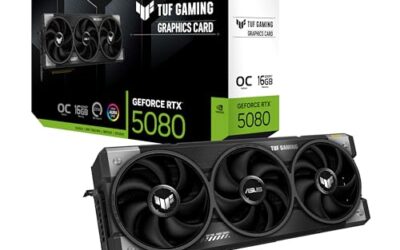
- NVIDIA DLSS Frame Generation: Runs on RTX 40 and 50 series cards using dedicated Optical Flow Accelerator hardware, with the multi-frame version on the newest GPUs generating several frames per rendered pair.
- AMD FSR Frame Generation: Open and broadly compatible, running on a wide range of AMD and even competing GPUs, which makes it the most accessible option.
- Intel XeSS Frame Generation: Tuned for Arc GPUs but designed to work across vendors, rounding out the field for Intel’s growing graphics lineup.
The Catch: Latency and Artifacts
Frame generation increases the numbers on your frame counter, but generated frames do not respond to your mouse and keyboard input, because they are interpolated, not rendered from your actions. That means input latency does not improve the way it would from a genuine frame-rate boost, and can actually feel slightly worse. This is why NVIDIA pairs it with Reflex and AMD with Anti-Lag: those technologies claw back the added latency. You may also spot artifacts around fast-moving objects, thin UI elements, or the HUD, though modern versions have reduced these significantly.
When You Should and Should Not Use It
The golden rule: frame generation shines when your base frame rate is already reasonable. Turning it on when you are rendering a smooth 60 fps to reach 120 fps for a fluid, high-refresh experience is ideal. Turning it on to rescue a game running at 25 fps is a mistake, because the input latency will feel sluggish and artifacts will be more visible. Save it for single-player and visually demanding titles; skip it in competitive shooters where the lowest possible latency matters more than a higher frame counter.
Tips
- Always enable the matching low-latency mode: pair frame gen with Reflex, Anti-Lag, or the game’s built-in latency reduction to offset added lag.
- Aim for a 60 fps base before enabling it: the higher your rendered frame rate, the better generated frames look and feel.
- Cap your frame rate below your monitor’s refresh: staying inside your VRR range keeps generated frames tear-free and consistent.
- Turn it off for esports: in fast competitive play, prioritize true rendered frames and minimal latency over the inflated frame counter.
Frequently Asked Questions
Does frame generation increase input lag?
It adds a small amount of latency because the system holds a frame to interpolate between, but pairing it with a low-latency mode like Reflex or Anti-Lag usually keeps the net result close to native. At high base frame rates the added lag is barely perceptible.
Is frame generation the same as upscaling?
No. Upscaling, such as DLSS Super Resolution or FSR upscaling, renders at a lower resolution and intelligently sharpens the image to a higher one. Frame generation instead creates additional whole frames in time. They are often used together for the biggest performance gains.
Will frame generation work on my older GPU?
It depends on the technology. AMD’s FSR frame generation is the most hardware-agnostic and runs on many older and competing cards, while NVIDIA’s DLSS frame generation requires RTX 40 series or newer. Check each game’s supported features against your specific GPU.
Why does the image look weird with frame generation on?
Occasional artifacts appear because the AI has to guess what belongs in the intermediate frame, and it can misjudge fast motion, transparent effects, or overlaid UI text. Lowering in-game motion blur and keeping a high base frame rate reduces how often you will notice it.
Conclusion
Frame generation is a genuinely useful tool when you understand its strengths: it turns a good frame rate into a great one for immersive, single-player experiences on a high-refresh display. Just remember it is a smoothness enhancer, not a fix for a struggling GPU. Enable it with the matching latency-reduction feature, keep a solid base frame rate, and leave it off in twitch-reflex competitive games, and you will get the best of what this 2026 technology offers.