- Top Pick: ARCTIC Liquid Freezer III Pro 360 A-RGB – AIO CPU Cooler, Water Cooling
- Best Value: BXQINLENX 24-Piece Silver Chrome G1/4" Fittings Kit for Custom PC Water Cooling Systems (Silver)
- Premium Choice: Thermalright Aqua Elite 240 V3 Water Cooling CPU Cooler, Double PWM ARGB Fans with S-FDB Bearings,Efficient PWM Controlled Pump,for AMD/AM4/AM5, Intel LGA1150/1151/1200/1700/1851, (AE240 V3)
Choosing how to cool your gaming CPU comes down to a classic decision: a proven air cooler or an all-in-one liquid cooler. Both keep modern processors in check, but they differ in cost, noise, installation complexity, aesthetics, and how they handle sustained heavy loads. The right choice depends as much on your case, your CPU, and your priorities as on raw cooling numbers.
This comparison breaks down air versus water cooling for gaming PCs in 2026, from budget tower coolers like the Thermalright Peerless Assassin to 360mm liquid units like the ARCTIC Liquid Freezer III Pro. By the end you will know which approach fits your build, and where each one is worth the money.
As an Amazon Associate we earn from qualifying purchases at no extra cost to you.



⚡ Save on Your Next PC — Amazon Prime
Prime members get fast free shipping on the systems above, plus early access to Prime Day & Black Friday PC deals. New members get a 30-day free trial.
Watch: Air vs Water Cooling for Gaming PCs — Video Review
Quick Verdict
A high-end dual-tower air cooler matches or beats most mid-range liquid coolers on price, reliability, and value, making it the smart default for the majority of gaming builds. A 240mm or 360mm all-in-one liquid cooler pulls ahead on peak thermal capacity for hot, high-core-count CPUs, offers a cleaner look around the socket, and can be quieter under heavy sustained loads. If you run a flagship processor or prize aesthetics and low noise, liquid earns its premium; otherwise, air is hard to beat.
Key Differences
- Cost: quality air coolers are typically cheaper than comparable AIO liquid coolers.
- Peak cooling: large 360mm AIOs handle the hottest high-end CPUs better under sustained full load.
- Reliability: air coolers have no pump or fluid to fail, giving them a longer worry-free lifespan.
- Noise: a big radiator can dissipate heat with slower, quieter fans, though the pump adds a faint hum.
- Clearance: tall air coolers can block tall RAM or hit the side panel; AIOs free up space around the socket.
- Installation: air coolers mount in one piece; AIOs require fitting a radiator and routing tubing.
Air Cooling
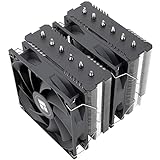
Air cooling uses a heatsink and heat pipes to draw heat off the CPU, with one or two fans exhausting it. The technology is mature, dead simple, and remarkably effective; a modern dual-tower cooler like the Thermalright Peerless Assassin 120 SE handles all but the most extreme processors while costing a fraction of premium liquid units. With no pump or coolant, there is nothing to leak or wear out, so an air cooler often outlives the rest of the build.
The downsides are size and looks. Big air coolers are tall and heavy, occasionally interfering with tall RAM modules or narrow cases, and their bulk dominates the view through a glass panel. But for pure performance-per-dollar and set-and-forget reliability, air cooling remains the enthusiast’s value pick, and it is the easiest to recommend to first-time builders.
Water Cooling
All-in-one liquid coolers circulate coolant through a block on the CPU to a radiator mounted on the case, where fans expel the heat. The large surface area of a 240mm or 360mm radiator, like that on the ARCTIC Liquid Freezer III Pro or Thermalright Aqua Elite 240, gives AIOs a higher ceiling for taming hot, high-core-count chips, and it frees up valuable space around the socket for a cleaner build and easier RAM access.
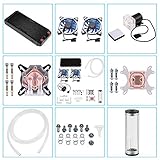
The compromises are cost, complexity, and long-term reliability. AIOs cost more than equivalent air coolers, add a pump that can eventually fail or develop noise, and carry a small but real risk of leaks over many years. Custom open-loop cooling, using parts like fittings kits and standalone radiators, pushes performance and looks even further, but demands maintenance and expertise most gamers do not need.
Which Should You Buy?
- Choose air if you want the best value, maximum reliability, and a simple one-piece installation.
- Choose a 240 or 360mm AIO if you run a hot flagship CPU that benefits from higher peak cooling capacity.
- Choose air if your budget is tight or you are building your first PC.
- Choose liquid if aesthetics around the socket and low noise under load matter to you.
- Choose a custom loop only if you enjoy the hobby and accept the maintenance it requires.
Frequently Asked Questions
Is water cooling better than air cooling?
Not universally. A large AIO edges out air on peak cooling for the hottest CPUs and looks cleaner, but a good air cooler matches mid-range liquid units on temperatures while costing less and being more reliable. Better depends on your CPU, budget, and priorities rather than a blanket rule.
Can an AIO liquid cooler leak?
The risk is small in a quality sealed unit, but it is not zero over many years, and a failed pump can also stop cooling entirely. Air coolers avoid both risks since they have no fluid or pump, which is a key part of their appeal for reliability-focused builders.
Do I need liquid cooling for gaming?
For most gaming CPUs, no. A capable air cooler keeps mainstream and even many high-end processors well within safe temperatures during gaming. Liquid cooling becomes worthwhile mainly for flagship chips, heavy overclocking, or when you want the aesthetic and space benefits.
Which is quieter, air or water cooling?
It depends on the specific coolers. A large radiator can move heat with slower, quieter fans, but the AIO’s pump adds a constant faint hum. A well-designed air cooler with quiet fans can be just as silent in normal use. Fan quality matters more than the cooling type here.
Final Verdict
For the majority of gamers, a premium dual-tower air cooler is the smartest buy: it delivers excellent temperatures, unbeatable reliability, and strong value with a painless install. Step up to a 240mm or 360mm AIO when you are cooling a hot flagship CPU, chasing a clean look around the socket, or want the lowest noise under sustained load. Match the cooler to your processor and case, and both paths will keep your rig running cool for years.