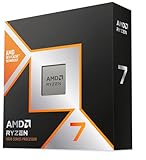
🛒 Best Price Today on Amazon
Prime members get fast, free shipping on everything above, plus member-only deals. New members get a 30-day free trial — cancel anytime.
- Eight processors to compare
- 1. Ryzen 7 9850X3D: investigate for a gaming-focused AM5 build
- 2. Ryzen 7 9800X3D: compare the actual X3D offer
- 3. Ryzen 7 7800X3D: an older option requiring a good comparison
- 4. Ryzen 7 7700: consider the work you do outside CS2
- 5. Ryzen 5 7600: keep the whole build balanced
- 6. Ryzen 7 5700X3D: check an existing AM4 board
- 7. Ryzen 5 5600: a restrained-cost AM4 comparison
- 8. Core Ultra 7 265K: an Intel platform alternative
- Minimum requirements are not competitive-play targets
- Measure the existing problem before upgrading
- Cooling and compatibility still matter
- Frequently asked questions
The best CPU for Counter-Strike 2 depends on the platform you already own, your target frame rate and the rest of your computer. Begin with actual processors. A replacement laptop fan whose part number contains “CS2” is a maintenance part, not a CPU recommendation for the game.
These eight processors form a conditional buying shortlist across existing AM4 systems, AM5 builds and an Intel alternative. The order explains use cases rather than claiming eight measured performance positions. Manufacturer specifications confirm identities and platforms; no unverified CS2 frame rates, hands-on tests or current prices are presented.
Eight processors to compare
Processor / Platform / When to investigate it
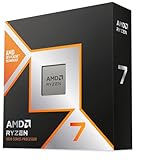
- Ryzen 7 9850X3D
-
Platform: AM5
When to investigate it: A gaming-focused build with room in the budget
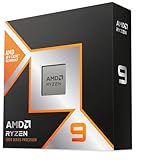
- Ryzen 7 9800X3D
-
Platform: AM5
When to investigate it: An X3D alternative to compare at the actual offer price
- Ryzen 7 7800X3D
-
Platform: AM5
When to investigate it: An older X3D option when the complete deal is competitive
- Ryzen 7 7700
-
Platform: AM5
When to investigate it: A mixed-use build where extra CPU threads also serve work
- Ryzen 5 7600
-
Platform: AM5
When to investigate it: A lower-cost platform starting point to compare
- Ryzen 7 5700X3D
-
Platform: AM4
When to investigate it: An upgrade for a supported existing AM4 motherboard
- Ryzen 5 5600
-
Platform: AM4
When to investigate it: A restrained-cost upgrade that keeps compatible parts
- Intel Core Ultra 7 265K
-
Platform: LGA1851
When to investigate it: A platform alternative for gaming and other workloads
1. Ryzen 7 9850X3D: investigate for a gaming-focused AM5 build
AMD identifies the Ryzen 7 9850X3D as an AM5 desktop processor with 3D V-Cache. Put it on your shortlist when you are planning a gaming-focused platform and can justify the complete cost.
Compare recent CS2 tests with the exact alternatives you could buy. A newer product name alone does not establish a useful improvement for your monitor and settings. Keep money available for compatible memory, cooling and the graphics hardware needed by the rest of your games.
2. Ryzen 7 9800X3D: compare the actual X3D offer
The Ryzen 7 9800X3D is another AM5 X3D desktop option. It provides a concrete alternative to compare when the price difference between models is substantial.
Do not convert a percentage from a broad multi-game marketing chart into a promised CS2 result. Check the actual game measurement and its conditions. If the expected difference does not matter to your use, a less expensive complete build may be the better decision.
3. Ryzen 7 7800X3D: an older option requiring a good comparison
AMD’s 7800X3D specifications identify the AM5 platform. Consider it only against the current offers available to you; an older generation is not automatically inexpensive or poor value.
For a used unit, inspect seller terms, condition and any applicable warranty. Include the same motherboard, memory and cooling assumptions when comparing it with another AM5 processor so that a difference in the surrounding parts does not distort the result.
4. Ryzen 7 7700: consider the work you do outside CS2
The Ryzen 7 7700 is an eight-core AM5 processor. It is a relevant comparison when your computer also handles workloads that benefit from additional CPU threads.
That does not establish that it wins a CS2 frame-rate comparison. Separate your gaming requirement from your productivity requirement and weigh both. A processor choice can be sensible for a mixed-use machine without being described as the fastest gaming option.
5. Ryzen 5 7600: keep the whole build balanced
The Ryzen 5 7600 is a six-core AM5 processor. Compare it when you want to enter that platform while controlling the complete purchase cost.
Use your display target and relevant measurements to decide whether a larger CPU spend is worthwhile. A budget that also needs a monitor, storage and graphics card should not be allocated solely around an isolated processor chart.
6. Ryzen 7 5700X3D: check an existing AM4 board
AMD’s 5700X3D announcement places this processor in the AM4 Ryzen 5000 family. It is an upgrade candidate for an existing system only when the exact motherboard and BIOS support it.
Keeping compatible memory and a motherboard can change the economics of an upgrade. However, do not pay any price simply to avoid changing platforms. Compare the processor, any needed cooler and the remaining useful capabilities of your existing system.
7. Ryzen 5 5600: a restrained-cost AM4 comparison
The Ryzen 5 5600 is a six-core AM4 processor. It is worth comparing when replacing a much older compatible CPU and keeping the upgrade spend under control.
Check the benefit for your current system rather than assuming it meets every high-refresh target. If you are purchasing a motherboard and memory as well, compare other complete platforms before choosing older hardware from processor price alone.
8. Core Ultra 7 265K: an Intel platform alternative
Intel specifies the Core Ultra 7 265K for LGA1851. Include it as a comparison when the complete Intel platform and your other applications make it relevant.
It is not compatible with an AM4 or AM5 motherboard. Check current firmware guidance and measurements for the exact application mix before choosing. A higher total core count cannot by itself demonstrate better CS2 responsiveness.
Minimum requirements are not competitive-play targets
Valve publishes the game’s system requirements on Steam. Treat those as minimum requirements, not a promise of a particular frame rate, monitor refresh experience or consistent performance during a busy match.
Decide what you want from the complete system and investigate tests that approximate it. Keep resolution, graphics settings, game version, GPU and memory visible in the comparison. A result from another setup is useful evidence only when you understand those differences.
Measure the existing problem before upgrading
Observe the game in a repeatable situation and record the settings. Check whether the concern is consistently low frame rate, intermittent stutter, excessive temperatures or network behavior. Replacing a CPU is not a universal solution to every interruption in an online game.
Use a stable configuration and keep background activity comparable between tests. If you change hardware, firmware and several game settings together, it becomes difficult to identify which change produced an improvement or regression.
Cooling and compatibility still matter
A suitable cooler supports the selected CPU; it does not become one of the eight processors. Verify socket mounting and case clearance using the cooler manufacturer’s information. Replacement laptop fans require exact device compatibility and belong in a repair decision rather than a desktop CPU shortlist.
Before buying, confirm the motherboard revision, supported BIOS, memory type, required cooling and complete cost. Keep the working system available until you understand the update procedure and have all required parts.
Frequently asked questions
Which CPU is guaranteed to deliver my target frame rate?
None can be guaranteed from its name alone. The game version, complete system, settings and workload matter. Use documented measurements closest to your situation.
Should I replace a working AM4 motherboard?
Compare both routes: a supported CPU upgrade and a complete platform change. Choose using the total cost and your requirements rather than assuming either route always wins.
Are the eight entries measured fastest to slowest?
No. They are real processor options grouped by buying situation. This guide does not invent benchmark results to imply a performance order that has not been established.