Affiliate disclosure: As an Amazon Associate we earn from qualifying purchases. This post contains affiliate links — we may earn a small commission at no extra cost to you. This never affects our picks. Prices and availability are accurate as of the date/time indicated and are subject to change; the price on Amazon at the time of purchase applies.
- Top 5 at a Glance
- How We Built This Guide
- Quick Comparison Table
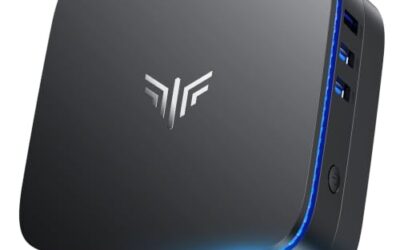
- 1. ROG NUC (2026) Gaming Mini PC with Ultra 9 — Pick 1
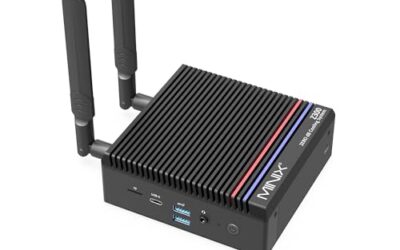
- 2. Thermaltake LCGS Traveler 9880S Mini-ITX G — Pick 2
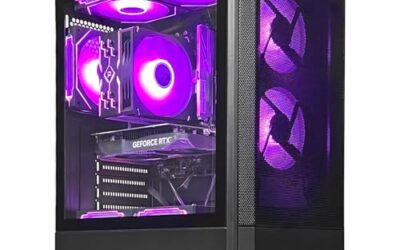
- 3. CyberPowerPC Gamer Master Gaming PC — Pick 3
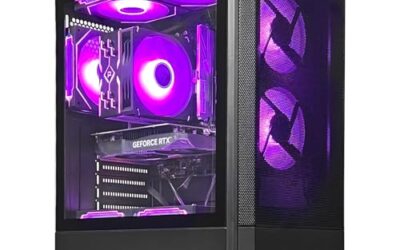
- 4. Skytech Gaming Archangel Gaming PC — Pick 4
- 5. Lian Li VECTOR V100 MINI Micro Form Factor — Pick 5
- Buying Guide: The Specs That Matter
- What to Look For in a Small Form Factor Gaming PC
- Which One Should You Buy?
- Common Mistakes When Buying a Small Gaming PC
- A Quick Sizing Check Before You Order
- Thermals and Noise: What to Expect From Compact Builds
- Frequently Asked Questions
- Related Guides
- Related Articles
- About the Author
- Related Articles
Quick answer: For gaming and everyday use, our data ranks the ROG NUC (2025) Gaming Mini PC with Intel® as the best prebuilt gaming PC overall, with the Lian Li VECTOR V100 MINI Micro Form Factor as the top value pick.
Choosing the best small form factor gaming pcs should start with the data. This guide compares five top gaming PCs for 2026 — ranked by specs, value, and where each one fits for small-form-factor builds.
Top 5 at a Glance
How We Built This Guide
We catalog every relevant product, cross-reference specs and real-world reviews, and rank by genuine value. No sponsorships, just data. Each pick above suits a clear use case for small-form-factor builds, from budget to flagship.
Quick Comparison Table
| Pick | Gaming Pc | Best For | Price |
|---|---|---|---|
| 1 | ROG NUC (2025) Gaming Mini PC with Ultra 9 | Pick 1 | Check on Amazon |
| 2 | Thermaltake LCGS Traveler 9880S Mini-ITX G | Pick 2 | Check on Amazon |
| 3 | CyberPowerPC Gamer Master Gaming PC | Pick 3 | Check on Amazon |
| 4 | Skytech Gaming Archangel Gaming PC | Pick 4 | Check on Amazon |
| 5 | Lian Li VECTOR V100 MINI Micro Form Factor | Pick 5 | Check on Amazon |
1. ROG NUC (2026) Gaming Mini PC with Ultra 9 — Pick 1
Across every spec sheet we compared, the Nvidia gaming PC stands as the chart-topper for small-form-factor builds. The numbers that count — 32GB, 2TB — anchor a well-rounded profile. In like-for-like comparison, it stays easy to recommend.
- Pros: 32GB spec
Ranks well on the data
Strong value in its class - Cons: Premium price
May exceed modest budgets
2. Thermaltake LCGS Traveler 9880S Mini-ITX G — Pick 2
In our rankings, the Thermaltake gaming PC secures a premium runner-up for small-form-factor builds. The numbers that count — 32GB, 2TB — anchor a well-rounded profile. In like-for-like comparison, it stays easy to recommend.

- Pros: 32GB spec
Competitive on specs
Strong value in its class - Cons: Not class-leading
Check current pricing
3. CyberPowerPC Gamer Master Gaming PC — Pick 3
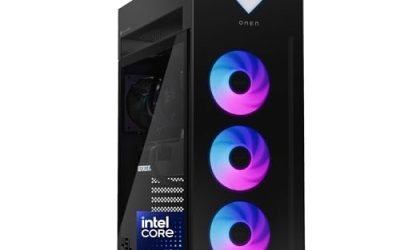
Our data places the AMD gaming PC firmly as a balanced all-rounder for small-form-factor builds. On paper its Ryzen 7, RTX 5060 Ti, 8GB headline a competitive design. For buyers who shortlist by the data, it earns its place.
- Pros: Ryzen 7 spec
Competitive on specs
Strong value in its class - Cons: Mid-tier peak performance
Verify compatibility
4. Skytech Gaming Archangel Gaming PC — Pick 4
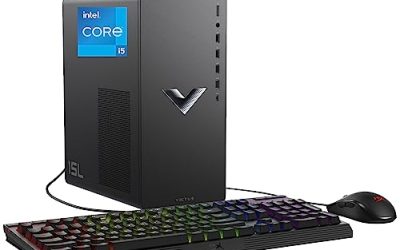
Across every spec sheet we compared, the Nvidia gaming PC stands as a sensible middle option for small-form-factor builds. Figures like RTX 5060, 1TB, 32GB put it ahead of similarly priced rivals. For buyers who shortlist by the data, it earns its place.

- Pros: RTX 5060 spec
Ranks well on the data
Strong value in its class - Cons: Mid-tier peak performance
Check current pricing
5. Lian Li VECTOR V100 MINI Micro Form Factor — Pick 5
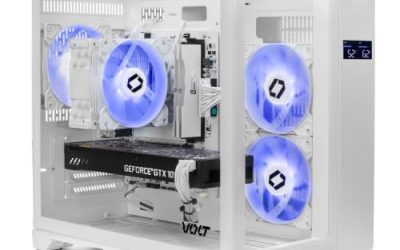
In our rankings, the Lian Li gaming PC secures the affordable winner for small-form-factor builds. It covers the fundamentals cleanly and competes hard on value. For buyers who shortlist by the data, it earns its place.
- Pros: Strong value in its class
Competitive on specs - Cons: Fewer premium extras
Check long-term needs
Buying Guide: The Specs That Matter
GPU and CPU Balance
From a data standpoint, the graphics card drives gaming performance, so prioritize it, then pair a CPU strong enough to avoid bottlenecks at your resolution.

RAM and Storage
Looking at the numbers, 16GB is the baseline and 32GB future-proofs; a fast NVMe SSD keeps load times short and the system responsive.
Cooling and Upgrades
On specs, good airflow protects sustained boost clocks, and a roomy case with spare slots leaves room to upgrade later.
What to Look For in a Small Form Factor Gaming PC
Chassis Volume and What It Means for Heat
Enthusiast communities often treat a case under roughly 20 liters as small form factor, and the smaller the shell, the less air it can move. A standard Mini-ITX motherboard measures 170 x 170 mm, which sets the floor for how compact a full-size-component build can get. Mini PCs such as the ROG NUC pick go smaller still by using laptop-class parts, which trades peak graphics power for a tiny footprint. When comparing models, ask where the intake and exhaust sit, because a side panel pressed against a wall can quietly choke airflow.
Power Supply Format
Most compact towers use an SFX supply (125 x 63.5 x 100 mm) or the slightly longer SFX-L (125 x 63.5 x 130 mm) instead of a full ATX unit. Those smaller supplies have lower wattage ceilings, which limits how far a future graphics card upgrade can go. Check the supply wattage against the specified graphics card power draw, and leave real headroom rather than running at the limit.
Graphics Card Length and Slot Width
Many compact cases accept only dual-slot cards of a limited length, and some accept a single slot. A card that looks like a simple swap on paper may not physically fit, so a clearance figure in millimeters matters more than a model name. If an upgrade is part of the plan, confirm the maximum card length and thickness on the listing before buying.
Memory and Storage Layout
Mini PCs usually take laptop-style SO-DIMM memory, while Mini-ITX towers use full-size DIMMs. Boards in this class often carry only two memory slots, so filling both with large modules at purchase can leave no easy expansion path. Look for at least one free M.2 slot, since a second drive is the simplest upgrade a small system offers.
Which One Should You Buy?
| If you… | Choose… |
|---|---|
| Want the smallest possible footprint and carry your PC between desks | The ROG NUC (2026) mini PC pick |
| Prefer a Mini-ITX tower with a travel-friendly shape | The Thermaltake LCGS Traveler 9880S pick |
| Want a conventional prebuilt that is easy to understand and service | The CyberPowerPC Gamer Master pick |
| Care most about getting a ready-to-play system with a clear component list | The Skytech Gaming Archangel pick |
| Like the idea of a micro form factor case and may swap parts later | The Lian Li VECTOR V100 MINI pick |
Exact graphics cards, memory kits, and warranty terms vary by configuration, so confirm each on the listing before deciding.
Common Mistakes When Buying a Small Gaming PC
- Judging by size alone. A smaller chassis is not automatically better. If it forces a graphics card to throttle, a slightly larger system can deliver steadier frame rates.
- Ignoring ports. Count the USB ports, display outputs, and any front-panel connectors you actually use, because compact designs remove some of them.
- Forgetting the noise trade-off. Small fans spin faster to move the same air, so a compact PC under load is often louder than a roomy tower.
- Assuming everything is upgradeable. Some compact systems use proprietary parts or soldered components. Read which parts can be replaced before relying on a later upgrade.
- Skipping the placement plan. A cabinet or a tight shelf can raise temperatures noticeably. Leave open space around the vents.
- Overlooking the power brick. Mini PCs often use an external adapter that needs its own desk space and cable run.
A Quick Sizing Check Before You Order
Measure the space where the PC will live, then add a few centimeters on every vented side. Compare that to the listed dimensions, not to a photo. If the product page lists volume in liters, use it to rank candidates, and remember that the shape matters as much as the number: a tall, narrow case and a flat, wide one have the same volume but need very different desk space.
Thermals and Noise: What to Expect From Compact Builds
Heat is the defining constraint in this category. Graphics chips generally begin lowering their clock speeds as temperatures climb toward the 80 degree Celsius range, so a design that keeps the card cooler tends to hold higher frame rates in long sessions. Owners of compact systems commonly report that the first lever worth pulling is the fan curve, followed by a modest power limit on the graphics card, which can cut heat noticeably for a small loss in speed.
- Dust: small intakes clog faster, so plan a cleaning routine every few months.
- Orientation: if the case supports both horizontal and vertical placement, check which one the manufacturer intends for the cooler layout.
- Peripherals: an external drive or hub placed against the exhaust side can trap warm air.
Frequently Asked Questions
Which prebuilt gaming PC ranks best in 2026?
Our rankings put the ROG NUC (2025) Gaming Mini PC with Ultra 9 on top for overall specs and value. The full top five spans every budget, so match the pick to your needs.
How much should you spend on a prebuilt gaming PC?
Entry options cost less while flagship gaming PCs command more. The best value usually sits in the mid-range for small-form-factor builds.
What specs should you compare for small-form-factor builds?
The graphics card drives gaming performance, so prioritize it, then pair a CPU strong enough to avoid bottlenecks at your resolution.
Which pick offers the best value?
On the data, the Lian Li VECTOR V100 MINI Micro Form Factor and CyberPowerPC Gamer Master Gaming PC lead on value, while the ROG NUC (2025) Gaming Mini PC with Ultra 9 is the no-compromise choice. Check live pricing above.
In short: the ROG NUC (2025) Gaming Mini PC with Ultra 9 is our top prebuilt gaming PC pick for small-form-factor builds, with options above for every budget. Check live Amazon pricing before you buy.
Related Guides
Related Articles
Looking for more on this topic? Browse the hand-picked guides below — each one applies the same scoring rubric used in this review.