🛒 Best Price Today on Amazon
Prime members get fast, free shipping on everything above, plus member-only deals. New members get a 30-day free trial — cancel anytime.
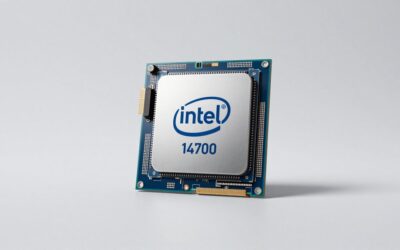
The Intel Core i7-14700F review: gaming performance and price question comes down to whether this 14th-generation desktop processor offers enough gaming speed and multitasking capacity for its cost. Its hybrid core design suits gaming alongside streaming and demanding applications, but the lack of integrated graphics, platform upgrade limits, and cooling requirements deserve attention before buying.
How to Choose a Gaming CPU for Your Budget
A gaming processor should match your graphics card, target resolution, workload, and total system budget. The Core i7-14700F has substantial multithreaded capacity, but its value depends on local pricing and the cost of a compatible motherboard, memory, and cooler. Buyers should compare complete platform costs rather than CPU prices alone.
Gaming Performance and Core Count
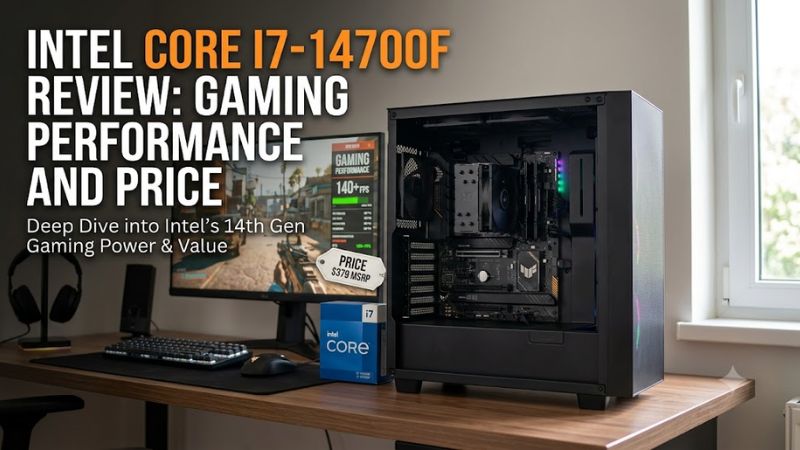
The i7-14700F combines 8 Performance-cores with 12 Efficient-cores, providing 20 cores and 28 threads. Performance-cores handle demanding foreground work, while Efficient-cores help manage background tasks. This arrangement is useful for gaming while streaming, recording gameplay, or running communication and creator applications.
For players considering the Intel Core i7-14700F review: gaming performance and price, core count alone cannot predict frame rates. Game engines, graphics cards, memory configuration, and resolution all affect results. At 1080p with a powerful GPU, CPU differences can become more visible; at 1440p and 4K, graphics performance often becomes a larger constraint.
Compatibility With Existing Hardware
The processor uses Intel’s FCLGA1700 socket and supports compatible DDR4 or DDR5 platforms, depending on the motherboard. Intel specifies memory support up to DDR4-3200 or DDR5-5600. A DDR4 motherboard cannot accept DDR5 modules, and a DDR5 motherboard cannot accept DDR4 modules, so check the exact board specification before ordering.
Existing LGA1700 owners may be able to upgrade without replacing their motherboard, provided its manufacturer supports the CPU and the installed BIOS is sufficiently recent. Check the board’s CPU support list and firmware instructions first. A move to a newer socket platform, however, would require a different motherboard and potentially new memory.
Power, Cooling, and System Cost
Intel lists a Processor Base Power of 65 W and a Maximum Turbo Power of 219 W. The base figure is not a reliable estimate of maximum gaming or sustained workload consumption. Power limits, motherboard firmware, workload intensity, and cooling affect actual behavior, so choose a cooler and case with sufficient capacity for the intended configuration.
The retail CPU price is only one part of the build. A suitable motherboard, capable CPU cooler, graphics card, memory, and power supply all influence the final budget. Because this model has no integrated graphics, a discrete GPU is required for display output. That matters when estimating the cost of a complete gaming PC or planning a troubleshooting setup.
Platform Longevity and Upgrade Options
The i7-14700F is a mature LGA1700 product rather than a processor on Intel’s newer desktop socket platform. It can make sense when upgrading an existing compatible system or purchasing a competitively priced complete build. Buyers building from scratch should compare the total cost and future upgrade options of alternative platforms before committing.
The processor is multiplier-locked for conventional CPU overclocking, so paying extra for a premium overclocking motherboard may not be worthwhile for a typical gaming build. A board with appropriate power delivery, the required connectivity, and confirmed CPU support is more important. Memory tuning and supported power settings still depend on the motherboard and BIOS.
Intel Core i7-14700F Review: Performance and Value
The i7-14700F offers a combination of high clock speeds and numerous cores, making it relevant to gaming PCs that also handle productivity work. Intel lists a maximum turbo frequency of 5.4 GHz, 33 MB of Intel Smart Cache, and support for PCIe 5.0 and 4.0. These specifications describe its capabilities, but actual application performance depends on the complete system configuration.
Gaming Results at Different Resolutions
At 1080p, the processor can support high-refresh-rate gaming when paired with a sufficiently powerful GPU. CPU-heavy simulation games, competitive shooters, and large multiplayer matches may benefit from its processing capacity, although performance varies by title. At higher resolutions, the graphics card generally takes on more of the workload, reducing the value of small CPU-level differences.
Independent comparison data from HowManyFPS provides useful context without establishing a universal frame rate. Its Core i7-14700 versus i7-14700F comparison reports predicted results for games including Valorant, Minecraft, and Fortnite. The figures use modeled gameplay data, so they should not be treated as results from a single controlled test bench.
HowManyFPS
Productivity and Multitasking Performance
The 20-core, 28-thread configuration is useful beyond gaming. Video encoding, code compilation, rendering, and other parallel workloads can benefit from the combination of Performance-cores and Efficient-cores. For a creator who streams games or edits footage after playing, this broader capability may justify spending more than a gaming-only system requires.
However, core count does not guarantee a particular rendering time or editing experience. Software optimization, GPU acceleration, memory capacity, and storage speed all affect productivity results. The processor also lacks integrated graphics, so a discrete GPU is necessary for normal display output. Buyers should account for that limitation when comparing complete systems or planning a build without a graphics card.
Price, Cooling, and Power Consumption
Intel’s published recommended customer price is 359–369, but that is pricing guidance rather than a guaranteed current retail price. HowManyFPS listed the i7-14700F at $328.99 in its comparison data, illustrating how street prices can differ from the manufacturer’s reference. Check current retailer offers, warranty terms, and shipping costs before deciding whether the processor represents good value.
Intel
+1
Cooling deserves attention because the processor’s maximum turbo power is considerably higher than its 65 W base power. A suitable aftermarket cooler can help maintain performance during demanding sustained workloads, but the appropriate choice depends on case airflow, motherboard power settings, ambient temperature, and noise preferences. A cooler’s rated capacity alone cannot predict the temperature of every build.
Four Alternatives to Compare Before Buying
| Product | Best for | Key specification | Compatibility | Watch out for |
| Intel Core i7-14700F | Gaming and multitasking | 20 cores, 28 threads | LGA1700; DDR4 or DDR5 board | No integrated graphics |
| Intel Core i7-14700 | Systems needing integrated graphics | 20 cores, 28 threads | LGA1700; compatible DDR4 or DDR5 board | Compare its actual price premium |
| Intel Core i7-14700KF | Buyers considering an unlocked CPU | 20 cores, 28 threads | LGA1700; compatible motherboard | Higher power and cooling demands can matter |
| AMD Ryzen 7 9800X3D | Gaming-focused alternative | 8 cores, 16 threads | AM5 motherboard; DDR5 memory | Requires a platform change from LGA1700 |
These alternatives suit different priorities rather than forming a universal performance ranking. The Core i7-14700 is worth considering when integrated graphics are useful for troubleshooting or temporary display output. The 14700KF targets buyers interested in CPU overclocking, while the Ryzen 7 9800X3D is a gaming-oriented alternative on a different platform. Compare independent results from the same games, GPU, resolution, and settings before drawing conclusions.
Frequently Asked Questions
Is the Intel Core i7-14700F good for gaming?
Yes, the Intel Core i7-14700F is a capable gaming processor, particularly when paired with a suitable discrete graphics card. Its 20-core design also supports demanding background workloads, but the frame rate you achieve depends on the game, GPU, resolution, memory, and system configuration.
How much does the Intel Core i7-14700F cost?
Intel lists a recommended customer price of 359–369, while independent price listings can be lower or higher. Treat those figures as reference points rather than a guaranteed October 2026 retail price, and compare local availability, shipping, and warranty coverage before purchasing.
Does the Intel Core i7-14700F have integrated graphics?
No, the Intel Core i7-14700F does not include integrated graphics. You need a discrete graphics card for display output, gaming, and ordinary desktop use, so include the GPU in your budget even if you plan to install one later.
Is the Intel Core i7-14700F compatible with DDR4 and DDR5?
Yes, the processor supports DDR4 and DDR5 memory, but the motherboard determines which memory type you can install. Intel specifies support up to DDR4-3200 or DDR5-5600, and the exact board, BIOS, and memory configuration should be checked before an upgrade.
Final Thoughts
The Intel Core i7-14700F review: gaming performance and price points to a capable desktop CPU for high-performance gaming and demanding multitasking, provided the complete build is sensibly priced. Its main drawbacks are the lack of integrated graphics, potentially substantial turbo power, and limited socket upgrade flexibility. Compare current offers and platform costs before buying.