Our Short List of 3

- Specs:
- Brand: Shokz
- Bone conduction open-ear design
- Boom microphone with noise cancelling

- Specs:
- Brand: Shokz
- Bone conduction open-ear design
- Boom microphone with noise cancelling
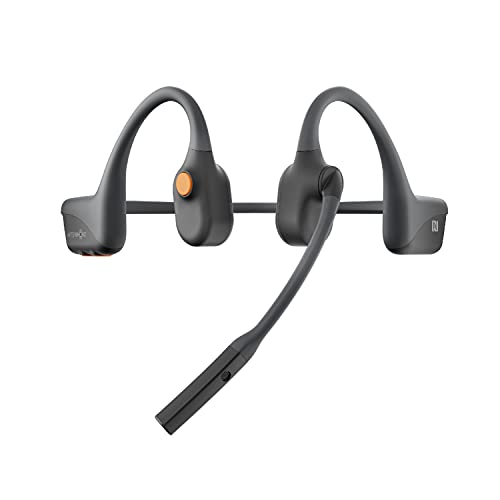
- Specs:
- Brand: Shokz
- Bone conduction open-ear design
- Boom microphone with noise cancelling
All 4 Picks at a Glance
| Product | Specs | Action |
|---|---|---|
| Shokz OpenComm2 2025 Upgrade |
| Check price on Amazon |
| Shokz OpenComm2 UC |
| Check price on Amazon |
| Shokz OpenComm |
| Check price on Amazon |
 Shokz OpenComm2 UC 2025 Upgrade |
| Check price on Amazon |
A trucker headset has a harder job than a normal pair of headphones. It has to keep the driver in touch on long calls, pick up the voice clearly over road and engine noise, and still let the driver hear what is happening around the cab. Open-ear headsets answer that last need with bone conduction, which sends sound through the cheekbones and leaves the ears open to the road. Add a boom microphone with noise cancelling, and you get a headset made for talking on the move. The four headsets below were picked from the names and specifications on their Amazon pages.
This guide is for truck drivers and other road workers who take calls all day, for dispatchers and fleet drivers who need hands-free talk time, and for anyone who wants an open-ear headset with a proper boom microphone rather than a tiny built-in mic. It also suits buyers who wear a headset for hours at a time and want one that stays comfortable without sealing off the ears.
Quick Picks
As an Amazon Associate we earn from qualifying purchases
| Product | Best for | Key spec from title |
|---|---|---|
| Shokz OpenComm2 2025 Upgrade | Long talk time on the road | 16-hour talk time |
| Shokz OpenComm2 UC | Computer and phone calls | USB-A dongle included |
| Shokz OpenComm | The original open-ear trucker headset | Bone conduction with boom mic |
| Shokz OpenComm2 UC 2025 Upgrade | The newest UC version | USB-A dongle, 2025 upgrade |
How to Choose
Open-ear design and road awareness
Bone conduction is the defining feature of these headsets. Instead of a speaker sitting in the ear canal, a small transducer rests on the cheekbone and sends sound vibrations through the bone, so the ear stays open. That matters on the road, where a driver needs to hear a horn, a warning beep, or a colleague at a loading dock. The trade-off is that open-ear sound leaks a little at high volume and has less bass than sealed earbuds. If you mostly take calls rather than listen to music, that trade-off is easy to accept. Drivers who take calls all day will notice the awareness benefit most.
Boom microphone and noise cancelling
The microphone decides whether the person on the other end can hear you, so check it as carefully as the speakers. A boom microphone sits close to the mouth, which helps it pick up the voice and ignore the cab. Look for noise cancelling on the microphone, which is designed to cut road and engine sound from the call. A flexible boom lets you position the mic where it works best, and a mute control on the headset lets you silence yourself quickly. Test the mic position before a long call, since a boom that sits too far from the mouth loses clarity. A mute button on the headset helps during noisy stops.
Battery life and talk time
Talk time is the number that matters most for a working driver, because a headset that dies mid-shift is no use at all. Check the talk time on the listing, and remember that real use depends on volume and how many calls you take. A headset with a long talk time can usually cover a full shift of calls, while a shorter one may need a top-up during a break. USB-C charging is the most convenient option on the road, since the same cable often charges a phone. Keep a charging cable in the cab so a low battery never ends a call early.
Fit, comfort, and all-day wear
A trucker headset is worn for hours, so comfort is not a luxury. The band should sit firmly without pressing hard on the head, and the ear hooks should hold the transducers in place without pinching. Bone conduction headsets are usually light, which helps over a long day, but the fit still varies from person to person. Glasses wearers should check that the band and the arms of their glasses do not fight for the same space. If possible, wear the headset for a full hour before judging the fit, since pressure points show up slowly. A light band helps, but the fit still varies from person to person.
The 4 Best Options
Shokz OpenComm2 2025 Upgrade
- Specs:
- Brand: Shokz
- Bone conduction open-ear design
- Boom microphone with noise cancelling
This is the newest standard OpenComm2, and its headline feature is a long talk time that suits a full day of calls on the road. The bone conduction design keeps the ears open while the boom microphone with noise cancelling handles the talking, so the driver hears the road and the caller hears the driver. It connects over Bluetooth to a phone, and the 2025 upgrade brings the current version of the design. For a driver who wants the latest standard model without a computer dongle, this is the straightforward pick in the range.
Shokz OpenComm2 UC
- Specs:
- Brand: Shokz
- Bone conduction open-ear design
- Boom microphone with noise cancelling
The UC version of the OpenComm2 adds a USB-A dongle for computer calls, which makes it the right pick for drivers who also take calls at a desk or in a dispatch office. The dongle gives a stable connection to a computer, while Bluetooth still handles the phone. Everything else follows the OpenComm2 design: bone conduction speakers that leave the ears open, a boom microphone with noise cancelling, and a light band made for long wear. It is the most flexible headset here for someone who splits time between the cab and a computer.
Shokz OpenComm
- Specs:
- Brand: Shokz
- Bone conduction open-ear design
- Boom microphone with noise cancelling
The original OpenComm is the headset that established this category, and it remains a solid pick for drivers who want the proven design. It has the same core idea as the newer models: bone conduction speakers, a boom microphone with noise cancelling, and an open-ear fit that keeps the driver aware of the road. The original model is simpler than the UC versions, with no dongle in the box, and it connects over Bluetooth. For a driver who wants a dependable open-ear trucker headset without the newest extras, it covers the essentials well.
Shokz OpenComm2 UC 2025 Upgrade
- Specs:
- Brand: Shokz
- Bone conduction open-ear design
- Boom microphone with noise cancelling
This is the newest UC version, combining the 2025 upgrade with the USB-A dongle for computer calls. It is the most complete headset in this guide: bone conduction speakers, a noise-cancelling boom microphone, Bluetooth for the phone, and a dongle for the computer. The 2025 upgrade brings the current design, while the UC setup suits a driver who moves between the cab, a dispatch desk, and a home office. If you want one headset for every kind of call, this is the one to pick.
Which One Fits Your Situation
You drive all day and take calls on your phone
Pick the Shokz OpenComm2 2025 Upgrade. Its long talk time covers a full day of calls, and the bone conduction design keeps your ears open to the road. The boom microphone with noise cancelling helps the caller hear you over engine and wind sound. Charge it overnight and keep a cable in the cab. The long talk time covers a full day of calls.
You take calls on a computer as well as a phone
Pick the Shokz OpenComm2 UC or the Shokz OpenComm2 UC 2025 Upgrade. Both include a USB-A dongle for a stable computer connection, while Bluetooth handles the phone. The 2025 upgrade is the newer of the two, so pick it if you want the current design and pick the earlier UC if you prefer the established version.
You want the proven original design
Pick the Shokz OpenComm. It is the headset that set the pattern for this category, with bone conduction speakers and a noise-cancelling boom microphone. It connects over Bluetooth and keeps the ears open, which is what matters most on the road. It suits drivers who want a simple, dependable headset. The open-ear fit keeps road sounds audible while calls stay clear.
You want one headset for every kind of call
Pick the Shokz OpenComm2 UC 2025 Upgrade. It covers phone calls over Bluetooth and computer calls through the USB-A dongle, with the newest design in the range. It is the most complete option here, and it suits a driver who works from the cab, a desk, and a home office in the same week.
Common Mistakes
- Choosing sealed earbuds that block road sounds a driver needs to hear.
- Picking a headset with a tiny built-in mic instead of a boom microphone for calls.
- Ignoring talk time and running out of battery in the middle of a shift.
- Wearing the boom too far from the mouth, which makes the voice hard to hear.
- Forgetting to check whether the computer has a USB-A port for the dongle.
Frequently Asked Questions
How does bone conduction keep a driver aware of the road?
Bone conduction sends sound through the cheekbones instead of into the ear canal, so the ears stay open to outside sound. A driver can hear a horn, a warning beep, or a colleague while still hearing the call. The sound is quieter than sealed earbuds at high volume, but for calls the trade-off is worth it.
Is a boom microphone really better for truckers?
Yes, a boom microphone sits close to the mouth, which helps it pick up the voice clearly and ignore road and engine noise. Built-in microphones sit further away and catch more background sound. Noise cancelling on the boom mic helps further, though it cannot remove every sound from a noisy cab.
What is the USB dongle for on the UC models?
The USB-A dongle gives the headset a stable wireless connection to a computer for calls and meetings. Bluetooth still handles the phone at the same time, so the headset can switch between the two. The dongle needs a free USB-A port, so check your computer before you buy.
How long does the battery last on a working day?
Talk time varies by model, and the OpenComm2 2025 Upgrade lists a long talk time suited to a full day of calls. Real battery life depends on volume and call length, so keep the volume moderate and charge the headset overnight. A USB-C cable in the cab covers a top-up during a break.