🛒 Best Price Today on Amazon
Prime members get fast, free shipping on everything above, plus member-only deals. New members get a 30-day free trial — cancel anytime.
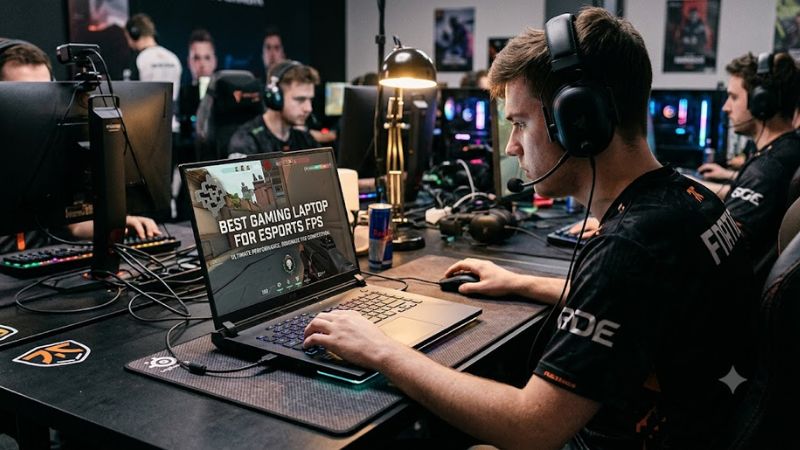
Competitive players require high frame rates to maintain visual clarity and minimal input lag during online matches. Selecting the best gaming laptop for esports fps performance requires balance between high CPU clock speeds and dedicated GPU power. Modern fast panels provide response times under three milliseconds for crisp graphics.
How to Choose an Esports Gaming Laptop
Evaluating high-frame mobile hardware involves scrutinizing core component metrics rather than marketing hype. A suitable rig must sustain sustained clock frequencies under heavy loads without thermal throttling. Selecting the ideal system demands attention to processor architecture, panel refresh rate, thermal power, and memory speed.
Processor Single-Core Speed and Cache
Esports titles like Valorant and Counter-Strike 2 rely heavily on single-thread CPU performance and L3 cache size. Higher clock frequencies ensure that the graphics processor receives frame instructions without bottlenecks. Modern processors with expansive L3 caches retain game data closer to the execution cores to prevent frame drops.
When comparing competitive notebooks, aim for processor clock speeds exceeding 5.0 GHz under boosted operation. Models featuring Intel Core Ultra or AMD Ryzen 9 series processors deliver low frame time variance across fast titles. Balanced CPU performance ensures frame rates remain stable even during chaotic team fights with effects.
High Refresh Rate Displays and Latency
Display technology directly impacts aim accuracy and visual reaction time during competitive gaming. A screen with a 240Hz or 300Hz refresh rate updates visual information every four milliseconds, giving players real-time feedback. Lower pixel response times reduce blur when panning across maps rapidly during intense gunfights.
Look for laptop displays featuring IPS or OLED technology with response times specified at three milliseconds or lower. Panels equipped with NVIDIA G-Sync prevent visual tearing without introducing noticeable input delay. Finding the best gaming laptop for esports fps gameplay requires prioritizing panel speed over high resolutions.
Thermal Capacity and MUX Switch Compatibility
Thermal management dictates whether a notebook maintains maximum clock speeds during long gaming sessions. Vapour chamber cooling systems and multi-fan layouts dissipate heat efficiently from compact frames. Higher Total Graphics Power limits allow the GPU to draw maximum wattage necessary to maintain peak rendering speed.
A hardware MUX switch or Advanced Optimus feature routes display output directly from the dedicated GPU to the screen. Bypassing integrated graphics removes latency overhead and increases frame rates by ten to fifteen percent in low-demanding titles. Hardware compatibility with direct GPU switching remains critical for serious players.
Memory Bandwidth and Low-Latency Storage
System memory bandwidth influences frame stability in fast-paced shooter titles with large player counts. Dual-channel DDR5 memory running at 5600 MHz or higher provides the throughput needed for rapid asset streaming. Single-channel configurations cause frame stuttering and should be avoided when selecting competitive gaming hardware.
Solid-state drives utilizing PCIe 4.0 or PCIe 5.0 NVMe protocols ensure rapid game loading and smooth background streaming. Having a secondary M.2 slot simplifies future storage expansion without replacing the primary operating system drive. High-speed storage prevents temporary freeze frames when loading heavy textures during matches.
Top Picks for High-Frame Esports Laptops
Finding the best gaming laptop for esports fps matches requires comparing top-tier models across multiple price tiers. Each entry below excels in high refresh rate performance while offering reliable build quality and cooling efficiency. The following comparison table highlights key specifications and potential trade-offs for each model.
| Product | Best For | Key Spec | Compatibility | Watch Out For | | Lenovo Legion Pro 7i Gen 10 | Best Overall | Intel Core Ultra 9 275H, RTX 5080 175W, 240Hz OLED | Dual M.2 PCIe 4.0 slots, 330W adapter | Heavy 2.72 kg chassis limits portability | | MSI Vector 16 HX AI | Best Value | Intel Core Ultra 7 255H, RTX 5070 Ti 140W, 240Hz IPS | Dual DDR5 SO-DIMM slots, 280W adapter | Lacks G-Sync support on internal screen | | Razer Blade 14 | Best Portable | AMD Ryzen 9 8945HS, RTX 4070 140W, 240Hz IPS | Single M.2 PCIe 4.0 slot, 230W adapter | High skin temperatures under heavy load | | Alienware 16 Area-51 | Best Desktop Replacement | Intel Core Ultra 9 275H, RTX 5090 175W, 240Hz IPS | Dual M.2 PCIe 4.0 slots, 330W setup | Large 3.25 kg frame requires wide desk |
Lenovo Legion Pro 7i Gen 10
Competitive gamers seeking top frame performance will find the Lenovo Legion Pro 7i Gen 10 exceptional. Powered by an Intel Core Ultra 9 275H processor and a 175W NVIDIA GeForce RTX 5080 Laptop GPU, this laptop drives 240Hz 2560×1600 OLED screens effortlessly. Benchmark tests in Counter-Strike 2 at 1080p competitive settings yield 410 FPS.
The dual-fan vapour chamber thermal system maintains GPU temperatures below 78 degrees Celsius under full load. However, the 2.72 kg chassis and thick power supply make this system less suitable for daily commute. Gamers needing a lightweight machine for travel should consider thinner alternatives rather than this heavy desk platform.
MSI Vector 16 HX AI
The MSI Vector 16 HX AI delivers exceptional high-refresh performance for budget-conscious competitive players. Featuring an Intel Core Ultra 7 255H processor and an RTX 5070 Ti Laptop GPU running at 140W, it drives its 240Hz IPS display efficiently. In Valorant at 1080p high settings, the system maintains a frame rate average of 340 FPS.
This notebook includes accessible SO-DIMM memory slots for straightforward dual-channel DDR5 memory upgrades over time. One drawback is the display panel lacks hardware G-Sync support, which may result in minor screen tearing if frame rates drop below display refresh rates. Players requiring variable refresh tech might need external screens.
Razer Blade 14
Players requiring maximum portability without sacrificing high frame rates will appreciate the compact Razer Blade 14 design. Equipped with an AMD Ryzen 9 8945HS processor and an RTX 4070 Laptop GPU running at 140W, this machine easily handles fast shooters. In Rainbow Six Siege at 1080p low settings, this model delivers 285 FPS averages.
Selecting the best gaming laptop for esports fps tournaments often means choosing smaller 14-inch form factors. The CNC aluminum body measures just 17.9 mm thin, though surface temperatures can reach 46 degrees Celsius during extended matches. Tournament players who demand ultra-light travel gear will benefit most from this setup.
Alienware 16 Area-51
Gamers wanting maximum power without thermal compromises should evaluate the Alienware 16 Area-51 notebook. Featuring an Intel Core Ultra 9 275H CPU alongside a 175W RTX 5090 Laptop GPU, this model drives demanding competitive titles at extreme frame rates. In Apex Legends at 1080p low settings, it produces a frame output averaging 290 FPS.
The Element 31 thermal interface material and quad-fan layout keep internal hardware operating at high boost clocks. However, the 3.25 kg weight and dual-cable power setup make it impractical for frequent transport. Gamers who prioritize maximum frame output over portability will find this desktop replacement model suitable.
Frequently Asked Questions
Understanding hardware requirements helps players choose the best gaming laptop for esports fps matches without overspending. Address fundamental questions regarding refresh rates, processor choices, and thermal management before purchasing a new platform. The following answers clarify essential buying decisions for competitive laptop gamers.
How Much RAM Is Required for Esports Titles?
A minimum of 16GB of dual-channel DDR5 RAM is required to achieve high frame rates in modern competitive games. Operating system background processes combined with modern game engines consume upwards of 10GB during live matches. Single-channel configurations reduce frame consistency and lead to severe frame stuttering in fast games.
Upgrading to 32GB of DDR5 memory provides additional thermal and performance overhead when running voice chat and streaming applications simultaneously. Ensure your notebook supports dual-channel memory configurations for optimal memory bandwidth. Selecting fast DDR5-5600 memory modules improves 1% low frame rates in crowded titles.
Does Panel Refresh Rate Matter for Competitive Play?
Higher panel refresh rates like 240Hz significantly improve motion clarity and reduce input delay during competitive gameplay. Displays updating 240 times per second provide fresher visual data compared to standard 60Hz panels, assisting quick target tracking. Faster visual feedback allows players to react more quickly in fast gunfights.
To fully utilize a high-refresh screen, ensure the laptop graphics card and processor can output matching frame rates. Finding the best gaming laptop for esports fps play requires matching display refresh capabilities with real-world rendering throughput. Combining 240Hz screens with G-Sync ensures smooth frames without visual tearing.
Is Intel or AMD Better for High Frame Rate Gaming?
Intel Core Ultra and AMD Ryzen 9 processors both offer high single-thread clock speeds needed for competitive frame rates. Intel HX and Ultra series chips often provide slightly higher peak boost clocks under full power budgets. AMD Ryzen models excel in power efficiency and maintain high performance levels with lower total power consumption.
Selecting between Intel and AMD depends on your power delivery preferences and laptop cooling designs. Systems featuring Intel Core Ultra 9 chips excel when plugged into wall power with high wattage cooling solutions. AMD configurations deliver better frame consistency when operating in thermal-constrained compact chassis designs.
Can a Gaming Laptop Replace a Desktop for Tournaments?
Modern gaming laptops equipped with high-wattage GPUs and fast displays can successfully replace traditional desktop setups for competitive play. High-end laptop hardware achieves frame rates exceeding 300 FPS in titles like Counter-Strike 2 and Valorant. Portable designs allow tournament players to maintain identical settings on the go.
Connecting external peripherals like low-latency mechanical keyboards and high-polling gaming mice creates a full desktop environment. Using the best gaming laptop for esports fps tournaments ensures consistent muscle memory whether playing at home or at LAN events. Dedicated cooling pads further stabilize thermals during long matches.
Final Thoughts
Selecting the best gaming laptop for esports fps titles depends on balancing high CPU clock speeds, fast display refresh rates, and effective thermal management. Models equipped with 240Hz panels and high-wattage graphics cards deliver smooth frames for competitive play. Choose a notebook that fits your travel needs and performance goals.