🛒 Best Price Today on Amazon
Prime members get fast, free shipping on everything above, plus member-only deals. New members get a 30-day free trial — cancel anytime.
Modern compact rigs combine desktop-class hardware with slim profiles for portable play. Choosing the best 14 inch gaming laptop requires weighing GPU power limits against chassis cooling capacity. High refresh OLED screens and high-density batteries offer great versatility for gaming and daily productivity on Windows 11.
How to Choose a 14-Inch Gaming Laptop
Evaluating portable rigs involves checking thermal constraints, component power targets, and memory accessibility. Determining how a best 14 inch gaming laptop handles sustained CPU and GPU workloads helps prevent unexpected throttling under load. Key specifications dictate real frame rate output during demanding gaming sessions.
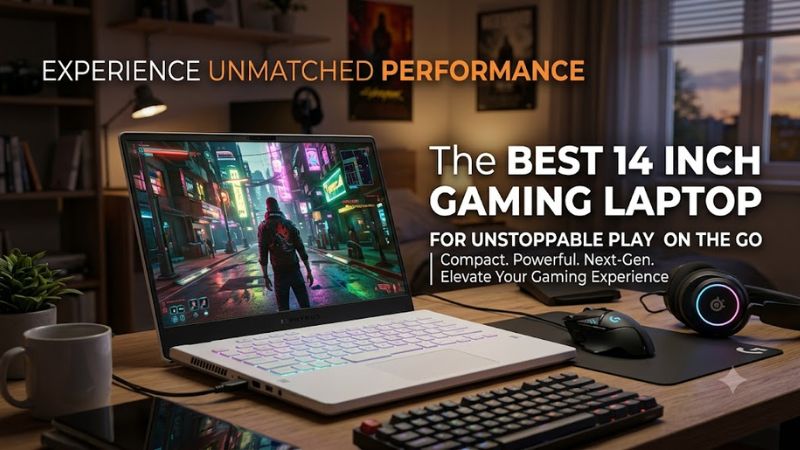
Graphics Processing Power and TGP Limits
Dedicated graphics processing units in compact laptops run at reduced Total Graphics Power targets compared to larger chassis models. When configuring a best 14 inch gaming laptop configuration, check if the NVIDIA GeForce RTX 4060 or 4070 runs between 85W and 90W. Lower wattage caps reduce peak framerates in ray tracing titles.
Dynamic Boost technology automatically shifts power between the central processor and graphics hardware based on workload context. A system running at 65W base power with 25W dynamic allocation delivers stable performance in heavy titles. Thermal dissipation limits remain the core bottleneck for ultraportable chassis designs.
Display Panel Technology and Refresh Rates
Display options in modern compact chassis feature high resolution OLED or IPS panels with 120Hz to 165Hz refresh rates. Fast response times prevent motion blur during competitive multiplayer gaming. Look for variable refresh rate support through NVIDIA G-Sync or AMD FreeSync Premium to prevent screen tearing during frame drops.
Color accuracy and panel brightness impact both gaming visuals and creative productivity tasks. Modern 2.8K OLED panels cover 100 percent of the DCI-P3 color space with peak brightness reaching 500 nits. High contrast ratios deliver deeper shadow details, though glossy panel coatings can increase glare under direct overhead lighting.
Processor Architecture and System Memory
Modern processors from AMD and Intel deliver high efficiency for thin chassis designs. The AMD Ryzen 9 8945HS and Intel Core Ultra 7 155H utilize integrated neural processing units for AI background tasks. These multi-core processors maintain high clock speeds without exceeding the strict thermal limits of a small chassis.
System memory requirements have expanded, making capacity a critical long-term decision. Many compact laptops solder LPDDR5X RAM directly to the motherboard to save internal space, preventing future manual upgrades. Selecting a model with 32GB of LPDDR5X memory ensures sufficient headroom for modern games and background applications.
Thermal Architecture and Noise Levels
Compact gaming designs rely on advanced cooling solutions including vapor chambers and liquid metal thermal interface material. Multi-fan configurations push heat through slim copper fin stacks to manage localized hotspots. High fan speeds remain necessary during intense gaming sessions to keep internal component temperatures stable.
Custom power profiles inside software suites like ASUS Armoury Crate or Razer Synapse control fan curves and power targets. Operating in silent mode caps chip wattage to lower fan noise for casual tasks. Performance mode raises thermal ceilings, allowing maximum GPU clock speeds while increasing acoustic output under full workload.
Top Portable Gaming Notebooks Compared
Selecting the right machine requires comparing internal hardware configurations, display panels, and physical dimensions. Identifying which model qualifies as the best 14 inch gaming laptop for your budget depends on specific performance requirements. The comparison table below highlights key specifications for current models.
| Product | Best For | Key Spec | Compatibility | Watch Out For |
| ASUS ROG Zephyrus G14 | Best Overall | Ryzen 9 8945HS, RTX 4070, 3K OLED | Soldered DDR5, PCIe 4.0 SSD | Limited to 90W GPU TGP |
| ASUS TUF Gaming A14 | Best Value | Ryzen 7 8845HS, RTX 4060, 2.5K IPS | Soldered DDR5, Dual M.2 SSD | Plastic bottom cover chassis |
| Razer Blade 14 | Best Premium Build | Ryzen 9 8945HS, RTX 4070, QHD+ 240Hz | Upgradable DDR5, PCIe 4.0 SSD | High price tier and heavy power brick |
| HP Omen Transcend 14 | Best Quiet Operation | Core Ultra 7 155H, RTX 4060, 2.8K OLED | Soldered DDR5, PCIe 4.0 SSD | Lower 65W GPU TGP target |
ASUS ROG Zephyrus G14
The ASUS ROG Zephyrus G14 stands out as the best 14 inch gaming laptop overall due to its balanced chassis design and vibrant 3K 120Hz OLED screen. Equipped with an AMD Ryzen 9 8945HS processor and NVIDIA GeForce RTX 4070 graphics card, it averages 78 FPS in Cyberpunk 2077 at 1080p Ultra settings according to Ultrabookreview benchmarks.
Soldered LPDDR5X system memory prevents future RAM expansion beyond the factory configuration. Users requiring more than 16GB must buy the 32GB model upfront. The aluminum chassis delivers structural rigidity, though surface temperatures feel warm near the top keyboard deck during extended gaming sessions under high ambient temperatures.
ASUS TUF Gaming A14
For players seeking solid mid-range performance, the ASUS TUF Gaming A14 serves as a best 14 inch gaming laptop option for budget-conscious buyers. Powered by an AMD Ryzen 7 8845HS CPU and NVIDIA GeForce RTX 4060 GPU, it delivers 84 FPS in Shadow of the Tomb Raider at 1080p Highest settings in Notebookcheck benchmarking tests.
To maintain an accessible price point, the chassis utilizes a plastic bottom panel alongside an aluminum display lid. The 2.5K IPS display offers a smooth 165Hz refresh rate but lacks the deep contrast ratios found on OLED alternatives. It remains an ideal choice for esports titles where frame rates take priority over black levels.
Razer Blade 14
The Razer Blade 14 targets gamers looking for CNC aluminum build quality and top tier display specs. Combining an AMD Ryzen 9 8945HS processor with an NVIDIA GeForce RTX 4070 graphics card, it hits 92 FPS in Horizon Zero Dawn at 1080p Ultimate Quality settings based on Hardware Unboxed tests on high performance power mode.
Unlike many 14-inch competitors, this model features user-upgradeable SO-DIMM DDR5 memory slots supporting up to 64GB of RAM. High retail pricing makes it less cost-effective than rival systems offering identical GPU wattage targets. The power adapter adds noticeable weight to travel bags during daily commutes to school or work.
HP Omen Transcend 14
The HP Omen Transcend 14 offers low fan acoustic output and a clean aesthetic suitable for office and gaming environments. Configured with an Intel Core Ultra 7 155H CPU and NVIDIA GeForce RTX 4060 GPU, it achieves 75 FPS in Assassin’s Creed Valhalla at 1080p High settings in Laptop Mag benchmark tests using performance settings.
A lower 65W TGP cap on the graphics chip results in lower frame output compared to 90W RTX 4060 configurations in competing laptops. This trade-off results in quieter fan profiles and lower chassis surface temperatures during load. Buyers who prioritize raw frame rate performance over quiet operation should explore higher TGP alternatives.
Frequently Asked Questions
Understanding common technical questions regarding power, thermals, and upgrade options ensures you choose the right mobile system. Assessing how a best 14 inch gaming laptop fits your daily routine prevents common purchasing mistakes. Below are answers to frequent inquiries regarding compact gaming hardware maintenance.
Can a 14-inch gaming laptop handle modern AAA games?
Yes, every best 14 inch gaming laptop with modern dedicated graphics cards runs current AAA titles smoothly. Mid-range GPUs like the NVIDIA GeForce RTX 4060 sustain frame rates above 60 FPS at 1080p resolution on High graphics settings. Upscaling tools like NVIDIA DLSS 3 further improve performance in demanding titles.
Demanding titles featuring ray tracing require setting adjustments to maintain stable frame rates on compact systems. Enabling frame generation helps offset lower Total Graphics Power caps inherent to slim chassis enclosures. Monitor internal component temperatures using software like HWiNFO64 during extended gaming sessions.
Are 14-inch gaming laptops capable of RAM upgrades?
RAM upgrade capabilities depend on the specific model, as many 14-inch gaming laptops use soldered memory. Machines like the ASUS ROG Zephyrus G14 solder LPDDR5X RAM directly to the motherboard to reduce chassis thickness. Buyers must select 32GB of memory during initial purchase if heavy multitasking demands require high capacity.
Select models like the Razer Blade 14 feature dual SO-DIMM slots that permit manual RAM expansion up to 64GB DDR5 memory. Checking motherboard specifications before purchasing ensures you understand memory flexibility. Storage drives using standard M.2 2280 PCIe 4.0 SSD slots remain upgradeable across almost all compact gaming chassis.
How long does the battery last during daily productivity?
Battery life during light productivity tasks ranges between six and eight hours on modern 14-inch gaming laptops. Energy-efficient processors like the AMD Ryzen 9 8945HS optimize power consumption when disconnected from wall power. Switching to integrated graphics mode via multiplexer switches extends operational runtime significantly.
Gaming on battery power restricts GPU performance limits and drains the battery in under 90 minutes. Windows 11 power management profiles allow users to automate screen brightness drops and refresh rate reductions to 60Hz when unplugged. USB Type-C Power Delivery support allows charging via compact 100W power adapters while traveling.
Why do small gaming laptops run hotter than 16-inch models?
Small gaming laptops run hotter because their compact chassis provides less internal volume and surface area for heat dissipation. Vapor chambers and high-density fans move thermal energy away from the CPU and GPU quickly. Reduced internal clearance forces fans to spin faster, resulting in higher acoustic output during peak loads.
Elevating the rear of the chassis off flat surfaces improves lower air intake vents and lowers operating temperatures by several degrees. Applying custom power limits in system software prevents components from reaching thermal throttling thresholds. Regular dust removal from exhaust vents maintains optimal airflow over internal cooling fins.
Final Thoughts
Selecting the ideal laptop depends on balancing graphic power limits, thermal management, display technology, and overall chassis weight. Choosing the best 14 inch gaming laptop provides desktop-class performance in a portable package for work and play. Evaluate your thermal tolerances and RAM needs before making a decision.