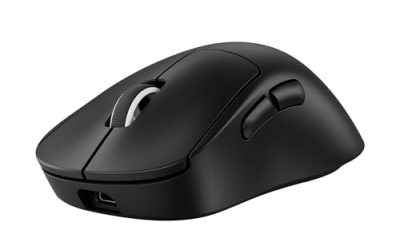
Choosing a wireless mouse for FPS play is a decision about trust at speed. A shooter player flicks, stops and clicks in fractions of a second, so the mouse has to report at high polling rates, track without smoothing surprises and stay light enough that stopping it is as precise as starting it. The flagship end of the market now answers with 8,000 Hz polling options, optical switches and weights between 35 g and 60 g, and the real differences are shape, battery behaviour and how each brand delivers its high polling rate.


This guide covers five flagship wireless mice positioned for esports and FPS play: Razer’s Viper V3 Pro, Logitech’s G PRO X Superlight 2, two Pulsar X2 models and ASUS ROG’s Harpe Ace Aim Lab Edition. These are current top-tier models chosen from their Amazon listing specifications, a different class of product from the budget wireless mice this site has covered for casual and Minecraft play.
Quick Picks
As an Amazon Associate we earn from qualifying purchases.
| Product | Best for | Key spec from title |
|---|---|---|
| Razer Viper V3 Pro Wireless Esports Gaming Mouse, Black | A competitive FPS player who wants the full 8,000 Hz wireless specification in a symmetrical shell, with the dongle included in the box rather than sold as an accessory. | 54 g, Focus Pro 35K sensor, 8K polling dongle |
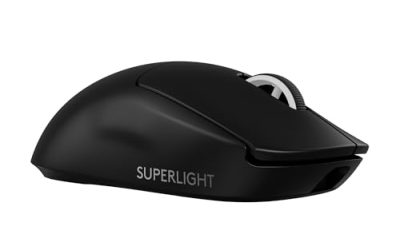
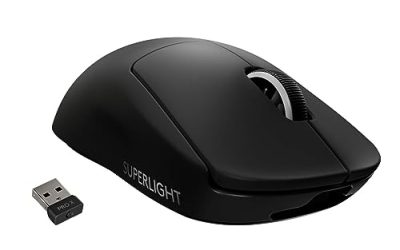
| Logitech G PRO X Superlight 2 Wireless Gaming Mouse, Black | A pro-leaning FPS player who prefers Logitech’s shape, hybrid switches and software, and wants 8 kHz reporting without leaving the G PRO ecosystem. | 60 g, HERO 2 sensor, 44K DPI, 8 kHz report rate |
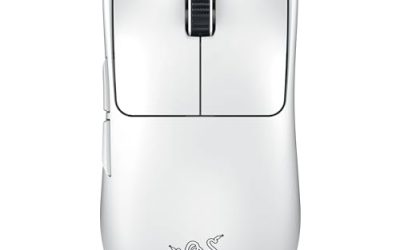
| Pulsar X2 v2 Wireless Gaming Mouse, Medium, White | A claw or fingertip FPS player who prioritises shell shape and a proven sensor over headline polling rates, and who likes the Medium size in white. | 53 g, PAW3395 sensor, 26,000 DPI, symmetrical |
| ASUS ROG Harpe Ace Aim Lab Edition, Black | A right-handed FPS player who trains in Aim Lab and wants one mouse that covers gaming on 2.4 GHz, office work on Bluetooth and wired play without swapping devices. | 54 g, 36K DPI AimPoint sensor, tri-mode |
| Pulsar X2 CrazyLight Wireless Gaming Mouse, Uyuni White | A fingertip-grip FPS player chasing the lowest possible wireless weight, who has already decided that 50 g-class mice still feel heavy at the end of a flick. | 35 g, XS-1 sensor, 32,000 DPI, 8K compatible |
How to Choose
Polling rate is a system, not a number
An 8,000 Hz figure only exists inside a chain: the mouse, its dongle and the game all have to support it, and the battery pays for every extra report. The Viper V3 Pro includes its HyperPolling dongle and quotes battery at 1,000 Hz; the Superlight 2 offers up to 8 kHz over LIGHTSPEED; the CrazyLight says 8K compatible, which needs a live-listing check for its dongle terms. Read each listing’s exact arrangement rather than comparing the headline rates, because the difference between included, compatible and supported is where the money hides.
Shape separates these five more than sensors do
Every sensor here tracks far beyond human need, so the real choice is the shell. The Viper V3 Pro, both Pulsars and the Superlight 2 are symmetrical shapes for claw and fingertip grips; the Harpe Ace is the right-handed ergonomic exception. A player who palm grips should be looking at the Harpe Ace or outside this guide entirely, and a fingertip player choosing between 35 g and 54 g is really choosing how much shell they want between their fingers, not how much performance they get.
Battery figures assume the polite settings
Each listing quotes its best battery number at standard polling with lighting restrained: 95 hours for the Razer and Logitech flagships, 90 for the Harpe Ace. Turn on 8,000 Hz and those figures fall steeply. The practical question is your charging tolerance: a player who docks a mouse nightly never thinks about battery, while a player who charges monthly should either stay at 1,000 Hz or accept the mid-session cable. None of these mice is a set-and-forget device at its fastest settings.
Weight has a floor set by your grip
The spread here runs from 35 g to 60 g, and lighter is not automatically better. Very light mice reward fingertip control and fast stops; they punish shaky hands and palm grips that rely on the shell for stability. The sensible method is to start from the weight of the mouse you already aim well with and move one step at a time. Jumping from a 100 g mouse straight to the 35 g CrazyLight skips the 54 g class where most competitive players in this guide actually land.
The 5 Best Options
Razer Viper V3 Pro Wireless Esports Gaming Mouse, Black
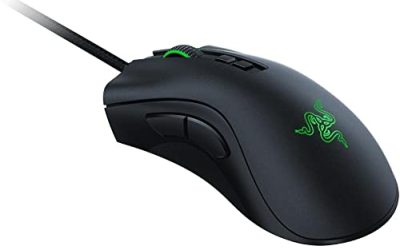
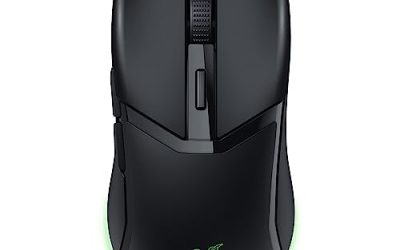
The Viper V3 Pro is Razer’s symmetrical esports flagship, and its listing is built around polling: up to 8,000 Hz through the included HyperPolling Wireless Dongle, against 1,000 Hz wired. The Focus Pro 35K Optical Sensor, Gen-3 optical switches and a 54 g shell make it the reference specification in this guide, and the battery figure is quoted honestly at up to 95 hours at 1,000 Hz, since high polling costs power. Note the listing’s own quirk: the shell is symmetrical while the hand-orientation field says Right.
Specs
- Sensor: Focus Pro 35K Optical Sensor Gen-2
- Maximum sensitivity: 35,000 DPI
- Weight: 54 g (Black; the White version is 55 g per the listing comparison table)
- Polling: up to 8,000 Hz via included HyperPolling Wireless Dongle; 1,000 Hz wired
- Switches: Razer Optical Mouse Switches Gen-3, 90-million click lifecycle per listing description
- Buttons: 8 programmable buttons
- Battery: up to 95 hours at 1,000 Hz
- Connectivity: Razer HyperSpeed Wireless (2.4 GHz) and wired USB-C
Best for: A competitive FPS player who wants the full 8,000 Hz wireless specification in a symmetrical shell, with the dongle included in the box rather than sold as an accessory.
Watch out for: Budget the battery around your polling choice: the 95-hour figure is at 1,000 Hz, and running 8,000 Hz shortens the interval between charges considerably, so a weekly charging habit is part of this mouse’s routine.
Logitech G PRO X Superlight 2 Wireless Gaming Mouse, Black
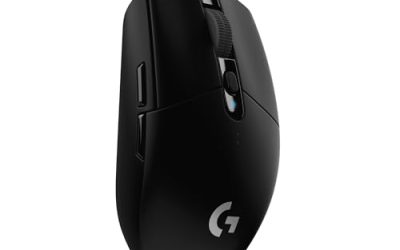
Logitech’s flagship answers Razer with its own full specification: a HERO 2 sensor, a report rate up to 8 kHz over LIGHTSPEED wireless, LIGHTFORCE hybrid switches and a 60 g shell with five programmable buttons. The listing’s current title and product information state a 44,000 DPI ceiling, the figure used here, and USB-C charging with up to 95 hours of battery rounds out a mouse aimed at professional players who want Logitech’s shape and software ecosystem. It is the heaviest pick in this guide and still firmly in ultralight territory.
Specs
- Sensor: HERO 2
- Maximum sensitivity: 44,000 DPI per current listing title and product information
- Report rate: up to 8 kHz
- Weight: 60 g
- Switches: LIGHTFORCE hybrid switches
- Buttons: 5 programmable buttons
- Battery: up to 95 hours
- Connectivity: LIGHTSPEED wireless; USB-C charging
- Model: 910-006628
Best for: A pro-leaning FPS player who prefers Logitech’s shape, hybrid switches and software, and wants 8 kHz reporting without leaving the G PRO ecosystem.
Watch out for: Check the DPI figure on the live listing at ordering time: an older crawl of this model stated 32,000 DPI while the current listing states 44,000, so the live page is the authority if the number matters to you.
Pulsar X2 v2 Wireless Gaming Mouse, Medium, White
The Pulsar X2 v2 is the specialist’s entry in this guide: a symmetrical 53 g shell built around the PAW3395 sensor, optical switches and a 2.4 GHz connection the listing rates at 1 ms. Pulsar sells shape and weight rather than an ecosystem, and the Medium size in White is the variant on this ASIN. Where the flagships above chase 8,000 Hz, the X2 v2 as listed is a 1,000 Hz mouse, which keeps its specification honest and its focus on the shell: low, symmetrical and shaped for claw and fingertip control in fast games.
Specs
- Sensor: PAW3395
- Maximum sensitivity: 26,000 DPI
- Weight: 53 g
- Shape: symmetrical
- Switches: optical switch
- Connectivity: 2.4 GHz wireless, 1 ms (1,000 Hz) as listed
- Size and colour of this ASIN: Medium, White
- Model: PX2222
- Battery: not stated in the listing data captured
Best for: A claw or fingertip FPS player who prioritises shell shape and a proven sensor over headline polling rates, and who likes the Medium size in white.
Watch out for: Confirm the size before ordering: Pulsar sells the X2 line in more than one size under different listings, and this ASIN is the Medium in White, so a player wanting the smaller shell needs a different listing.
ASUS ROG Harpe Ace Aim Lab Edition, Black

The Harpe Ace Aim Lab Edition is the right-handed entry in a field of symmetrical shells, built with Aim Lab and carrying that software’s Settings Optimizer as its signature feature. The listing states a 36,000 DPI ROG AimPoint sensor, a 54 g weight, up to 90 hours of battery and tri-mode connectivity across 2.4 GHz, Bluetooth and wired, which makes it the most flexible connector in this guide. For a player whose aim training already lives in Aim Lab, the optimizer tie-in is a genuine workflow feature rather than a badge.
Specs
- Sensor: ROG AimPoint optical sensor per listing copy
- Maximum sensitivity: 36,000 DPI
- Weight: 54 g
- Connectivity: tri-mode — 2.4 GHz, Bluetooth, wired
- Battery: up to 90 hours per title
- Shape: right-handed
- Feature: Aim Lab Settings Optimizer per title
- Platform: PC and Mac support per title
Best for: A right-handed FPS player who trains in Aim Lab and wants one mouse that covers gaming on 2.4 GHz, office work on Bluetooth and wired play without swapping devices.
Watch out for: Tri-mode is only an advantage if you use it: if the mouse will live permanently on a gaming PC, the Bluetooth mode and optimizer extras are features you are carrying without benefit, and a simpler pick may serve better.
Pulsar X2 CrazyLight Wireless Gaming Mouse, Uyuni White

The X2 CrazyLight is the extreme of this guide: 35 g, the lightest wireless FPS mouse here by a wide margin, built around Pulsar’s XS-1 sensor at 32,000 DPI and 750 IPS with optical switches. The listing describes it as 8K compatible, which is the wording to note: confirm on the live page what the 8K polling requires, since brands differ on whether the high rate needs a separate dongle. In the Uyuni White colourway of this ASIN, it is a mouse for players who have tried 50-something grams and still want less.
Specs
- Sensor: XS-1 sensor
- Maximum sensitivity: 32,000 DPI
- Tracking speed: 750 IPS
- Weight: 35 g
- Switches: optical switch
- Polling: 8K compatible per listing (dongle requirement to confirm on the live page)
- Shape: symmetrical
- Colour of this ASIN: Uyuni White
- Model: PX2CL108
Best for: A fingertip-grip FPS player chasing the lowest possible wireless weight, who has already decided that 50 g-class mice still feel heavy at the end of a flick.
Watch out for: Confirm the 8K arrangement on the live listing before assuming it works out of the box, and be honest about grip: at 35 g there is very little shell to hold, which fingertip players love and palm players often do not.
Which One Fits Your Situation
You play ranked FPS nightly and want the full flagship specification
Take the Razer Viper V3 Pro: 8,000 Hz polling with the dongle in the box, a 35K sensor and optical switches in a 54 g symmetrical shell. The optical switches remove the debounce compromises that competitive players tune around on mechanical flagship mice.
You are invested in Logitech gear and software
Take the G PRO X Superlight 2 for LIGHTSPEED at up to 8 kHz, LIGHTFORCE hybrid switches and the G PRO shape your hand already knows. USB-C charging and a 95-hour battery at standard polling make it the lowest-maintenance flagship in this guide.
You train in Aim Lab and play on two machines
Take the ASUS ROG Harpe Ace Aim Lab Edition: tri-mode connectivity covers both computers and the Settings Optimizer ties into your training routine. The right-handed shell is the exception in this guide, and palm-leaning players will feel the difference immediately.
You want the absolute lightest wireless mouse here
Take the Pulsar X2 CrazyLight at 35 g, after confirming the 8K dongle arrangement on its live listing and being sure your grip suits a minimal shell. Confirm the dongle arrangement first, because the listing’s 8K wording is a compatibility claim rather than a box-contents claim.
Common Mistakes
- Comparing headline polling rates without checking how each mouse delivers them, when one includes its high-polling dongle, another builds it into the receiver and a third calls itself compatible, which are three different purchases wearing the same number.
- Expecting the quoted 90-plus-hour battery life while running 8,000 Hz polling, when every listing’s battery figure is stated at standard polling and the high rate is the single most expensive setting a wireless mouse has.
- Buying the lightest mouse in the guide as a first ultralight, skipping the 50 g class entirely, and blaming the mouse for an unsteady aim that is really a grip that has not adjusted to a near-weightless shell.
- Treating DPI ceilings as a performance ranking, when all five sensors exceed what any player uses and the meaningful differences are shape, polling delivery, switches and battery behaviour instead.
Frequently Asked Questions
Is 8,000 Hz polling worth it for FPS games?
It reduces the interval between mouse reports to an eighth of the standard, which competitive players value for fast flicks. The listings here deliver it differently — included dongle, built-in receiver or stated compatibility — and it costs battery life, so read each product’s arrangement before deciding.
Which of these mice is the lightest?
The Pulsar X2 CrazyLight at 35 g per its listing. The Viper V3 Pro and Harpe Ace sit at 54 g, the Pulsar X2 v2 at 53 g and the Superlight 2 at 60 g, all figures from the products’ own listings.
How long do these mice last between charges?
The listings quote up to 95 hours for the Viper V3 Pro and Superlight 2 and up to 90 hours for the Harpe Ace, at standard polling rates. Running 8,000 Hz polling shortens those figures substantially in every case. Those figures assume standard polling; high-polling modes are the setting that separates a weekly charge from a monthly one.
Are these mice suitable for palm grip players?
Mostly not. Four of the five are low symmetrical shells aimed at claw and fingertip grips; the right-handed Harpe Ace is the closest fit here. A committed palm player should look at larger ergonomic models instead. Players between grips often do well with the Viper V3 Pro’s symmetrical shell, which tolerates claw and fingertip styles equally.