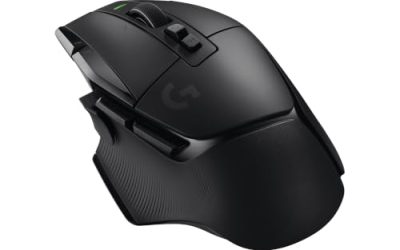
Counter-Strike rewards aim that is repeatable, and a mouse that fights your hand is the enemy of that. The real decision is not which sensor has the biggest number — every mouse here tops out at 3,200 DPI — but which shell fits your hand, which weight lets you flick without dragging, and whether a cable or a wireless receiver suits your desk. Get the shape wrong and no amount of practice fixes the strain; get it right and the mouse disappears during a round.
This guide covers the four Zowie mice that make sense for CSGO right now, all from the EC family that has been a staple of competitive play for years. Palm grippers with medium hands get the EC2-C, large hands get the EC1-C, and players who want the same shapes without a cable get the wireless EC2-CW and EC1-CW. Each one is driverless, each one uses a proven PixArt sensor, and each one is listed on Amazon with a clear size and weight to plan around.
Quick Picks
As an Amazon Associate we earn from qualifying purchases
| Product | Best for | Key spec from title |
|---|---|---|
| Zowie EC2-C | Medium hands, palm or claw grip, wired | 73 g, PMW3360, 3,200 DPI |
| Zowie EC1-C | Large hands, palm grip, wired | 80 g, PMW3360, 3,200 DPI |
| Zowie EC2-CW | Medium hands, wireless play | 77 g, PAW3370, wireless |
| Zowie EC1-CW | Large hands, wireless play | 79 g, PAW3370, wireless |
How to Choose
Match the Shell to Your Hand Size
Zowie sizes its EC shells by hand, not by marketing: the EC1 is large, the EC2 is medium, and the difference shows up in the length of the shell and the height of the hump under your palm. Measure your hand from the wrist crease to the tip of your middle finger — hands around 19 cm and up usually fit the EC1, while hands under that sit better on the EC2. A shell that is too large forces your fingers to stretch for the side buttons; a shell that is too small leaves your palm unsupported and makes your grip tense during long rounds. Size first, everything else second.
Decide Between Wired and Wireless
A wired EC mouse uses a flexible paracord cable that drags far less than a stiff rubber cord, and it never needs charging, which is why many competitive players still prefer it. The wireless CW models use an enhanced receiver that keeps polling at 1,000 Hz, so the connection does not hold back fast flicks, and the receiver doubles as a charging dock. Wireless adds a few grams and a battery to think about; wired adds a cable to manage. If your desk has a bungee or a clean cable route, wired is the simpler choice; if cables annoy you, wireless is worth the extra weight.
Understand the Sensor and DPI Steps
All four mice here use a PixArt optical sensor with four DPI steps — 400, 800, 1,600, and 3,200 — and you switch between them with a button on the underside, no software needed. Most CSGO players settle on 400 or 800 DPI with a low in-game sensitivity, because that combination gives fine control over small adjustments and smooth tracking during large arm movements. A higher DPI is not better aim; it is just a different way to cover the same distance. Pick the DPI that lets you turn 180 degrees with one comfortable sweep, then leave it alone.
Weight, Scroll Wheel, and Switches
Weight is the first thing you feel and the last thing you should overthink. The EC2-C weighs 73 g, the EC2-CW 77 g, the EC1-CW 79 g, and the EC1-C 80 g — a spread of just 7 g across the whole group, so shape matters more than the number on the scale. Every model here has a 24-step scroll wheel with a clear click for each step, which makes weapon switching predictable. The EC1-C uses Huano switches under its main buttons, and all four mice run driverless, so there is no software to install or update before a match.
The 4 Best Options
Zowie EC2-C

The EC2-C is the mouse most CSGO players should start with. Its medium ergonomic shell measures 123 by 65 by 42 mm and weighs 73 g, which puts it in the sweet spot for palm and claw grips with medium hands. The PixArt PMW3360 sensor tracks up to 3,200 DPI and polls at 1,000 Hz, and the four DPI steps switch with a button on the underside. A flexible paracord cable keeps drag low, the 24-step scroll wheel gives a clear click per step, and the driverless design means there is nothing to install before a match.
Specs
- Weight: 73 g
- Size: 123 x 65 x 42 mm (medium)
- Sensor: PixArt PMW3360
- DPI: 400 / 800 / 1600 / 3200
- Polling rate: 1,000 Hz
- Cable: Paracord
- Scroll wheel: 24-step
- Buttons: 5
- Design: Driverless, right-handed ergonomic
Best for: Medium hands using palm or claw grip in CSGO.
Watch out for: The right-handed shape does not suit left-handed players.
Zowie EC1-C

The EC1-C is the same idea as the EC2-C, sized up for large hands. At 130 mm long and 42 mm high it gives a full palm rest that keeps big hands relaxed through long matches, and the 80 g weight adds stability that resists accidental drift during slow, careful holds. The PMW3360 sensor, 3,200 DPI ceiling, and 1,000 Hz polling match the smaller model exactly, so the choice between the two is purely about fit. Huano switches sit under the main buttons, a 2 m paracord cable keeps drag low, and the driverless design means setup ends at plugging it in.
Specs
- Weight: 80 g
- Length: 130 mm
- Height: 42 mm
- Size: Large
- Sensor: PixArt PMW3360
- DPI: 400 / 800 / 1600 / 3200
- Polling rate: 1,000 Hz
- Cable: 2 m paracord
- Scroll wheel: 24-step
- Switches: Huano
- Buttons: 5
- Design: Driverless, right-handed ergonomic
Best for: Large hands using a palm grip.
Watch out for: The large shell can feel bulky for claw grip.
Zowie EC2-CW

The EC2-CW takes the EC2 shape wireless without changing what makes it work. It keeps the same 123 by 65 by 42 mm ergonomic shell, adds 4 g for the battery and radio to reach 77 g, and swaps the PMW3360 for a PixArt PAW3370 sensor with the same 400 to 3,200 DPI steps. An enhanced receiver handles the 2.4 GHz link at 1,000 Hz and doubles as a charging dock, so the mouse has a home between sessions. The 24-step scroll wheel and driverless design carry over unchanged, which makes the wireless version feel familiar from the first round.
Specs
- Weight: 77 g
- Size: 123 x 65 x 42 mm (medium)
- Sensor: PixArt PAW3370
- DPI: 400 / 800 / 1600 / 3200
- Polling rate: 1,000 Hz
- Connection: Wireless 2.4 GHz with enhanced receiver
- Scroll wheel: 24-step
- Design: Driverless, right-handed ergonomic
Best for: Medium hands that want the EC2 shape without a cable.
Watch out for: A few grams heavier than the wired EC2-C, and the battery needs charging.
Zowie EC1-CW

The EC1-CW is the wireless version of the large EC1 shell, and it suits players who want a big mouse with no cable in the way. At 79 g it is actually a gram lighter than the wired EC1-C, which is unusual for a wireless mouse, and the PixArt PAW3370 sensor keeps the same 400 to 3,200 DPI steps with 1,000 Hz polling through the enhanced receiver. The large ergonomic shell supports a full palm grip, the 24-step scroll wheel gives predictable weapon switching, and the driverless design means there is no software between you and the game.
Specs
- Weight: 79 g
- Size: Large
- Sensor: PixArt PAW3370
- DPI: 400 / 800 / 1600 / 3200
- Polling rate: 1,000 Hz
- Connection: Wireless 2.4 GHz with enhanced receiver
- Scroll wheel: 24-step
- Design: Driverless, right-handed ergonomic
Best for: Large hands that want wireless freedom.
Watch out for: The large shell is not a good match for small hands.
Which One Fits Your Situation
You Palm Grip With Medium Hands
The EC2-C is the default answer. Its 123 mm shell and centered hump fill a medium palm without stretching your fingers, the 73 g weight keeps flicks light, and the paracord cable stays out of the way. If you want the same shape without a cable, the EC2-CW is the wireless twin at 77 g.
You Palm Grip With Large Hands
The EC1-C gives large hands the room they need: a 130 mm shell, a taller hump, and 80 g of steady weight that resists accidental drift. The EC1-CW offers the same large shell with wireless freedom, so pick wired if you never want to think about charging and wireless if you hate cables.
You Switch Between Claw and Palm Grip
The EC2 shape suits a hybrid grip better than the EC1, because the medium shell lets your fingers curl without reaching. The EC2-C is the wired pick and the EC2-CW the wireless one; both keep the same 24-step scroll wheel and the same driverless setup, so the only real choice is cable or no cable.
You Play Low Sensitivity With Big Arm Movements
Low sensitivity means your arm does the work, so a stable shell and a smooth glide matter most. The EC1-C and EC1-CW give large-handed players a full palm rest that stays planted during wide sweeps, while the paracord on the wired model and the enhanced receiver on the wireless one both keep the connection honest at 1,000 Hz.
Common Mistakes
- Picking a mouse by weight alone and ignoring shell size.
- Setting DPI to the maximum and wondering why small adjustments feel jumpy.
- Buying a large shell for small hands and stretching for the side buttons.
- Assuming a wireless mouse is slower than a wired one at 1,000 Hz polling.
- Expecting software remapping on a driverless mouse that has none.
Frequently Asked Questions
What DPI should I use for CSGO with a Zowie mouse?
Most players use 400 or 800 DPI with a low in-game sensitivity, because that pairing gives fine control for small corrections and smooth tracking for large sweeps. All four mice here offer 400, 800, 1,600, and 3,200 DPI steps, so start at 800, adjust your in-game sensitivity until a 180-degree turn feels natural, and stick with it.
Is wireless fast enough for competitive CSGO?
Yes, at the level these mice operate. The EC2-CW and EC1-CW poll at 1,000 Hz through an enhanced receiver, which matches the wired models, so the connection does not add lag you can feel in a match. The trade-off is a few extra grams and a battery to charge, not speed.
Which Zowie size fits my hand?
Measure from your wrist crease to the tip of your middle finger. Hands around 19 cm and longer generally fit the large EC1 shell, while shorter hands fit the medium EC2 shell. Grip matters too: palm grippers need the full shell, while claw grippers can go a size down. When in doubt, the EC2 suits more hands than the EC1.
Do Zowie mice need software?
No. All four mice in this guide are driverless: DPI changes happen with a button on the underside, and there is no program to install or update. That means fewer background processes on a gaming PC, but it also means you cannot remap buttons or adjust lift-off distance in software. What you get is exactly what the hardware offers.