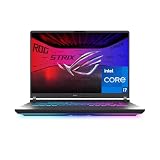
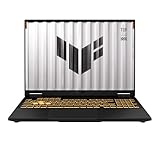
- Top Pick: ASUS ROG Strix G16 (2025) Gaming Laptop, 16” FHD+ 16:10 165Hz/3ms, NVIDIA® GeForce RTX™ 5060, Intel® Core™ i7 Processor 14650HX, 16GB DDR5, 1TB Gen 4 SSD, Wi-Fi 7, Windows 11 Home, G615JMR-AS74
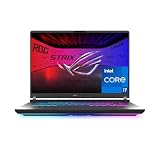
- Best Value: ASUS ROG Strix G16 (2025) Gaming Laptop, 16” ROG Nebula 16:10 2.5K 240Hz/3ms, NVIDIA® GeForce RTX™ 5070 Ti, Intel® Core™ Ultra 9 Processor 275HX, 32GB DDR5, 1TB SSD, Wi-Fi 7, Win11 Home, G615LR-AS96
- Premium Choice: ASUS TUF Gaming F16 (2025) Gaming Laptop, 16” FHD+ 165Hz 16:10 Display, Intel® Core™ i5 Processor 13450HX, NVIDIA® GeForce RTX™ 5050, 16GB DDR5, 512GB PCIe Gen4 SSD, Wi-Fi 6E, Win 11 Home
Shopping for a gaming laptop in 2026 means wading through a maze of GPU tiers, refresh rates, and confusing processor names that all sound similarly impressive. Pick the wrong machine and you’re stuck with thermal throttling mid-raid, a display that can’t keep up with your frame rate, or a battery that dies before you finish loading into a match.
This guide breaks down six standout gaming laptops for 2026, from budget-friendly entry points to no-compromise flagships, so you can match the right specs to your games, budget, and portability needs.


As an Amazon Associate we earn from qualifying purchases at no extra cost to you. Product prices and availability are accurate as of the date shown and are subject to change.




🎮 Get More From Your Setup — Free
Prime Gaming gives you free PC games every month, in-game loot, and a free Twitch channel sub — plus fast free shipping on all the gear above. New members get a 30-day free trial.
Watch: Best Ten Best Gaming Laptops — Video Review
How to Choose a Gaming Laptop (2026)
- GPU tier: Match the graphics card to your target resolution and frame rate; an RTX 5050 or 5060 handles 1080p esports titles well, while 1440p or ray-traced AAA games call for an RTX 5070 Ti or higher.
- Display quality: Look for a high refresh rate (144Hz minimum) paired with a fast response time; 2.5K panels offer sharper visuals but demand more GPU horsepower to drive them.
- RAM and storage: 16GB DDR5 is the practical minimum for modern games and multitasking, while 32GB gives creators and streamers headroom; prioritize Gen4 PCIe SSDs for fast load times.
- Cooling and build: Sustained performance depends on chassis thermals, not just chip specs, so check for vapor chamber cooling or multiple exhaust vents, especially in thinner laptops.
- Portability vs. power: 16-inch laptops balance performance and portability, while 18-inch models trade weight and battery life for maximum cooling headroom and screen real estate.
The Best Gaming Laptops (2026) Reviewed
ASUS ROG Strix G16 (RTX 5060)
This configuration pairs a 14th-gen Intel Core i7 with an RTX 5060 and a fast 165Hz FHD+ panel, making it a well-rounded pick for competitive gamers who want high frame rates without stepping up to a 2.5K display.
ASUS ROG Strix G16 (RTX 5070 Ti)
With a Core Ultra 9 275HX, 32GB of RAM, and a 240Hz ROG Nebula 2.5K screen, this Strix G16 variant is built for gamers who want sharper visuals and enough GPU muscle to drive them without sacrificing smoothness.
ASUS TUF Gaming F16 (RTX 5050)
The TUF F16 delivers a genuinely capable 165Hz gaming experience at a more accessible price, and its Core i5-13450HX still has plenty of headroom for esports titles and most modern AAA games at 1080p.
ASUS TUF Gaming F16 (RTX 4050)
This entry-level TUF configuration is the budget pick of the lineup, offering a solid 144Hz IPS-level display and dependable everyday gaming performance for players who don’t need maxed-out settings.
ASUS ROG Strix SCAR 18
The SCAR 18 is an uncompromising flagship, combining an RTX 5080, Core Ultra 9 275HX, 32GB DDR5-5600, and a 240Hz 2.5K HDR display in an 18-inch chassis built for enthusiasts who want desktop-replacement performance.
Related Guides
- 14 Inch Vs 15.6 Inch Laptop Screen: Full Comparison (2026)
- Best Laptop For High School (2026)
- OLED Surface Laptop (2026)
- Triple Laptop Display (2026)
Frequently Asked Questions
How much RAM do I really need for gaming in 2026?
16GB is sufficient for most current games, but 32GB is worth the upgrade if you stream, run background apps, or want your laptop to stay comfortable for the next few years.
Is an RTX 5060 enough for 1440p gaming?
An RTX 5060 is best suited for 1080p at high refresh rates; for consistently smooth 1440p performance with ray tracing, an RTX 5070 Ti or better is a safer choice.
Do I need a 2.5K display or is FHD+ enough?
FHD+ panels are easier to drive at high frame rates and are ideal for competitive play, while 2.5K displays offer noticeably sharper detail for single-player and story-driven games if your GPU can support it.
Are 18-inch gaming laptops worth the extra size and weight?
18-inch models generally offer better cooling and more immersive screens, making them a strong choice for desk-bound gamers, but 16-inch laptops remain the better balance for anyone who travels with their machine.
Final Thoughts
For most gamers, the ASUS ROG Strix G16 with the RTX 5060 hits the sweet spot of price and performance, while the ROG Strix SCAR 18 is the clear choice for enthusiasts chasing top-tier power, and the ASUS TUF Gaming F16 (RTX 5050) remains the best value pick for budget-conscious buyers.
Top picks from this guide
 RazerRazer Viper V3 Pro SE Wireless Gaming Mouse, 95 Hr…$80 \xc2\xb7 98/100
 FejwlvsZhouWang Moonlight White Magnetic Switch 36PCS,Pre-Lubed Linear Switches$15 \xc2\xb7 97/100RazerRazer Wolverine Ultimate Officially Licensed Xbox One Controller: 6 Remappable…$81 \xc2\xb7 97/100
 KAIGERRLight Gaming Laptop, ΑΜD Ryzen 7 5700U(8C/16T, Up to 4.3GHz),…$490 \xc2\xb7 96/100