To play Pokemon trading cards you each need a 60-card deck, and the goal is simple: be the first player to take all six of your Prize cards by knocking out your opponent’s Pokemon. Each turn you draw a card, build your board by benching Basic Pokemon, evolving them and attaching one Energy, then attack to end your turn. Everything else — Trainer cards, Abilities, Special Conditions and retreating — sits inside that loop, and you can learn the whole thing in a single evening.
As an Amazon Associate I earn from qualifying purchases.
🛒 Best Price Today on Amazon
Prime members get fast, free shipping on everything above, plus member-only deals. New members get a 30-day free trial — cancel anytime.
Quick answer: Our top pick in 2026 is the Pokemon Trading Card Game — our #1 rated choice. See the full ranked comparison, alternatives and buying advice below.
How to Play Pokemon Trading Cards: Setup and Win Condition
Shuffle your 60-card deck and draw seven cards. You must place at least one Basic Pokemon face down as your Active Pokemon; if your opening hand has none, reveal it, shuffle back, and draw seven again while your opponent draws one extra card for each of your mulligans. You may also place up to five more Basic Pokemon face down on your Bench. Then count six cards off the top of your deck and set them aside face down as your Prize cards. Flip a coin to decide who goes first, turn everything face up, and begin.
| Game | Platform | Genre | Why It’s Great | Rating |
|---|---|---|---|---|
| Pokemon Trading Card Game | Game Boy Color / 3DS Virtual Console | Digital card battler | Still the best interactive tutorial for the paper game’s core rules | 9.0/10 |
| Pokemon TCG Live | PC, Mac, iOS, Android | Digital card battler | Free official client that enforces every rule so you learn by playing | 7.8/10 |
| Pokemon TCG Pocket | iOS, Android | Collectible card game | Streamlined 20-card decks and daily pack openings for quick sessions | 8.3/10 |
| Magic: The Gathering Arena | PC, Mac, Mobile | Digital card battler | The deepest deckbuilding rules set in the genre, with strong tutorials | 8.7/10 |
| Yu-Gi-Oh! Master Duel | PC, Switch, PS5, Xbox | Digital card battler | Massive card pool and a solo mode that teaches archetype interactions | 8.5/10 |
| Hearthstone | PC, iOS, Android | Digital card battler | The friendliest onboarding of any major card game, with rotating formats | 8.4/10 |
| Marvel Snap | PC, iOS, Android | Card battler | Six-turn games that teach bluffing and resource timing very quickly | 8.8/10 |
| Slay the Spire | PC, Switch, PS4, Xbox, Mobile | Roguelike deckbuilder | Teaches deck consistency better than almost any competitive card game | 9.5/10 |
The Three Card Types You Need to Understand
Pokemon cards come in three families. Pokemon cards do the fighting and come as Basics, which can be played straight from your hand, and Stage 1 or Stage 2 evolutions, which must be played on top of the correct pre-evolution. Energy cards power attacks and come in Basic types such as Fire or Water plus Special Energy with extra effects. Trainer cards are your engine: Items can be played freely, Supporters are limited to one per turn, Stadiums sit in the middle of the table affecting both players, and Pokemon Tools attach to a single Pokemon.
Deckbuilding rules are strict but short. Exactly 60 cards, a maximum of four copies of any card sharing the same name, and unlimited Basic Energy. Most competitive decks run roughly 12 to 18 Pokemon, 8 to 12 Energy and the rest Trainers.
How a Turn Works When You Play Pokemon Trading Cards
Every turn begins with a mandatory draw. If your deck is empty and you cannot draw, you lose immediately. After drawing you may do the following in any order and as often as the cards allow: put Basic Pokemon onto your Bench, evolve a Pokemon that has been in play since your previous turn, attach exactly one Energy from your hand, play Item cards, play one Supporter, play one Stadium, use Abilities, and retreat your Active Pokemon once by discarding Energy equal to its Retreat Cost. When you attack, your turn ends immediately.
Two restrictions catch new players out. The player going first cannot attack on their very first turn, and you can never evolve a Pokemon on the turn you played it or on the first turn of the game.
Attacking, Damage, Weakness and Prize Cards
To attack, check that your Active Pokemon has the Energy shown in the attack cost, then apply the damage to the opponent’s Active Pokemon. If the defender has a Weakness matching your attacker’s type, double the damage. If it has Resistance, subtract the printed amount, usually 30. Place damage counters on the defending Pokemon; they stay there between turns. When total damage reaches or passes the Pokemon’s HP, it is Knocked Out and goes to the discard pile along with everything attached to it, and you take a Prize card. Powerful cards such as ex Pokemon award two Prizes instead of one.
There are three ways to win: take all six Prize cards, knock out every Pokemon your opponent has in play, or have your opponent be unable to draw at the start of their turn.
Special Conditions and the Between-Turns Checkup
Five Special Conditions can affect the Active Pokemon only. Poisoned adds a damage counter between turns, Burned adds counters and requires a coin flip to shake off, Asleep and Paralyzed prevent attacking and retreating, and Confused forces a coin flip that can hurt your own Pokemon. Asleep and Confused are checked between turns with coin flips, Paralyzed clears automatically at the end of the affected player’s next turn, and simply retreating or evolving a Pokemon removes every Special Condition on it — an escape route many beginners forget.
Building Your First Deck
The cheapest sensible entry point is a preconstructed product. Battle Academy includes two ready-to-play decks, a board and a rulebook, and current-set starter decks give you a legal 60-card list out of the box. From there, upgrade one card at a time. Aim for two evolution lines maximum, a reliable draw Supporter, a way to search out Basic Pokemon, and enough Energy that you can attach every single turn. Consistency beats power at every level of play, and a deck that does the same thing every game will beat a deck full of expensive singles that never line up.
Formats, Events and Playing Online
Organised play uses two main formats. Standard uses only recent sets and rotates each year, while Expanded reaches much further back. Local game stores run weekly league nights that are genuinely welcoming to beginners, and Play! Pokemon events scale up from League Challenges to Regionals and the World Championships. If you want practice without leaving home, Pokemon TCG Live is free, enforces every rule automatically, and lets you redeem the code cards found in physical booster packs to build a digital collection alongside your paper one.
Common Beginner Mistakes to Avoid
New players attach Energy to the wrong Pokemon, forget they can only play one Supporter per turn, and bench nothing so a single knockout ends the game. Fill your Bench early, keep a second attacker charged, and treat Retreat Cost as part of your plan rather than an emergency button. Above all, resist building a deck around one enormous Pokemon. If your entire strategy needs four Energy on a single card, an opponent only has to knock it out once to win the game outright.
If you play a lot of TCG Live or Pocket alongside paper cards, the right gear helps. Start with our best gaming monitors buying guide for a panel that keeps card text sharp, then the gaming desk and chair guide for long league nights. On PC, the wireless gaming mouse buying guide and mechanical keyboard buying guide cover the essentials, while our tablet and mobile gaming accessories guide is the one to read for Pocket. If you stream your matches, the USB microphone buying guide is the single biggest quality upgrade you can make.
Frequently Asked Questions
How many cards do you need to play Pokemon trading cards?
A legal deck contains exactly 60 cards, no more and no fewer, with a limit of four copies of any card sharing the same name. Basic Energy cards are the sole exception and can be included in unlimited quantities. You also need damage counters, a coin or die for flips, and six of your own cards set aside as Prizes.
Can you play Pokemon trading cards with just two starter decks?
Yes, and it is the recommended way to learn. Products such as Battle Academy or paired starter decks are balanced against each other, contain simple evolution lines and include a rulebook. Playing five or six games with those before touching a booster pack will teach you the turn structure far faster than reading rules documents.
What is the difference between Standard and Expanded format?
Standard is the main competitive format and only allows cards from recent sets, rotating annually so the card pool stays manageable and affordable. Expanded stretches back to the Black & White era, creating a much larger and more powerful card pool. Most local league nights and beginner events use Standard, so build there first.
Do the digital Pokemon card games teach the real rules?
Pokemon TCG Live uses the exact paper rules and enforces them automatically, which makes it an excellent teacher for turn order, Special Conditions and Prize counting. Pokemon TCG Pocket is a simplified variant with 20-card decks and different Prize rules, so it is great fun but not a direct substitute for learning the tabletop game.
As an Amazon Associate we earn from qualifying purchases at no extra cost to you. Product prices and availability are accurate as of the date shown and are subject to change.
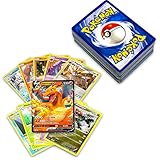


Ready to decide? Our #1 pick for 2026 is the Pokemon Trading Card Game.
Live price & availability on Amazon.