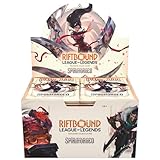
- Top Pick: Riftbound: League of Legends – Proving Grounds – Trading Card Game, Deck-Building Battle, 4 Champion Boards & Starter Decks, Ages 14+, 2-4 Players
- Best Value: Riftbound: League of Legends TCG Spiritforged – Champion Deck: Rumble – Ready-to-Play Character, Trading Card Game, Deck-Building, Units & Spells
- Premium Choice: Riftbound: League of Legends TCG Unleashed – Booster Display – 24 Booster Packs (14 Cards Ea), Deck-Building Trading Card Game, Randomly Assorted
The fastest way to start Riftbound, Riot Games’ League of Legends trading card game, is to pick up a two-player starter product, learn the three core zones (your base, the battlefields and the rune pool), and play a few rounds of the objective: be the first player to score 8 points by holding battlefields. You do not need to build a deck from scratch on day one, because preconstructed starter decks are legal, balanced against each other and designed to teach the combat rules as you play. This guide walks through exactly what to buy, how a turn flows, and the first deck-building habits worth forming.
As an Amazon Associate I earn from qualifying purchases.
If you enjoy Riftbound’s mix of resource management and board control, these eight games scratch a similar itch on PC and console.
| Game | Platform | Genre | Why It’s Great | Rating |
|---|---|---|---|---|
| Legends of Runeterra | PC, Mobile | Digital Card Game | Same Runeterra characters and the most generous card acquisition in the genre | 9/10 |
| Slay the Spire | PC, Switch, PS4, Xbox, Mobile | Deckbuilding Roguelike | The single best teacher of deck consistency and curve | 9.5/10 |
| Magic: The Gathering Arena | PC, Mobile | Digital Card Game | Deep stack-based interaction that sharpens sequencing skills | 8.5/10 |
| Hearthstone | PC, Mobile | Digital Card Game | Fast matches and an excellent onboarding tutorial | 8/10 |
| Marvel Snap | PC, Mobile | Digital Card Game | Location control that mirrors Riftbound’s battlefield scoring | 8.5/10 |
| Balatro | PC, Switch, PS5, Xbox, Mobile | Roguelike Deckbuilder | Ruthlessly addictive scoring engine built on poker hands | 9.5/10 |
| Inscryption | PC, PS5, Xbox, Switch | Card Game / Horror | Turns card rules themselves into the puzzle | 9/10 |
| League of Legends | PC, Mac | MOBA | The source material, and useful context for every champion card | 8.5/10 |
🛒 Best Price Today on Amazon
Prime members get fast, free shipping on everything above, plus member-only deals. New members get a 30-day free trial — cancel anytime.
How to Start Riftbound Game Sessions: What You Actually Need
Riftbound is a physical trading card game set in Runeterra, built for one-versus-one duels and multiplayer free-for-alls. Unlike a digital card game, you cannot simply download it and press play, so the first decision is which product to open with. Riot has kept the entry ramp deliberately shallow: a sealed two-player set gives two ready-to-play decks, the tokens you need and a rules insert, which is enough for your first ten games without spending another cent.
Choose Your First Riftbound Product
You have three sensible on-ramps. A two-player starter set is the best value if you have a regular opponent, since it includes both sides of the table and a shared token pool. Single starter decks tied to a specific champion suit players who already have a playgroup and want a particular colour identity. Booster packs are for expanding a collection, not for learning, because a random pack will not give you a playable deck. Whatever you choose, sleeve the cards immediately; shuffling unsleeved cards for a few weeks visibly wears the edges and makes them identifiable in a shuffled deck. If you also play digital card games on PC between tabletop nights, our gaming monitor buying guide covers panels that keep small card text crisp.
Understand the Deck Structure Before You Play
A legal Riftbound deck is not one pile of cards. You bring a Legend card that defines your identity and grants an ability, a main deck of roughly 40 cards containing units, spells and gear, a separate rune deck that supplies your colour-based resources, and a small set of battlefield cards that form the contested board. Keeping runes in their own deck is the design’s cleverest touch: you never lose a game because you drew too many or too few resources, which removes the single most frustrating failure state in older card games. That structural safety net is exactly why Riftbound is beginner-friendly.
How a Turn Flows in Riftbound
On your turn you ready your resources, draw, then spend energy and power to play units, move them to battlefields, and resolve combat. Units placed at a battlefield contest it; if you control a battlefield when scoring happens, you bank points. Play continues back and forth until someone reaches the 8-point win condition. New players should focus on a single habit: ask what your opponent can do before you commit units. Overcommitting to one battlefield and losing the whole squad to a single removal spell is the classic beginner blowout. Long tabletop sessions are easier with good lighting and a comfortable seat, and our gaming desk and chair buying guide covers setups that work for both card tables and PC play.
Learn the Colours and Their Roles
Riftbound sorts cards into colour domains, each with a clear personality: aggressive early pressure, defensive control, ramping resources, card draw and disruption. Your Legend usually anchors one or two of these. The mistake new deck-builders make is spreading across three or four colours for the “best” cards, which wrecks the rune maths and leaves you unable to cast what you drew. Stick to one or two colours for your first twenty games. Once you can consistently curve out, splashing a third colour becomes a calculated risk rather than a coin flip.
Your First Five Games: A Practical Plan
Game one, play the starter decks exactly as printed and do not look up strategy. Game two, swap decks with your opponent so you see both sides. Game three, keep a notepad and write down every time you were unsure of a rule, then look those up together afterwards. Games four and five, try deliberately different lines: rush a single battlefield in one, spread across all of them in the other. This teaches the scoring tempo faster than any guide, including this one. If you also stream or record your tabletop games for a group chat, our webcam and capture card buying guide explains overhead mounting options that actually show the board clearly.
Where to Play and Find Opponents
Local game stores are the backbone of any physical card game. Ask about weekly casual nights before you jump into a competitive event, since casual tables are where people will happily walk you through interactions. Online, community Discords and subreddits run pickup games over webcam and maintain rules FAQs that resolve edge cases faster than official channels. Riot has also leaned on organised play at store level, so the format you learn casually is usually the format tournaments use. If your group plays over video call, a decent mic makes rules discussions painless; see our gaming headset buying guide for options with clear voice pickup.
Budget Tips for New Riftbound Players
Do not chase rare champion cards in your first month. Preconstructed decks are deliberately competitive against one another, and the skill gap between a new player and an experienced one dwarfs any card-quality gap. Buy sleeves and a deck box first, a playmat second, and singles only after you know which colours you actually enjoy. Trading duplicate cards at your local store is far cheaper than opening boosters hoping for a specific card. Many players run companion apps or life trackers on a tablet or phone, and our tablet and accessories buying guide covers stands that keep a screen readable across the table.
Common Beginner Mistakes to Avoid
Four errors show up constantly. Holding removal spells too long so they rot in hand while a board builds; ignoring battlefields you think you cannot win, which hands your opponent free points; playing every unit the moment you can afford it instead of holding one for a response; and building a deck around a single expensive card with no way to survive until you cast it. Fix those four and you will beat most casual opponents. For PC players who also grind Legends of Runeterra or League between tabletop nights, our gaming mouse buying guide is a useful companion read.
Frequently Asked Questions About How to Start Riftbound Game Play
Do I need to know League of Legends to start Riftbound?
Not at all. Champion names, regions and artwork will feel richer if you already play League of Legends, but every rule, keyword and card ability is explained on the cards themselves and in the rules insert, so complete newcomers can learn the game without any prior Runeterra knowledge.
How many players can play Riftbound at once?
The core experience is one-versus-one, which is what starter sets are built around and what organised play uses. The rules also support multiplayer free-for-all games with three or more players sharing a larger battlefield row, which changes scoring pace considerably and works well for casual game nights.
Is a starter deck strong enough to play against friends?
Yes. Preconstructed starter decks are balanced against each other and contain a complete curve of units, spells and runes, so two unmodified starters produce genuinely close games. Upgrading only becomes worthwhile once everyone in your group has learned the fundamentals and started customising.
Is there a digital version of Riftbound I can practise on?
Riftbound is designed as a physical trading card game, so the primary way to play is with real cards at a table or over webcam. Players who want a digital Runeterra card experience usually turn to Legends of Runeterra, which uses the same characters and world but an entirely different rules set.
As an Amazon Associate we earn from qualifying purchases at no extra cost to you.