🛒 Best Price Today on Amazon
Prime members get fast, free shipping on everything above, plus member-only deals. New members get a 30-day free trial — cancel anytime.
- Top Pick: Marvel Rivals Venom Men's Black Sleep Pajama Pants-Large
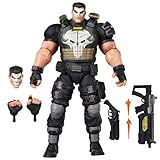
- Best Value: Marvel Legends Series Marvel Rivals The Punisher, Video Game-Inspired Collectible 6-Inch Action Figure
- Premium Choice: Marvel Legends Series Marvel Rivals Spider-Man & Luna Snow, Video Game-Inspired Collectible 6-Inch Action Figures
Marvel Rivals is a free-to-play 6v6 hero shooter built on Unreal Engine 5, and that engine choice dictates nearly everything about how the game performs on your hardware. The title leans heavily on Lumen global illumination and Nanite virtualized geometry, which means GPU load is front-loaded into lighting and geometry systems most older engines never touched. At the same time, UE5’s actor management, Blueprint scripting, and physics simulation create a persistent CPU floor that can bottleneck even mid-range processors during chaotic teamfights with multiple ultimates landing simultaneously.
Two additional quirks matter for competitive play. First, the game features destructible cover on every map, which increases CPU geometry recalculation and can introduce micro-stutters during sustained fights if your storage subsystem is slow. Second, frame pacing is uneven in UE5 titles because the engine’s rendering pipeline batches work differently frame to frame; you will often see high average FPS paired with inconsistent frametimes, which feels worse than a lower but stable framerate when you are trying to track a diving Magik or a strafing Spider-Man.
As an Amazon Associate we earn from qualifying purchases at no extra cost to you.







Quick Preset
| Setting | Competitive | Balanced | Low-End PC |
|---|---|---|---|
| Resolution Scale | 100% | 100% | 70-85% |
| Render Quality | Custom (below) | High | Low |
| Global Illumination (Lumen) | Low | Medium | Off |
| Shadows | Low | Medium | Low |
| Reflections | Low | Medium | Off |
| Post-Processing | Low | Medium | Low |
| Anti-Aliasing | TSR | TSR | TSR |
| Texture Quality | Medium | High | Medium |
| Tessellation | Off | Medium | Off |
| View Distance | Epic | Epic | Medium |
| Particle Quality | High | High | Medium |
| Upscaling | DLSS/FSR Quality | DLSS/FSR Quality | DLSS/FSR Balanced |
| Frame Generation | Off | Off | On |
| Ray Tracing | Off | Off | Off |
| Depth of Field | Off | On | Off |
| Motion Blur | Off | Off | Off |
| VSync | Off | Off | Off |
Settings That Matter Most
Global Illumination (Lumen)
This is the single largest GPU cost in Marvel Rivals. Lumen performs real-time ray-traced GI by default, meaning light bounces off surfaces and recalculates every frame. Dropping from High to Low typically yields a 20-35% FPS increase on mid-tier cards because Low uses a cached approach that skips many secondary bounce calculations. Turning it completely off removes the effect but can cause abilities and character silhouettes to blend into dark map geometry, which is why competitive presets still keep it on Low rather than off. The visual difference between Low and Medium is subtle in motion; between Medium and High it is noticeable in color bleeding and corner lighting.
Shadow Quality
Marvel Rivals uses UE5’s Virtual Shadow Maps, which are far more expensive than traditional cascaded shadow maps. On Low, the game reduces the resolution and number of shadow-casting lights. The jump from Medium to High roughly doubles shadow memory usage and GPU time because it increases the virtual shadow map tile count. For competitive play, Low is sufficient because shadows do not affect gameplay visibility; enemy models remain fully lit regardless. On Low-end systems, Medium can cost 10-15 FPS for no competitive benefit.
Particle Quality
Counterintuitively, you want this set high for competitive play. Marvel Rivals abilities rely heavily on particle effects to communicate range, direction, and timing. Hulk’s shockwave, Iron Man’s unibeam charge indicator, and Namor’s flood wave are all communicated through particle density and color. Dropping particles to Low or Medium causes them to thin out and become harder to read against busy map geometry, especially on maps like K’un-L’un or the two-floor sections of Ten Times Square. The FPS cost of High particles is minimal (2-5%) compared to the competitive visibility gain.
View Distance
UE5’s Nanite handles long-distance geometry efficiently, so the view distance slider primarily affects the LOD transition distance for non-Nanite actors (characters, destructible props). Setting it to Epic costs almost nothing on modern GPUs and ensures you can spot enemies at map sightlines without pop-in. Low-end systems on an integrated GPU or a card with under 6GB VRAM may see 5-8% improvement on Medium, but pop-in at long range is a competitive liability.
Anti-Aliasing Mode
The only meaningful option here is TSR (Temporal Super Resolution), which is UE5’s native upscaler and denoiser. The game also exposes TAA and FXAA, but TSR produces the cleanest result when combined with DLSS or FSR upscaling because it operates in the engine’s temporal history buffer. Switching to TAA while using DLSS creates ghosting artifacts on fast-moving camera angles, particularly noticeable when flicking across a Magik portal. Stick with TSR and let the upscaler handle resolution recovery.
Texture Quality
This setting controls VRAM usage with negligible FPS impact at the render level. The only scenario where lowering textures helps is when you are at the edge of VRAM exhaustion and the game begins streaming from disk, causing stuttering during map load-ins or when new abilities trigger unstreamed particle textures. On a 6GB card, Medium textures are safe. On 8GB or more, leave textures on High. Competitive benefit is zero at any setting.
Upscaling and Frame Generation
Marvel Rivals supports three upscaling methods: NVIDIA DLSS (2 and 3), AMD FSR 3, and Intel XeSS. The competitive recommendation is DLSS Quality or FSR 3 Quality. Both reconstruct native-resolution detail accurately enough that you do not lose sightline clarity at the edges of maps. Avoid DLSS/FSR Performance or Ultra Performance modes unless you are below 80 FPS; the ghosting on character edges and the reduced sharpness on ability indicators become genuinely harmful to reaction time.
Frame Generation (DLSS 3 FG, FSR 3 FG, XeSS FG) adds AI-interpolated frames between rendered frames. This looks smooth but introduces input latency penalty proportional to the generated frame interval. For a tracking-heavy shooter like Marvel Rivals where you are following fast vertical targets, frame generation can add 15-25ms of effective latency that the game’s built-in Reflex equivalent partially compensates for but does not eliminate. Use FG only on Low-End presets where you need to push from 45 to 80 and can tolerate the latency, or on Balanced if you are above 100 native and using FG purely to hit 144Hz displays for spectator-mode comfort.
Ray Tracing in Marvel Rivals is limited to reflections and Lumen’s high-tier mode. It offers no competitive advantage and costs 25-40% of your frame budget. Leave it off entirely in 2026 regardless of your GPU tier.
Outside the Game
Start with your GPU driver. NVIDIA drivers in the Game Ready branch occasionally introduce regressions in UE5 titles; if a new driver drops FPS by more than 5% on the same settings, roll back rather than troubleshoot. Set Power Management Mode to Prefer Maximum Performance in the NVIDIA Control Panel for Marvel Rivals specifically, as UE5’s variable load can cause the GPU to downclock between fights and then lag on the clock-up transition when combat starts.
In Windows, set your power plan to High Performance or Ultimate Performance. Disable Hardware-Accelerated GPU Scheduling (HAGS) if you experience stuttering during ultimates, because UE5’s Nanite and Lumen passes interact poorly with HAGS on some driver versions. If HAGS is already off and you still stutter, verify your game is on an NVMe drive; Marvel Rivals’ asset streaming is heavy and a SATA SSD cannot keep up during rapid camera transitions between floors on multi-level maps.
On the launcher side, the game’s proprietary launcher downloads patches with a checksum verification pass that can consume CPU threads after each update. Fully quit and restart the launcher after a patch to ensure background verification is not eating two of your eight cores during a session.
Settings to Leave Alone
Bloom and Lens Flare: disabling these offers negligible FPS gains (under 1%) because the post-processing passes are shared with other effects already running. Keep them on your preset value; the visual noise reduction is not worth the setting fatigue.
Screen Space Ambient Occlusion: this is integrated into Lumen in UE5 and does not appear as a standalone toggle on most configurations. If your version exposes it separately, Medium is the sweet spot; High increases shadow contact darkening with diminishing returns and Low introduces visible seams at geometry intersections.
Sharpening: this is a post-pass that adds edge contrast. On Balanced and Low-End presets where upscaling is active, sharpening helps counteract softness. On Competitive with native 100% render and TSR, it is redundant and can introduce aliasing halos on thin geometry like web-lines or sword trails. Leave it at default.
Fov is locked at a fixed value per hero in this game and cannot be changed; do not waste time searching for a slider. The only way to widen perceived FOV is by increasing monitor aspect ratio, which the game handles natively.
FAQ
Why does my FPS look good in the average but the game feels sluggish?
Marvel Rivals exhibits UE5’s frametime variance pattern. The engine’s rendering passes (Nanite geometry, Lumen lighting, compute shaders for particle systems) do not distribute evenly across the frame budget. You can see 140 average FPS with 1% lows at 80, which produces perceptible micro-stutters. The fix is to lower Lumen GI or Shadows one tier until your 1% lows close the gap to your average, because consistent 110 FPS feels more responsive than variable 140.
Does DLSS Frame Generation help my competitive performance?
No. FG adds interpolated frames that your input is not aware of. Between a rendered frame and a generated frame, your mouse movement is sampled against the last real frame, so effective latency increases. In a game where you are tracking vertical dives and fast strafes, this penalty is felt as a slight rubber-banding of your crosshair on fast flicks. Use FG only for single-player comfort or if you are below 60 and have no other options.
Which is the most important setting for seeing enemy abilities clearly?
Particle Quality set to High. This ensures ability indicators retain full visual density, which directly affects your reaction time to incoming crowd control and damage bursts. Every other quality setting can drop without impairing your ability to read combat information; particles are the exception.
My GTX 1660 or RX 580 struggles. What do I sacrifice first?
On these cards, disable Lumen GI entirely (use the Static GI fallback if offered, otherwise accept the flat lighting). Then set Shadows to Low, Reflections to Off, and drop resolution scale to 85%. This typically brings a 1660 to 70-80 FPS on balanced presets during fights. If you still fall below 60, lower View Distance to Medium, which reduces the number of Nanite clusters the CPU must manage per frame.