🛒 Best Price Today on Amazon
Prime members get fast, free shipping on everything above, plus member-only deals. New members get a 30-day free trial — cancel anytime.
- Verdict at a glance
- What Patch 2.0 changed
- Official system requirements
- What each setting costs
- Recommended settings by GPU tier
- Upscaling and edge smoothing
- Fixing stutter and low frame rates
- Settings for specific situations in the Zone
- Display, camera and comfort settings
- Hardware upgrades that help most
- Laptops and handhelds
- Common mistakes
- Products Mentioned in This Guide
- How we compared
- Sources
- Frequently Asked Questions
The best Stalker 2 PC settings after Patch 2.0 are the High preset with DLSS, FSR or XeSS on Quality, then Foliage Quality and Shading Quality dropped to Medium, Shadows and Global Illumination kept at High, and Textures at High on any GPU with 8 GB or more of VRAM. Foliage is the most expensive setting in the Zone, costing over 10% on its own in PCOptimizedSettings’ measurements, while Effects, Post Processing, Materials and Textures cost almost nothing. Because the game remains partly CPU-limited in busy settlements, Patch 2.0’s move to Unreal Engine 5.5.4 helps more than any single slider.
S.T.A.L.K.E.R. 2: Heart of Chornobyl launched on November 20, 2024, with a demanding Unreal Engine 5.1 build and well-documented stutter and CPU bottlenecks in towns. In August 2026, GSC Game World released Patch 2.0, which upgraded the game to Unreal Engine 5.5.4, updated the A-Life system, added visual improvements and support for the Cost of Hope expansion. This guide covers the current settings menu, which options cost the most, recommended presets for entry, mid and high-end GPUs, and the fixes that matter most for stutter and low frame rates.
Quick answer: For most people in 2026, the best stalker 2 pc settings after patch 2.0 (2026) is the Rock Paper Shotgun — our #1 rated choice. See the full ranked comparison, alternatives and buying advice below.
Verdict at a glance
- Best overall: High preset, upscaler Quality, Foliage Medium, Shading Medium, everything else High.
- Best for 6-8 GB GPUs: Medium preset, upscaler Balanced, Foliage Low, Textures Medium on 6 GB cards.
- Best for high-end GPUs: Epic preset with Foliage High, DLSS or FSR 4 Quality, Frame Generation on for high refresh.
- Biggest single gain: Foliage Quality, followed by Shading Quality and Global Illumination indoors.
- Biggest stability fix: update to Patch 2.0 and let shader compilation finish before loading a save.
What Patch 2.0 changed
Patch 2.0 is the most important performance update the game has received. Most settings guides online were written for the 1.x builds, so their exact frame-rate costs are approximate, though the relative ranking of settings should still hold.
| Source | Hardware | Measured change |
|---|---|---|
| Rock Paper Shotgun | RTX 5080 | Rostok: 83 fps on Patch 1.7 to 110 fps on 2.0, a 33% uplift; Zalissya woods: 106 to 114 fps, about 8% |
| MxBenchmarkPC (via Gaming Optimized) | Core i7-14700F, RTX 4080 | Around 10 fps more in sparse areas; around 20 fps more in large areas with many NPCs |
| OC3D | Various | Major improvements, especially in CPU-heavy areas |
The pattern is clear: the biggest gains are in settlements and dense hubs, where the CPU was the bottleneck. Open wilderness, which was already GPU-bound, improved less. Not every viewer saw the same uplift; some comparison videos showed similar performance with improved visuals, and Patch 2.0 will not make the game run well on hardware below the minimum specification.
Official system requirements
| Tier | CPU | GPU | RAM |
|---|---|---|---|
| Minimum | Core i7-7700K or Ryzen 5 1600X | GTX 1060 6 GB, RX 580 8 GB or Arc A750 | 16 GB |
| Recommended | Core i7-11700 or Ryzen 7 5800X | RTX 3070 Ti, RTX 4070 or RX 6800 XT | 32 GB |
Both tiers require about 160 GB on an SSD, according to the final launch specifications. Windows Central notes that minimum-spec hardware targets roughly 1080p at 30 fps on Low. Some older listings still show the 2021 requirements with an RTX 2070 Super and 150 GB; those were replaced before launch.
What each setting costs
PCOptimizedSettings measured every option on a Core i9-12900K with an RTX 4090, primarily at 4K. Switchblade Gaming published its own 2026 measurements, which broadly agree on the top offenders but report larger swings in dense forests.
| Setting (in-game name) | Measured cost at highest level | Recommendation |
|---|---|---|
| Foliage Quality | Over 10% (PCOptimizedSettings); up to 27% in forests (Switchblade Gaming) | Medium for most; High on high-end GPUs |
| Shading Quality | About 7% at Epic, up to 5% after sunset | Medium or High |
| Global Illumination | 4-6%, mostly indoors with artificial light | High |
| Shadow Quality | About 4% gained when lowered from Epic | High |
| Fog | Over 4% at night | High |
| Environmental Draw Distance | 3-5% at 4K | High or Epic |
| Reflections | Epic adds Lumen reflections; High uses SSR and saves about 5% (Switchblade Gaming) | High |
| Materials | 2-3% at Epic | Epic |
| Hair | Nominal on RTX 4090 (PCOptimizedSettings); 10-17% in Switchblade Gaming’s scenes | Medium on entry and mid GPUs |
| Effects Quality | Marginal | Epic |
| Post Processing | No pronounced impact | Epic |
| Object Detail | Negligible | Epic |
| Clouds, Sky, Light Shafts | Trivial | Epic / On |
| Textures | Near zero if VRAM is sufficient | High; Medium below 8 GB |
| Motion Blur | Negligible | 0% for clarity |
Hair Quality is the one setting where the two outlets disagree sharply. PCOptimizedSettings saw almost no cost on an RTX 4090, while Switchblade Gaming measured 10-17% in scenes with many characters. The likely explanation is hardware and scene choice: hair rendering scales with the number of NPCs on screen and hits mid-range GPUs harder. Setting it to Medium is a safe compromise.
VRAM use
Stalker 2 is relatively modest on memory compared with many UE5 games. PCOptimizedSettings recorded under 9 GB at 1080p, about 9.1 GB at 1440p and up to 10 GB at 4K, rising to nearly 12 GB at 4K with frame generation. That means 8 GB cards can run High textures at 1080p in most areas, though Switchblade Gaming advises dropping to Medium if you see stutters in towns.
Recommended settings by GPU tier
| Setting | Entry (GTX 1660 Super, RTX 3060, RTX 4060, RX 6600) | Mid (RTX 4070, RTX 5070, RX 7800 XT, RX 9070) | High (RTX 5080, RTX 4090, RX 9070 XT, RTX 5090) |
|---|---|---|---|
| Target | 1080p, 60 fps | 1440p, 60-90 fps | 1440p high refresh or 4K |
| Base preset | Medium | High | Epic |
| Upscaling | DLSS / FSR / XeSS Balanced | DLSS / FSR 4 Quality | DLSS / FSR 4 Quality (DLAA at 1440p if fast enough) |
| Frame Generation | Off | On if base is 50-60 fps | On for high refresh |
| Textures | High (8 GB), Medium (6 GB) | High | Epic |
| Foliage Quality | Low | Medium | High |
| Shading Quality | Medium | Medium | High |
| Global Illumination | Medium | High | Epic |
| Shadow Quality | Medium | High | High or Epic |
| Reflections | Medium | High | Epic |
| Fog | Medium | High | High |
| Hair | Low | Medium | High |
| Environmental Draw Distance | Medium | High | Epic |
| Effects, Post Processing, Materials, Object Detail | High | Epic | Epic |
| Motion Blur | 0% | 0% | Preference |
Entry-level GPUs
The GTX 1060 6 GB is the official minimum for 1080p at roughly 30 fps on Low. For a 60 fps target on entry cards like the RTX 3060 or RX 6600, use the Medium preset with an upscaler on Balanced, drop Foliage to Low and Hair to Low, and keep Effects, Post Processing and Materials higher since they cost almost nothing. Avoid Frame Generation on this tier because the base frame rate is usually too low for it to feel good.
Reasons to pick this setup: a stable 60 fps target in the wilderness with decent image quality.
Reasons to skip: on GTX 10 and 16 series cards, use FSR on Performance and the Low preset instead.
The catch: settlements remain CPU-heavy; older four-core and six-core chips will dip below 60 fps there regardless of GPU settings.
Mid-range GPUs
The recommended specification lists an RTX 3070 Ti, RTX 4070 or RX 6800 XT, and current mid-range cards exceed it. Start with the High preset and upscaling on Quality, then drop Foliage and Shading to Medium. Switchblade Gaming’s 2026 recommendations follow the same pattern: High overall, Foliage and Hair on Medium, Global Illumination, Shadows and Reflections on High. Frame Generation is useful here once your base frame rate reaches 50-60 fps.
Reasons to pick: near-Epic visuals with comfortable frame rates at 1440p.
Reasons to skip: if you play mostly at night or underground, you can raise Foliage to High since you will see less of it.
The catch: frame generation smooths motion but does not fix CPU-bound hitches in towns.
High-end GPUs
Even with a flagship card, Stalker 2 is often CPU-limited. PCOptimizedSettings recorded a GPU-busy deviation of 12-17% at 4K Epic with DLSS Quality, which means the processor held back the RTX 4090 in a meaningful share of frames. Patch 2.0 eased this considerably in settlements. Run Epic with Foliage at High, use DLSS or FSR 4 Quality, and enable Frame Generation for 120 Hz or faster displays.
Reasons to pick: the best visuals the Zone offers, including Lumen reflections at Epic.
Reasons to skip: if you prefer the lowest latency, keep Frame Generation off and accept lower peak frame rates.
The catch: a faster CPU, ideally a recent X3D chip, does more for town performance than any GPU upgrade at this tier.
Upscaling and edge smoothing
- Upscaling is effectively required at 1440p and above in this UE5 game.
- Use DLSS on GeForce RTX cards, FSR 4 on Radeon RX 9000 cards, and FSR or XeSS on older hardware.
- On fast NVIDIA cards, DLAA smooths foliage flicker well; Switchblade Gaming suggests FSR Native AA as the AMD equivalent.
- Only enable Frame Generation from a base of 50-60 fps; below that, latency and artefacts become noticeable.
- Turn V-Sync off and use a frame cap a few frames below your monitor’s refresh rate with G-Sync or FreeSync.
Fixing stutter and low frame rates
- Update to Patch 2.0 or later. The engine upgrade addressed many CPU and streaming problems.
- Let shaders compile fully after every patch and driver update before loading a save.
- Install on an NVMe SSD. An SSD is required; NVMe reduces streaming hitches in the open world.
- Enable Resizable BAR in your BIOS.
- Turn on Windows Game Mode and test Hardware-accelerated GPU Scheduling on and off; Switchblade Gaming recommends enabling it along with Windowed Optimizations.
- Be careful with old Engine.ini tweaks. Community tweaks such as the “FPS++” guide were written for the UE 5.1 launch build and may behave differently under UE 5.5.
- Use 32 GB of RAM if you can. The recommended specification lists 32 GB, and 16 GB systems are more prone to hitching in hubs.
Settings for specific situations in the Zone
Stalker 2’s performance varies more by location than most games. A setup that holds 90 fps in an empty field can fall to 50 fps in Rostok or during an emission storm. These quick adjustments help when one area is the problem.
| Situation | Main bottleneck | What to change |
|---|---|---|
| Settlements such as Rostok and Zalissya | CPU (NPCs, A-Life simulation) | Lower Environmental Draw Distance and Hair one step; enable Frame Generation if base is 50+ fps |
| Dense forests and swamps | GPU (foliage) | Drop Foliage Quality one step; consider upscaler Balanced |
| Night and underground labs | GPU (shading, GI, fog) | Lower Shading Quality and Fog one step; Global Illumination to High |
| Emissions and anomaly fields | GPU (effects, volumetrics) | Fog to Medium; Effects can stay high since they cost little |
| Large firefights with many factions | CPU | Close background apps; a frame cap smooths pacing |
Display, camera and comfort settings
- Window Mode: Fullscreen generally gives the most consistent frame pacing; use Borderless only if you alt-tab often.
- Resolution: keep output at your monitor’s native resolution and let the upscaler handle performance, rather than lowering the output resolution.
- Frame rate limit: set a cap three to five frames below your refresh rate when using G-Sync or FreeSync, with V-Sync off.
- Field of View: a wider FOV shows more of the Zone and can reduce motion sickness, but raises GPU and CPU load slightly because more objects are drawn.
- Motion Blur: 0% keeps distant mutants and enemies easier to track.
- Chromatic aberration, film grain and similar post effects: personal taste; they cost almost nothing, so turn them off only if you dislike the look.
- NVIDIA Reflex or AMD Anti-Lag: enable it, particularly when using frame generation, to keep aiming responsive.
After changing settings, restart the game if the menu asks you to, and reload in the area that gave you trouble so you can compare like for like. Small differences of a few frames are normal between runs because the A-Life system changes what is happening around you each time.
Hardware upgrades that help most
- A faster CPU. Settlement performance is the most common complaint, and it is mostly processor-bound. Eight-core chips with large caches, such as recent Ryzen X3D models, show the largest gains in hubs.
- 32 GB of RAM. The recommended specification lists 32 GB. Moving from 16 GB reduces hitching when entering towns.
- A modern GPU with DLSS or FSR 4 support. Machine-learning upscalers look noticeably cleaner on Stalker 2’s dense foliage than older methods.
- An NVMe SSD. The roughly 160 GB install must be on an SSD; NVMe drives load faster and stream more smoothly.
Laptops and handhelds
On gaming laptops, plug in, select the manufacturer’s performance profile, and make sure the game runs on the dedicated GPU through a MUX switch or Advanced Optimus. Laptop GPUs have lower power limits than their desktop namesakes, so a laptop RTX 4070 behaves closer to a desktop entry-to-mid card; follow the entry column above and adjust upward. On handheld PCs, the game is far below its recommended specification; expect to use the Low preset, aggressive upscaling and a 30 fps cap, and avoid settlements until Patch 2.0 or later is installed.
Common mistakes
- Lowering Textures first. They are nearly free with enough VRAM; Foliage and Shading matter far more.
- Trusting pre-2.0 frame-rate numbers. Settlement performance changed substantially in Patch 2.0.
- Expecting a GPU upgrade to fix town stutter. Those dips are mostly CPU-bound.
- Using frame generation from 30 fps. It adds latency and visible artefacts at low base frame rates.
- Running the game from a hard drive. An SSD is a hard requirement.
Products Mentioned in This Guide
These are specific models from the system requirements, GPU tiers and hardware upgrade advice discussed above for Stalker 2.
AMD Ryzen 7 9800X3D
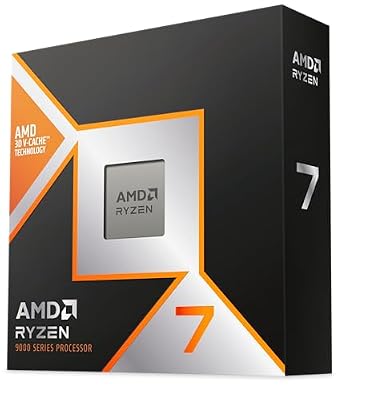
AMD RYZEN 7 9800X3D 8-Core, 16-Thread Desktop Processor
Included for 'Best Stalker 2 PC Settings After Patch 2.0' as a representative home product in this roundup; selection reflects the product set returned for this topic.
View on AmazonAn eight-core chip with a large cache, the kind of recent Ryzen X3D model the upgrade section says shows the largest gains in CPU-bound settlements.
AMD Ryzen 7 5800X

AMD Ryzen 7 5800X 8-core, 16-thread unlocked desktop processor
Included for 'Best Stalker 2 PC Settings After Patch 2.0' as a representative home product in this roundup; selection reflects the product set returned for this topic.
View on AmazonThe AMD processor listed in the official recommended specification.
GIGABYTE GeForce RTX 5070 Gaming OC 12G

GIGABYTE GeForce RTX 5070 Gaming OC 12G Graphics Card, 12GB 192-bit GDDR7, PCIe 5.0, WINDFORCE Cooling System, GV-N5070GAMING OC-12GD Video Card
Included for 'Best Stalker 2 PC Settings After Patch 2.0' because the listing adds cooling or gel-infused layers, which is the attribute this article compares.
View on AmazonA mid-range pick for the High preset with DLSS Quality at 1440p, adding Frame Generation if your base is 50-60 fps.
GIGABYTE GeForce RTX 5080 Gaming OC 16G

GIGABYTE GeForce RTX 5080 Gaming OC 16G Graphics Card, WINDFORCE Cooling System, 16GB 256-bit GDDR7, GV-N5080GAMING OC-16GD Video Card
Included for 'Best Stalker 2 PC Settings After Patch 2.0' because the listing adds cooling or gel-infused layers, which is the attribute this article compares.
View on AmazonThe GPU Rock Paper Shotgun used to measure the Patch 2.0 uplift in Rostok, and a high-end option for the Epic preset with DLSS Quality.
CORSAIR Vengeance DDR5 32GB (2 x 16GB) 6000MHz

CORSAIR Vengeance DDR5 32GB (2 x 16GB) Up to 6000MHz AMD Intel RAM
Included for 'Best Stalker 2 PC Settings After Patch 2.0' as a representative home product in this roundup; selection reflects the product set returned for this topic.
View on AmazonThe recommended specification lists 32 GB, and moving from 16 GB reduces hitching when entering towns.
Samsung 990 PRO 2TB NVMe SSD

Samsung SSD 990 PRO 2TB, PCIe 4.0 M.2 2280, Up to 7,450 MB/s
Included for 'Best Stalker 2 PC Settings After Patch 2.0' as a representative home product in this roundup; selection reflects the product set returned for this topic.
View on AmazonThe roughly 160 GB install must be on an SSD, and NVMe drives load faster and stream more smoothly.
How we compared
We compared settings using GSC Game World’s official requirements and patch information, independent measurements from PCOptimizedSettings, Switchblade Gaming, Rock Paper Shotgun, OC3D, MxBenchmarkPC and DSOGaming, and owner reports from the Steam community. We did not bench-run these settings ourselves. Per-setting costs mostly predate Patch 2.0 and are best read as a ranking rather than exact percentages.
Sources
- GSC Game World: official PC requirements and Patch 2.0 announcement
- PCOptimizedSettings: Stalker 2 optimization and best graphics settings
- Switchblade Gaming: Best STALKER 2 PC settings 2026
- Rock Paper Shotgun: Patch 2.0 performance comparison
- OC3D: STALKER 2 Patch 2.0 performance review
- TweakTown and DSOGaming: Unreal Engine 5.5.4 upgrade coverage
- Gaming Optimized and MxBenchmarkPC: Patch 2.0 benchmark comparison
- Windows Central and KitGuru: system requirement coverage
Frequently Asked Questions
What is the most demanding setting in Stalker 2?
Foliage Quality. PCOptimizedSettings measured a cost of over 10%, and Switchblade Gaming saw up to 27% in dense forests.
Did Patch 2.0 improve performance?
Yes, especially in settlements. Rock Paper Shotgun measured a 33% uplift in Rostok on an RTX 5080, from 83 fps to 110 fps.
Is Stalker 2 CPU-bound?
Partly. PCOptimizedSettings found the CPU limiting an RTX 4090 in 12-17% of frames at 4K Epic with DLSS Quality, mainly in busy areas.
How much VRAM does Stalker 2 need?
About 9 GB at 1440p and up to 10 GB at 4K according to PCOptimizedSettings, so 8 GB cards can usually run High textures at 1080p.
Should I use Frame Generation?
Yes on mid and high-end GPUs with a base of 50-60 fps. It does not fix CPU-bound stutter in towns.
Can a GTX 1060 run Stalker 2?
It is the official minimum, targeting about 30 fps at 1080p on Low. Use FSR on Performance.
Do old Engine.ini tweaks still work?
Many were written for the UE 5.1 launch build. After the UE 5.5.4 upgrade in Patch 2.0, test carefully and remove them if you see problems.
DLSS or FSR in Stalker 2?
DLSS on GeForce RTX cards, FSR 4 on Radeon RX 9000 cards, and FSR or XeSS on older GPUs. DLAA is a good choice for foliage flicker on fast NVIDIA cards.
Ready to decide? Our #1 pick for 2026 is the Rock Paper Shotgun.
Live price & availability on Amazon.