🛒 Best Price Today on Amazon
Prime members get fast, free shipping on everything above, plus member-only deals. New members get a 30-day free trial — cancel anytime.
EA Sports FC 26 runs on an updated iteration of EA’s proprietary Frostbite engine, introducing expanded physical simulation passes, complex pitch deformation, and dense geometric detail. However, like its predecessors, FC 26 presents unique optimization challenges on PC. The engine suffers from a distinct split in workload demands: actual gameplay camera views are surprisingly light on modern graphics cards, but close-ups, corner kicks, free kicks, and celebrations trigger massive GPU spikes due to strand-based hair rendering, detailed pitch-level geometry, and volumetric lighting. At the same time, the game relies heavily on single-core CPU throughput to calculate dynamic player collisions, ball physics, and tactical positioning data in real time.
Additionally, EA AntiCheat operates continuously in the background, which can cause micro-stuttering if driver-level shader caching or thread scheduling is misconfigured. Achieving the best EA Sports FC 26 PC settings in 2026 requires balancing two distinct goals: eliminating frametime variance and input latency for hyper-responsive competitive play in Ultimate Team and Clubs, or maximizing visual fidelity for immersive Career Mode play on high-end hardware. Below is our complete breakdown of how to optimize every graphics toggle, driver parameter, and launcher setting for peak performance.

Thermalright Peerless Assassin 120 SE CPU Cooler, 6 Heat Pipes AGHP Technology, Dual 120mm PWM Fans, 1550RPM Speed, for AMD:AM4 AM5/Intel LGA 1700/1150/1151/1200/1851,PC Cooler
Included for 'Best EA Sports FC 26 PC Settings in 2026: Competitive and Low-End Presets' because the listing specifies 6 Heat Pipes AGHP Technology and Dual 120mm PWM Fans, details this guide uses to compare options.
View on Amazon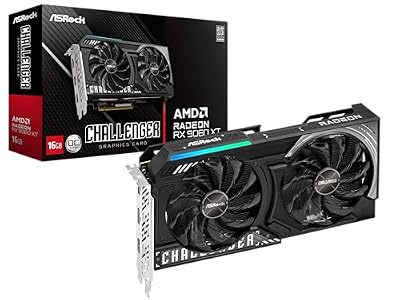
ASRock Radeon RX 9060 XT Challenger 16GB OC, RDNA 4, 3290MHz Boost, 16GB GDDR6 128-bit, PCIe 5.0, Dual Fans, 0dB Silent, LED Indicator, DisplayPort 2.1a, HDMI 2.1b
Included for 'Best EA Sports FC 26 PC Settings in 2026: Competitive and Low-End Presets' because the listing specifies RDNA 4 and 3290MHz Boost, details this guide uses to compare options.
View on AmazonQuick Preset
Use the following breakdown to instantly configure your game based on your hardware target. For competitive modes, we strongly recommend prioritizing consistent frame delivery over cinematic effects.
| Setting | Competitive | Balanced | Low-End PC |
|---|---|---|---|
| Display Mode | Full Screen | Full Screen | Full Screen |
| Resolution | Native Monitor Res | Native Monitor Res | 1080p / 720p |
| Refresh Rate | Max Monitor Rate | Max Monitor Rate | Max Monitor Rate |
| Frame Rate Limit | Unlocked / Driver Capped | Unlocked / Driver Capped | 60 FPS Cap |
| Cutscene Frame Rate | Full Refresh Rate | Full Refresh Rate | Half Refresh Rate |
| Dynamic Resolution Scaling | Off | Off | Off |
| Rendering Quality | Medium | High | Low |
| Strand Hair | Off | On | Off |
| Grass Quality | Medium | High | Low |
| Crowd Quality | Low | Medium | Low |
| Ambient Occlusion | Off | Medium | Off |
| Lighting Quality | Low | Medium | Low |
| Anti-Aliasing | TAA Low | TAA High | Off / TAA Low |
| Upscaling Tech | Off (Native) | Off / Quality Mode | Performance Mode |
Settings That Matter Most
Every graphics option in FC 26 impacts performance differently depending on whether you are in the default tele broadcast gameplay camera or locked into a close-up replay. Here is how the individual options affect your frame rate, rendering latency, and visual clarity.
Strand Hair
Strand Hair replaces traditional polygon-mesh hairstyles with dynamic, physics-driven hair strands that react to player momentum and weather. While visually impressive during goal celebrations and close-up replays, it is the single most demanding setting in the game. Enabling Strand Hair causes GPU utilization to jump by 15% to 22% during set pieces and cinematic cuts. On mid-range or older GPUs, this sudden GPU load spike causes severe frametime spikes, creating noticeable input lag during crucial moments like corner kicks or penalty shootouts. Recommendation: Turn Off for competitive play; enable only if you have an upper-tier GPU and prioritize cinematic visuals.
Rendering Quality
Rendering Quality governs level-of-detail (LOD) transitions, player model geometry distance, and shadow mapping resolution. Setting this to Ultra adds microscopic details to jerseys and skin shaders, but increases rendering pipeline stress without providing any competitive advantage on pitch cameras. Drop this setting from Ultra to Medium to gain roughly 8% to 12% in average frame rates while smoothing out frame pacing when the camera pans rapidly across the pitch.
Grass Quality
Grass Quality dictates the density, rendering distance, and physical interaction of individual 3D blades of grass. At Ultra settings, every footstep, slide tackle, and ball bounce deforms the pitch in real time. However, high-density grass forces heavy rasterization on the GPU, dropping frametimes during low-angle camera sweeps. Dropping Grass Quality to Medium keeps the pitch looking clean and realistic while netting a 10% performance uplift and reducing visual clutter when tracking low-driven passes.
Crowd Quality
The stadium crowd in FC 26 features fully animated 3D models with individual reactions and outfits. High and Ultra settings force your CPU to handle additional draw calls to track thousands of individual spectators simultaneously. On 6-core CPUs or systems with constrained system memory bandwidth, High Crowd Quality causes stutter during stadium entrances, set pieces, and goals. Reducing Crowd Quality to Low or Medium drastically cuts CPU overhead and yields up to a 14% boost to 1% low frame rates without affecting the appearance of the pitch itself.
Cutscene Frame Rate
By default, the engine locks replays, set pieces, and celebrations to 30 FPS or half your monitor refresh rate. This dynamic switching between uncapped gameplay and capped cutscenes disrupts GPU state handling, resulting in noticeable stuttering right as play resumes from a throw-in or goal kick. Selecting Full Refresh Rate forces the engine to render cutscenes at the same frame rate as active gameplay, preserving fluid motion and preventing engine lag when transitions occur.
Ambient Occlusion and Lighting Quality
Ambient Occlusion adds contact shadows where surfaces meet, such as under player boots and in jersey folds. While it adds depth to the scene, High Ambient Occlusion combined with High Lighting Quality causes expensive screen-space reflections on wet pitches. Disabling Ambient Occlusion or dropping it to Low reduces GPU shading load by up to 9%, clarifying the boundaries between players and the pitch surface for better spatial awareness.
Upscaling and Frame Generation
FC 26 includes native support for spatial and temporal upscalers, including NVIDIA DLSS, AMD FSR, and Intel XeSS. Because football simulation games rely on razor-sharp visual clarity to distinguish player movements and ball spin at high speeds, spatial upscaling can introduce unintended artifacts.
Temporal Upscaling (DLSS / FSR / XeSS): If you are gaming at 4K resolution on a budget-to-mid-range graphics card, setting DLSS or FSR to “Quality” mode provides a welcome 20% to 30% performance boost with minimal temporal blur. However, at 1080p, upscaling degrades the image significantly, causing the ball and small pitch markers to ghost during fast camera pans. At 1080p or 1440p, run at native resolution whenever possible.
Frame Generation: While NVIDIA DLSS Frame Generation and AMD FSR Fluid Motion Frames can double your reported FPS counter, they should be universally avoided in competitive match play. Frame generation technologies insert interpolated frames between real renders, which increases hardware input latency. In a game where success depends on precise button inputs for timed finishing and tackle timing, added input lag creates a sluggish, unresponsive feeling that actively harms your gameplay.
Outside the Game
Optimizing in-game options is only half the battle. Because EA AntiCheat constantly checks memory integrity, external system adjustments are required to prevent background hitching.
- Set Shader Cache Size to 10GB: Open the NVIDIA Control Panel or AMD Software and change your Shader Cache Size from “Driver Default” to “10GB”. FC 26 frequently compiles shaders on the fly; expanding the cache storage prevents the driver from discarding compiled assets, curing micro-stuttering across matches.
- NVIDIA Reflex / AMD Anti-Lag: Force NVIDIA Reflex to “On” (or “On + Boost” if you are CPU-bound) within your GPU control panel. This bypasses the render queue and significantly cuts controller latency. AMD users should enable Anti-Lag in their software suite.
- Frame Rate Capping: Do not rely on the in-game frame limiter, as it introduces uneven frame pacing. Instead, set the in-game limiter to “Unlocked” and cap your frame rate via NVIDIA Control Panel, RTSS (RivaTuner Statistics Server), or AMD Radeon Software to 3 FPS below your display’s maximum refresh rate (e.g., 141 FPS on a 144Hz screen) to maintain optimal G-Sync / FreeSync engagement without triggering V-Sync latency.
- Disable Overlays: Disable the EA App overlay, Discord overlay, and Steam overlay. Background overlay hooks are notorious for conflicting with EA AntiCheat, causing frame drops during match transitions.
- Windows Settings: Ensure Windows Game Mode is enabled to give FC 26 high priority on your CPU’s primary performance cores. Turn on Hardware-Accelerated GPU Scheduling (HAGS) in Windows Display settings for improved VRAM management.
Settings to Leave Alone
There are several settings within FC 26 that offer virtually no performance gain when adjusted, or actively degrade your visual experience if modified improperly.
Dynamic Resolution Scaling (DRS): Leaving DRS enabled forces the game to constantly shift its internal render resolution up and down to hit a target frame rate. This creates sudden, unpredictable shifts in blurriness and input delay. Disable DRS entirely and rely on static resolution or standard DLSS/FSR presets instead.
Motion Blur and Depth of Field: These post-processing filters simulate cinematic camera lenses. Motion blur masks fast directional passes, while depth of field artificially blurs players in your peripheral vision during play. Both settings should always be turned off to keep the entire pitch in crisp focus.
FAQ
Why does EA Sports FC 26 stutter during corner kicks and replays?
Stuttering during set pieces and replays occurs because the engine suddenly shifts from a light top-down view to a detailed camera angle. This loads high-polygon player models, Strand Hair physics, dynamic lighting, and dense pitch geometry all at once. Disabling Strand Hair and setting Cutscene Frame Rate to “Full Refresh Rate” stabilizes these transitions.
Should I lock my frame rate in-game or through my GPU control panel?
Always lock your frame rate through your GPU control panel (NVIDIA Control Panel or AMD Software) or RivaTuner Statistics Server rather than the in-game menu. The built-in frame limiter in Frostbite engine games uses unstable software timing, which causes frametime jitter and input lag compared to driver-level limiting.
Is Strand Hair worth enabling on mid-range graphics cards?
For mid-range GPUs, Strand Hair is rarely worth the performance trade-off. It incurs a heavy 15% to 20% GPU penalty and causes severe 1% low frame rate drops during goal celebrations and free kicks. Turning it off guarantees smoother overall frame delivery.
Why is my controller input lag worse in online matches than offline kick-off?
Higher input lag in online modes like Ultimate Team is caused by a combination of network latency, netcode rollback processing, and V-Sync engagement. To minimize this, ensure V-Sync is forced OFF in-game, enable NVIDIA Reflex or AMD Anti-Lag, use a wired Ethernet connection, and run your monitor at its absolute highest refresh rate.