Our Short List of 3

- Best for: Unrestricted flagship CPUs in roomy cases where cooling headroom comes first.
- Dual-tower heatsink with 8 heatpipes
- 2x NF-A14x25r G2 140mm PWM fans with speed offset
- Dimensions 152 x 150 x 168 mm; weight 1525 g
- Socket support: AMD AM5/AM4; Intel LGA1851, LGA1700, LGA1200, LGA115x

- Best for: High-end gaming rigs in bedrooms and shared offices where fan noise carries.
- Dual-tower heatsink with 7 high-performance copper heatpipes
- Manufacturer TDP rating of 270W
- Silent Wings PWM fans: 135mm front, 120mm middle
- Speed Switch with Quiet and Performance modes

- Best for: High-end builds in cases with roughly 160mm of cooler clearance.
- Dual-tower heatsink with 7 x 6mm heatpipes, AGHP 4.0 technology
- Dual TL-K12 PWM fans, up to 2150 RPM
- Dimensions 125 x 135 x 157 mm
- Nickel-plated copper base
All 3 Picks at a Glance
| Product | Specs | Action |
|---|---|---|
| Noctua NH-D15 G2 |
| Check price on Amazon |
| be quiet! Dark Rock Pro 5 |
| Check price on Amazon |
| Thermalright Phantom Spirit 120 EVO |
| Check price on Amazon |
Building around a flagship processor changes the cooler question completely. The real decision is not which tower looks the part, but whether an air cooler can hold a high-end chip’s sustained turbo wattage — the 200W-plus loads an unrestricted Core i9, Core Ultra 9 or Ryzen 9 produces during long gaming and rendering sessions — without throttling or sounding like a desk fan. Undersize the cooler and the CPU hands back performance you already paid for.
This guide is written for flagship gaming builds, hybrid gaming-and-creation rigs and overclockers who have decided to stay on air rather than move to liquid. Every pick is a flagship dual-tower cooler chosen from the specifications published on its Amazon product page — heatpipe counts, fan sizes, stated TDP ratings and dimensions — so there are no value or mainstream models here, only the top tier of each maker’s range.
Quick Picks
As an Amazon Associate we earn from qualifying purchases
| Product | Best for | Key spec from title |
|---|---|---|
| Noctua NH-D15 G2 | Maximum headroom on an unrestricted flagship CPU | 8 heatpipes, dual 140mm fans |
| be quiet! Dark Rock Pro 5 | A high-end build that has to stay hushed | 270W TDP rating, 7 copper heatpipes |
| Thermalright Phantom Spirit 120 EVO | Flagship cooling in a case under 160mm clearance | 7 heatpipes, dual fans up to 2150 RPM |
| ID-COOLING FROZN A720 Black | Long all-core workloads on a 250W-class chip | 300W TDP rating, dual 140mm fans |
How to Choose
Start With Sustained Wattage, Not the Box TDP
The wattage printed beside a CPU’s name is its base rating, not the load your cooler will actually face. An unrestricted Core i9 or Core Ultra 9 can hold turbo power well past 250W in an all-core workload, and a Ryzen 9’s package power target sits far above its nominal TDP as well. Match the cooler’s class to that sustained figure. Manufacturer TDP ratings help shortlist — the coolers here carry ratings of 270W and 300W — but brands measure differently, so treat those numbers as a floor for the flagship tier rather than a precise score, and favour dual-tower designs with seven or eight heatpipes.
Measure Case Clearance Before Anything Else
Flagship air coolers are tall, and height is a hard physical limit rather than a preference. Three of the four picks here stand 163–168mm, so a case needs at least that much stated CPU cooler clearance, ideally with a few millimetres to spare for the side panel. Check the case maker’s specification sheet, not the interior you can eyeball through glass. Depth matters too: a wide dual tower can crowd the top PCIe slot or the first memory slots on some boards. The Phantom Spirit 120 EVO, at 157mm, exists in this guide precisely because many otherwise suitable cases stop a few millimetres short of the tallest towers.
Plan Around RAM Height and Fan Position
On most dual-tower coolers the front fan hangs over the memory slots, so tall RGB memory kits are the most common fitment failure in high-end builds. Noctua quotes 32mm of RAM clearance for the NH-D15 G2 with both fans fitted, rising to 59mm in single-fan mode. ID-COOLING quotes 28mm for the FROZN A720 as standard, with the option to raise the front fan or drop it entirely. Raising a fan works, but it adds to total cooler height — the A720 grows from 163mm to 170mm — so a fix for your memory can quietly break your case clearance instead.
Confirm Socket Support for Your Exact Platform
A flagship build today means AMD AM5 or Intel LGA1700/LGA1851, and every pick here lists both, but the detail still matters. Noctua sells the NH-D15 G2 in standard, HBC and LBC variants with different base convexity tuned for Intel or AMD heatspreaders, so the variant name is part of the purchase decision, not packaging trivia. Check that the mounting kit for your socket is in the box rather than a separate order, especially if the build reuses an older platform such as AM4 or LGA1200, where support varies between listings of the same cooler family.
The 4 Best Options
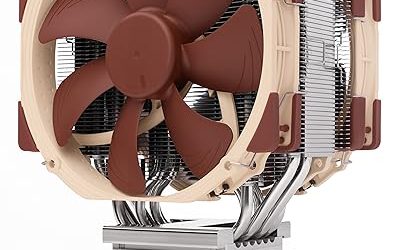
Noctua NH-D15 G2
- Best for: Unrestricted flagship CPUs in roomy cases where cooling headroom comes first.
- Dual-tower heatsink with 8 heatpipes
- 2x NF-A14x25r G2 140mm PWM fans with speed offset
- Dimensions 152 x 150 x 168 mm; weight 1525 g
- Socket support: AMD AM5/AM4; Intel LGA1851, LGA1700, LGA1200, LGA115x
Unrestricted flagship CPUs in roomy cases where cooling headroom comes first.
Pick the right variant — standard, HBC (Intel) and LBC (AMD) versions have different base convexity, and the 168mm height excludes narrower cases.
The NH-D15 G2 is the default answer when the brief is simply the most air cooling available for a flagship chip. Eight heatpipes and two second-generation 140mm fans give it the largest thermal margin in this group, and Noctua’s own NSPR rating system places it well above its predecessor. It suits builders running an unrestricted Core Ultra 9 or Ryzen 9 who game, stream and render on the same machine and do not want temperature to be the variable that decides clock speeds. The offset fin design also buys back clearance over the top PCIe slot on most current boards.
be quiet! Dark Rock Pro 5
- Best for: High-end gaming rigs in bedrooms and shared offices where fan noise carries.
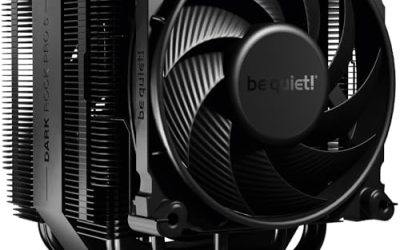
- Dual-tower heatsink with 7 high-performance copper heatpipes
- Manufacturer TDP rating of 270W
- Silent Wings PWM fans: 135mm front, 120mm middle
- Speed Switch with Quiet and Performance modes
High-end gaming rigs in bedrooms and shared offices where fan noise carries.
At 168mm tall it needs a wide case, and Quiet mode trades some thermal margin away, so leave Performance mode on for sustained all-core work.
The Dark Rock Pro 5 is built for the high-end PC that shares a room with other people. Its two Silent Wings fans — a 135mm unit in front and a 120mm between the towers — are tuned for air pressure at low noise, and a physical Speed Switch lets you flip between Quiet and Performance modes without software. be quiet! rates the cooler at 270W, which covers flagship gaming loads comfortably. Tom’s Hardware has described the Dark Rock Pro 5 as among the quietest high-end coolers it has tested, which is exactly the trade this model makes: near-flagship cooling with acoustics as the priority.
Thermalright Phantom Spirit 120 EVO
- Best for: High-end builds in cases with roughly 160mm of cooler clearance.
- Dual-tower heatsink with 7 x 6mm heatpipes, AGHP 4.0 technology
- Dual TL-K12 PWM fans, up to 2150 RPM
- Dimensions 125 x 135 x 157 mm
- Nickel-plated copper base
High-end builds in cases with roughly 160mm of cooler clearance.
Fans running at 2150 RPM are audible at full load, and the front fan still overhangs the memory slots, so check RAM height before ordering.
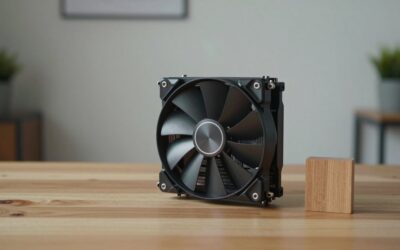
The Phantom Spirit 120 EVO is the flagship pick for builders whose case will not swallow a 168mm tower. At 157mm it undercuts the other picks by a centimetre while keeping the hardware that matters: seven heatpipes with Thermalright’s AGHP 4.0 design and two TL-K12 fans that spin to 2150 RPM, faster than anything else here. That fan speed is its thermal strategy — where the Noctua uses size, the EVO uses airflow. Tom’s Hardware measured the closely related Phantom Spirit 120 holding a 234W load on a Core i7-13700K, which indicates the design family’s ceiling sits in genuine flagship territory.
ID-COOLING FROZN A720 Black
The FROZN A720 Black carries the highest manufacturer TDP rating in this guide at 300W, delivered by seven heatpipes and two full-size 140mm fluid-dynamic-bearing fans. It is aimed at the high-end PC that works as hard as it plays: long renders, shader compiles and simulation runs that pin every core for hours. ID-COOLING’s own published testing puts the A720 on a Core i9-14900K running at 260W, a manufacturer figure that at least shows the workload class the design targets. The flexible front fan, which can be raised or removed for memory clearance, makes it easier to fit around tall RAM than most towers this size.
Specs
- Dual-tower heatsink with 7 x 6mm heatpipes
- Dual 140 x 140 x 25 mm FDB fans, 500–1800 RPM
- Manufacturer TDP rating of 300W
- Height 163 mm, or 170 mm with the front fan raised
- RAM clearance 28 mm standard, 58 mm in single-fan mode
- Socket support: Intel LGA1700, LGA1851, LGA1200, LGA115X, LGA20XX; AMD AM4/AM5
Best for: Hybrid gaming and workstation builds with sustained all-core loads.
Watch out for: Raising the front fan for tall memory pushes total height to 170mm, so re-check case clearance in that configuration before buying.
ASIN: B0CNR1YGH5
Which One Fits Your Situation
You Run an Unrestricted Flagship and Refuse to Throttle
Choose the Noctua NH-D15 G2. If your Core Ultra 9 or Ryzen 9 runs with power limits raised and your case clears 168mm, its eight heatpipes and dual 140mm fans hold the largest thermal reserve here, so boost clocks survive the third hour of a session rather than just the first benchmark run.
Your Gaming PC Doubles as a Bedroom or Office Machine
Choose the be quiet! Dark Rock Pro 5. Its 270W rating still covers flagship gaming loads, and the Speed Switch’s Quiet mode keeps the system hushed during desktop work and late sessions. You give up a small amount of peak headroom against the Noctua and gain a machine other people can be in the room with.
Your Weekends Involve Renders, Compiles and Long Encodes
Choose the ID-COOLING FROZN A720 Black. Sustained all-core work is where its 300W manufacturer rating and twin 140mm fans earn their place, and the adjustable front fan means tall workstation memory is less likely to block installation. It is the pick here most clearly aimed at load duration rather than peak gaming bursts.
Your Case Is Premium but a Few Millimetres Too Short
Choose the Thermalright Phantom Spirit 120 EVO. At 157mm it fits cases that reject the 163–168mm towers in this guide, and its 2150 RPM fans recover much of the cooling the smaller fin stacks give away. Measure your memory height as well, because the front fan overhang has not changed.
Common Mistakes
- Sizing the cooler against the CPU’s base TDP instead of its turbo or package power target, then wondering why it throttles in all-core loads.
- Ordering a 168mm tower before checking the case maker’s stated CPU cooler clearance, and discovering the side panel will not close.
- Ignoring memory height until install day, when the front fan cannot sit flush over tall RGB DIMMs.
- Buying the wrong NH-D15 G2 variant — the HBC and LBC versions are tuned for different heatspreader shapes, not different colours.
- Comparing manufacturer TDP ratings across brands as if they were one standardised measurement; they are each maker’s own figure.
Frequently Asked Questions
Can an air cooler really handle a Core i9 or Core Ultra 9?
Yes, within the flagship tier covered here. Dual-tower coolers with seven or eight heatpipes and manufacturer ratings of 270–300W are designed for exactly these chips. The condition is honesty about settings: an unrestricted 250W-plus all-core load will run hot and loud on any air cooler, while gaming loads, which sit far lower, are handled comfortably by all four picks.
Should I set a power limit in the BIOS with a flagship air cooler?
For gaming, usually not — games rarely sustain the wattage that stresses these coolers. For rendering or compiling, a sensible limit is a legitimate tuning choice rather than a defeat: capping package power trims a small amount of all-core performance while cutting heat and noise substantially. Try the system unrestricted first and let your own temperatures and noise tolerance decide.
Is a dual-tower air cooler better than a 240mm liquid cooler for a high-end PC?
Neither is universally better. A flagship dual tower roughly matches entry 240mm liquid cooling on sustained CPU loads, with no pump to fail and no radiator mounting to plan, but it concentrates a large heatsink over the memory slots. Liquid moves the bulk to the case wall and clears the RAM area. Choose based on case layout, memory height and how much you value mechanical simplicity.
How much case clearance do I need for the coolers in this guide?
Plan around the tallest configuration you will actually run. The Phantom Spirit 120 EVO needs 157mm, the FROZN A720 needs 163mm or 170mm with its front fan raised, and both the NH-D15 G2 and Dark Rock Pro 5 need 168mm. Read the clearance figure from your case maker’s specification sheet and leave a small margin rather than trusting a measurement taken with a ruler.