A quiet PC is rarely quiet because of one clever fan setting. It is quiet because the CPU cooler has enough thermal headroom that its fans almost never need to spin fast. The real decision is how much heatsink to buy: a cooler that only just copes with your processor will run near full speed under load and sound strained, while a slightly oversized tower can move the same heat at a lazy, near-silent fan speed. Height, memory clearance and socket support then decide which of those oversized towers can actually go in your case.
This guide is written for builders putting a PC in a bedroom, a shared living room or a home office, and for streamers who record voice in the same room as the machine. Every pick below was chosen from the names and listed specifications on its Amazon product page, with listed noise figures, fan layouts and dimensions doing the sorting. The focus stays on low-noise builds throughout rather than maximum overclocking headroom or workstation duty.
Quick Picks
As an Amazon Associate we earn from qualifying purchases
| Product | Best for | Key spec from title |
|---|---|---|
| be quiet! Dark Rock Pro 5 | A powerful CPU in a bedroom or studio PC | Listed 23.3 dB(A) noise level with Quiet/Performance speed switch |
| Noctua NH-D15 G2 chromax.black | High-power CPUs that must stay hushed under load | 8 heatpipes and dual 140mm fans in a 168mm dual tower |
| be quiet! Dark Rock 5 | Mid-range CPUs in compact cases with tall memory | Single Silent Wings 4 120mm fan with cut-outs for RAM clearance |
| Noctua NH-U12A chromax.black | Smaller cases that cannot fit a flagship dual tower | 120mm single tower with two NF-A12x25 PWM fans |
| Scythe Fuma 3 | Quiet cooling in a shorter, memory-friendly frame | Twin tower, six heatpipes, 154mm height |
How to Choose
Start With the Listed Noise Figure, Then Read It Skeptically
Every cooler here publishes a noise figure, and it is the natural place to start: the Dark Rock Pro 5 lists 23.3 dB(A), which is genuinely low for a dual tower. Treat brand figures as a rough guide rather than a laboratory ranking, though, because each maker measures at a different distance and fan speed. A cooler rated a few decibels higher but fitted with larger, slower-turning fans can sound softer in a real case. Use the listed figure to shortlist, then let fan size, speed range and headroom break the tie.
Buy Thermal Headroom So the Fans Can Loaf
Noise follows fan speed, and fan speed follows how hard the heatsink has to work. A dual tower rated well above your CPU’s power draw can shed gaming heat at half speed, where it is barely audible, while a compact tower matched exactly to the chip will be working flat out and sounding it. Match the cooler’s class to your processor: mid-range chips sit happily under the Dark Rock 5 or Fuma 3, while high-core-count parts justify the Dark Rock Pro 5 or NH-D15 G2 precisely because the extra metal buys silence.
Check Height and Memory Clearance Before Anything Else
The quietest cooler on paper is useless if the side panel will not close. Flagship dual towers stand 168mm tall, so measure your case’s CPU cooler clearance first. Then look at memory: a wide front fan can hang over the DIMM slots and clash with tall RGB heatspreaders. Designs answer this differently — the Dark Rock 5 uses heatsink cut-outs to clear memory of any height, the Fuma 3 offsets its towers rearward, and the NH-U12A keeps a slim 120mm footprint that leaves every slot and the top PCIe slot free.
Use the Controls the Cooler Gives You
Hardware sets the floor for noise; settings decide whether you reach it. PWM control lets the motherboard hold fans at a few hundred RPM during desktop work and only ramp them when temperatures genuinely climb, so set a gentle custom curve rather than a performance preset. Some coolers add their own tools: the Dark Rock Pro 5 carries a physical speed switch that selects a Quiet mode without opening the BIOS, and Noctua bundles low-noise adaptors that cap fan speed outright. Five minutes of setup is often worth more than the next model up.
The 5 Best Options
be quiet! Dark Rock Pro 5

Silence is this cooler’s entire design brief, and it shows in the details: a 135mm and a 120mm Silent Wings fan, a listed noise level of 23.3 dB(A), and a speed switch on the cooler itself that drops it into a dedicated Quiet mode. Tom’s Hardware has described it as among the quietest high-end coolers it has tested. With seven copper heatpipes and a 270W-class rating, it has the headroom to keep powerful gaming and creator CPUs cool at the low fan speeds a bedroom or studio build demands.
Specs
- 7 high-performance copper heat pipes
- Silent Wings 135mm front and 120mm PWM fans
- Listed noise level: 23.3 dB(A)
- Speed Switch with Quiet and Performance modes
- Maximum fan speed 2,000 RPM; airflow 68.7 CFM
- Sockets: Intel LGA1851, LGA1700, LGA1200, LGA115x; AMD AM5, AM4
- Model BK036
Best for: Builders who want the quietest flagship-class air cooler for a PC that lives where people sleep or record.
Watch out for: At 168mm tall and roughly 1.29kg, it needs a wide case and care during installation; confirm your case clearance first.
ASIN: B0CJY3DYQ3
Noctua NH-D15 G2 chromax.black
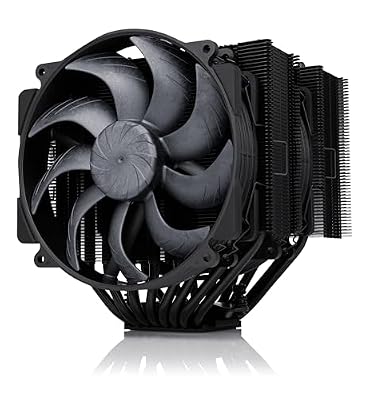
The NH-D15 G2 takes the opposite route to the same quiet result: instead of a dedicated quiet mode, it simply out-muscles the heat. Eight heatpipes and two 140mm NF-A14x25r G2 fans give it the most thermal headroom on this page, so on a high-core-count CPU the fans can turn slowly while a smaller cooler would already be audible. The chromax.black finish replaces Noctua’s traditional brown with an all-black heatsink and fans that suit windowed cases. Noctua’s six-year warranty and free mounting upgrades also make it the pick most likely to survive several builds.
Specs
- Dual-tower heatsink, 168mm height
- 8 heatpipes
- 2x 140mm NF-A14x25r G2 PWM fans
- Sockets: AMD AM5, AM4; Intel LGA1851, LGA1700, LGA1200
- chromax.black coated heatsink and black fans
- SecuFirm2+ mounting system
Best for: High-power CPUs in quiet builds, where maximum headroom keeps fan speeds and noise at their lowest.
Watch out for: The front fan sits over the memory slots in dual-fan mode, so tall RAM modules may force you to raise the fan or run one fan.
ASIN: B0FXGWKHND
be quiet! Dark Rock 5

Not every quiet PC runs a flagship processor, and the Dark Rock 5 is built for the far more common case: a mid-range gaming or office chip in a normal case. A single Silent Wings 4 120mm fan with a fluid-dynamic bearing does the work, and the single-tower layout is far easier to install and live with than a dual tower. Its real party trick is compatibility — the asymmetrical heatsink and its cut-outs leave unlimited room for tall memory and large VRM heatsinks, which removes the two clearance gambles that plague bigger coolers.
Specs
- 6 high-performance copper heat pipes
- Silent Wings 4 120mm FDB PWM fan
- 210W TDP rating
- Airflow 55 CFM
- Asymmetrical design with heatsink cut-outs for RAM and VRM clearance
- Sockets: Intel LGA1851, LGA1700, LGA1200, LGA115x; AMD AM5, AM4
- Model BK035
Best for: Mid-range CPUs in compact or memory-heavy builds that still need to stay near-silent at a desk.
Watch out for: The single fan and 210W rating leave less headroom than the dual towers, so it is not the choice for an unrestricted high-core-count CPU.
ASIN: B0D3NXLZ1T
Noctua NH-U12A chromax.black

The NH-U12A exists for cases that cannot swallow a 168mm dual tower but whose owners refuse to give up quiet cooling. Its 120mm-class single tower stands 158mm tall, yet the dense fin stack and seven heatpipes let it rival larger coolers, and the two NF-A12x25 fans are widely regarded as among the quietest 120mm fans sold. Because the tower is narrow, it clears all four memory slots and the first PCIe slot completely, which makes it the safest premium pick for small motherboards and tightly packed builds.
Specs
- 120mm single-tower heatsink, 158mm height
- 7 heatpipes
- 2x NF-A12x25 PWM 120mm fans
- Full RAM and PCIe clearance in 120mm class footprint
- Sockets: Intel LGA1700, LGA1200, LGA115x; AMD AM5, AM4
- chromax.black finish with black anti-vibration pads
Best for: Compact and mid-tower builds that need premium quiet cooling without dual-tower clearance problems.
Watch out for: Socket support stops at LGA1700 — there is no LGA1851 listing — so check your platform before ordering for a newest-generation Intel build.
ASIN: B098XP1Y38
Scythe Fuma 3

The Fuma 3 delivers the dual-tower formula at a height most cases can accept. Standing 154mm tall, it undercuts the flagship towers by a clear margin, and its asymmetric layout pushes the fin stacks back so the front memory slots stay completely clear — a rare combination. Two Kaze Flex II 120mm fans in a reverse-flow arrangement pull air through six nickel-plated heatpipes, and the whole cooler avoids lighting and decoration in favour of a plain, workmanlike finish. For a quiet build on a sensible budget of space rather than money, it is the balanced option.
Specs
- Twin-tower heatsink, 154mm height
- 6x 6mm nickel-plated heat pipes
- 2x Kaze Flex II 120mm PWM fans (one slim, one standard)
- Asymmetric offset design for full memory clearance
- Sockets: Intel LGA1700, LGA1200, LGA115X, LGA2011, LGA2066; AMD AM5, AM4
- Model SCFM-3000
Best for: Quiet mid-range builds in cases with limited cooler height or tall memory modules.
Watch out for: Scythe publishes no TDP rating for the Fuma 3, so pair it with mainstream CPUs rather than flagship parts run without power limits.
ASIN: B0CGZHQ223
Which One Fits Your Situation
Your PC Sits in a Bedroom or Shared Living Room
Choose the Dark Rock Pro 5. Its listed 23.3 dB(A) figure is the lowest here, and the physical speed switch means you can drop it into Quiet mode at night without touching BIOS settings. The seven heatpipes still give it enough capacity for a strong gaming CPU, so the quiet mode is a real operating mode rather than a compromise you have to undo before playing.
You Run a High-Core-Count CPU but Hate Fan Noise
Choose the NH-D15 G2 chromax.black. On a processor that pulls serious power, silence comes from headroom, and no air cooler here has more of it. The dual 140mm fans can turn slowly while still moving plenty of air, which keeps the noise floor down exactly when a smaller cooler would start to sing during long renders or heavy gaming sessions.
Your Case or Memory Rules Out a Flagship Tower
Choose the NH-U12A chromax.black if height is the limit, since its 158mm single tower fits where the 168mm dual towers cannot while keeping every RAM slot clear. If the case is shorter still, or tall memory is the real obstacle, the Fuma 3’s 154mm height and offset towers solve both problems at once.
You Are Quieting Down an Ordinary Mid-Range PC
Choose the Dark Rock 5. A single well-made 120mm fan on a properly sized tower is all a mid-range processor needs, and the cut-out design means it will fit around whatever memory and motherboard heatsinks you already own. It is the least disruptive upgrade here: no case change, no memory swap, and a noticeably calmer machine at the desk.
Common Mistakes
- Comparing dB(A) figures across brands as if they were measured the same way — each maker uses its own distance and fan speed, so treat the numbers as a shortlist tool, not a ranking.
- Ordering a 168mm flagship tower without measuring case clearance, then discovering the side panel will not close.
- Forgetting memory height: a dual tower’s front fan often hangs over the DIMM slots and clashes with tall RGB heatspreaders.
- Leaving the motherboard fan profile on a performance preset, which keeps fans spinning fast at idle and wastes the quiet hardware you just bought.
- Silencing the CPU cooler while leaving loud case fans in place — the PC is only as quiet as its loudest fan.
Frequently Asked Questions
Is an air cooler quieter than a liquid AIO in a quiet PC?
Usually, yes at idle and light load. An AIO adds a pump that runs constantly and can hum or buzz at a frequency many people find more noticeable than fan noise. A good air cooler has no pump, and its fans can slow to a few hundred RPM or stop entirely under a custom curve, which makes it the simpler path to a silent desk.
What noise level should I look for in a quiet CPU cooler?
Treat anything listed in the low-to-mid 20s dB(A) as genuinely quiet-focused, like the Dark Rock Pro 5 at a listed 23.3 dB(A). Remember that brands measure differently, so also weigh fan size and maximum speed: large 140mm fans turning slowly generally sound softer than small fans at high RPM, whatever the headline figure says.
Will a big dual-tower cooler block my RAM slots?
It can. On the NH-D15 G2, the front fan overhangs the memory area, so tall modules may need the fan raised or removed. If your memory has tall heatspreaders, pick a design that plans around it: the Dark Rock 5’s cut-outs, the Fuma 3’s offset towers or the NH-U12A’s narrow 120mm footprint all leave the slots fully clear.
Can I make my current cooler quieter without replacing it?
Often, yes. Set a custom PWM fan curve in the BIOS that keeps speeds low until temperatures genuinely rise, clean dust from the fins, and check the cooler is mounted firmly with fresh thermal paste. If the fans still ramp audibly under load, the heatsink itself is undersized for your CPU — that is when stepping up to a larger tower from this list makes the real difference.