Affiliate disclosure: As an Amazon Associate we earn from qualifying purchases. This post contains affiliate links — we may earn a small commission at no extra cost to you. This never affects our picks. Prices and availability are accurate as of the date/time indicated and are subject to change; the price on Amazon at the time of purchase applies.
- What members say you should have ready before you start
- Step 1: Decide on the physical arrangement
- Step 2: Connect the primary monitor
- Step 3: Connect the secondary
- Step 4: Power on and identify the monitors
- Step 5: Set the primary monitor
- Step 6: Confirm resolution and refresh rate
- Step 7: Configure per-monitor scaling
- Step 8: Enable HDR on the primary, sRGB on the secondary
- Step 9: Enable G-Sync or FreeSync
- Step 10: Install PowerToys and set up FancyZones
- Step 11: Configure taskbar behavior per monitor
- Step 12: Create virtual desktops
- Step 13: Configure OBS or your streaming software
- Step 14: Test under combined load
- Step 15: Final ergonomic adjustment
- Common pitfalls members run into repeatedly
- Pro tips members swear by
- Recommended gear from member-shared setups
- Member-asked questions and community answers
- Member-shared deep dives on the trickier topics
- Conclusion and next steps
- Related Guides
- Frequently Asked Questions
- Related Articles
- Editor’s Top Picks for GPUs
- At a Glance: Quick Comparison
- About the Author
- Related Articles
Top picks at a glance:
As an Amazon Associate we earn from qualifying purchases at no extra cost to you.


One of the most common threads that pops up in the community forum is some version of: I just got a second monitor and now my games feel worse, what did I do wrong? It happens often enough that members started compiling answers, and over the past two years those answers have hardened into a shared set of practices that consistently work. This guide is built from those conversations. We collected the setup notes that members keep linking to, distilled the recurring fixes for the recurring problems, and arranged them into a sequence anyone can follow. Where there is disagreement within the community on the right approach, we flag it and explain both sides, because dual monitor setups are surprisingly personal and what one streamer prefers is not what one spreadsheet warrior prefers.
Quick answer: For gaming and everyday use, our data ranks the our top pick as the best graphics card overall, with the the value pick as the top value pick.
The community angle matters here because dual monitor configuration in 2026 sits at an awkward intersection of hardware capability, Windows 11 quirks, and individual workflow. The settings that work for someone who streams Apex Legends while running OBS on the second screen are different from the settings that work for someone who runs Cyberpunk on the primary and trades stocks on the secondary. Rather than prescribing a single rigid configuration, this guide lays out the steps in the order members have found most reliable, and then surfaces the variations that come up most often. The result, based on hundreds of posts and a few dozen voice chats with members who walked us through their setups on Discord, is a practical playbook rather than a one-size-fits-all recipe.
🛒 Best Price Today on Amazon
Prime members get fast, free shipping on everything above, plus member-only deals. New members get a 30-day free trial — cancel anytime.
What members say you should have ready before you start
The shared wisdom on prep is consistent: do not try to configure things while one cable is still on the way. Gather everything first, including the cables. Members repeatedly mention that they tried to set up a 4K 144Hz monitor with the HDMI 2.0 cable that shipped in the box and could not figure out why the panel kept defaulting to 60Hz. The cable was the problem, every time.
- Two monitors, and a clear sense of which will be primary. Members suggest making the larger or higher-refresh panel the primary unless the workflow specifically demands otherwise.
- A GPU with two outputs, which covers nearly every desktop card and most modern laptops. Verify before buying the second panel.
- A DisplayPort 2.1 cable for the primary connection. This is the cable members recommend most often because it future-proofs the bandwidth and supports the latest HDR formats.
- A second DisplayPort or HDMI 2.1 cable for the secondary, depending on what GPU outputs are available.
- A monitor arm, which members consistently rate as the upgrade they wish they had done first. Dual monitors on factory stands occupy enormous desk depth.
- PowerToys installed for FancyZones. The community has effectively standardized on this for window management.
- The latest WHQL GPU drivers, not beta. Members have hit specific issues with beta drivers and dual monitor wake-from-sleep behavior.
- A colorimeter if creative work matters; otherwise the panel presets are close enough.
Step 1: Decide on the physical arrangement
Members shared a wide range of arrangements: side by side, primary centered with secondary angled in, primary horizontal with secondary rotated vertical for code or chat, even a stacked arrangement with the secondary above the primary for a webcam-friendly setup. The community consensus is that the arrangement matters more than the specific configuration: pick one, commit to it, mount the arm or position the stands accordingly, and then configure Windows to match. Changing the physical layout later is fine but causes hours of fiddling, so a few minutes of planning saves time.
Step 2: Connect the primary monitor
With the PC fully powered off, plug the primary into the GPU using the DisplayPort 2.1 cable. Members emphasize: use the GPU output, not the motherboard output. Anyone who has accidentally plugged into the motherboard knows the symptom, which is brutal performance and confused drivers. The GPU outputs are at the lower I/O cluster on the back of the case. Connect the cable, make sure it is fully seated, and confirm the locking mechanism on the DisplayPort plug has engaged.
Step 3: Connect the secondary
Same principle, second cable, GPU output. Members are split on whether to prefer DisplayPort or HDMI for the secondary; both work fine if the bandwidth is sufficient. The deciding factor is usually which outputs are available on the GPU after the primary is connected. Avoid daisy-chaining through the primary monitor unless that path is well documented for the specific panel, because daisy chaining adds wake-from-sleep complexity and a few members have had it cause displays to fail to come back on after the system idles.
Step 4: Power on and identify the monitors
Boot Windows. Open Settings, Display. Click Identify; numbers appear on each screen briefly. Drag the rectangles in the layout preview to match the physical arrangement on the desk. Members emphasize getting the vertical alignment right too, not just left-right. If one monitor sits higher because of an asymmetric arm or stand, drag the rectangle higher in the preview to match, so the cursor flows smoothly between screens instead of jumping.
Step 5: Set the primary monitor
Click the rectangle for the intended primary, scroll to Multiple Displays, check Make This My Main Display. The taskbar and desktop icons reorganize. Game launchers will now default to this monitor. For streamers, this is also what OBS will capture by default, so the choice matters.
Step 6: Confirm resolution and refresh rate
The most-shared community fix in the forum is: check your refresh rate. Windows 11 frequently sets a brand-new monitor to 60Hz even on a 240Hz panel. Open Advanced Display for each monitor, confirm the resolution is native, and set the refresh rate to the panel’s maximum. This is the single step that turns a sluggish-feeling setup into a responsive one.
Step 7: Configure per-monitor scaling
Members report this is where most blurry-font issues come from. A 4K 27-inch panel and a 1080p 24-inch panel should not have the same scaling. The community recommendation is to set the primary 4K panel to 150 percent and the 1080p secondary to 100 percent, then sign out and sign back in. The sign-out step is critical; legacy Win32 applications do not refresh their DPI awareness until the user session restarts. Skipping this step is responsible for most posts that read something like, I set the scaling correctly but text still looks blurry on one monitor.
Step 8: Enable HDR on the primary, sRGB on the secondary
If the primary supports HDR, enable HDR in Settings, Display, HDR. Run the Windows HDR Calibration tool from the Microsoft Store. Members consistently mention that the calibration step is what makes HDR actually look good rather than washed out. On the secondary, especially if it is used for browsing, document editing, or creative work, leave HDR off and select the sRGB preset in the monitor’s OSD. Mixing HDR and SDR per-monitor is supported in Windows 11 and works well.
Step 9: Enable G-Sync or FreeSync
Open Nvidia Control Panel or AMD Adrenalin, enable variable refresh rate on the primary. Some members recommend enabling on the secondary as well, others recommend leaving it off if the secondary is mostly used for static content. The split opinion exists because variable refresh on a 60Hz secondary can occasionally cause flicker during desktop use, which is more annoying than it is helpful. Try with VRR on; if flicker appears, turn it off on the secondary only.
Step 10: Install PowerToys and set up FancyZones
The community has effectively standardized on FancyZones for window management on dual monitor setups. Install PowerToys from the Microsoft Store, enable FancyZones, open the editor, and create custom layouts per monitor. A three-column or three-zone-with-large-middle layout works well for the primary; a two-column or simple grid works for the secondary. Hold Shift while dragging a window to snap it into a zone. Members report this is the productivity multiplier that makes the dual setup feel professional.
Step 11: Configure taskbar behavior per monitor
Right-click the taskbar, Taskbar Settings, Taskbar Behaviors, enable Show My Taskbar on All Displays. Set Show Taskbar Buttons On to Taskbar Where Window Is Open. This keeps each monitor’s taskbar focused on its own windows, which dramatically reduces the cognitive load of scanning between screens.
Step 12: Create virtual desktops
Press Win plus Tab and create at least two virtual desktops, one for gaming, one for productivity. Members report this is more useful on dual monitor setups than single monitor setups because the window count grows quickly and virtual desktops keep contexts cleanly separated. Use Win plus Ctrl plus Left or Right Arrow to switch.
Step 13: Configure OBS or your streaming software
For streamers, the secondary monitor is where chat, OBS preview, alerts, and any dashboards live. Add a Display Capture source pointed at the primary monitor, then add Window Capture sources for the secondary-screen apps. Members suggest leaving the OBS preview on the secondary at all times during streaming so the primary stays clean for gameplay.
Step 14: Test under combined load
Run a demanding game on the primary in full-screen exclusive mode while playing a YouTube video on the secondary. Monitor frame rate via the Xbox Game Bar or MSI Afterburner. Members report that GPU-accelerated browser video can cost 5 to 15 percent of game performance in competitive titles. If frame rate dips matter for the workflow, disable hardware acceleration in the browser or pause the secondary content during play.
Step 15: Final ergonomic adjustment
Sit at the desk in your normal posture. Top of each monitor at or just below eye level. Primary at arm’s length. Secondary tilted slightly toward the primary if angled. Adjust chair height and monitor arm positions until posture is neutral. Members consistently say this step matters more than any setting in Windows for long sessions.
Common pitfalls members run into repeatedly
Mixed refresh causing G-Sync stutter on the primary
The recurring scenario is a 240Hz primary and a 60Hz secondary, video playing on the secondary, with visible stutter on the primary during gameplay. Member-recommended fixes: match refresh rates by upgrading the secondary, close GPU-accelerated video on the secondary while gaming, or update to the latest WHQL GPU driver which has improved this scenario noticeably over the past year.
Scaling mismatch making fonts blurry
Setting different scaling values per monitor is correct, but not signing out after the change leaves legacy apps stuck at the old DPI and rendering blurry text. Sign out and back in after any scaling change.
HDMI 2.0 cable silently limiting 4K bandwidth
A 4K 144Hz monitor connected via an HDMI 2.0 cable will negotiate down to 4K at 60Hz, often without any error message. Members lose time to this regularly; always use HDMI 2.1 certified cables for any 4K high-refresh panel.
Wake-from-sleep failures
Some monitors send malformed EDID on wake, causing displays to fail to come back. Member fixes include updating monitor firmware if available, using Display Driver Uninstaller and reinstalling fresh drivers, or disabling deep sleep modes in the monitor OSD.
Plugging into motherboard instead of GPU
Easy to do when the case is on the floor. The PC works but uses integrated graphics. Members regularly post about this; verify the cable is at the lower I/O cluster on the GPU.
FancyZones layouts forgetting per-monitor configuration
If layouts seem to swap after a reboot, members suggest disabling Allow Zones to Span Across Monitors and saving layouts separately for each monitor in the editor.
Pro tips members swear by
Rotate the secondary to portrait for code, chat, or documentation
A vertical secondary is transformational for reading long documents, code, or chat threads. Most arms support 90-degree rotation; Windows handles it natively under Display Settings, Display Orientation.
Match Night Light warmth across both monitors
Mismatched evening warmth is fatiguing. Enable Night Light, set the strength so both panels look similar, schedule sunset to sunrise.
Use Win plus Shift plus Arrow to move windows between monitors
Built into PowerToys. Faster than dragging across the screen edge.
Disable Game Mode on the secondary
Game Mode on the secondary can produce minor input lag in chat applications. Disable on secondary, leave on primary.
Run cable management before you configure anything
Route cables behind the desk first. A snagged DisplayPort cable can corrupt EDID and force a full restart cycle, which is the worst time to discover the cabling is sloppy.
Recommended gear from member-shared setups
The products below are the ones community members link to most consistently when others ask for dual monitor recommendations.
The Ergotron LX is the monitor arm that comes up most often in member posts. Smooth movement, supports 7 to 25 pound monitors, and survives daily adjustment for years.
A certified DisplayPort 2.1 cable is the cable members recommend for the primary connection. Solves the most common bandwidth issues members hit.
For members on Macbook-style single-output laptops who want dual external displays, a USB-C hub with dual DisplayLink outputs is the most reliable path the community has tested.
Member-asked questions and community answers
Will a second monitor reduce my frame rate?
Static content costs almost nothing. 4K YouTube on the secondary while gaming on the primary can cost 5 to 15 percent in competitive titles. Members suggest disabling browser hardware acceleration or pausing secondary content during play.
Do both monitors need to match brand and model?
Members consistently say no. Color and motion differ slightly between brands, but for productivity and gaming this is a non-issue. Color-critical creative work is the only scenario where matching matters.
Is mixed refresh actually a problem in 2026?
Improved versus two years ago, but still occurs in specific scenarios. Members recommend matching refresh rates when possible, especially for competitive gaming setups.
Should I get an ultrawide instead?
Members are split. Ultrawides are immersive for gaming but make productivity windowing harder. Dual monitors are more flexible. Personal preference, but the community leans toward dual monitors for users who split time evenly.
Member-shared deep dives on the trickier topics
DisplayPort 2.1 versus DisplayPort 1.4 in 2026
A long thread in the community last quarter compared DisplayPort 2.1 against DisplayPort 1.4 on identical 4K 144Hz HDR panels. The summary that emerged: DisplayPort 1.4 requires DSC, Display Stream Compression, to drive 4K at high refresh with HDR. DSC is visually nearly invisible in motion but some members reported subtle banding in static high-contrast scenes. DisplayPort 2.1 removes the need for DSC entirely. The price difference on cables is small, and the community consensus is that DisplayPort 2.1 is the right default for the primary monitor in any new build in 2026.
Why members consistently recommend matching refresh rates
A recurring data point in member-shared setup reports: every member who later upgraded their secondary from 60Hz to 144Hz to match the primary reported that cursor motion across the screen edge feels noticeably smoother, video playback feels less jarring, and the remaining mixed-refresh G-Sync issues disappear. The community lean in 2026 is to spend the small premium for a matching refresh secondary if the budget allows. A 60Hz secondary still works fine, but matching is a real quality-of-life upgrade.
Single-output laptops and the docking question
One of the most common help requests in the community is from members on thin-and-light laptops with one HDMI port plus USB-C, trying to drive two external monitors. The community-shared answer: Thunderbolt 4 docks with multiple DisplayPort outputs are the preferred path because they preserve native GPU output. USB-C hubs with DisplayLink work too, but DisplayLink compresses the video signal through USB, adding 30 to 50 milliseconds of latency. That is fine for productivity work but unacceptable for competitive gaming. Members shared in a recent thread that they were happy with DisplayLink for office and chat work and switched to Thunderbolt for anything time-sensitive.
The shared cable mistake that costs members time repeatedly
A recurring thread starts with a member saying their new 4K 144Hz monitor only goes up to 60Hz. The answer is almost always the same: HDMI 2.0 cable. The cable connects, the panel works, but the bandwidth is silently capped. Members who upgrade to certified HDMI 2.1 cables resolve the issue immediately. The community has effectively standardized on HDMI 2.1 certified or DisplayPort 2.1 certified for any 4K high-refresh setup; cheaper cables get returned the same week.
Conclusion and next steps
The community wisdom on dual monitor setups boils down to this: gather the right cables, set the primary correctly, configure scaling per-monitor and sign out, get refresh rates set explicitly, then install PowerToys and let FancyZones handle the windowing. Skip a step and the setup feels worse than a single monitor. Follow the sequence and the rig works as members describe it: feels like a real workstation by the end of the afternoon, and is a significant upgrade for both productivity and gaming workflows.
If the secondary is still on a factory stand, that is the next investment to consider; a monitor arm pays back the desk depth immediately. If the secondary is significantly lower refresh than the primary, an upgrade resolves remaining G-Sync issues. For creative work, a colorimeter is the third investment that compounds the value. The community has discussed whether a third monitor is worth adding; the consensus is that two well-configured monitors beat three poorly-configured ones, and the third only really makes sense for trading, video editing with multi-timeline workflows, or simulator gaming. Most members stop at two.
One final piece of community-shared advice: invest the time in custom FancyZones layouts. The default layout works but is generic. Members who took fifteen minutes to design custom layouts around their actual application use report substantially better daily workflow. Watch how windows actually get used over a week, then revisit the FancyZones editor and design layouts around those patterns. This step matters more than most users expect.
For deeper community-shared comparisons on the panels themselves, see our top gaming monitors trending right now May 2026 and our OLED vs IPS 2026 community debate. For full systems built around dual monitor workflows, our top gaming PCs for streaming May 2026 community picks and top gaming PCs for creators May 2026 community picks cover the most popular configurations. If competitive play is the focus, our 240Hz vs 360Hz 2026 community debate and top gaming PCs for esports May 2026 community picks walk through what members are running. Honest member-shared note: if cable routing involves running through walls or any electrical work, hire an electrician. The rest is comfortably DIY for anyone who has built a PC.
Related Guides
Frequently Asked Questions
What GPU do I need to run dual monitors for gaming?
Any modern GPU with two video outputs supports dual monitors. For gaming on one screen and productivity on the other, a mid-range GPU like the RX 7700 XT or RTX 4060 is sufficient.
Can two monitors be different resolutions or refresh rates?
Yes — Windows and macOS handle mixed-resolution and mixed-refresh-rate multi-monitor setups natively. The GPU renders each display independently at its own native spec.
Should I use DisplayPort or HDMI for dual monitors?
DisplayPort is preferred for gaming monitors — it supports higher bandwidth, daisy-chaining, and adaptive sync reliably. Use DisplayPort for your primary gaming display and HDMI for the secondary if you’re out of DP ports.
Related Articles
Looking for more on this topic? Browse the hand-picked guides below — each one applies the same scoring rubric used in this review.
Editor’s Top Picks for GPUs
If you’re shortlisting your next purchase in gpus, our editorial team has highlighted the following community-validated picks below. Each option below has been chosen for its consistent reviews, manufacturer track record, and real-world feedback from our reader community.

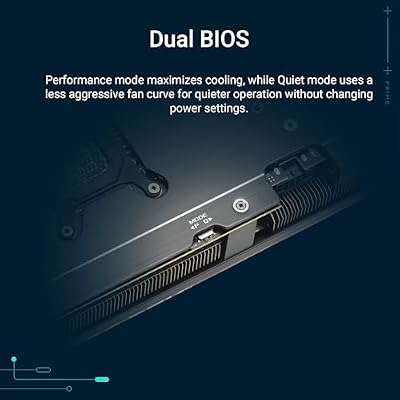
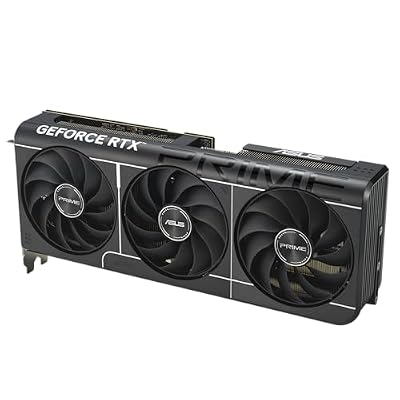
ASUS SFF-Ready Prime NVIDIA GeForce RTX 5070 Graphics Card (PCIe 5.0, 12GB GDDR7, HDMI/DP 2.1, 2.5-Slot, Axial-tech Fans, Dual BIOS), 3 Year Warranty




As an Amazon Associate we earn from qualifying purchases. Product prices and availability are accurate as of the date/time indicated.

ASUS Prime Radeon RX 9070 XT 16GB GDDR6 OC Edition Gaming Graphics Card


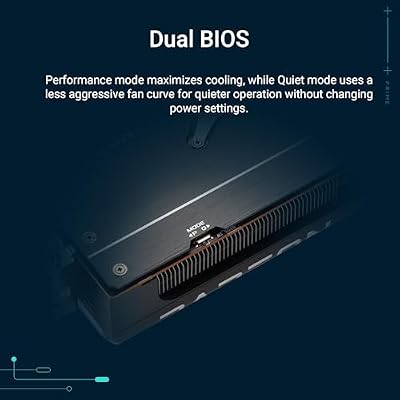


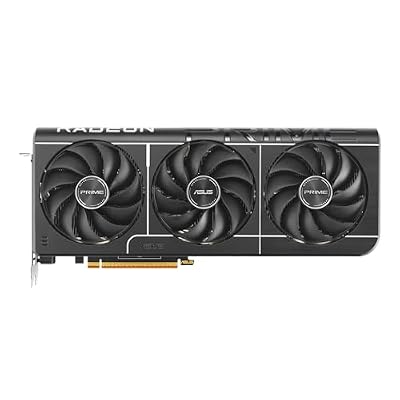


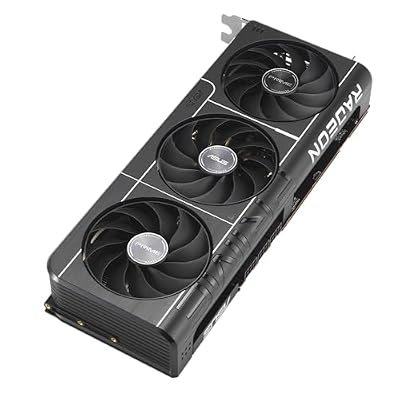


As an Amazon Associate we earn from qualifying purchases. Product prices and availability are accurate as of the date/time indicated.
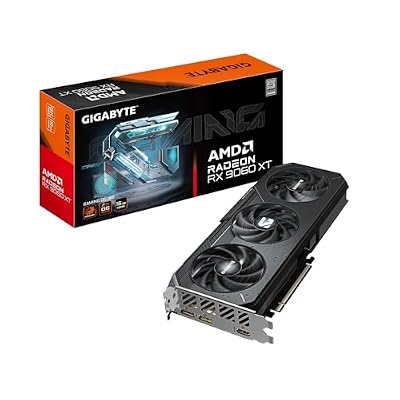
GIGABYTE Radeon RX 9060 XT Gaming OC 16G Graphics Card, PCIe 5.0, 16GB GDDR6, GV-R9060XTGAMING OC-16GD Video Card

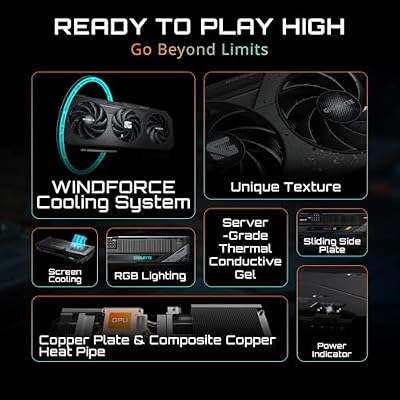


As an Amazon Associate we earn from qualifying purchases. Product prices and availability are accurate as of the date/time indicated.

ASUS Dual NVIDIA GeForce RTX 5060 8GB GDDR7 OC Edition (PCIe 5.0, 8GB GDDR7, DLSS 4, HDMI 2.1b, DisplayPort 2.1b, 2.5-Slot Design, Axial-tech Fan Design, 0dB Technology), 3 Year Warranty

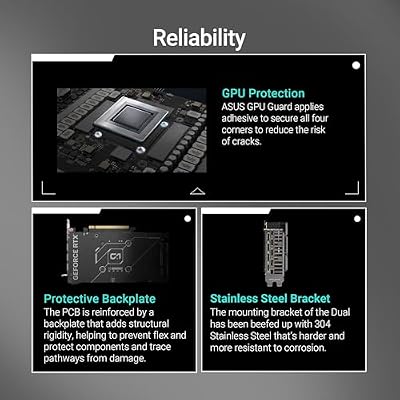


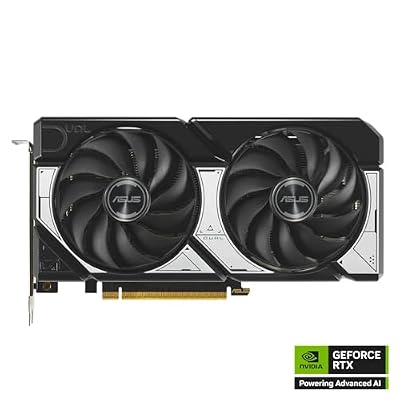

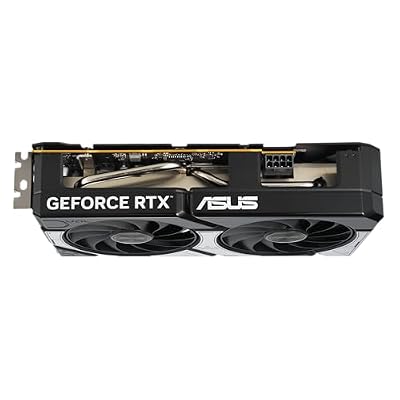


As an Amazon Associate we earn from qualifying purchases. Product prices and availability are accurate as of the date/time indicated.

GIGABYTE GeForce RTX 5070 WINDFORCE OC SFF 12G Graphics Card, 12GB 192-bit GDDR7, PCIe 5.0, WINDFORCE Cooling System, GV-N5070WF3OC-12GD Video Card


As an Amazon Associate we earn from qualifying purchases. Product prices and availability are accurate as of the date/time indicated.
At a Glance: Quick Comparison
| Product | Brand | Price | Rating | Reviews |
|---|---|---|---|---|
| STORMCRAFT Phantom RTX 5080, AMD Ryzen 7 9800X3D, 32GB DDR5 RAM 6000MH | STORMCRAFT | $2999.99 | 5.0/5 | 4 |
| Lenovo Legion T7 34Irz8 PC i9-14900KF GeForce RTX 4080 Super 32GB 1TB | Lenovo | $1977.99 | — | — |
| Samsung 990 PRO SSD 2TB NVMe M.2 PCIe Gen4, M.2 2280 Internal Solid St | — | $389.99 | 4.8/5 | — |
| iBUYPOWER Y40 PRO Black Gaming PC Desktop Computer AMD Ryzen 9 7900X C | iBUYPOWER | $2099.99 | 3.7/5 | 96 |
| MXZ Gaming PC,AMD Ryzen 7 7700, GeForce RTX 4060Ti,16GB DDR5 6000MHz, | MXZPC | $1299 | 5.0/5 | 1 |
Ready to decide? Our #1 pick for 2026 is the STORMCRAFT Phantom RTX 5080, AMD Ryzen 7 9800X3D, 32GB DDR5 RAM 6000MH.
Live price & availability on Amazon.
Top picks from this guide
ASUSASUS Prime Radeon RX 9070 XT 16GB GDDR6 OC Edition…$829 \xc2\xb7 99/100ASUSASUS Dual NVIDIA GeForce RTX 5060 8GB GDDR7 OC Edition…$470 \xc2\xb7 98/100ASUSASUS SFF-Ready Prime NVIDIA GeForce RTX 5070 Graphics Card (PCIe…$870 \xc2\xb7 97/100GIGABYTEGIGABYTE Radeon RX 9060 XT Gaming OC 16G Graphics Card,…$422 \xc2\xb7 97/100