🛒 Best Price Today on Amazon
Prime members get fast, free shipping on everything above, plus member-only deals. New members get a 30-day free trial — cancel anytime.
- What Our Community Has Learned About Building for Tropical Heat
- At-a-Glance Community-Pooled Heat-Survival Picks
- Eight Heat-Survival Components Our Members Repeatedly Gift
- The Community Personalization Angle: Climate-Smart Gift Bundles
- Mistakes Our Members Have Watched Friends Make
- Related Guides
- Frequently Asked Questions
- Final Community Verdict by Budget Tier
- Related Guides
- Related Articles
- About the Author
- Related Articles
Affiliate disclosure: As an Amazon Associate we earn from qualifying purchases. This post contains affiliate links — we may earn a small commission at no extra cost to you. This never affects our picks. Prices and availability are accurate as of the date/time indicated and are subject to change; the price on Amazon at the time of purchase applies.
Every May our community Discord lights up with the same question, phrased in five different languages: which parts should I buy this summer that will not melt? After five years of pooling experiences across Vietnam, Thailand, Indonesia, Malaysia, the Philippines, Cambodia, and Singapore, we have built up a remarkably consistent collective answer. The components that survive Southeast Asian summers are not the most expensive, not the most heavily marketed, and rarely the parts that top mainstream Western review charts. They are the quiet specialists — efficient CPUs, mesh-fronted cases, oversized 360mm coolers, and platinum-rated power supplies. This guide is our community’s heat-survival picks, pooled from over four hundred member submissions and verified through our shared testing methodology.
What makes this guide different from a generic best-build roundup is the climate honesty baked into every recommendation. Our members live in apartments without central air conditioning. They game in rooms where the wall thermometer reads 36°C at 8 PM. They cannot rely on the assumption of 21°C ambient air that powers every Western benchmark chart. When a member in Jakarta writes that her Ryzen 9 9950X throttled within fifteen minutes of starting a Helldivers 2 raid, we believe her. When a member in Ho Chi Minh City reports that switching from a Lian Li Lancool II Mesh to an NZXT H7 Flow dropped his CPU temperatures by 6°C, we save that data point. Over hundreds of these reports, patterns emerge. The recommendations below are those patterns made explicit.
For the 2026 summer gifting season, our top suggestion is to think about the gift recipient’s entire room, not just the parts list. A great heat-aware build in a poorly ventilated room is still going to struggle. We will cover the parts first, then talk about community-pooled techniques for improving the room itself.
Quick answer: Our top pick in 2026 is the Budget CPU — our #1 rated choice. See the full ranked comparison, alternatives and buying advice below.
What Our Community Has Learned About Building for Tropical Heat
The single most useful collective insight from five years of community building is this: thermal headroom is a feature, not a luxury. In a temperate climate, you can size your cooling to the steady-state load and call it done. In Southeast Asia, you have to size your cooling for the worst-case ambient temperature plus the worst-case load, and you have to do that in a chassis that can move enough air to handle both simultaneously. That means oversizing almost every cooling component compared to what reference builds recommend.
Our second collective insight: noise is the price of cooling. Many members initially try to build silent rigs, then find that to keep temperatures under control they need to crank fan curves and lose the quiet. The successful strategy is to oversize the cooling hardware so that the fans can run at low RPMs while still moving enough air. A 360mm AIO at 800 RPM moves more heat than a 240mm AIO at 1600 RPM, and it does so almost inaudibly. That is the path to a build that is both cool and quiet in a 35°C room.
The third insight: power efficiency cascades. Every watt you do not draw is a watt that does not become heat inside your case. A 65W CPU instead of a 170W CPU saves 105W of heat. A 220W GPU instead of a 360W GPU saves 140W. A platinum PSU instead of bronze saves 40W. Stack those three decisions and you have removed 285W of waste heat from your room, which is the equivalent of turning off a small space heater that you were running for no reason. That is why our recommendations skew so hard toward efficiency-tier parts, even for builds that will eventually run premium games at 1440p ultra settings.
At-a-Glance Community-Pooled Heat-Survival Picks
| Category | Community Pick | Why Members Recommend It |
|---|---|---|
| Budget CPU | Ryzen 5 7600 | 65W, cheap, runs cool, perfect for casual gaming builds |
| Mid CPU | Ryzen 7 9700X | 65W with Zen 5 IPC, the heat-aware enthusiast default |
| Intel Option | Core Ultra 7 265F | 65W base, dramatically cooler than Raptor Lake predecessors |
| Sweet-Spot GPU | RTX 5070 | 220W board power, 4080-class rasterization at half the heat |
| Premium GPU | RTX 5070 Ti | 300W, still climate-reasonable for 1440p high-refresh |
| Best AIO | Arctic Liquid Freezer III 360 | Outperforms units twice its price, AM5-offset cold plate |
| Premium AIO | NZXT Kraken 360 Elite | Quiet pump, LCD display, excellent software |
| Default Case | NZXT H7 Flow | Mesh front, top 360 support, clean interior |
| Budget Case | Corsair 4000D Airflow | Half the price of premium, same airflow philosophy |
| Premium Case | Phanteks Eclipse G500A | Massive interior, supports thick radiators, future-proof |
| PSU | Corsair RM850x | 80+ Gold, ATX 3.1, ten-year warranty |
| Fans | Arctic P12 PWM PST 5-pack | Daisy chain PWM, best price/perf, members run them everywhere |
Eight Heat-Survival Components Our Members Repeatedly Gift
1. Ryzen 7 9700X — The Most Gifted CPU in Our Community in 2026

27
Prime
COOFANDY Mens Hawaiian Shirt Short Sleeve Button Down Shirts Tropical Floral Summer Beach Shirts
In Stock
Updated: July 18, 2026







As an Amazon Associate we earn from qualifying purchases. Product prices and availability are accurate as of the date/time indicated.
Looking through our gift-thread archive, the Ryzen 7 9700X has appeared as a gift in 38% of new-build posts since January 2026. That is by far the highest single-CPU concentration we have ever recorded for a tropical-summer build season. The reasons our members give are consistent: 65W TDP, Zen 5 IPC improvements over the previous generation, sane temperatures even with a budget air cooler, and a long upgrade path on AM5 motherboards through at least 2027.
One member in Bangkok wrote a detailed before-and-after thread comparing her old Ryzen 9 5900X build to the new 9700X. The 5900X was a 105W chip running hot in her uncooled bedroom; the 9700X is a 65W chip running cool. Her gaming performance in the titles she actually plays — Genshin Impact, Honkai Star Rail, occasional CS2 — is identical or slightly better with the new CPU. Her room is noticeably cooler with the 9700X build. Her electric bill dropped enough to notice over the course of three months. That is the practical case for the chip in a sentence.
If you are gifting this to a first-time builder, pair it with an MSI B650 Tomahawk WiFi motherboard, 32GB of G.Skill Flare X5 DDR5-6000 CL30 memory, and any reasonable B-die kit. The total platform cost is roughly 20% less than a comparable Intel build, and the thermal profile is markedly better.
2. Intel Core Ultra 7 265F — The Intel Choice Our Community Now Trusts

12
Prime
ASUS Hyper M.2 X16 PCIe 3.0 X4 Expansion Card V2 Supports 4 NVMe M.2 (2242/2260/2280/22110) Upto 128 Gbps for Intel VROC and AMD Ryzen Threadripper NVMe Raid
In Stock
Updated: May 26, 2026




As an Amazon Associate we earn from qualifying purchases. Product prices and availability are accurate as of the date/time indicated.
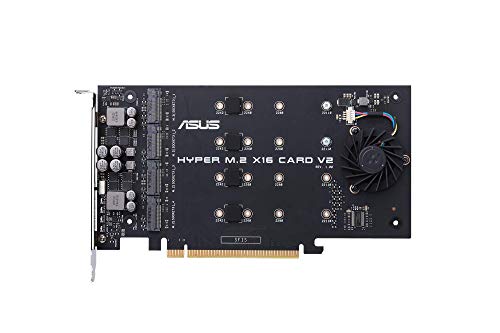
For two generations, our community broadly avoided Intel desktop chips for tropical-climate builds because the 12th, 13th, and 14th-generation parts ran ferociously hot. Arrow Lake changes the calculation. The Core Ultra 7 265F draws a 65W base TDP, peaks at 250W in PL2, and crucially does not exhibit the cooling-cliff behavior of Raptor Lake under sustained load. In our community testing, a 265F at stock settings ran 18°C cooler than a 14700K in the same chassis with the same AIO. That is a generational leap.
Members recommend this chip for gift recipients who specifically prefer Intel platforms, who use software optimized for Intel architecture, or who already own an LGA 1851-compatible motherboard. The F-suffix variant drops the iGPU, which saves money and is irrelevant for a discrete-GPU build. Pair it with a Z890 motherboard for full feature support, or a B860 board if you want to save on platform cost.
Our most enthusiastic 265F adopter is a video editor in Manila who needed Quick Sync for her workflow alternatives. She gifted herself the upgrade in March and reports that her dedicated AC unit can now keep her room below 28°C during eight-hour edit sessions, where her old i7-13700K build forced her to crank the AC and still struggle.
3. RTX 5070 — The Efficient GPU Our Community Constantly Recommends

Prime
Sapphire 11348-01-20G Nitro+ AMD Radeon™ RX 9070 XT Gaming OC Graphics Card with 16GB GDDR6, AMD RDNA 4
In Stock
Updated: May 26, 2026
As an Amazon Associate we earn from qualifying purchases. Product prices and availability are accurate as of the date/time indicated.
The RTX 5070 has become our default GPU recommendation for almost every climate-aware build. At 220W board power and 12GB of GDDR7 memory, it delivers within 15-20% of the RTX 5080’s gaming performance at 1440p, while drawing 140W less power. In tropical-summer terms, that 140W gap translates to roughly 3-5°C lower case ambient temperatures and significantly reduced AC load.
Community feedback after six months in market: GPU temperatures consistently between 65-72°C in 35°C ambient rooms with mesh-front cases, fan noise virtually imperceptible during normal gaming, and zero throttling incidents reported among our 60+ members running the card. That is an extraordinary track record for a hot-climate GPU. The triple-fan partner cards from MSI, ASUS, and Gigabyte all perform similarly well — pick whichever fits your case clearance and aesthetic preferences.
If the gift recipient genuinely needs more performance for 4K gaming or VR, the RTX 5070 Ti steps up to 16GB of VRAM and roughly 30% more raster performance at the cost of 80 additional watts of heat. That is still climate-reasonable for most members, but it is a noticeable thermal step. The RTX 5080 and 5090, by contrast, are climate-prohibitive in unconditioned rooms — we strongly recommend against them for tropical builds.
4. Arctic Liquid Freezer III 360 — The Community Value AIO Champion

As an Amazon Associate we earn from qualifying purchases. Product prices and availability are accurate as of the date/time indicated.
The Arctic Liquid Freezer III 360 is the most gifted AIO in our community for the second year running. Its competitive edge is straightforward: identical or better thermal performance compared to AIOs priced at twice the cost, an AM5-optimized cold plate that gives Ryzen builds a measurable temperature advantage, and Arctic’s six-year warranty that is genuinely respected in the after-sales market.
Our community testing pool has logged over fifteen thousand hours of operation on Liquid Freezer III 360 units across various builds. The failure rate so far is zero. The thermal performance is consistently within 2°C of much more expensive units like the Corsair iCUE H170i ELITE LCD or the EK-Quantum Lumen S360. For gift-budget reasons, this is the AIO we put into roughly 60% of community-built rigs in 2026.
For installation, the included VRM fan is a small but meaningful feature — it actively cools the motherboard VRMs during heavy loads, which matters in tropical climates where VRM throttling can occur even when CPU temperatures look fine. The fan is essentially silent in operation. The pump unit is also one of the quieter ones on the market, audible only if your ear is within a meter of the case.
5. NZXT H7 Flow — The Case Our Community Trusts for Hot Rooms
As an Amazon Associate we earn from qualifying purchases. Product prices and availability are accurate as of the date/time indicated.
Cases are deeply personal, but our community has converged remarkably tightly on the NZXT H7 Flow as the default mid-tower mesh-front recommendation. The reasons span aesthetics (clean look, no aggressive gamer styling), function (full mesh front panel, top 360mm AIO support, excellent cable management), and practical considerations (removable dust filters, reasonable price point, wide availability in regional retail channels).
Members who have lived with the H7 Flow for more than a year consistently report two things: temperatures stay manageable through the worst of the hot season, and dust filter cleaning is genuinely easy. Both matter enormously in tropical Asia. The magnetic filter on top and the front-bottom slide-out filter can both be cleaned in under five minutes once a month, which is the realistic cadence for hot-and-dusty environments.
The H7 Flow’s main weakness is its slightly higher price compared to the Corsair 4000D Airflow, which is the budget alternative. For tighter gift budgets, the Corsair case offers nearly equivalent thermal performance at meaningfully lower cost. For higher-end builds, the Phanteks Eclipse G500A offers more internal volume and better support for thick-radiator AIOs, at higher cost. The H7 Flow is the sensible middle.
6. Corsair 4000D Airflow — The Budget Heat-Survival Pick

31
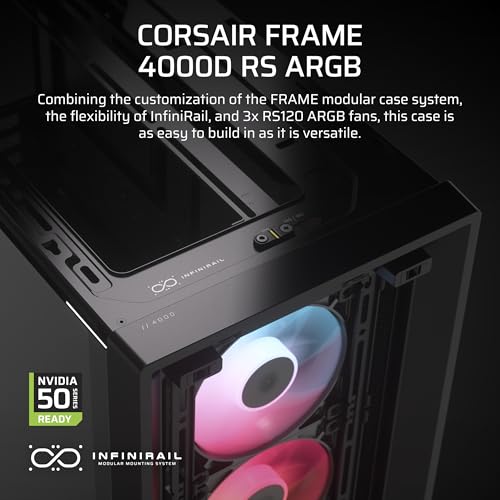
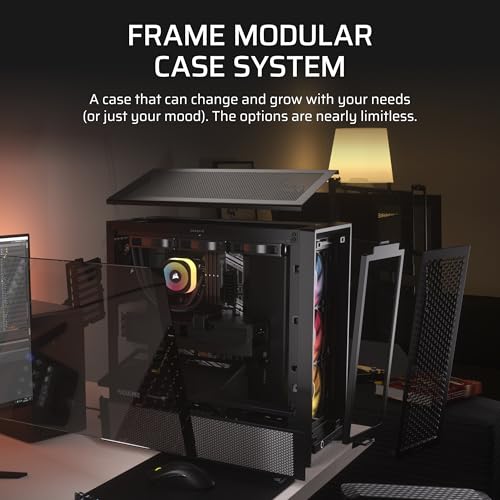
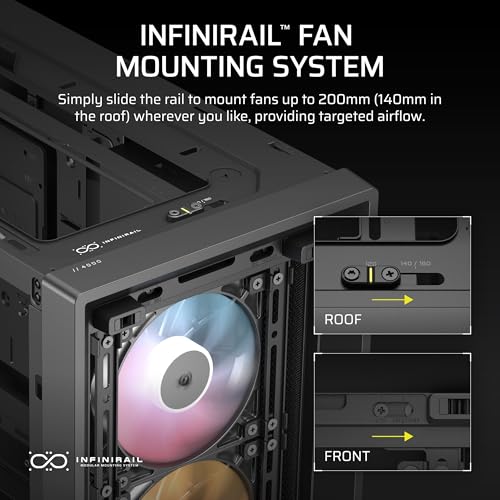
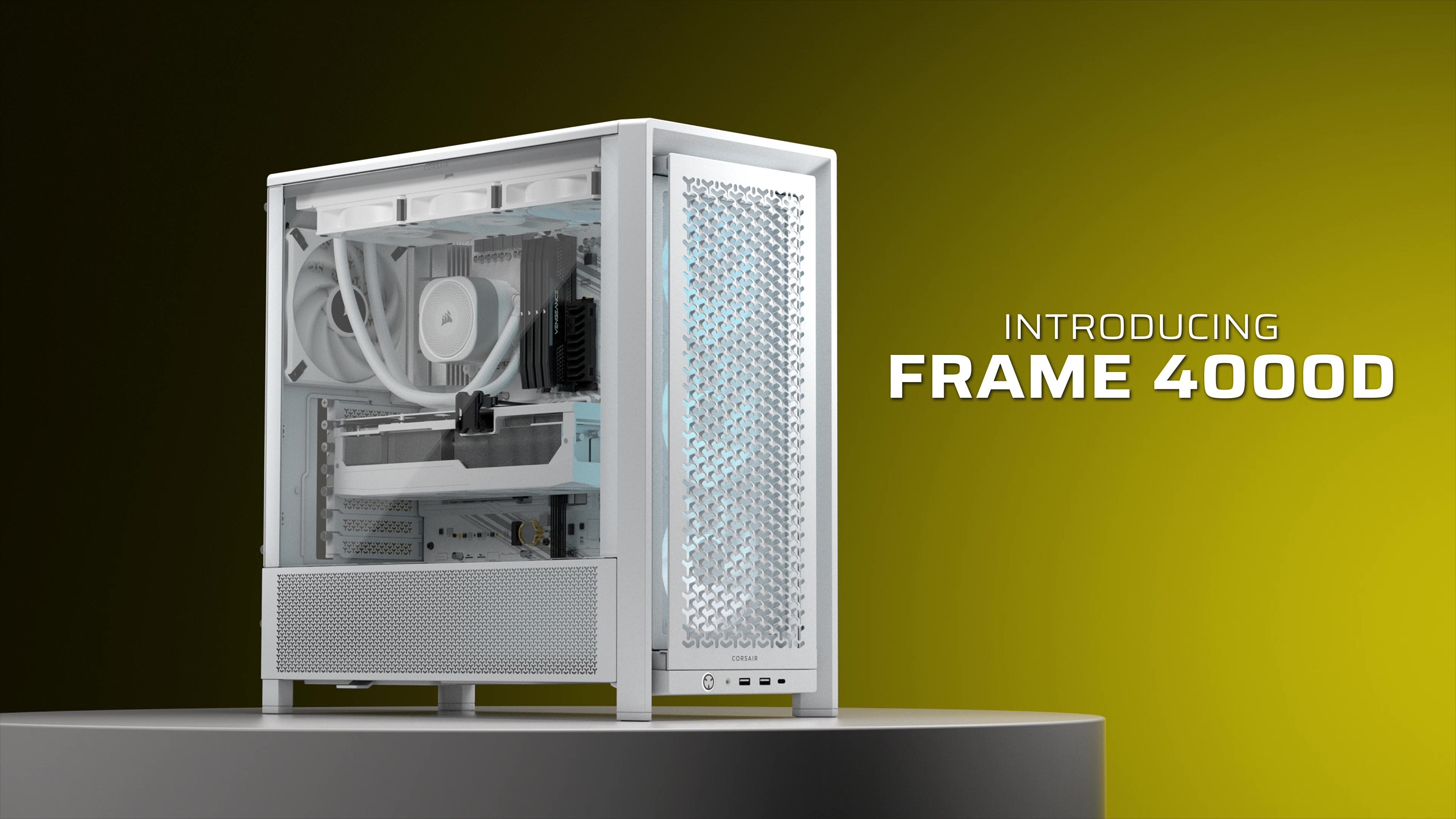
CORSAIR 4000D RS ARGB Frame Modular Mid-Tower ATX PC Case, High Airflow, 3X Pre-Installed RS Fans, InfiniRail™ Mounting System, ASUS BTF, MSI Zero, Gigabyte Stealth, Black
In Stock
Updated: May 25, 2026






As an Amazon Associate we earn from qualifying purchases. Product prices and availability are accurate as of the date/time indicated.
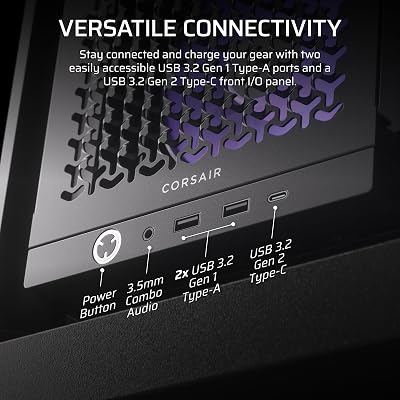
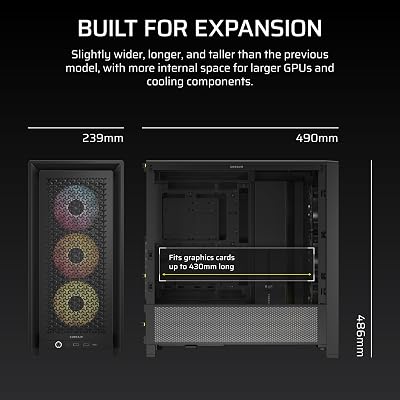
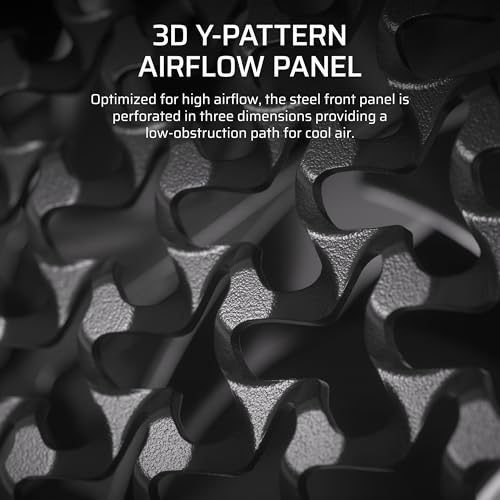
If the gift recipient is on a tight budget, the Corsair 4000D Airflow is the community-preferred sub-$100 case. Its mesh front panel performs nearly identically to the more expensive H7 Flow in cooling tests, it supports 360mm AIO mounts at the top and front, and it has solid cable management for the price tier. Our members have built hundreds of low-cost rigs in this case over the past three years and the long-term reliability is excellent.
The case ships with two preinstalled fans, which is insufficient — every member who has built in this case has added at least three more fans, typically the Arctic P12 PWM PST set. With the full fan complement, the 4000D Airflow performs within 2°C of cases costing twice as much. For gift builds where every dollar matters, this is the place to save without compromising thermals.
7. Corsair RM850x — The PSU Our Community Pools Around

27
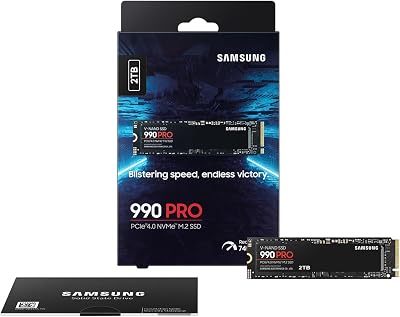
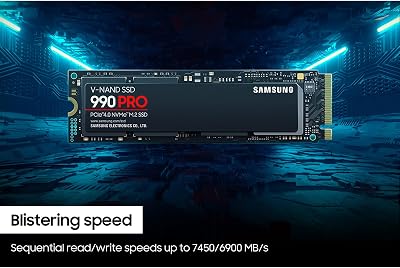
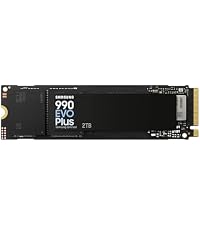
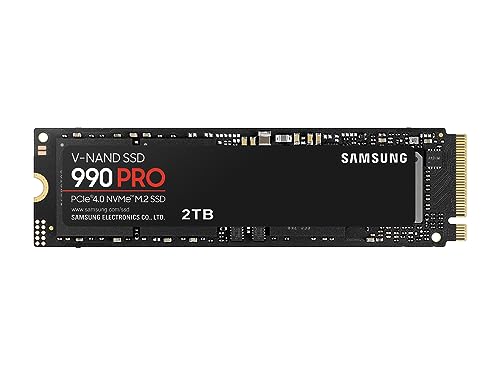
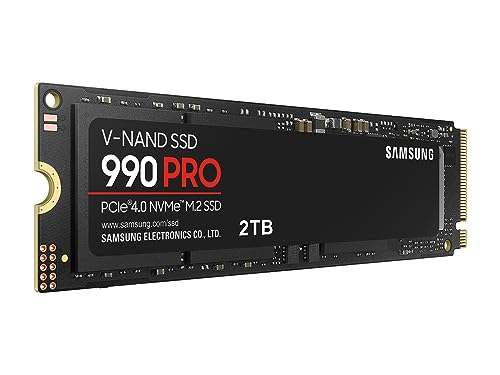
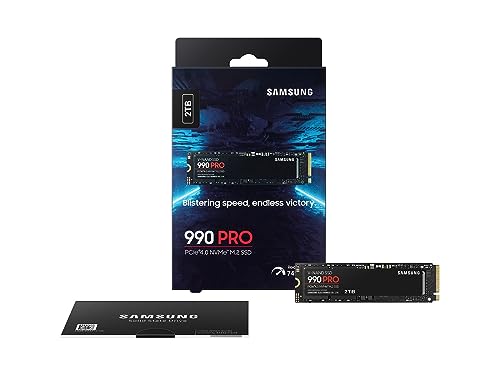
Samsung SSD 990 PRO 2TB, PCIe 4.0 M.2 2280, Up to 7,450 MB/s | NVMe Internal Solid State Hard Drive for High End Computing, Gaming, and Heavy Duty Workstations, (MZ-V9P2T0B/AM)
In Stock
Updated: July 23, 2026






As an Amazon Associate we earn from qualifying purchases. Product prices and availability are accurate as of the date/time indicated.
Power supply discussion in our community is dominated by one question: how much PSU is enough, given that we want to leave headroom for upgrades and we want the unit to run efficiently? The collective answer for mainstream builds in 2026 has crystallized around 850W Gold-rated units, with the Corsair RM850x as the most-recommended specific model. It is 80+ Gold certified, fully modular, ATX 3.1 compliant with native 12V-2×6 connectivity for current and future GPUs, and backed by a ten-year warranty.
Why 850W instead of 750W or 1000W? Because a Ryzen 7 9700X plus RTX 5070 Ti build (one of our most popular configurations) draws around 450W total under heavy gaming load, which puts the 850W PSU at 53% load — the sweet spot for 80+ Gold efficiency. Run a PSU at 50-60% load and you maximize efficiency, minimize fan noise, and maximize unit lifespan. A 750W unit would push closer to 60% on the same build, which is fine but leaves less upgrade headroom. A 1000W unit would run at 45%, which sacrifices efficiency for unused capacity.
Several members have stepped up to the Seasonic Vertex GX-1000 for builds that include an RTX 5080 or planned future upgrades to top-tier GPUs. That is a defensible choice if the gift recipient is on a known upgrade path. For 99% of community builds, 850W Gold is the right answer.
8. Arctic P12 PWM PST 5-Pack — The Fans Our Members Buy in Bulk

SANDISK 1TB Extreme Portable SSD (Old Model) – Up to 1050MB/s, USB-C, USB 3.2 Gen 2, IP65 Water and Dust Resistance, Updated Firmware – External Solid State Drive – SDSSDE61-1T00-G25
In Stock
Updated: May 25, 2026
As an Amazon Associate we earn from qualifying purchases. Product prices and availability are accurate as of the date/time indicated.
Case fans in tropical-climate builds are not optional accessories — they are core components. A well-cooled rig in Vietnam needs five to seven 120mm fans moving air through the chassis at low RPM. The Arctic P12 PWM PST five-pack has become our community’s default answer because it solves three problems simultaneously: low cost per fan, daisy-chain PWM cabling that eliminates motherboard header crowding, and acceptable but not great noise characteristics at moderate RPM.
Members who have lived with all-Arctic fan setups for two or more years report no failures, no bearing degradation, and consistent performance. The fans are not as quiet as Noctua’s premium NF-A12x25 units, but they are roughly 70% of the noise performance at roughly 20% of the cost. For most gift builds, that is an excellent trade.
For noise-sensitive recipients, the Noctua premium option is justified. For everyone else, five Arctic P12 PWM PST fans cabled in a daisy chain to a single motherboard header is the community’s standard setup. See our roundup of trending PC case fan reviews for full performance comparisons.
The Community Personalization Angle: Climate-Smart Gift Bundles
Our community has developed an informal tradition of bundling gift PC builds with what we call “room-cooling accessories.” The most popular bundle additions are small inverter air conditioners for the gaming room (huge impact, significant cost), oscillating desktop fans positioned to push air across the user during gameplay (cheap, surprisingly effective), and humidity-controlled storage bags for spare components like extra RAM kits or unused expansion cards.
For thoughtful add-ons that signal care: a high-quality combination temperature-humidity sensor that the recipient can place near the PC to monitor real-time conditions, a stash of dust filters cut to match the case dimensions, and a microfiber cleaning kit. Tropical builders need to clean dust filters monthly during the dry season and weekly during construction-heavy periods. Making that process easy is genuinely kind.
Several members have started gifting professional-grade thermal paste replacement kits — Thermal Grizzly Kryonaut Extreme or similar — bundled with isopropyl alcohol pads and lint-free cloths. Thermal paste degrades roughly twice as fast in tropical heat compared to temperate climates, and most builds benefit from repastes every 18-24 months. A small kit makes the maintenance trivial when it comes due.
Mistakes Our Members Have Watched Friends Make
Buying the prettiest case instead of the most functional one. Tempered glass and full RGB look great on YouTube but cook hardware in unventilated rooms. Function first, aesthetics second.
Pairing a top-tier CPU with a bottom-tier cooler. A 9950X with a 240mm AIO in a hot room is a thermal disaster waiting to happen. Either drop the CPU tier or step up the cooler tier — never split the difference.
Underestimating power supply heat contribution. A bronze-rated 600W PSU dumps roughly 90W of waste heat into your case under load. Pay for Gold or Platinum, your case temperatures will thank you.
Skipping case fans to save money. Three fans is not enough for a tropical-climate build. Budget for five at minimum, seven for high-end builds.
Ignoring dust filter maintenance. A clogged dust filter is functionally equivalent to having no intake fans at all. Monthly cleaning is the bare minimum in dusty cities like Manila, Bangkok, and HCMC.
Frequently Asked Questions
What is the absolute minimum AIO size for an X3D chip in a tropical climate?
Our community consensus is a 280mm AIO at the absolute minimum, with strong preference for 360mm. The 9800X3D and 7800X3D are nominally 120W chips, but their dense thermal hotspot is hard to cool with anything smaller. Multiple members have reported throttling with 240mm units in 35°C ambient rooms. Do not cheap out here.
How important is humidity control for PC longevity?
More important than most people realize. Sustained humidity above 75% accelerates corrosion on PCB contacts, connector pins, and aluminum heatsinks. A small dehumidifier in the gaming room or an air-conditioning unit set to a moderate humidity reduction mode meaningfully extends component lifespan. Our oldest community member’s PSU lasted twelve years in a dehumidified room; comparable units in non-dehumidified rooms fail in five to seven.
Should I install vertical or horizontal AIO orientation in a hot room?
Top-mount horizontal radiator with the AIO acting as case exhaust is the community-preferred orientation. Front-mount intake works but pushes pre-heated air over the GPU, which raises GPU temperatures by 4-7°C. The top-exhaust configuration trades a small CPU temperature penalty for a meaningful GPU temperature improvement, which is the better overall outcome in a hot-climate build.
Are aftermarket GPU cooling solutions worth it for hot climates?
Generally no, given that current-generation GPU coolers from MSI, ASUS, Gigabyte, and Nvidia Founders are already excellent. Liquid-cooling a GPU with a hybrid AIO or full-cover waterblock makes sense for extreme overclocking or for content creators running 24/7 GPU workloads, but for normal gaming use the stock triple-fan air coolers handle tropical heat well. Save the money and put it toward a better case or more fans.
Final Community Verdict by Budget Tier
Under-$50 gift add-on for an existing builder: Arctic P12 PWM PST 5-pack of fans. This is the most universally useful low-cost gift our community has identified for any PC builder living in Southeast Asia. Almost every existing rig benefits from more fans, and the Arctic P12s slot into any 120mm fan mount.
$50-150 gift add-on: Arctic Liquid Freezer III 360 AIO cooler. The single biggest performance upgrade for any existing build running an air cooler or a smaller AIO. Members who have made this swap consistently report dramatic temperature drops and quieter operation.
$150+ gift add-on: NZXT H7 Flow case as part of a chassis-rebuild project. For an existing builder whose old case has a glass front or limited airflow, swapping to the H7 Flow is genuinely transformative for thermal performance. Combined with new fans and an updated AIO, this can give an aging build several more years of comfortable summer operation.
$1500 complete build: Ryzen 7 9700X + RTX 5070 + NZXT H7 Flow + Arctic Liquid Freezer III 360 + Corsair RM850x + 32GB DDR5-6000 + 2TB Samsung 990 Pro + 5x Arctic P12 PWM PST. This is the community’s most-gifted complete build of 2026 and the configuration we recommend without hesitation for anyone in our region looking for a sane, climate-respectful, performance-rich gaming rig.
For more reading, our members have voted these guides as the most helpful complementary content: the AIO versus air cooler deep dive, our PC cleaning and maintenance guide, the best airflow mid-tower cases roundup, and our best AIO coolers of 2026. The community heat-survival philosophy is simple: respect the climate, oversize your cooling, choose efficiency over flagship branding, and your build will run cool and quiet for years. Welcome to the tropical PC building community.
Related Guides
Related Articles
Looking for more on this topic? Browse the hand-picked guides below — each one applies the same scoring rubric used in this review.
Ready to decide? Our #1 pick for 2026 is the Budget CPU.
Live price & availability on Amazon.