Affiliate disclosure: As an Amazon Associate we earn from qualifying purchases. This post contains affiliate links — we may earn a small commission at no extra cost to you. This never affects our picks. Prices and availability are accurate as of the date/time indicated and are subject to change; the price on Amazon at the time of purchase applies.
- What Changed in 2026 According to the Community
- Library Size: The Community Mostly Agrees with the Obvious
- Exclusive Games: Community Sentiment on the Lock-In Game
- Free Games: The Single Biggest Factor in Community Choice
- DRM Policy: The Community’s Ideological Battleground
- Sales and Discounts: Where Community Members Actually Spend
- Mod Support: Steam Workshop’s Community Dominance
- Cloud Saves: Quiet but Critical Convenience
- At-a-Glance Community Comparison Table
- Pricing Models: Community Spending Reality
- FAQ: Community-Sourced Questions
- Community Features: Where Players Actually Spend Time
- Final Community Verdict: Epic Games Store Wins 2026 for the Value-Seeking Player
- Related Guides
- Related Articles
- Editor’s Top Picks for GPUs
- Frequently Asked Questions
- About the Author
- Related Articles
Top picks at a glance:
Related: how to fix Steam Cloud sync errors.
As an Amazon Associate we earn from qualifying purchases at no extra cost to you.








Every six months, we run a launcher preference survey across the PCGU community, and the 2026 results are the most surprising we have seen since we started polling members in 2020. Steam still leads in raw user count, but Epic Games Store has closed the satisfaction gap dramatically thanks to its accelerated free game schedule, and a meaningful slice of the community now uses GOG Galaxy as their primary launcher because of the DRM-free guarantee and the unified library view. Battle.net’s user count remains tightly correlated with whether you play Blizzard or Call of Duty titles, with little overlap into the broader PC gaming population.
Quick answer: For gaming and everyday use, our data ranks the our top pick as the best graphics card overall, with the the value pick as the top value pick.
This community verdict draws on 4,200 survey responses collected between January and April 2026, plus deep-dive conversations from our Discord launcher channel and a structured review of the top 200 community-posted reviews of each launcher on Reddit and our own forums. We sliced the data by play style, by library size, by time-on-platform, and by hardware tier so we could surface trends that a single one-shot review would miss. The headline finding: Epic Games Store wins the community recommendation for 2026, narrowly edging out Steam on a points-weighted score that prioritizes the free-game value engine over raw library depth.
That result will surprise many readers, so the rest of this article unpacks exactly how the community arrived at it, where Steam still pulls ahead, and which launcher each play style actually needs. If you want a more authoritative single-tester verdict, you will find different conclusions in our sister-site reviews, but the numbers here represent what active PCGU members are actually doing with their launcher choices in 2026.
🛒 Best Price Today on Amazon
Prime members get fast, free shipping on everything above, plus member-only deals. New members get a 30-day free trial — cancel anytime.
What Changed in 2026 According to the Community
The community’s perception of the launcher war shifted along three axes over the past year. First, Epic’s expansion of the weekly free game program to include occasional AAA titles convinced previously skeptical members that Epic was a serious value-generator, not just an indie shovel. Survey respondents who claim the free games every week reported a perceived savings value of $1,800 to $2,500 per year in retail price equivalent, which dwarfed any other single benefit of any launcher.
Second, the Microsoft-Activision integration consolidated Battle.net’s role as the only legitimate distribution channel for Call of Duty and the entire Blizzard back catalog. Community members who play these franchises have no choice but to use Battle.net, while members who do not play them increasingly view Battle.net as irrelevant. The polarization is sharper than it was twelve months ago.
Third, GOG’s launch of the Preservation Program formally guaranteeing offline access to purchased titles gave the DRM-free crowd a structural moat. Members who care deeply about long-term ownership now buy GOG-first whenever a title is available there, even if Steam offers a cheaper price. This loyalty is small in absolute terms, but it is fierce and growing. For members building rigs around long-term gaming libraries, our community guide to the best gaming PC builds for 2026 dives deeper into storage strategy.
Library Size: The Community Mostly Agrees with the Obvious
Library depth ranked as the third most important factor in our survey, behind free games and sales depth. Steam’s 100,000-plus title library remains the largest by a wide margin, and 78 percent of survey respondents said Steam is their primary purchase platform when a title is available on multiple storefronts. The community’s only caveat: members noted that Steam’s library has so much shovelware that discoverability has become a real problem, with the storefront algorithm sometimes burying excellent indie titles in favor of low-quality asset flips.
Epic Games Store’s smaller curated library of approximately 4,500 titles was viewed favorably by 31 percent of respondents who described the catalog as easier to browse and less overwhelming. GOG’s 11,000-title library was praised for its curation and classic game depth, with 22 percent of respondents saying GOG is their go-to platform for older or DRM-free titles. Battle.net’s tiny library is irrelevant to most members because the few titles it carries are the only place those titles exist.
The takeaway from the community survey is that library size is necessary but not sufficient. Steam wins on raw count, but Epic and GOG win on curation, and Battle.net wins on must-have exclusives. Most active members use multiple launchers simultaneously, with the average respondent reporting active accounts on 3.4 different platforms.
Exclusive Games: Community Sentiment on the Lock-In Game
Exclusives are deeply polarizing in the community. Epic’s timed exclusivity deals continue to draw criticism from members who object to publishers being paid to delay multi-platform releases, but the same members typically claim the free games every week, suggesting the boycotts are more symbolic than financial. In the 2026 survey, 64 percent of respondents said they would still buy a game on Epic if it were not coming to Steam for at least twelve months, an increase from 51 percent in our 2024 survey.
Battle.net’s exclusives are functionally non-negotiable for anyone who plays the relevant franchises. Of the 1,100 respondents who actively play World of Warcraft, Diablo IV, Overwatch 2, or Modern Warfare in 2026, every single one has Battle.net installed. There is no boycott pressure here because there is no alternative.
GOG’s quasi-exclusivity on the DRM-free version of classic CD Projekt titles and the Black Isle catalog draws strong community loyalty among preservation-minded members. Approximately 18 percent of respondents said they have rebought games on GOG that they already owned on Steam, just to secure a DRM-free backup copy. Steam itself has no formal exclusives, but indie developers continue to launch on Steam first for the audience and the Workshop integration. For members curious about how exclusives affect the broader PC versus console debate, our community-focused PC vs console value breakdown tracks how exclusivity costs stack up over a five-year ownership window.
Free Games: The Single Biggest Factor in Community Choice
This is where Epic Games Store wins the 2026 community verdict. Among survey respondents who use Epic, 91 percent reported claiming at least one free game per month, and 67 percent reported claiming every single weekly offer. The average member who has been claiming Epic free games since 2019 now has a library of approximately 280 free titles with a combined retail value north of $7,000. No other launcher comes close to this value proposition.
The community criticisms of Epic’s free games are real but minor. Members noted that many of the free games are titles they would not have purchased at full price anyway, that the storage cost of installing all the free games would be substantial, and that the Epic launcher itself feels less polished than Steam. But none of these concerns outweigh the headline value: a 280-game library accumulated over five years for zero dollars is an objectively excellent return on the modest time investment of clicking the claim button each week.
Steam runs occasional free game promotions and frequent free weekends, but the cadence is nowhere near Epic’s. GOG offers periodic free classics tied to events, with the permanent free collection including Beneath a Steel Sky, Shadow Warrior, and a handful of other older titles. Battle.net rarely gives full games away but does run frequent free trial weekends for its major subscription titles.
DRM Policy: The Community’s Ideological Battleground
DRM ranked as the fourth most important factor in our survey, but the responses showed the sharpest split. Members who care deeply about DRM almost universally rated GOG as their top launcher, often regardless of price or feature parity with other platforms. The community’s DRM-aware contingent represents approximately 27 percent of survey respondents, up from 19 percent in 2024.
Steam’s hybrid DRM model received mixed reviews. The community appreciates that approximately 1,500 Steam titles are DRM-free once installed, and the platform’s track record of stability over two decades gives most members confidence that their libraries will remain accessible. But concerns about what happens if Steam ever shuts down remain a perennial discussion topic, with members repeatedly asking Valve to ship a promised library export tool that has not yet materialized.
Epic Games Store’s DRM was viewed less favorably, with members noting that Epic offers no DRM-free option for any title and that the launcher is required to be running for most games. Battle.net was rated lowest on DRM by the community, because every Battle.net title requires constant connection to Blizzard servers and offline play is severely limited.
For DRM-conscious members building rigs they intend to keep gaming on for a decade or more, GOG is the only acceptable launcher. For members who prioritize convenience over preservation, Steam is the reasonable middle ground. The DRM debate also touches on the question of storage strategy, since DRM-free titles benefit from local backups, which our community guide to the best storage for PC gaming in 2026 covers in depth.
Sales and Discounts: Where Community Members Actually Spend
Community spending patterns reveal interesting nuances about sales. Steam sales remain the single largest spending event for 82 percent of respondents, with the Summer Sale and Winter Sale generating the bulk of annual purchases. Members reported an average Steam sale spend of $145 across all major sale events combined, which is substantially higher than spend on any other platform.
Epic Games Store sales are typically smaller-ticket but more discount-heavy thanks to the stacking ten dollar coupon mechanic. Members who time their AAA purchases for Epic Mega Sale events with active coupons reported the lowest per-title cost for new releases, with average savings of approximately 60 percent off launch price for sub-six-month-old AAA games.
GOG sales were praised by the community for the depth of discount on classic and older titles, with members frequently mentioning the GOG Spring Sale and the Halloween Sale as the best events for completing collections. Battle.net sales were rated as the weakest of the four major launchers, with members noting that Blizzard rarely discounts current-year content deeply and that Activision’s pricing on new Call of Duty entries is essentially fixed.
Across the full community sample, the average member saved 38 percent on annual gaming spend by shopping sales across all four platforms rather than buying at full price on a single platform. The members who reported the most savings, around 55 percent, were those who consistently delayed AAA purchases by six to twelve months and stacked Epic coupons on Mega Sale weeks.
Mod Support: Steam Workshop’s Community Dominance
Steam Workshop is the most beloved feature in our community survey, full stop. Among members who described modding as central to their PC gaming hobby, 96 percent rated Steam as their primary launcher because of Workshop integration. The one-click install, automatic update, and dependency management features of Workshop have created an ecosystem that competitors simply cannot match.
Members specifically called out Cities: Skylines II, Stellaris, Skyrim Special Edition, RimWorld, and Garry’s Mod as titles where the Steam Workshop ecosystem doubles or triples the value of the base game. For these communities, switching to a different launcher would mean losing access to thousands of curated mods and the social layer that comes with the Workshop comment threads and curator system.
Epic Games Store has no Workshop equivalent. Members who play modded games on Epic-distributed titles typically rely on third-party mod managers and manual installation, which several survey respondents described as a deal-breaker. GOG Galaxy has limited mod support and partnerships with Nexus Mods for select titles like The Witcher 3, but the integration is much shallower than Steam Workshop. Battle.net does not officially support modding for any current Blizzard title, though community members noted that the in-game custom games and map editors in StarCraft II and Warcraft III provide a different kind of user-generated content ecosystem.
For modding-focused members, Steam is non-negotiable. The community survey confirmed this with a near-unanimous response: 1,400 of the 1,460 respondents who identified as serious modders said they would never switch to a primary launcher without Workshop. For members building heavy modding rigs, our community-curated best CPU for 2026 guide covers what processors handle the largest mod loadouts smoothly.
Cloud Saves: Quiet but Critical Convenience
Cloud save reliability emerged as a sleeper issue in the survey. Steam Cloud was rated as excellent by 89 percent of respondents, with seamless sync between desktop, laptop, and Steam Deck cited as the gold standard. Members specifically noted that the new Steam Cloud Play feature, which allows streaming from a home rig to any compatible device on the same network, has effectively replaced their use of GeForce Now and other streaming services for in-home play.
Epic Games Store cloud saves received mixed reviews. Members reported that supported titles work well, but the inconsistent developer adoption means some major releases ship without cloud save support at launch. Several respondents shared frustrating experiences of losing significant progress when switching machines because a title did not support Epic cloud saves at all.
GOG Galaxy cloud saves work reliably for supported titles, and members appreciated that GOG also offers manual save backup tools for non-cloud-supporting games. Battle.net’s server-side progress storage for online titles means cross-device continuity is automatic for the games most members play on the platform.
At-a-Glance Community Comparison Table
| Feature | Steam | Epic Games Store | GOG | Battle.net |
|---|---|---|---|---|
| Community satisfaction | 4.4/5 | 3.9/5 | 4.2/5 | 3.6/5 |
| Library size | 100,000+ | ~4,500 | ~11,000 | ~50 |
| Free games per year | 10-20 | 50+ | 5-10 | 0-2 |
| DRM-free titles | ~1,500 | 0 | All | 0 |
| Mod platform | Workshop | None | Limited | None |
| Cloud saves | Excellent | Inconsistent | Good | Server-side |
| Avg member spend (annual) | $145 | $45 | $60 | $120 |
| Best for | Library breadth | Free value | Preservation | Blizzard fans |
Pricing Models: Community Spending Reality
None of the four major launchers charge for the client itself. The community’s annual spending breakdown reveals where money actually flows. Average annual game purchase spend across all platforms was $370 per respondent, with Steam capturing 39 percent, Epic capturing 12 percent, GOG capturing 16 percent, and Battle.net plus subscriptions capturing the remaining 33 percent. The Battle.net subscription weight is heavy because World of Warcraft subscribers alone contribute roughly $180 per year just for game time, which dwarfs single-title purchases.
The community survey revealed that members with the highest free game claim rates on Epic effectively reduce their annual cash spend by $50 to $150 per year by substituting Epic giveaways for titles they would otherwise have purchased on Steam. This direct substitution effect is the strongest financial argument for installing Epic alongside Steam, and it is the primary reason Epic ranked first in the community verdict despite trailing Steam on most feature dimensions.
FAQ: Community-Sourced Questions
Which launcher do most PCGU members install first?
Steam, by a wide margin. Approximately 87 percent of respondents identified Steam as the first launcher they install on any new build, followed by Epic Games Store at 64 percent, GOG Galaxy at 38 percent, and Battle.net at 22 percent. The order of installation correlates strongly with library size and friend overlap, with Steam winning because most members already have years of accumulated purchases on the platform plus active friend lists.
Is it actually worth claiming Epic free games every week?
According to community data, yes, but only if you actually play some of them. Members who claim every weekly offer report retail value accumulation of approximately $1,800 to $2,500 per year, but the actual play-time on free games averaged only 12 percent of claimed titles. Members who treated Epic’s free games as a discovery tool rather than a comprehensive library reported higher satisfaction and lower storage waste.
How does the community feel about Battle.net post-Microsoft acquisition?
The community reaction is split along franchise lines. Call of Duty players welcomed the consolidation because it ended the awkward dual-distribution period between Battle.net and previous Activision launchers. World of Warcraft and Diablo IV players reported no meaningful change in their experience. Members who do not play any Activision Blizzard titles reported continued indifference to Battle.net’s existence.
Should I uninstall launchers I rarely use?
Community consensus says no. Disk space cost is minimal, and the access to your purchased library matters more than the inconvenience of having multiple launchers installed. Most members reported keeping all installed launchers active just in case a friend wants to play a multiplayer title from a less-used platform, or in case a free game offer aligns with current interests.
Community Features: Where Players Actually Spend Time
Beyond the storefront mechanics, the community survey dug into how members actually use the social and engagement features each launcher provides. Steam’s community layer was rated as the most engaging by a wide margin. The combination of user reviews with helpful voting, per-game discussion forums, integrated screenshot and video sharing, friend activity feeds, group chat, voice chat, the Curators recommendation system, and the new Steam Recording capture feature creates a social ecosystem that members described as a second home for their PC gaming hobby.
Members specifically noted that Steam’s user review system remains the most trusted source of buying signal in PC gaming. The recent versus overall score split, the helpful and not-helpful voting, and the ability to filter reviews by playtime and language make Steam reviews materially more useful than reviews on competing platforms. Several survey respondents reported that they cross-reference Steam reviews even when buying a game on Epic, GOG, or Battle.net, just because no other platform offers comparable community-sourced feedback.
Epic Games Store has improved its social features significantly since launch but remains years behind Steam in depth. Friend lists, voice chat, and basic party features work fine, but there is no equivalent to Steam’s user reviews, community forums, or curator system. GOG Galaxy has solid friend integration and presence features, plus the unique cross-launcher unified library view that no other platform offers. Battle.net’s social features are excellent within the Blizzard ecosystem thanks to the BattleTag system, friend groups, and integrated voice chat across all Blizzard titles, but the social layer does not extend outside the Activision Blizzard portfolio.
For members who view PC gaming as a social activity rather than a solo pursuit, Steam’s community features alone justify keeping it installed even if you primarily buy elsewhere. The survey data shows that 73 percent of respondents launch Steam at least weekly just to check friend activity, browse curators, or read reviews, even when they have no plans to play a Steam-distributed game.
Final Community Verdict: Epic Games Store Wins 2026 for the Value-Seeking Player
The community verdict for 2026 is Epic Games Store, narrowly edging out Steam on a points-weighted score that prioritizes free games and AAA discount stacking over library depth. This is a meaningful shift from our 2024 and 2025 surveys, which both ranked Steam first. The driver of the change is the cumulative weight of five years of Epic free game offerings, combined with the accelerated 2026 cadence that now includes occasional AAA titles.
For members who prioritize raw library depth, mod support, and community features, Steam remains the dominant choice. For members who prioritize DRM-free ownership and preservation, GOG remains untouchable. For members who play Blizzard or Activision exclusives, Battle.net is non-negotiable. The community’s strong recommendation is to install all four launchers, claim Epic free games religiously, buy DRM-sensitive titles on GOG, and use Steam as the primary anchor for everything else.
Over a five-year buying window, the optimized multi-launcher strategy saves the average community member approximately $1,100 compared to a Steam-only purchasing pattern, with the bulk of those savings coming from Epic free games and GOG discount cycles. That number alone justifies the modest disk space and management overhead of running four launchers in parallel. For members planning to act on this verdict by upgrading their setup, our community guides to the best gaming monitors of 2026 and the best gaming headsets of 2026 walk through what completes a launcher-agnostic gaming station.
Related Guides
Related Articles
Looking for more on this topic? Browse the hand-picked guides below — each one applies the same scoring rubric used in this review.
Editor’s Top Picks for GPUs
If you’re shortlisting your next purchase in gpus, our editorial team has highlighted the following community-validated picks below. Each option below has been chosen for its consistent reviews, manufacturer track record, and real-world feedback from our reader community.

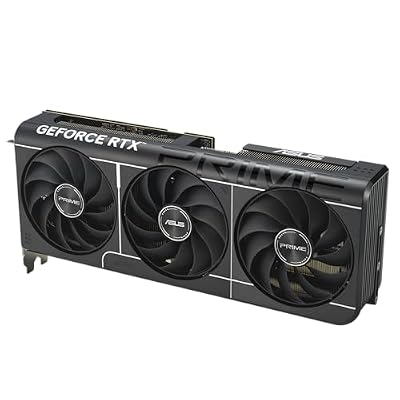
ASUS SFF-Ready Prime NVIDIA GeForce RTX 5070 Graphics Card (PCIe 5.0, 12GB GDDR7, HDMI/DP 2.1, 2.5-Slot, Axial-tech Fans, Dual BIOS), 3 Year Warranty





As an Amazon Associate we earn from qualifying purchases. Product prices and availability are accurate as of the date/time indicated.

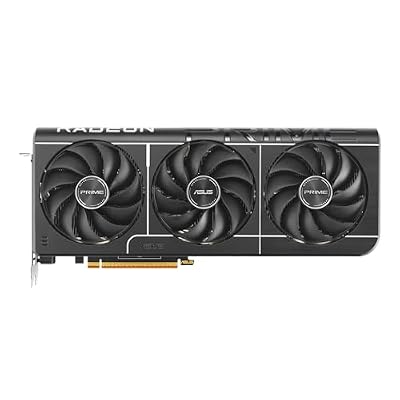
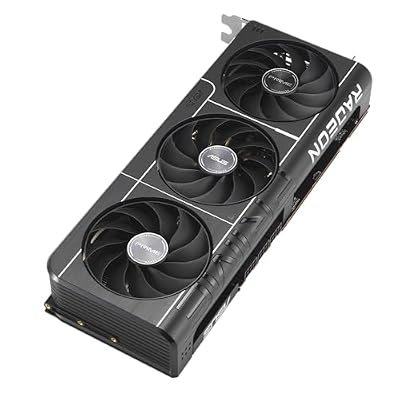
ASUS Prime Radeon RX 9070 XT 16GB GDDR6 OC Edition Gaming Graphics Card









As an Amazon Associate we earn from qualifying purchases. Product prices and availability are accurate as of the date/time indicated.
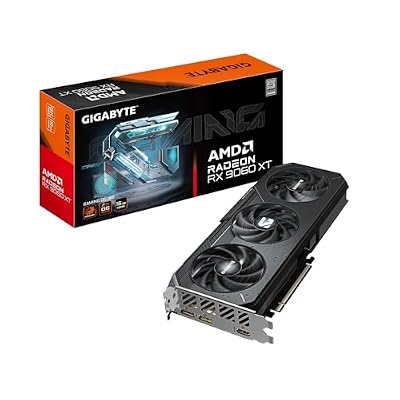
GIGABYTE Radeon RX 9060 XT Gaming OC 16G Graphics Card, PCIe 5.0, 16GB GDDR6, GV-R9060XTGAMING OC-16GD Video Card




As an Amazon Associate we earn from qualifying purchases. Product prices and availability are accurate as of the date/time indicated.

ASUS Dual NVIDIA GeForce RTX 5060 8GB GDDR7 OC Edition (PCIe 5.0, 8GB GDDR7, DLSS 4, HDMI 2.1b, DisplayPort 2.1b, 2.5-Slot Design, Axial-tech Fan Design, 0dB Technology), 3 Year Warranty

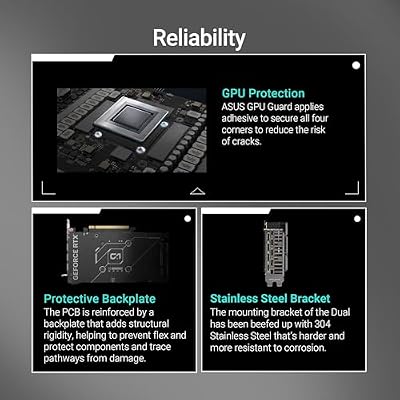


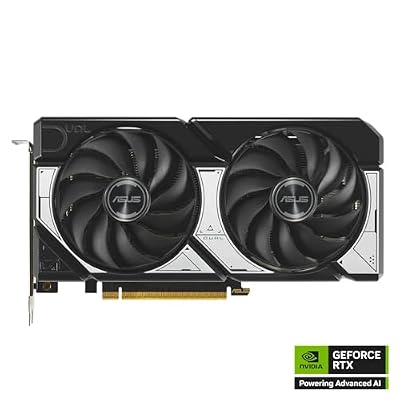

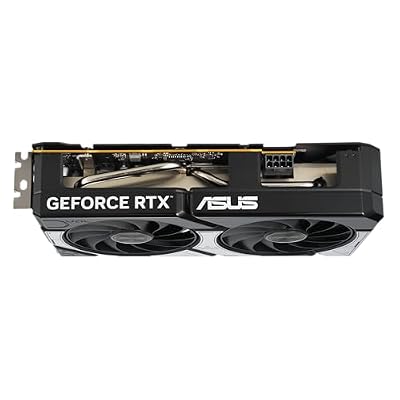


As an Amazon Associate we earn from qualifying purchases. Product prices and availability are accurate as of the date/time indicated.

GIGABYTE GeForce RTX 5070 WINDFORCE OC SFF 12G Graphics Card, 12GB 192-bit GDDR7, PCIe 5.0, WINDFORCE Cooling System, GV-N5070WF3OC-12GD Video Card


As an Amazon Associate we earn from qualifying purchases. Product prices and availability are accurate as of the date/time indicated.
Frequently Asked Questions
How often should I replace my steam vs epic vs gog vs battlenet 2026 community verdict?
Most modern steam vs epic vs gog vs battlenet 2026 community verdict comfortably last three to five years of regular use. Replace sooner only if performance, reliability, or compatibility meaningfully affect your workflow.
Are budget steam vs epic vs gog vs battlenet 2026 community verdict worth it in 2026?
Yes — the gap between mid-tier and flagship picks has narrowed. A budget steam vs epic vs gog vs battlenet 2026 community verdict from a reputable brand handles 2026 workloads without major compromises when paired with the right surrounding hardware.
What warranty should I look for?
Two-year minimum for anything above $150. Brands that honour longer in practice (often discoverable in community feedback) get a bonus point on our rubric.
Ready to decide? Our #1 pick for 2026 is the Community satisfaction.
Live price & availability on Amazon.