A keyboard amplifier does a different job than a guitar amp. Keyboards and digital pianos produce a full range of sound, from deep bass notes to bright highs, and often in stereo. A keyboard amp needs a flat, full-range response that reproduces that range cleanly, plus enough channels to mix a keyboard with a microphone or a second instrument. Stereo output matters because many keyboard patches use stereo effects, and a mono amp collapses that width into a single point.
The picks below were compared on published specifications: power output, channel count, speaker size, EQ and effects, inputs, outputs, weight, and portability. All four are stereo keyboard amplifiers with multi-channel mixers built in, which means each one can serve as a small PA for keys, vocals, and a second instrument in one box.
The right choice depends on where the amp will be used: a rehearsal room needs power to hear keys over drums, a home studio needs clean sound at low volume, and a small stage needs line outputs to feed a larger system.
At a Glance
| Product | Best for | Key specification |
|---|---|---|
| Roland KC-400 | All-round keyboard and vocal use | 150 watts, 4-channel stereo mixing |
| Roland KC-200 | Rehearsal rooms and home studios | 100 watts, 4-channel stereo mixing |
| Behringer ULTRATONE KXD15 | Large rooms and full bands | 600 watts, 15-inch woofer, 4 channels |
| Behringer ULTRATONE KXD12 | Powerful sound in a smaller box | 600 watts, 12-inch woofer, 4 channels |
How to Choose
Power output. Wattage decides how loud the amp plays cleanly before distortion sets in. A 50-watt amp suits a quiet room, a 100-watt amp suits a rehearsal space, and a 150-watt or higher amp suits a stage or a loud band. Match the power to the loudest setting the amp will face, not the quietest.
Channel count and mixing. A keyboard amp with four channels can mix a keyboard, a second keyboard, a microphone, and a backing track at once. Each channel should have its own volume control, and at least one channel should accept an XLR microphone input. A built-in mixer removes the need for a separate mixing board in small setups.
Stereo imaging. Keyboards use stereo patches, rotary effects, and chorus that only make sense in stereo. A stereo keyboard amp has two speakers or a stereo output stage that keeps the left and right channels separate. Some amps also link in stereo pairs, so two amps can serve as a wide left and right pair.
Speaker size and low end. A 12-inch or 15-inch woofer reproduces the low notes of a piano or an organ patch with authority, while a horn tweeter keeps the highs clear. Smaller speakers suit a home studio but can sound thin on deep bass patches. Check the woofer size and whether the amp has a dedicated tweeter.
EQ and effects. A multi-band EQ shapes the sound for the room, and built-in effects such as reverb add depth to a vocal or a piano patch. Look for an EQ that covers the low, mid, and high ranges, and check whether effects can be applied per channel or only to the whole mix.
Inputs and outputs. Beyond the keyboard input, look for XLR microphone inputs, auxiliary inputs for a phone or a backing track, and line outputs to feed a larger PA or a recorder. A subwoofer output helps when the amp needs more low end for a large room.
Weight and portability. A keyboard amp travels to rehearsals and gigs. Check the weight and whether the amp has handles or casters. A 150-watt amp with a 12-inch speaker is portable for one person, while a 600-watt amp with a 15-inch speaker is a two-person lift.
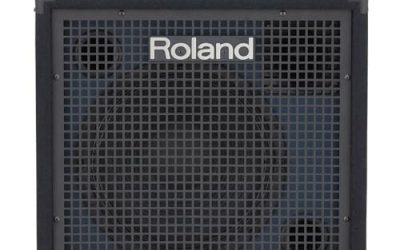
Roland KC-400

The Roland KC-400 is a 150-watt stereo keyboard amplifier with a 4-channel mixer built in. It uses a 12-inch woofer and a horn tweeter to cover the full range of a keyboard, from deep bass to bright highs. Channel 1 accepts an XLR microphone input, so the amp can mix vocals with keys, and the stereo link function connects two KC-400 units as a left and right pair.
For all-round use, the KC-400 covers rehearsals, small stages, and home studios. The 150-watt output plays cleanly over a band, and the 4-channel mixer handles a keyboard, a second instrument, a microphone, and a backing track without extra gear. The cabinet is sized for one person to carry.
Best for: keyboard players who need one amp for rehearsal, stage, and studio use.
Considerations: the KC-400 is a full-size amp, so it needs a proper space in a car or a storage room.
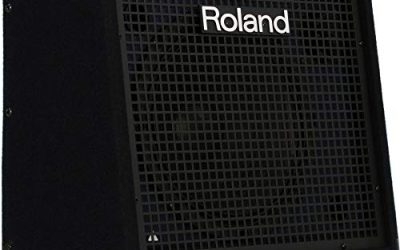
Roland KC-200

The Roland KC-200 is a 100-watt stereo keyboard amplifier with the same 4-channel mixing layout as the KC-400. It uses a 12-inch woofer and a tweeter, with an XLR microphone input on channel 1 and a stereo link function for pairing two units. The 100-watt output suits a rehearsal room or a home studio where full volume is not needed.
The KC-200 is the lighter pick in the Roland range, which makes it easy to carry to a practice space. The 4-channel mixer still handles a keyboard, a microphone, and a backing track, and the full-range speaker keeps piano and organ patches clear at moderate volume.
Best for: rehearsal rooms and home studios where clean sound at moderate volume matters most.
Considerations: the 100-watt output can run out of headroom in a loud band setting. A larger room or a full drum kit calls for the KC-400 or a line output to a PA.
Behringer ULTRATONE KXD15

The Behringer ULTRATONE KXD15 is a 600-watt stereo keyboard amplifier built for large rooms. It uses a 15-inch woofer and a 1-inch tweeter, with a 4-channel stereo mixer, a 7-band graphic EQ, and a built-in effects processor. An XLR microphone input handles vocals, and the FBQ feedback detection system helps find and cut feedback frequencies.
For full-band use, the KXD15 has the power and the low end to carry keys over drums and guitars. The 15-inch woofer reproduces deep bass patches with authority, and the 7-band EQ shapes the sound for the room. Line outputs feed a larger PA or a recorder when the amp serves as a stage monitor.
Best for: large rooms and full bands where power and low end matter most.
Considerations: the KXD15 is heavy, so moving it needs planning and a second pair of hands. The 600-watt output is more than a quiet room needs, so the volume control and EQ matter for home use.
Behringer ULTRATONE KXD12

The Behringer ULTRATONE KXD12 packs the same 600-watt output and 4-channel stereo mixer as the KXD15 into a smaller cabinet with a 12-inch woofer and a 1-inch tweeter. It includes the same 7-band graphic EQ, built-in effects processor, XLR microphone input, and FBQ feedback detection system.
The 12-inch woofer keeps the cabinet easier to move than the 15-inch model while still covering the low notes of a keyboard. For players who want the power and features of the KXD15 in a smaller box, the KXD12 is the practical pick. Line outputs feed a PA or a recorder, and the stereo mixer handles keys, vocals, and a backing track.
Best for: players who want 600 watts of power in a cabinet that one person can move.
Considerations: the 12-inch woofer gives up some low-end depth to the 15-inch KXD15. A subwoofer output helps when the room needs more bass, so check the output options before planning a large-room setup.
Which One Is Right for You?
Choose the Roland KC-400 when one amp must cover rehearsal, stage, and studio use with clean stereo sound. Choose the Roland KC-200 for a rehearsal room or a home studio where 100 watts is enough and a lighter cabinet helps. Choose the Behringer ULTRATONE KXD15 when a large room or a full band needs power and deep low end. Choose the Behringer ULTRATONE KXD12 when you want the same power in a smaller cabinet that is easier to move.
Frequently Asked Questions
What makes a keyboard amplifier different from a guitar amp?
A keyboard amp has a flat, full-range response that reproduces bass, mids, and highs cleanly, while a guitar amp colors the sound. A keyboard amp also has multiple channels to mix keys with vocals and other instruments.
Why does stereo matter for a keyboard amp?
Many keyboard patches use stereo effects such as chorus and rotary simulation. A stereo amp keeps the left and right channels separate, so those effects keep their width instead of collapsing into mono.
How many watts do I need for a keyboard amp?
A 100-watt amp suits a rehearsal room or a home studio. A 150-watt amp suits a small stage. A 600-watt amp suits a large room or a full band. Match the power to the loudest setting the amp will face.
Can a keyboard amp work as a small PA?
Yes. A 4-channel keyboard amp with an XLR microphone input can mix keys, vocals, and a backing track in one box. Line outputs feed a larger PA when the room needs more coverage.
Bottom Line
For most keyboard players, the Roland KC-400 is the all-round pick with the right mix of power, channels, and portability. The KC-200 suits quieter rooms, while the Behringer KXD15 and KXD12 bring serious power for large rooms and full bands.
Disclosure: As an Amazon Associate, this site earns from qualifying purchases.